
Quotes
Quotes to inspire and reflect

Exhaust the little moment. Soon it dies. And be it gash or gold it will not come Again in this identical disguise.
What shall I give my children? who are poor, Who are adjudged the leastwise of the land.
Abortions will not let you forget. You remember the children you got that you did not get.
Maud went to college. Sadie stayed at home. Sadie scraped life With a fine-tooth comb.
Do not go gentle into that good night, Old age should burn and rave at close of day; Rage, rage against the dying of the light.
Time held me green and dying Though I sang in my chains like the sea.
And honored among foxes and pheasants by the gay house Under the new-made clouds and happy as the heart was long, I ran my heedless ways.
And the sabbath rang slowly In the pebbles of the holy streams.
In the sun that is young once only, Golden in the mercy of his means.
And honored among wagons I was prince of the apple towns.
Now as I was young and easy under the apple boughs About the lilting house and happy as the grass was green.
Forgotten mornings when he walked with his mother Of sunlight And the legend of the green chapels.
After the first death there is no other.
And death shall have no dominion.
The hand that signed the paper felled a city; Five sovereign fingers taxed the breath, Doubled the globe of dead and halved a country; These five kings did a king to death.
Light breaks where no sun shines; Where no sea runs, the waters of the heart Push in their tides.
They dance between their arclamps and our skull, Impose their shots, throwing the nights away. We watch the show of shadows kiss or kill, Flavoured of celluloid give love the lie.
The absolutes the eternities Their outlying districts Are not my theme I am hungry for life and for death also I know what I know and I write it.
The force that through the green fuse drives the flower Drives my green age; that blasts the roots of trees Is my destroyer. And I am dumb to tell the crooked rose My youth is bent by the same wintry fever.
We are condemned to kill time: Thus we die bit by bit
My steps along this street Resound in another street In which I hear my steps Passing along this street In which Only the mist is real.
the world changes if two, dizzy and entwined, fall on the grass
a crystal willow, a poplar of water, a tall fountain the wind arches over, a tree deep-rooted yet dancing still, a course of a river that turns, moves on, doubles back, and comes full circle, forever arriving:
I wish to make a noise with my feet. I want my soul to find its proper body.

We come from not being and march toward not being: nothing between two nothings, zero between two zeros, and since between two nothings nothing can be, let’s drink to the splendor of not being our bodies.

Offering dragons quarter is no good, they regrow all their parts & come on again, they have to be killed.
When will indifference come.
What was it missing, then, at the man’s heart so that he does not wound?
I haven’t lost a battle yet but I am tense for the first losing.
It is a true error to marry with poets or to be by them.
over a high income.
The world is gradually becoming a place where I do not care to be any more.
But I do guess mos peoples gonna lose.
Something can (has) been said for sobriety but very little.
I myself walked at the funeral of tenderness.
He stared at ruin. Ruin stared straight back. He thought they were old friends.
But never did Henry, as he thought he did, end anyone and hacks her body up and hide the pieces, where they may be found. He knows: he went over everyone, & nobody’s missing. Often he reckons, in the dawn, them up. Nobody is ever missing.
withdrew into a corner of the gorgeous room and one told the other a lie.
Life, friends, is boring. We must not say so.
I don’t see how Henry, pried open for all the world to see, survived.
Huffy Henry hid the day, Unappeasable Henry sulked.

To hurt the Negro and avoid the Jew Is the curriculum.
Mountainous, woman not breaks and will bend: sways God nearby: anguish comes to an end. Blossomed Sarah, and I blossom. Is that thing alive? I hear a famisht howl.

The mind is a city like London, Smoky and populous: it is a capital Like Rome, ruined and eternal, Marked by the monument which no one Now remembers.
One day beside some flowers near his nose He will be thinking, When will I look at it? And pain, still in the middle distance, will reply At what? and he will know it’s gone, O where! and begin to tremble and cry. He will begin to cry as a child cries Whose puppy is mangled under a screaming wheel.
That inescapable animal walks with me. Has followed me since the black womb held, Moves where I move, distorting my gesture, A caricature, a swollen shadow, A stupid clown of the spirit’s motive, Perplexes and affronts with his own darkness, The secret life of belly and bone.
Time is the school in which we learn, Time is the fire in which we burn.
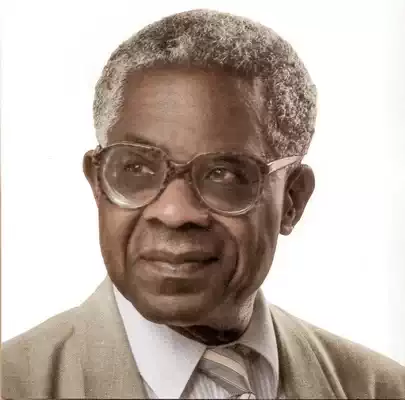
my negritude riddles with holes the dense affliction of its worthy patience.