
Quotes
Quotes to inspire and reflect
What else does the history of ideas prove, than that intellectual production changes in character in proportion as material production is changed? The ruling ideas of each age have ever been the ideas of its ruling class.
In this sense, the theory of the Communists may be summed up in the single sentence: Abolition of private property.
The bourgeoisie, wherever it has got the upper hand, has put an end to all feudal, patriarchal, idyllic relations. It has pitilessly torn asunder the motley feudal ties that bound man to his “natural superiors,” and has left remaining no other bond between man and man than naked self-interest, than callous “cash payment.”
The bourgeoisie has subjected the country to the rule of the towns. It has created enormous cities, has greatly increased the urban population as compared with the rural, and has thus rescued a considerable part of the population from the idiocy of rural life.
The executive of the modern State is but a committee for managing the common affairs of the whole bourgeoisie.
Ce qu’il y a de certain, c’est que moi je ne suis pas Marxiste .
The centralization of the means of production and the socialization of labor reach a point at which they become incompatible with their capitalist integument. This integument is burst asunder. The knell of capitalist private property sounds. The expropriators are expropriated.
[The effect of capitalist development is to] distort the worker into a fragment of a man, . . . degrade him to the level of an appendage of a machine, they destroy the actual content of his labor by turning it into a torment.
Nothing can be a value without being an object of utility. If the thing is useless, so is the labor contained in it; the labor does not count as labor, and therefore creates no value.
[ Of John Stuart Mill :] On a level plain, simple mounds look like hills; and the insipid flatness of our present bourgeoisie is to be measured by the altitude of its “great intellects.”
My own contribution was: 1. to show that the existence of classes is merely bound up with certain historical phases in the development of production ; 2. that the class struggle necessarily leads to the dictatorship of the proletariat ; 3. that this dictatorship itself constitutes no more than a transition to the abolition of all classes and to a classless society .
Society does not consist of individuals; it expresses the sum of connections and relationships in which individuals find themselves.
Men make their own history, but they do not make it just as they please; they do not make it under circumstances chosen by themselves, but under circumstances directly encountered, given, and transmitted from the past. The tradition of all the dead generations weighs like a nightmare on the brain of the living.
The criticism of religion is the basis of all criticism.
I’ve been around so long, I knew Doris Day before she was a virgin.
[ Responding to a beach club telling him he couldn’t join because he was Jewish :] My son’s only half Jewish. Would it be all right if he went in the water up to his knees?
I never forget a face—but I’m going to make an exception in your case.
[ Explaining his resignation from the Hollywood chapter of the Friars Club :] I don’t want to belong to any club that would accept me as one of its members.
[ Question asked of losers on quiz show so that they would go away with some money :] Who is buried in Grant’s Tomb?
[ Responding to a woman contestant who, explaining why she had twenty-two children, said “because I love children, and I think that’s our purpose here on earth, and I love my husband” :] I love my cigar too, but I take it out of my mouth once in a while.
[ Gordon Miller, played by Groucho Marx, speaking :] Room service? Send up a larger room.
[ J. Cheever Loophole, played by Groucho Marx, after being told that “the bottom of your shoe creates a suction that holds you up in the ceiling” :] No, no, I’d rather not. I have an agreement with the houseflies. The flies don’t practice law and I don’t walk on the ceiling.
[ Otis B. Driftwood, played by Groucho Marx, speaking :] That’s—that’s in every contract. That’s—that’s what they call a sanity clause.
[ “Doctor” Hugo Z. Hackenbush, played by Groucho Marx, attempting to take Harpo’s pulse :] Either he’s dead, or my watch has stopped.
[ Ambassador Tarentino, played by Louis Calhern, speaking :] This means war!
[ Chicolini, played by Chico Marx, speaking :] Who you gonna believe, me or your own eyes?
[ Professor Wagstaff, played by Groucho Marx, speaking :]
[ Rufus T. Firefly, played by Groucho Marx, speaking :] Will you marry me? Did he leave you any money? Answer the second question first.
[ Groucho Marx speaking :] Come, Kapellmeister, let the violas throb! My regiment leaves at dawn.
[ Groucho Marx speaking after a woman says, “I don’t like this innuendo” :] That’s what I always say. Love flies out the door when money comes innuendo.
[ Groucho Marx speaking :] Do you suppose I could buy back my introduction to you?
[ Groucho Marx, replying to the comment, “You’re awfully shy for a lawyer” :] You bet I’m shy. I’m a shyster lawyer.
[ Mrs. Whitehead, played by Margaret Irving, speaking :] Why, that’s bigamy.
[ Captain Jeffrey T. Spaulding, played by Groucho Marx, singing :] Hello, I must be going.
[ Hammer, played by Groucho Marx, speaking :] Three years ago I came to Florida without a nickel in my pocket. And now I’ve got a nickel in my pocket.
[ Line repeatedly spoken by Chico Marx when Groucho Marx refers to a viaduct:] Why a duck?
Poetry is what Milton saw when he went blind.
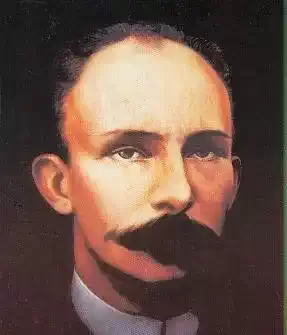
[Our objective is to prevent] the annexation of the nations of our America by the unruly and brutal North which despises them. I have lived in the bowels of the beast and I know it from the inside.
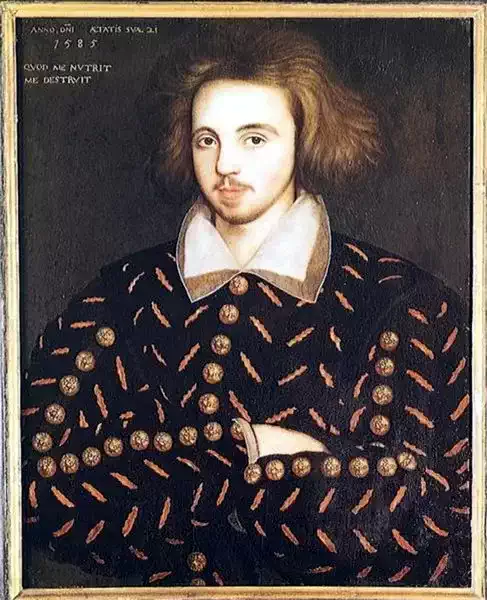
Now hast thou but one bare hour to live,
Hell hath no limits nor is circumscribed

Emancipate yourselves from mental slavery.
[ “Last words” :] Money can’t buy life.
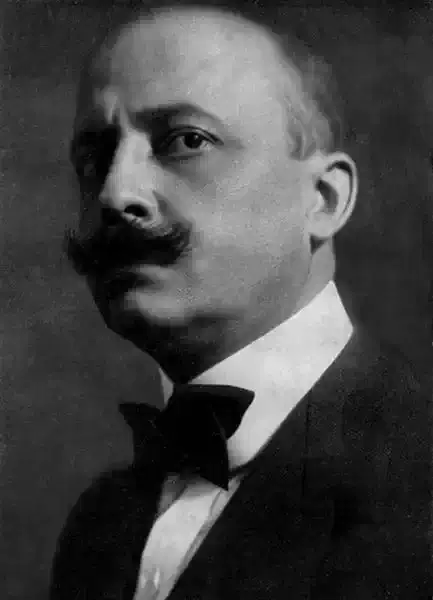
It is from Italy that we launch through the world this violently upsetting incendiary manifesto of ours. With it, today, we establish Futurism , because we want to free this land from its smelly gangrene of professors, archaeologists, ciceroni , and antiquarians. For too long Italy has been a dealer in secondhand clothes. We mean to free her from the numberless museums that cover her like so many graveyards.
We affirm that the world’s magnificence has been enriched by a new beauty: the beauty of speed. A racing car whose hood is adorned with great pipes, like serpents of explosive breath—a roaring car that seems to ride on grapeshot is more beautiful than the Victory of Samothrace .

Many people think it is impossible for the guerrilla to exist long in the enemy’s realm. Such a belief reveals a lack of understanding of the relationship that should exist between the people and the troops. The former may be likened to water and the latter to the fish that swim in it.
All erroneous ideas, all poisonous weeds, all ghosts and monsters, must be subjected to criticism; in no circumstance should they be allowed to spread unchecked.

But then there comes that moment rare
The enemy advances, we retreat; the enemy camps, we harass; the enemy tires, we attack; the enemy retreats, we pursue.