
Quotes
Quotes to inspire and reflect

Looking back, I imagine I was always writing. Twaddle it was, too. But better far write twaddle or anything, anything, than nothing at all.
I want, by understanding myself, to understand others. I want to be all that I am capable of becoming. . . . This all sounds very strenuous and serious. But now that I have wrestled with it, it’s no longer so. I feel happy—deep down.
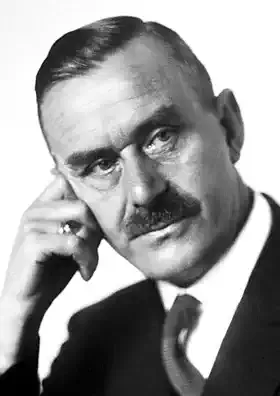
[ Remark after arriving in New York, N.Y., 21 Feb. 1938 :] Where I am, there is Germany.

If nothing else is left, one must scream. Silence is the real crime against humanity.
The extermination camps, in endeavoring to turn man into a beast, intimated that it is not life alone which makes him man.
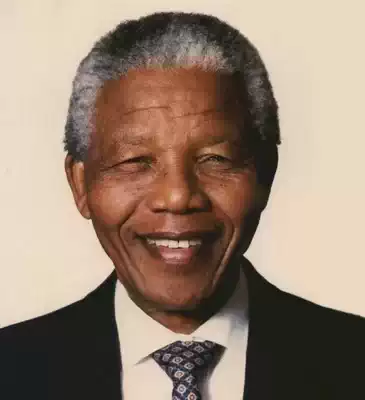
Out of the experience of an extraordinary human disaster that lasted too long, must be born a society of which all humanity will be proud. . . . Never, never, and never again shall it be that this beautiful land will again experience the oppression of one by another.
Un Coup de Dés Jamais N’Abolira le Hasard .
Donner un sens plus pur aux mots de la tribu .
Tel qu’en Lui-Même enfin l’éternité le change .
And a rose, she lived as roses do, the space of a morn.
And nowhere, surely, should we discover more painful and absolute sacrifice. . . . The queen bids farewell to freedom, the light of day. . . . The workers give five or six years of their life, and shall never know love, or the joys of maternity.
Hating England is a form of self-defense. That kind of nationalism is nothing more than a local manifestation of a concern for human rights.
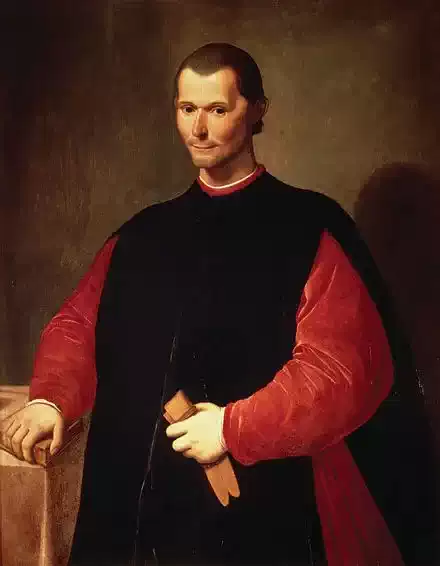
From this springs a dispute: whether it is better to be loved than feared or the reverse. It is answered that one would want to be both; but, because it is difficult to force them together whenever one has to do without either of the two, it is much more secure to be feared than to be loved.
Since a prince is constrained by necessity to know well how to use the beast, among [the beasts] he must choose the fox and the lion; because the lion does not defend itself from traps, the fox does not defend itself from the wolves. One therefore needs to be a fox to recognize traps, and a lion to dismay the wolves.
Many have imagined for themselves republics and principalities that no one has ever seen or known to be in reality. Because how one ought to live is so far removed from how one lives that he who lets go of what is done for that which one ought to do sooner learns ruin than his own preservation.
A prince must not have any objective nor any thought, nor take up any art, other than the art of war and its ordering and discipline; because it is the only art that pertains to him who commands. And it is of such virtue that not only does it maintain those who were born princes, but many times makes men rise to that rank from private station.
Men must either be caressed or extinguished; because they avenge themselves of light offenses, but of the grave ones they cannot. So the offense one does to a man must be such that one not fear vengeance for it.
Nothing is more difficult to transact, nor more dubious to succeed, nor more dangerous to manage, than to make oneself chief to introduce new orders. Because the introducer has for enemies all those whom the old orders benefit, and has for lukewarm defenders all those who might benefit by the new orders.
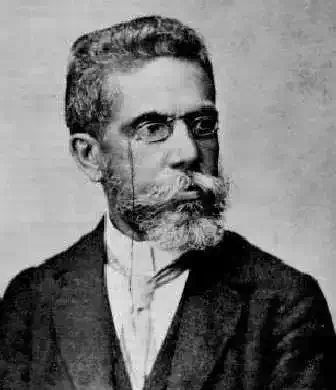
It is better to fall from above the clouds than from the third floor.
It is necessary for him who lays out a state and arranges laws for it to presuppose that all men are evil and that they are always going to act according to the wickedness of their spirits whenever they have free scope.
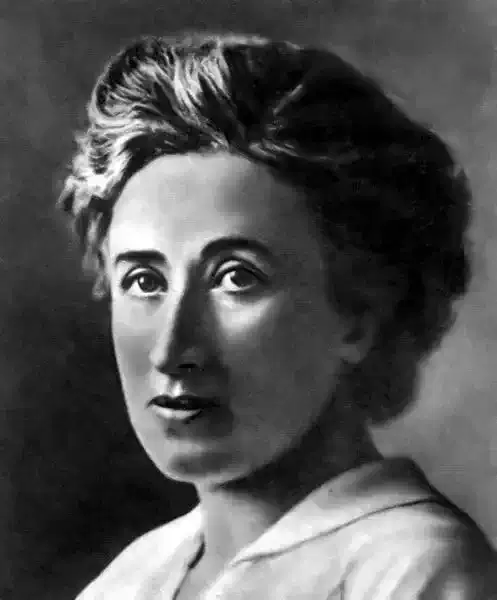
Freiheit ist immer nur Freiheit des anders Denkenden .
Bourgeois society stands at the crossroads, either transition to Socialism or regression into Barbarism.

History will one day have its say, but it will not be the history that Brussels, Paris, Washington, or the United Nations will teach, but that which they will teach in the countries emancipated from colonialism and its puppets. Africa will write its own history, and it will be, to the north and to the south of the Sahara, a history of glory and dignity.
A minimum of comfort is necessary for the practice of virtue.
Ut quod ali cibus est aliis fuat acre venenum .

[ Words upon resuming a lecture after being imprisoned for five years, Salamanca University, 1577 :] We were saying yesterday . . .
Augescunt aliae gentes, aliae minuuntur ,
Nil posse creari de nilo .

All history shows that the hand that cradles the rock has ruled the world, not the hand that rocks the cradle!
Whenever a Republican leaves one side of the aisle and goes to the other [Democratic side], it raises the intelligence quotient of both parties.
But much of what Mr. [Vice-President Henry] Wallace calls his global thinking is, no matter how you slice it, still “globaloney.” Mr. Wallace’s warp of sense and his woof of nonsense is very tricky cloth out of which to cut the pattern of a post-war world.
You know, that’s the only good thing about divorce; you get to sleep with your mother.
Nature abhors . . . a virgin—a frozen asset.
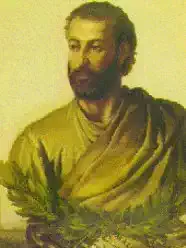
It is not granted to know which man took up arms with more right on his side. Each pleads his cause before a great judge: the winning cause pleased the gods, but the losing cause pleased Cato.

Though old the thought and oft expressed,
Democ’acy gives every man
And what is so rare as a day in June?

We have . . . defined Gaia as a complex entity involving the Earth’s biosphere, atmosphere, oceans, and soil: the totality constituting a feedback or cybernetic system which seeks an optimal physical and chemical environment for life on this planet.

We may say most aptly that the Analytical Engine [Charles Babbage’s visionary computer] weaves algebraical patterns just as the Jacquard loom weaves flowers and leaves.
The Analytical Engine [Charles Babbage’s visionary computer] has no pretensions whatever to originate anything. It can do whatever we know how to order it to perform. It can follow analysis; but it has no power of anticipating any analytical relations or truths.
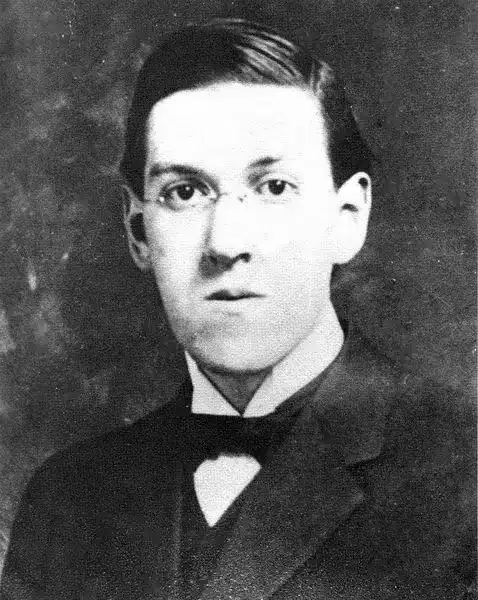
[ On Ambrose Bierce’s Devil’s Dictionary:] That sort of thing wears thin—for when one’s cynicism becomes perfect and absolute, there is no longer anything amusing in the stupidity and hypocrisy of the herd. It is all to be expected—what else could human nature produce?—so irony annuls itself by means of its own victories!
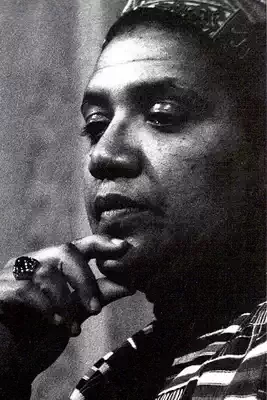
Pain is an event, an experience that must be recognized, named, and then used in some way in order for the experience to change, to be transformed into something else, strength or knowledge or action.
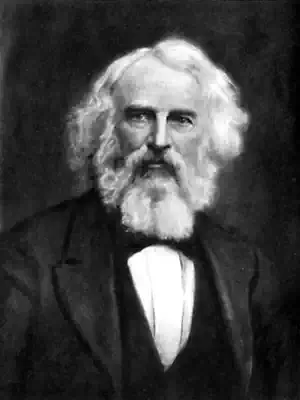
The love of learning, the sequestered nooks,
The Master’s Tools Will Never Dismantle the Master’s House.
As unto the bow the cord is,
I hear in the chamber above me
And the night shall be filled with music,
From the waterfall he named her,