

Quotes
Quotes to inspire and reflect
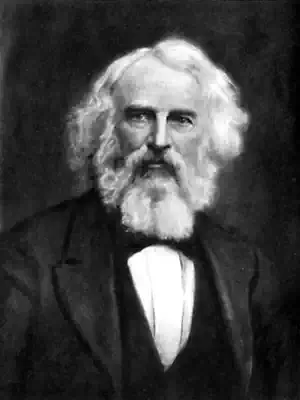
The bards sublime,
Into each life some rain must fall,
Each morning sees some task begin,
His brow is wet with honest sweat,
Tell me not, in mournful numbers,
There is a Reaper whose name is Death,
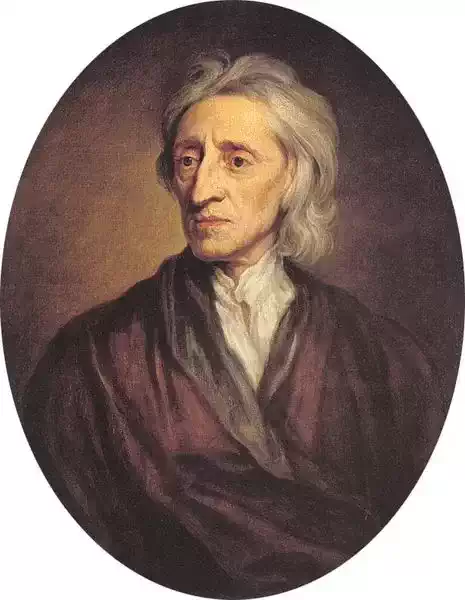
Let us suppose the mind to be, as we say, white paper, void of all characters, without any ideas; how comes it to be furnished? Whence comes it by that vast store which the busy and boundless fancy of man has painted on it with an almost endless variety? Whence has it all the materials of reason and knowledge? To this I answer, in one word, from experience .
Virtue is harder to be got than a knowledge of the world; and, if lost in a young man, is seldom recovered.
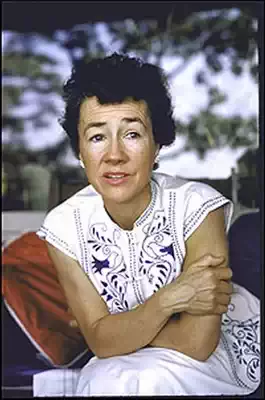
[ Diary entry, 5 Aug. 1939 :] Life itself is always pulling you away from the understanding of life.
The Chinese do not draw any distinction between food and medicine.
I . . . understand why the saints were rarely married women. I am convinced it has nothing inherently to do, as I once supposed, with chastity or children. It has to do primarily with distractions. . . . Women’s normal occupations in general run counter to creative life, or contemplative life or saintly life.
The Wave of the Future.
A lawyer’s time and advice are his stock in trade.
“The sun,” said Mr. Bull, “never sets on English dominion. Do you understand how that is?” “Oh, yes,” said the Indian, “that is because God is afraid to trust them in the dark.”
[ After being requested to remove Ulysses S. Grant from command because he drank too much :] Can you tell me where he gets his whiskey? . . . Because, if I can only find out, I will send a barrel of this wonderful whiskey to every general in the army.
Mr. Lincoln [told] the story of the young man who had an aged father and mother owning considerable property. The young man being an only son and believing that the old people had lived out their usefullness assassinated them both. He was accused, tried, and convicted of the murder. When the judge came to pass sentence upon him and called upon him to give any reason he might have why the sentence of death should not be passed upon him, he with great promptness replied he hoped the court would be lenient upon him because he was a poor orphan.
He [Lincoln] used to liken the case to that of the boy who, when asked how many legs his calf would have if he called its tail a leg, replied, “Five,” to which the prompt response was made that calling the tail a leg would not make it a leg.
[ Remark at conference of cabinet members and generals, 10 Jan. 1862 :] If General McClellan did not want to use the army, he would like to borrow it.
[ Upon meeting Harriet Beecher Stowe, Nov. 1862 :] So you’re the little woman who wrote the book that made this great war!
[ Recollection of comment by an old man at an Indiana church meeting, ca. 1810 :] When I do good, I feel good, when I do bad, I feel bad, and that’s my religion.
If the end brings me out all right, what’s said against me won’t amount to anything. If the end brings me out wrong, ten angels swearing I was right would make no difference.
[ Commenting on his loss to Stephen A. Douglas for senator from Illinois in 1858 :] I feel just like the boy who stubbed his toe— too d —— d badly hurt to laugh and too d —— d proud to cry!
Dear Madam,—I have been shown in the files of the War Department a statement of the Adjutant General of Massachusetts, that you are the mother of five sons who have died gloriously on the field of battle. I feel how weak and fruitless must be any words of mine which should attempt to beguile you from the grief of a loss so overwhelming. But I cannot refrain from tendering to you the consolation that may be found in the thanks of the Republic they died to save. I pray that our Heavenly Father may assuage the anguish of your bereavement, and leave you only the cherished memory of the loved and lost, and the solemn pride that must be yours, to have laid so costly a sacrifice upon the altar of Freedom.
It may seem strange that any men should dare to ask a just God’s assistance in wringing their bread from the sweat of other men’s faces; but let us judge not that we be not judged.
[ On the possibility of his reelection :] I have not permitted myself, gentlemen, to conclude that I am the best man in the country; but I am reminded, in this connection, of a story of an old Dutch farmer, who remarked to a companion once that “it was not best to swap horses when crossing streams.”
The world has never had a good definition of the word liberty, and the American people, just now, are much in want of one. We all declare for liberty; but in using the same word we do not all mean the same thing . . . . The shepherd drives the wolf from the sheep’s throat, for which the sheep thanks the shepherd as a liberator , while the wolf denounces him for the same act as the destroyer of liberty, especially as the sheep was a black one. Plainly the sheep and the wolf are not agreed upon a definition of the word liberty; and precisely the same difference prevails today among us human creatures.
By general law life and limb must be protected; yet often a limb must be amputated to save a life; but a life is never wisely given to save a limb.
I am naturally anti-slavery. If slavery is not wrong, nothing is wrong. I can not remember when I did not so think, and feel.
But, in a larger sense, we cannot dedicate—we cannot consecrate—we cannot hallow—this ground. The brave men, living and dead, who struggled here, have consecrated it far above our poor power to add or detract. The world will little note, nor long remember what we say here, but it can never forget what they did here. It is for us the living, rather, to be dedicated here to the unfinished work which they who fought here have thus far so nobly advanced. It is rather for us to be here dedicated to the great task remaining before us—that from these honored dead we take increased devotion to that cause for which they gave the last full measure of devotion—that we here highly resolve that these dead shall not have died in vain—that this nation, under God, shall have a new birth of freedom—and that government of the people, by the people, for the people, shall not perish from the earth.
Four score and seven years ago our fathers brought forth on this continent, a new nation, conceived in Liberty, and dedicated to the proposition that all men are created equal.
I do order and declare that all persons held as slaves within said designated States, and part of States, are, and henceforward shall be free; . . . And upon this act, sincerely believed to be an act of justice, warranted by the Constitution, upon military necessity, I invoke the considerate judgment of mankind, and the gracious favor of Almighty God.
The signs look better. The Father of Waters [the Mississippi River] again goes unvexed to the sea.
Fellow-citizens, we cannot escape history. We of this Congress and this administration, will be remembered in spite of ourselves. No personal significance, or insignificance, can spare one or another of us. The fiery trial through which we pass, will light us down, in honor or dishonor, to the latest generation. We say we are for the Union. The world will not forget that we say this. We know how to save the Union. The world knows we do know how to save it. We—even we here —hold the power, and bear the responsibility. In giving freedom to the slave , we assure freedom to the free —honorable alike in what we give, and what we preserve. We shall nobly save, or meanly lose, the last best, hope of earth.
The dogmas of the quiet past are inadequate to the stormy present. The occasion is piled high with difficulty, and we must rise with the occasion. As our case is new, so we must think anew, and act anew. We must disenthrall ourselves, and then we shall save our country.
I have just read your dispatch about sore tongued and fatigued horses. Will you pardon me for asking what the horses of your army have done since the battle of Antietam that fatigue anything?
On the first day of January in the year of our Lord, one thousand eight hundred and sixty-three, all persons held as slaves within any state, or designated part of a state, the people whereof shall then be in rebellion against the United States shall be then, thenceforward, and forever free.
In great contests each party claims to act in accordance with the will of God. Both may be, and one must be, wrong. God can not be for and against the same thing at the same time.
If there be those who would not save the Union, unless they could at the same time save slavery, I do not agree with them. If there be those who would not save the Union unless they could at the same time destroy slavery, I do not agree with them. My paramount object in this struggle is to save the Union, and is not either to save or to destroy slavery. If I could save the Union without freeing any slave I would do it, and if I could save it by freeing all the slaves I would do it; and if I could save it by freeing some and leaving others alone I would also do that. What I do about slavery, and the colored race, I do because I believe it helps to save the Union; and what I forbear, I forbear because I do not believe it would help to save the Union.
Physically speaking, we cannot separate.
Labor is prior to, and independent of, capital. Capital is only the fruit of labor, and could never have existed if labor had not first existed. Labor is the superior of capital, and deserves much the higher consideration.
If, by the mere force of numbers, a majority should deprive a minority of any clearly written constitutional right, it might, in a moral point of view, justify revolution—certainly would, if such right were a vital one.
Whether the owners of this species of property [slavery] do really see it as it is, it is not for me to say, but if they do, they see it as it is through 2,000,000,000 of dollars, and that is a pretty thick coating.
If a house was on fire there could be but two parties. One in favor of putting out the fire. Another in favor of the house burning.
I am glad to know that there is a system of labor where the laborer can strike if he wants to! I would to God that such a system prevailed all over the world.
It is said an Eastern monarch once charged his wise men to invent him a sentence, to be ever in view, and which should be true and appropriate in all times and situations. They presented him the words: “And this, too, shall pass away.”
I hold that if the Almighty had ever made a set of men that should do all the eating and none of the work, he would have made them with mouths only and no hands, and if he had ever made another class that he intended should do all the work and none of the eating, he would have made them without mouths and with all hands.
Negro equality! Fudge!! How long, in the government of a God great enough to make and maintain this Universe, shall there continue knaves to vend, and fools to gulp, so low a piece of demagogueism as this.
[ Referring to Senator Stephen A. Douglas’s argument about popular sovereignty :] Has it not got down as thin as the homeopathic soup that was made by boiling the shadow of a pigeon that had starved to death?