
Quotes
Quotes to inspire and reflect

True ideas are those that we can assimilate, validate, corroborate, and verify. False ideas are those that we cannot.
The truth of an idea is not a stagnant property inherent in it. Truth happens to an idea. It becomes true, is made true by events. Its verity is in fact an event, a process: the process namely of its verifying itself, its veri- fication . Its validity is the process of its valid- ation .
I myself believe that the evidence for God lies primarily in inner personal experiences.
First, you know, a new theory is attacked as absurd; then it is admitted to be true, but obvious and insignificant; finally it is seen to be so important that its adversaries claim that they themselves discovered it.
Most people live, whether physically, intellectually, or morally, in a very restricted circle of their potential being. They make use of a very small portion of their possible consciousness, and of their soul’s resources in general, much like a man who, out of his whole bodily organism, should get into a habit of using and moving only his little finger. Great emergencies and crises show us how much greater our vital resources are than we had supposed.
The philosophy which is so important in each of us is not a technical matter; it is our more or less dumb sense of what life honestly and deeply means. It is only partly got from books; it is our individual way of just seeing and feeling the total push and pressure of the cosmos.
The God whom science recognizes must be a God of universal laws exclusively, a God who does a wholesale, not a retail business. He cannot accommodate his processes to the convenience of individuals.
One hears of the mechanical equivalent of heat. What we now need to discover in the social realm is the moral equivalent of war: something heroic that will speak to men as universally as war does, and yet will be as compatible with their spiritual selves as war has proved itself to be incompatible.
We can act as if there were a God; feel as if we were free; consider Nature as if she were full of special designs; lay plans as if we were to be immortal; and we find then that these words do make a genuine difference in our moral life.
A genuine first-hand religious experience . . . is bound to be a heterodoxy to its witnesses, the prophet appearing as a mere lonely madman. If his doctrine prove contagious enough to spread to any others, it becomes a definite and labeled heresy. But if it then still prove contagious enough to triumph over persecution, it becomes itself an orthodoxy, its day of inwardness is over: the spring is dry; the faithful live at second hand exclusively and stone the prophets in their turn.
Religion . . . is a man’s total reaction upon life.
Although all the special manifestations of religion may have been absurd (I mean its creeds and theories), yet the life of it as a whole is mankind’s most important function.
Objective evidence and certitude are doubtless very fine ideals to play with, but where on this moonlit and dream-visited planet are they found?
Some people are far more sensitive to resemblances, and far more ready to point out wherein they consist, than others are . They are the wits, the poets, the inventors, the scientific men, the practical geniuses.
In its widest possible sense . . . a man’s Self is the sum total of all that he can call his , not only his body and his psychic powers, but his clothes and his house, his wife and children, his ancestors and friends, his reputation and works, his lands and horses, and yacht and bank-account. All these things give him the same emotions. If they wax and prosper, he feels triumphant; if they dwindle and die away, he feels cast down.
Consciousness, then, does not appear to itself chopped up in bits. Such words as “chain” or “train” do not describe it fitly as it presents itself in the first instance. It is nothing jointed; it flows. A “river” or a “stream” are the metaphors by which it is most naturally described. In talking of it hereafter, let us call it the stream of thought, of consciousness, or of subjective life .
All our scientific and philosophic ideals are altars to unknown gods.
Habit is thus the enormous fly-wheel of society, its most precious conservative agent. It alone is what keeps us all within the bounds of ordinance.
The best way to define a man’s character would be to seek out the particular mental or moral attitude in which, when it came upon him, he felt himself most deeply and intensely active and alive. At such moments there is a voice inside which speaks and says: “ This is the real me!”
[ On experiencing his initial stroke :] So here it is at last, the distinguished thing!
The war has used up words.
The black and merciless things that are behind the great possessions.
The fatal futility of Fact.
We must know, as much as possible, in our beautiful art . . . what we are talking about—& the only way to know it is to have lived & loved & cursed & floundered & enjoyed & suffered—I think I don’t regret a single “excess” of my responsive youth—I only regret, in my chilled age, certain occasions & possibilities I didn’t embrace .
The historian, essentially, wants more documents than he can really use; the dramatist only wants more liberties than he can really take.
The terrible fluidity of self-revelation .
In art economy is always beauty.
She couldn’t dress it away, nor walk it away, nor read it away, nor think it away; she could neither smile it away in any dreamy absence nor blow it away in any softened sigh. She couldn’t have lost it if she had tried—that was what it was to be really rich. It had to be the thing you were.
Vereker’s secret, my dear man—the general intention of his books: the string the pearls were strung on, the buried treasure, the figure in the carpet.
The time-honored bread-sauce of the happy ending.
If I should certainly say to a novice, “Write from experience, and experience only,” I should feel that this was a rather tantalising monition if I were not careful immediately to add, “Try to be one of the people on whom nothing is lost!”
The only reason for the existence of a novel is that it does compete with life.
It takes a great deal of history to produce a little literature.
[ Of Henry David Thoreau :] He was worse than provincial—he was parochial.
The curious thing is that the more the mind takes in, the more it has space for, and that all one’s ideas are like the Irish people at home who live in the different corners of a room, and take boarders.
We stand like a race with shrunken muscles, staring helplessly at the weights our forefathers easily lifted.
To write well and worthily of American things one need even more than elsewhere to be a master .

No live organism can continue for long to exist sanely under conditions of absolute reality; even larks and katydids are supposed, by some, to dream. Hill House, not sane, stood by itself against its hills, holding darkness within; it had stood so for eighty years and might stand for eighty more. Within, walls continued upright, bricks met neatly, floors were firm, and doors were sensibly shut; silence lay steadily against the wood and stone of Hill House, and whatever walked there, walked alone.
“It isn’t fair, it isn’t right,” Mrs. Hutchinson screamed, and then they were upon her.
[ Upon being asked in court testimony whether he had memory lapses :] Not that I recall.

Look, don’t kill that fly!
[ Defending his practice of sharing his bed with young boys :] Why can’t you share your bed? The most loving thing to do is to share your bed with someone.
A civil servant doesn’t make jokes.
Living is abnormal.
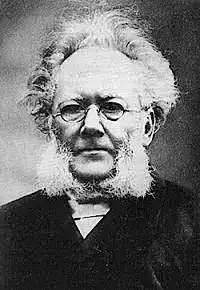
With vine leaves in his hair.
[ “Last words,” responding to a nurse’s remark that he “seemed to be a little better” :] On the contrary.
Our common lust for life.
Always do that, wild ducks do. Go plunging right to the bottom . . . as deep as they can get . . . hold on with their beaks to the weeds and stuff—and all the other mess you find down there. Then they never come up again.