

Quotes
Quotes to inspire and reflect
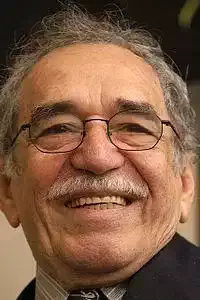
Before reaching the final line, however, he had already understood that he would never leave that room, for it was foreseen that the city of mirrors (or mirages) would be wiped out by the wind and exiled from the memory of men at the precise moment when Aureliano Babilonia would finish deciphering the parchments, and that everything written on them was unrepeatable since time immemorial and forever more, because races condemned to one hundred years of solitude did not have a second opportunity on the earth.

[ Upon being asked what he thought of Western civilization :] It would be a good idea.
“Hate the sin and not the sinner” is a precept which, though easy enough to understand, is rarely practised, and that is why the poison of hatred spreads in the world.
I am an uncompromising opponent of violent methods even to serve the noblest of causes.
Noncooperation with evil is as much a duty as is cooperation with good. But in the past, noncooperation has been deliberately expressed in violence to the evildoer. I am endeavoring to show to my countrymen that violent noncooperation only multiplies evil and that evil can only be sustained by violence, withdrawal of support of evil requires complete abstention from violence.
Satyagraha largely appears to the public as Civil Disobedience or Civil Resistance. It is civil in the sense that it is not criminal. . . . [The civil resister] considers certain laws to be so unjust as to render obedience to them a dishonor. He then openly and civilly breaks them and quietly suffers the penalty for their breach.

[ Alleged remark after recanting his position that the earth moves around the sun, 1632 :] Eppur si muove .
Philosophy is written in this grand book, the universe, which stands continually open to our gaze. . . . It is written in the language of mathematics, and its characters are triangles, circles, and other geometric figures without which . . . one wanders about in a dark labyrinth.
Desiring to remove from the minds of Your Eminences, and of all faithful Christians, this vehement suspicion rightly conceived against me, with sincere heart and unpretended faith I abjure, curse, and detest the aforesaid errors and heresies . . . and I swear that in the future I will never again say or assert verbally or in writing, anything that might cause a similar suspicion toward me.
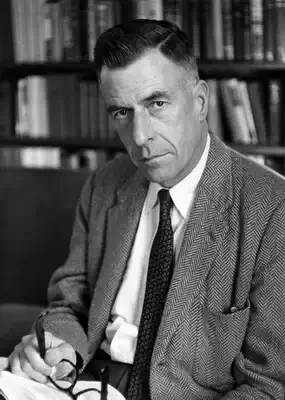
The leisure class has been replaced by another and much larger class to which work has none of the older connotation of pain, fatigue, or other mental or physical discomfort. We have failed to observe the emergence of this New Class, as it may be simply called.
Much of the world’s work, it has been said, is done by men who do not feel quite well. Marx is a case in point.
It will be convenient to have a name for the ideas which are esteemed at any time for their acceptability, and it should be a term that emphasizes this predictability. I shall refer to these ideas henceforth as the conventional wisdom.

[ When asked how many husbands she had had :]
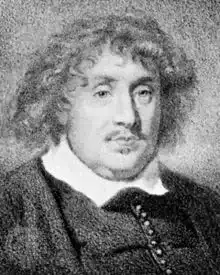
Be you never so high the law is above you.
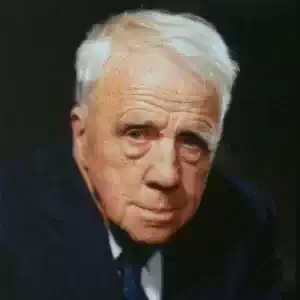
And were an epitaph to be my story
Such as we were we gave ourselves outright
The figure a poem makes. It begins in delight and ends in wisdom . . . in a clarification of life—not necessarily a great clarification, such as sects and cults are founded on, but in a momentary stay against confusion.
My little horse must think it queer
I met a Californian who would
But if it had to perish twice,
From what I’ve tasted of desire
I shall be telling this with a sigh
I see him there

A society that puts equality—in the sense of equality of outcome—ahead of freedom will end up with neither equality nor freedom.
“I should have called it
Even the most ardent environmentalist doesn’t really want to stop pollution. If he thinks about it, and doesn’t just talk about it, he wants to have the right amount of pollution. We can’t really afford to eliminate it—not without abandoning all the benefits of technology that we not only enjoy but on which we depend.
A minimum-wage law is, in reality, a law that makes it illegal for an employer to hire a person with limited skills.
Freedom in economic arrangements is itself a component of freedom broadly understood, so economic freedom is an end in itself. . . . Economic freedom is also an indispensable means toward the achievement of political freedom.
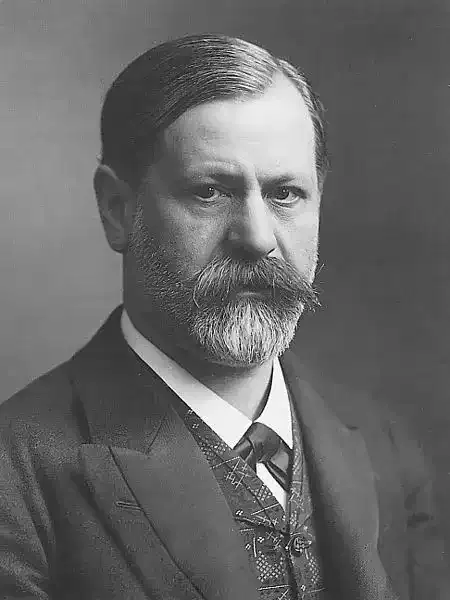
Freud was once asked what he thought a normal person should be able to do well. The questioner probably expected a complicated answer. But Freud, in the curt way of his old days, is reported to have said: “Lieben und arbeiten” (to love and to work).
[ Remark on the occasion of his seventieth birthday :] The poets and philosophers before me discovered the unconscious. . . . What I discovered was the scientific method by which the unconscious can be studied.
Yes, America is gigantic, but a gigantic mistake.
Homosexuality is assuredly no advantage, but it is nothing to be ashamed of, no vice, no degradation; it cannot be classified as an illness; we consider it to be a variation of the sexual function, produced by a certain arrest of sexual development. . . . It is a great injustice to persecute homosexuality as a crime—and a cruelty, too.
Intolerance of groups is often, strangely enough, exhibited more strongly against small differences than against fundamental ones.
The poor ego . . . serves three severe masters and does what it can to bring their claims and demands into harmony with one another. . . . Its three tyrannical masters are the external world, the super-ego, and the id.
Where id was, there ego shall be.
Before the problem of the artist, analysis must, alas, lay down its arms.
The ego’s relation to the id might be compared with that of a rider to his horse. The horse supplies the locomotive energy, while the rider has the privilege of deciding on the goal and of guiding the powerful animal’s movement. But only too often there arises between the ego and the id the not precisely ideal situation of the rider being obliged to guide the horse along the path by which it itself wants to go.
The ego is not master in its own house.
We know less about the sexual life of little girls than of boys. But we need not feel ashamed of this distinction: after all, the sexual life of adult women is a “dark continent” for psychology.
The individual’s mental development repeats the course of human development in an abbreviated form.
The excremental is all too intimately and inseparably bound up with the sexual; the position of the genitals— inter urinas et faeces —remains the decisive and unchangeable factor. One might say here, varying a well-known saying of the great Napoleon: “Anatomy is destiny.”
I owe my results to a new method of psychoanalysis, Josef Breuer’s exploratory procedure; it is a little intricate, but irreplaceable, so fertile has it shown itself to be in throwing light upon the obscure unconscious mental processes.
I am actually not at all a man of science, not an observer, nor an experimenter, not a thinker. I am by temperament nothing but a conquistador—an adventurer . . . with all the curiosity, daring, and tenacity characteristic of a man of this sort.
I am inclined to suppose that children cannot find their way to acts of sexual aggression unless they have been seduced previously. The foundation for a neurosis would accordingly always be laid in childhood by adults.
We have seen that hysterical symptoms immediately and permanently disappeared when we had succeeded in bringing clearly to light the memory of the event by which they were provoked and in arousing their accompanying affect, and when the patient had described that event in the greatest possible detail and had put the affect into words. . . . Hysterics suffer mainly from reminiscences.
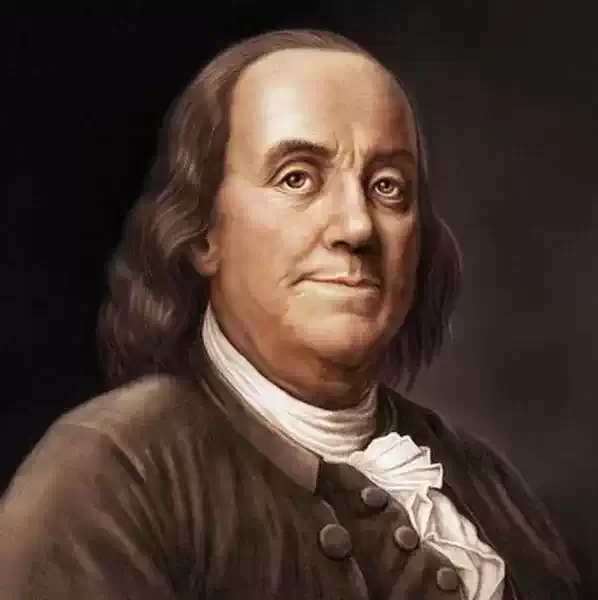
[ Responding to skepticism about the usefulness of the first balloon flights :] What good is a new-born baby?
[ After the conclusion of the Constitutional Convention, when asked by a woman, “Well, Doctor, what have we got, a republic or a monarchy?” :] A republic, if you can keep it.
Our new Constitution is now established, and has an appearance that promises permanency; but in this world nothing can be said to be certain, except death and taxes.