

Quotes
Quotes to inspire and reflect

The King of France’s Picture set with Four hundred and Eight Diamonds, I give to my Daughter Sarah Bache requesting however that she would not form any of those Diamonds into Ornaments either for herself or Daughters and thereby introduce or countenance the expensive vain and useless Fashion of wearing Jewels in this Country.
Painters had found it difficult to distinguish in their art a rising from a setting sun. I have often and often in the course of the Session [ of the Constitutional Convention], and the vicissitudes of my hopes and fears as to its issue, looked at that [sun painted] behind the [chair of the] President without being able to tell whether it was rising or setting: but now at length I have the happiness to know that it is a rising and not a setting Sun.
That it is better 100 guilty Persons should escape than that one innocent Person should suffer, is a Maxim that has been long and generally approved.
I wish the bald eagle had not been chosen as the representative of our country. . . . The turkey . . . is a much more respectable bird.
The grand Leap of the Whale in that Chace up the Fall of Niagara is esteemed by all who have seen it, as one of the finest Spectacles in Nature!
Many a long dispute among Divines may be thus abridg’d:
Old Boys have their Playthings as well as Young
None but the well-bred man knows how to confess a fault or acknowledge himself in error.
Certainlie these things agree,
Opportunity is the great bawd.
Here comes the orator with his flood of words and his drop of reason.
Lawyers, Preachers, and Tomtits Eggs, there are more of them hatch’d than come to perfection.
Avarice and happiness never saw each other.
Blame-all and praise-all are two blockheads.
God works wonders now and then;
Answ. Commend her among her Female Acquaintances.
I am about Courting a Girl I have had but little Acquaintance with; how shall I come to a Knowledge of her Fawlts? and whether she has the Virtues I imagine she has?
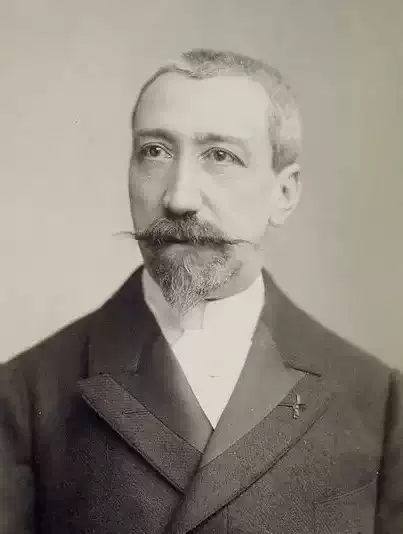
Ils naquirent, ils souffrirent, ils moururent .
The Body of B. Franklin, Printer; like the Cover of an old Book, its Contents torn out, and stript of its Lettering and Gilding, lies here, Food for Worms. But the Work shall not be wholly lost: for it will, as he believ’d, appear once more, in a new & more perfect Edition, corrected and amended by the Author.

Homosexuality appeared as one of the forms of sexuality when it was transposed from the practice of sodomy into a kind of interior androgyny, a hermaphroditism of the soul. The sodomite had been a temporary aberration; the homosexual was now a species.
If those arrangements [the fundamental arrangements of knowledge] were to disappear as they appeared . . . then one can certainly wager that man would be erased, like a face drawn in sand at the edge of the sea.
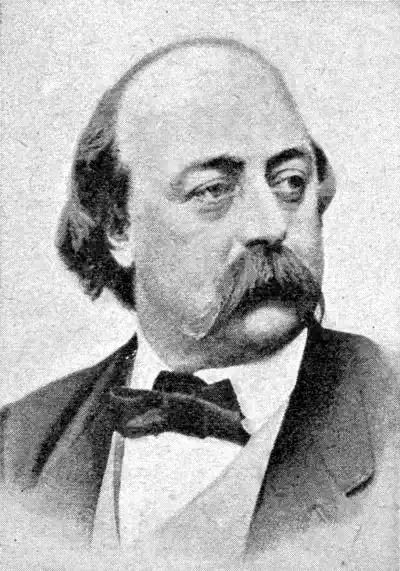
Le bon Dieu est dans le détail .
As the archaeology of our thought easily shows, man is an invention of recent date. And one perhaps nearing its end.
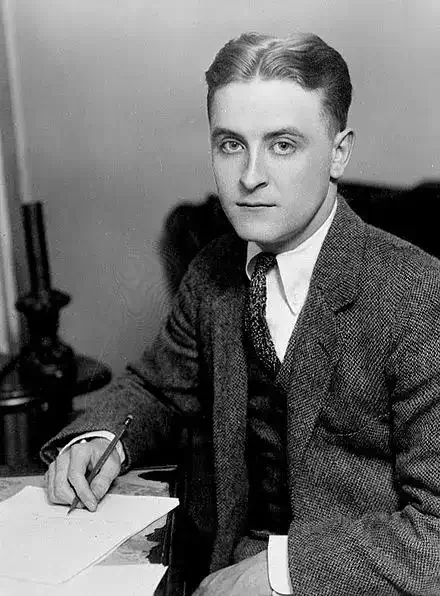
The wise and tragic sense of life. By this I mean . . . the sense that life is essentially a cheat and its conditions are those of defeat, and that the redeeming things are not “happiness and pleasure” but the deeper satisfactions that come out of struggle.
Listen, little Elia: draw your chair up close to the edge of the precipice and I’ll tell you a story.
I am not a great man, but sometimes I think the impersonal and objective quality of my talent and the sacrifices of it, in pieces, to preserve its essential value has some sort of epic grandeur.
When I was your age I lived with a great dream. The dream grew and I learned how to speak of it and make people listen. Then the dream divided one day when I decided to marry your mother after all. . . . I was a man divided—she wanted me to work too much for her and not enough for my dream. She realized too late that work was dignity, and the only dignity, and tried to atone for it by working herself, but it was too late and she broke and is broken forever.
One writes of scars healed, a loose parallel to the pathology of the skin, but there is no such thing in the life of an individual. There are open wounds, shrunk sometimes to the size of a pin-prick but wounds still. The marks of suffering are more comparable to the loss of a finger, or of the sight of an eye. We may not miss them, either, for one minute in a year, but if we should there is nothing to be done about it.
It was about then [1920] that I wrote a line which certain people will not let me forget: “She was a faded but still lovely woman of twenty-seven.”
In the spring of ’27, something bright and alien flashed across the sky. A young Minnesotan [Charles Lindbergh] who seemed to have had nothing to do with his generation did a heroic thing, and for a moment people set down their glasses in country clubs and speakeasies and thought of their old best dreams.
The hangover became a part of the day as well allowed-for as the Spanish siesta.
Gatsby believed in the green light, the orgastic future that year by year recedes before us. It eluded us then, but that’s no matter—tomorrow we will run faster, stretch out our arms farther. . . . And one fine morning—
And as I sat there brooding on the old, unknown world, I thought of Gatsby’s wonder when he first picked out the green light at the end of Daisy’s dock. He had come a long way to this blue lawn, and his dream must have seemed so close that he could hardly fail to grasp it. He did not know that it was already behind him, somewhere back in that vast obscurity beyond the city, where the dark fields of the republic rolled on under the night.
And as the moon rose higher the inessential houses began to melt away until gradually I became aware of the old island here that flowered once for Dutch sailors’ eyes—a fresh, green breast of the new world.
For a transitory enchanted moment man must have held his breath in the presence of this continent, compelled into an aesthetic contemplation he neither understood nor desired, face to face for the last time in history with something commensurate to his capacity for wonder.
I see now that this has been a story of the West, after all—Tom and Gatsby, Daisy and Jordan and I, were all Westerners, and perhaps we possessed some deficiency in common which made us subtly unadaptable to Eastern life.
“I’m thirty,” I said. “I’m five years too old to lie to myself and call it honor.”
[ Remark by attendee at Gatsby’s funeral :] The poor son-of-a-bitch.
That’s my Middle West—not the wheat or the prairies or the lost Swede towns, but the thrilling returning trains of my youth, and the street lamps and sleigh bells in the frosty dark and the shadows of holly wreaths thrown by lighted windows on the snow. I am part of that, a little solemn with the feel of those long winters, a little complacent from growing up in the Carraway house in a city where dwellings are still called through decades by a family’s name.
Thirty—the promise of a decade of loneliness, a thinning list of single men to know, a thinning brief-case of enthusiasm, thinning hair.
There was no difference between men, in intelligence or race, so profound as the difference between the sick and the well.
Then he kissed her. At his lips’ touch she blossomed for him like a flower and the incarnation was complete.
What’ll we do with ourselves this afternoon . . . and the day after that, and the next thirty years?
He knew that when he kissed this girl, and forever wed his unutterable vision to her perishable breath, his mind would never romp again like the mind of God.
Gatsby saw that the blocks of the sidewalks really formed a ladder and mounted to a secret place above the trees—he could climb to it, if he climbed alone, and once there he could suck on the pap of life, gulp down the incomparable milk of wonder.
His imagination had never really accepted them as his parents at all. The truth was that Jay Gatsby . . . sprang from his Platonic conception of himself. He was a son of God—a phrase which, if it means anything, means just that—and he must be about His Father’s business, the service of a vast, vulgar, and meretricious beauty.
I remembered, of course, that the World’s Series had been fixed in 1919, but if I had thought of it at all I would have thought of it as something that merely happened , the end of an inevitable chain. It never occurred to me that one man could start to play with the faith of fifty million people.
I like large parties. They’re so intimate. At small parties there isn’t any privacy.