
Quotes
Quotes to inspire and reflect
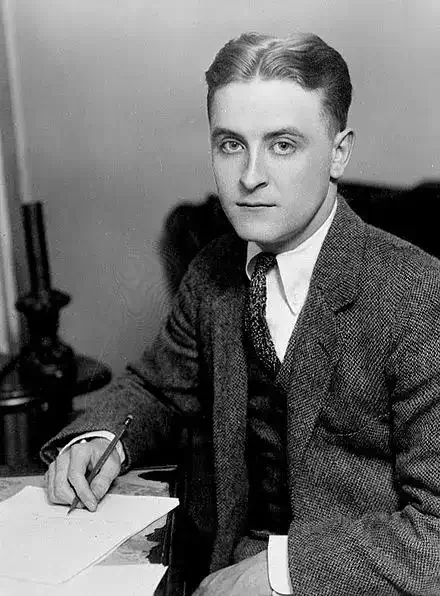
Every one suspects himself of at least one of the cardinal virtues, and this is mine: I am one of the few honest people that I have ever known.
They had spent a year in France for no particular reason, and then drifted here and there unrestfully wherever people played polo and were rich together.
That’s the best thing a girl can be in this world, a beautiful little fool.
Now I was going to bring back all such things into my life and become again that most limited of all specialists, the “well-rounded man.” This isn’t just an epigram—life is much more successfully looked at from a single window, after all.
It is what preyed on Gatsby, what foul dust floated in the wake of his dreams that temporarily closed out my interest in the abortive sorrows and short-winded elations of men.
If personality is an unbroken series of successful gestures, then there was something gorgeous about him, some heightened sensitivity to the promises of life, as if he were related to one of those intricate machines that register earthquakes ten thousand miles away.
I wanted no more riotous excursions with privileged glimpses into the human heart.
Reserving judgments is a matter of infinite hope.
A sense of the fundamental decencies is parcelled out unequally at birth.
The intimate revelations of young men, or at least the terms in which they express them, are usually plagiaristic and marred by obvious suppressions.
This is to tell you about a young man named Ernest Hemingway, who lives in Paris (an American), writes for the Transatlantic Review and has a brilliant future. . . . I’d look him up right away. He’s the real thing.
The victor belongs to the spoils.

I’ve been drunk only once in my life. But that lasted for twenty-three years.
[ Deathbed remark while reading the Bible :] I’m looking for loopholes.
I like to keep a bottle of stimulant handy in case
[ The Great Man, played by W. C. Fields, speaking :] I was in love with a beautiful blonde once. She drove me to drink. ’Tis the one thing I’m indebted to her for.
[ Of Charlie Chaplin :] The son of a bitch is a ballet dancer. . . . He’s the best ballet dancer that ever lived . . . and if I get a good chance I’ll kill him with my bare hands.
[ Cuthbert J. Twillie, played by W. C. Fields, responding to the question, “Is this a game of chance?” :] Not the way I play it.
[ Cuthbert J. Twillie, played by W. C. Fields, speaking :] A thing worth having is worth cheating for.
I’d rather have two girls at 21 each, than one girl at 42.
[ When asked whether he liked children :] I do if they’re properly cooked!
[ Larsen E. Whipsnade, played by W. C. Fields, speaking :] You kids are disgusting, skulking around here all day, reeking of popcorn and lollipops.
You Can’t Cheat an Honest Man.
[ Sam Bisbee, played by W. C. Fields, speaking :] It’s a funny old world—a man’s lucky if he gets out of it alive.
Now don’t say you can’t swear off drinking; it’s easy. I’ve done it a thousand times.
[ Mr. Snavely, played by W. C. Fields, speaking :] It ain’t a fit night out for man or beast.
[ Harold Bissonette, played by W. C. Fields, replying to a real estate agent who said “You’re drunk” :] Yeah, and you’re crazy. I’ll be sober tomorrow, but you’ll be crazy the rest of your life.
[ Rollo La Rue, played by W. C. Fields, speaking :]
[ Professor Quail, played by W. C. Fields, speaking :] Now that I’m here, I shall dally in the valley—and believe me, I can dally.

I think I can safely say that nobody understands quantum mechanics.
[ J. Effingham Bellweather, played by W. C. Fields, speaking :] Godfrey Daniel!

La Dolce Vita .

Everything has been written, everything has been said, everything has been made: that’s what God heard before creating the world, when there was nothing yet. I have also heard that one, he may have answered from the old, split Nothingness. And then he began.
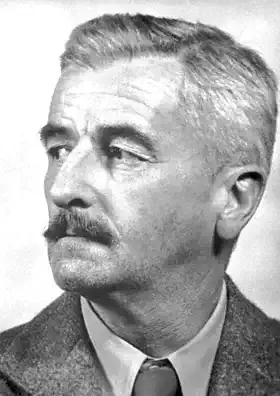
The ideal woman which is in every man’s mind is evoked by a word or phrase or the shape of her wrist, her hand. The most beautiful description of a woman is by understatement. Remember, all Tolstoy ever said to describe Anna Karenina was that she was beautiful and could see in the dark like a cat. Every man has a different idea of what’s beautiful, and it’s best to take the gesture, the shadow of the branch, and let the mind create the tree.
Really the writer doesn’t want success. . . . He knows he has a short span of life, that the day will come when he must pass through the wall of oblivion, and he wants to leave a scratch on that wall—Kilroy was here—that somebody a hundred, or a thousand years later will see.
The Long Hot Summer.
The writer’s only responsibility is to his art. He will be completely ruthless if he is a good one. He has a dream. It anguishes him so much he must get rid of it. He has no peace until then. Everything goes by the board. . . . If a writer has to rob his mother, he will not hesitate; the Ode on a Grecian Urn is worth any number of old ladies.
Oh yes, he will survive it because he has that in him which will endure even beyond the ultimate worthless tideless rock freezing slowly in the last red and heatless sunset, because already the next star in the blue immensity of space will be already clamorous with the uproar of his debarkation, his puny and inexhaustible voice still talking, still planning.
The poet’s, the writer’s duty is to write about these things. It is his privilege to help man endure by lifting his heart, by reminding him of the courage and honor and hope and pride and compassion and pity and sacrifice which have been the glory of his past. The poet’s voice need not merely be the record of man, it can be one of the props, the pillars to help him endure and prevail.
I decline to accept the end of man.
There are no longer problems of the spirit. There is only one question: When will I be blown up? Because of this, the young man or woman writing today has forgotten the problems of the human heart in conflict with itself which alone can make good writing because only that is worth writing about, worth the agony and the sweat.
JEFFERSON, YOKNAPATAWPHA CO., Mississippi. Area, 2400 Square Miles. Population, Whites, 6298; Negroes, 9313. WILLIAM FAULKNER, Sole Owner & Proprietor.
Between grief and nothing I will take grief.
I dont hate it. . . . I dont hate it. . . . I dont hate it he thought, panting in the cold air, the iron New England dark; I dont. I dont! I dont hate it! I dont hate it!
You cant understand it [the South]. You would have to be born there.
Too much happens. . . . Man performs, engenders, so much more than he can or should have to bear. That’s how he finds that he can bear anything. . . . That’s what’s so terrible.
Why do you hate the South?
They [the Negroes] will endure. They are better than we are. Stronger than we are. Their vices are vices aped from white men or that white men and bondage have taught them: improvidence and intemperance and evasion—not laziness: evasion: of what white men had set them to, not for their aggrandizement or even comfort but his own.