
Quotes
Quotes to inspire and reflect
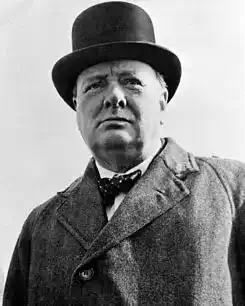
The people of London with one voice would say to Hitler: “You have committed every crime under the sun. . . . We will have no truce or parley with you, or the grisly gang who work your wicked will. You do your worst—and we will do our best.”
The V sign is the symbol of the unconquerable will of the occupied territories, and a portent of the fate awaiting the Nazi tyranny.
The gratitude of every home in our Island, in our Empire, and indeed throughout the world, except in the abodes of the guilty, goes out to the British airmen who, undaunted by odds, unwearied in their constant challenge and mortal danger, are turning the tide of the World War by their prowess and their devotion. Never in the field of human conflict was so much owed by so many to so few.
We are waiting for the long-promised invasion. So are the fishes.
What General Weygand called the Battle of France is over. I expect that the Battle of Britain is about to begin.
I would say to the House, as I said to those who have joined this Government: “I have nothing to offer but blood, toil, tears, and sweat.”
Their sweat, their tears, their blood bedewed the endless plain.
[ Of Ramsey MacDonald :] I remember, when I was a child, being taken to the celebrated Barnum’s circus, which contained an exhibition of freaks and monstrosities, but the exhibit on the program which I most desired to see was the one described as “The Boneless Wonder.” My parents judged that the spectacle would be too revolting and demoralizing for my youthful eyes, and I have waited 50 years to see the boneless wonder sitting on the Treasury Bench.
By being so long in the lowest form [at Harrow] I gained an immense advantage over the cleverer boys. . . . I got into my bones the essential structure of the ordinary British sentence—which is a noble thing.
[ Responding to criticism that he edited the British Gazette in a biased manner during the General Strike :] I decline utterly to be impartial as between the fire brigade and the fire.
Business carried on as usual during alterations on the map of Europe.
I pass with relief from the tossing sea of Cause and Theory to the firm ground of Result and Fact.

[ On being married to Max Mallowan :] An archeologist is the best husband any woman can get. Just consider: The older she gets, the more he is interested in her.
It is completely unimportant. . . . That is why it is so interesting.
“My dear Mr. Mayherne,” said Romaine, “you do not see at all. I knew—he was guilty!”
With method and logic one can accomplish anything.
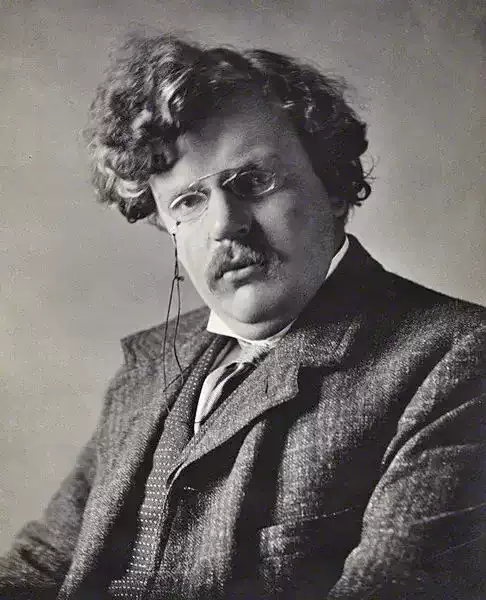
The first effect of not believing in God is to believe in anything.
[Fictional detective Hercule] Poirot was an extraordinary-looking little man. He was hardly more than five feet four inches, but carried himself with great dignity. His head was exactly the shape of an egg, and he always perched it a little on one side. His moustache was very stiff and military. The neatness of his attire was almost incredible; I believe a speck of dust would have caused him more pain than a bullet wound.
I think I will not hang myself today.
All but the hard-hearted must be torn with pity for this pathetic dilemma of the rich man, who has to keep the poor man just stout enough to do the work and just thin enough to have to do it.
The mystic does not bring doubts or riddles: the doubts and riddles exist already. We all feel the riddle of the earth without anyone to point it out. The mystery of life is the plainest part of it. The clouds and curtains of darkness, the confounding vapors, these are the daily weather of this world.
The criminal is the creative artist; the detective only the critic.
This diseased pride [of artistic individualists] was not even conscious of a public interest, and would have found all political terms utterly tasteless and insignificant. It was no longer a question of one man one vote, but of one man one universe.
Our civilization has decided, and very justly decided, that determining the guilt or innocence of men is a thing too important to be trusted to trained men. . . . When it wants a library catalogued, or the solar system discovered, or any trifle of that kind, it uses up its specialists. But when it wishes anything done which is really serious, it collects twelve of the ordinary men standing round. The same thing was done, if I remember right, by the Founder of Christianity.
You will hear everlastingly, in all discussions about newspapers, companies, aristocracies, or party politics, this argument that the rich man cannot be bribed. The fact is, of course, that the rich man is bribed; he has been bribed already. That is why he is a rich man.
Fairy-tales do not give a child his first idea of bogy. What fairy-tales give the child is his first clear idea of the possible defeat of bogy. The baby has known the dragon intimately ever since he had an imagination. What the fairytale provides for him is a St. George to kill the dragon.
Poets do not go mad; but chess-players do. Mathematicians go mad, and cashiers; but creative artists very seldom. I am not, as will be seen, in any sense attacking logic: I only say that this danger does lie in logic, not in imagination.
Creeds must disagree: it is the whole fun of the thing. If I think the universe is triangular, and you think it is square, there cannot be room for two universes. We may argue politely, we may argue humanely, we may argue with great mutual benefit: but, obviously, we must argue. Modern toleration is really a tyranny. It is a tyranny because it is a silence. To say that I must not deny my opponent’s faith is to say I must not discuss it.
It has often been said, very truly, that religion is the thing that makes the ordinary man feel extraordinary; it is an equally important truth that religion is the thing that makes the extraordinary man feel ordinary.
When you break the big laws, you do not get liberty; you do not even get anarchy. You get the small laws.
The act of defending any of the cardinal virtues has to-day all the exhilaration of a vice.
They have invented a phrase, a phrase that is a black and white contradiction in two words—” free-love”—as if a lover ever had been, or ever could be, free. It is the nature of love to bind itself, and the institution of marriage merely paid the average man the compliment of taking him at his word.

When a woman isn’t beautiful, people always say, “You have lovely eyes, you have lovely hair.”
The person who is really in revolt is the optimist, who generally lives and dies in a desperate and suicidal effort to persuade all the other people how good they are.
I’m a seagull. No, that’s wrong. Remember you shot a seagull? A man happened to come along, saw it and killed it, just to pass the time.
I’m in mourning for my life, I’m unhappy.
I feel more confident and more satisfied when I reflect that I have two professions and not one. Medicine is my lawful wife and literature is my mistress. When I get tired of one I spend the night with the other. Though it’s disorderly, it’s not so dull, and besides, neither really loses anything through my infidelity.
One must not put a loaded rifle on the stage if no one is thinking of firing it.
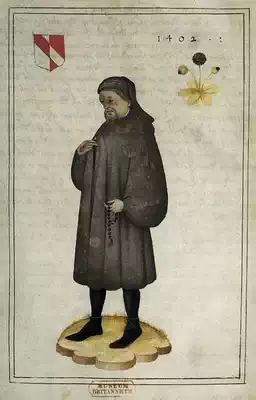
Yblessed be god that I have wedded fyve!
And therefore, at the kynges court, my brother,
For out of olde feldes, as men seyth,
Whan that Aprill with his shoures soote
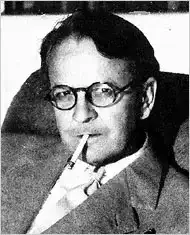
Letter to Edward Weeks, 18 Jan. 1947
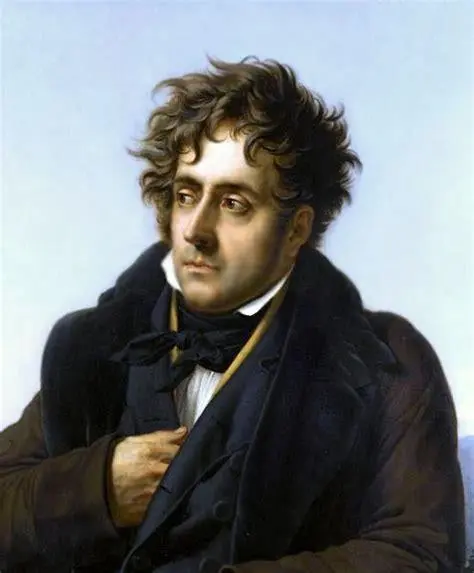
The original writer is not he who refrains from imitating others, but he who can be imitated by none.
If my books had been any worse, I should not have been invited to Hollywood, and if they had been any better, I should not have come.
Would you convey your compliments to the purist who reads your proofs and tell him or her that I write in a sort of broken-down patois which is something like the way a Swiss waiter talks, and that when I split an infinitive, God damn it, I split it so it will stay split.
[ Credo of fictional detective Philip Marlowe :] Trouble Is My Business.
Law is where you buy it in this town.