
Quotes
Quotes to inspire and reflect
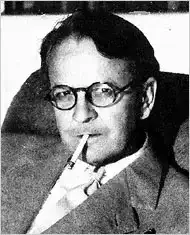
You just slept the big sleep, not caring about the nastiness of how you died or where you fell.
What did it matter where you lay once you were dead? . . . You were dead, you were sleeping the big sleep, you were not bothered by things like that.
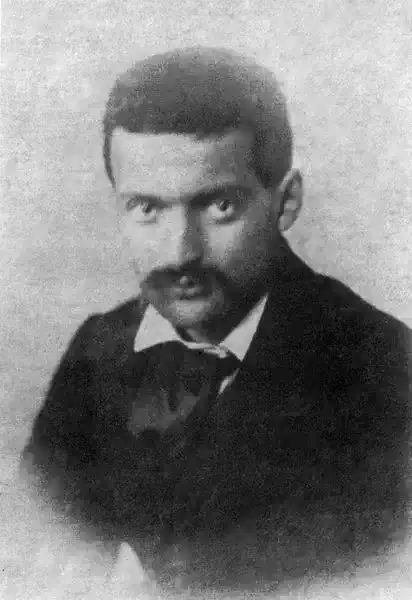
[ Remark to Ambroise Vollard :] Monet is only an eye, but my God what an eye!
I don’t mind if you don’t like my manners. They’re pretty bad. I grieve over them on the long winter evenings.
The day was not far off when one solitary, original carrot [depicted in a painting] might be pregnant with revolution!
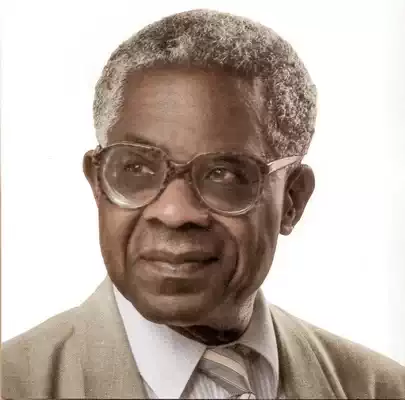
I see several Africas and one vertical in the tumultuous event with its screens and nodules, a little separated, but within the century, like a heart in reserve.
My mouth shall be the mouth of misfortunes which have no mouth, my voice the freedoms of those freedoms which break down in the prison-cell of despair.
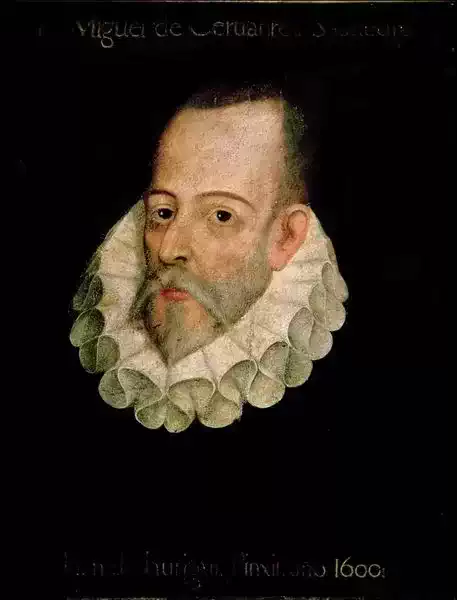
[ Of impending death :] One foot already in the stirrup.
Digo, paciencia y barajar .
[ Don Quixote’s epitaph :] To die in wisdom, having lived in folly.
Dos linajes solos hay en el mundo . . . que son el tener y el no tener .
He’s a muddle-headed fool, with frequent lucid intervals.
We cannot all be friars, and many are the ways by which God leads his own to eternal life.
El Caballero de la Triste Figura .
To tilt against windmills.
In a village of La Mancha, the name of which I won’t try to recall, there lived, not long ago, one of those gentlemen, who usually keep a lance upon a rack, an old shield, a lean horse, and a greyhound for coursing.
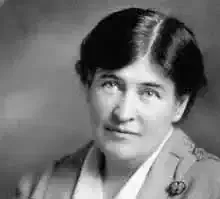
Whatever we had missed, we possessed together the precious, the incommunicable past.
Give the people a new word and they think they have a new fact.
I tell you there is such a thing as creative hate!
Her secret? It is every artist’s secret . . . passion. That is all. It is an open secret, and perfectly safe. Like heroism, it is inimitable in cheap materials.

[Marriage] is the tomb of love.

As crude a weapon as the cave man’s club, the chemical barrage has been hurled against the fabric of life.
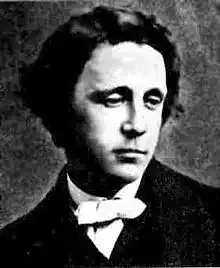
Life, what is it but a dream?
I am fond of children (except boys).
I don’t like belonging to another person’s dream.
“When I use a word,” Humpty Dumpty said, in rather a scornful tone, “it means just what I choose it to mean—neither more nor less.” “The question is,” said Alice, “whether you can make words mean so many different things.” “The question is,” said Humpty Dumpty, “which is to be master—that’s all.”
“O oysters,” said the Carpenter.
But four young oysters hurried up,
The sun was shining on the sea,
“The horror of that moment,” the King went on, “I shall never, never forget!” “You will, though,” the Queen said, “if you don’t make a memorandum of it.”
Who can tell whether the parallelogram, which in our ignorance we have defined and drawn, and the whole of whose properties we profess to know, may not be all the while panting for exterior angles, sympathetic with the interior, or sullenly repining at the fact that it cannot be inscribed in a circle?
You’re nothing but a pack of cards!
“Where shall I begin, please your Majesty?” he asked. “Begin at the beginning,” the King said, very gravely, “and go on till you come to the end: then stop.”
I could tell you my adventures—beginning from this morning . . . but it’s no use going back to yesterday, because I was a different person then.
[ The Queen of Hearts speaking :] Off with her head!
“I only took the regular course.” “What was that?” inquired Alice. “Reeling and Writhing, of course, to begin with,” the Mock Turtle replied; “and then the different branches of Arithmetic—Ambition, Distraction, Uglification, and Derision.”
“Take some more tea,” the March Hare said to Alice, very earnestly. “I’ve had nothing yet,” Alice replied in an offended tone, “so I can’t take more.” “You mean you can’t take less ,” said the Hatter: “it’s very easy to take more than nothing.”
Why is a raven like a writing-desk?
Speak roughly to your little boy,
[ Of the Cheshire Cat :] “Well! I’ve often seen a cat without a grin,” thought Alice; “but a grin without a cat! It’s the most curious thing I ever saw in all my life!”
One side will make you grow taller, and the other side will make you grow shorter.
Oh my fur and whiskers!
How cheerfully he seems to grin,
You’re enough to try the patience of an oyster!
[ The White Rabbit speaking :] Oh dear! Oh dear! I shall be too late!
Down the Rabbit-Hole.
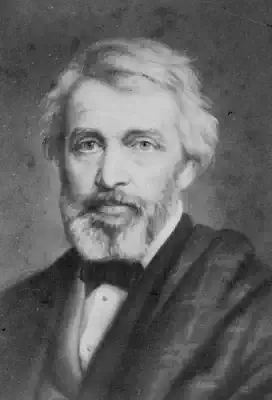
[Economics is] not a “gay science,” I should say, like some we have heard of; no, a dreary, desolate, and, indeed, quite abject and distressing one: what we might call, by way of eminence, the dismal science .
[ Commenting on Margaret Fuller’s remark, “I accept the universe,” ca. 1843 :] Gad! she’d better.