Poem of the day

Do Not Go Gentle Into That Good Night

Dylan Thomas
Do not go gentle into that good night, 
Old age should burn and rave at close of day; 
Rage, rage against the dying of the light. 

Though wise men at their end know dark is right, 
Because their words had forked no lightning they 
Do not go gentle into that good night. 

Good men, the last wave by, crying how bright 
Their frail deeds might have danced in a green bay, 
Rage, rage against the dying of the light. 

Wild men who caught and sang the sun in flight, 
And learn, too late, they grieved it on its way, 
Do not go gentle into that good night. 

Grave men, near death, who see with blinding sight 
Blind eyes could blaze like meteors and be gay, 
Rage, rage against the dying of the light. 

And you, my father, there on that sad height, 
Curse, bless, me now with your fierce tears, I pray. 
Do not go gentle into that good night. 
Rage, rage against the dying of the light.
Read full poem

Born on this day

5
Nilson José Ribeiro

Nilson José Ribeiro was a Brazilian poet whose work is distinguished by lyrical sensitivity and the exploration of themes such as nature, love, and the human condition. His poetry, often marked by accessible language and a melodious rhythm, invites reflection on the beauty of the world and the depth of emotions. Ribeiro contributed to the Brazilian literary scene with an authentic voice and a keen eye for the details of life.

Louis Aragon

Louis Aragon was a prominent French poet, novelist, and journalist. He is considered one of the founders of Surrealism and an important figure in 20th-century French literature. His work covers a wide range of themes, including love, politics, and the human condition.

We know that the nature of genius is to provide id
Gerardo Diego

Gerardo Diego was a Spanish poet, a prominent member of the Generation of '27, known for his versatility and mastery of various poetic forms. His work ranges from traditional poetry to avant-garde movements, demonstrating a remarkable capacity for formal and thematic experimentation. Throughout his extensive career, he explored the musicality of language, surprising imagery, and reflections on art, faith, and life. Diego is remembered for his creative vitality and his contribution to the enrichment of 20th-century Spanish poetry, serving as a bridge between the literary past and future.

Died on this day

4
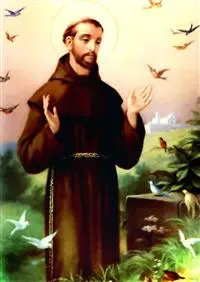
S. Francisco de Assis

Francis of Assisi was an Italian Catholic friar and preacher, founder of the Franciscan Order. He is known worldwide for his deep devotion to God, his love for creation, and his life of poverty and humility. His words and example have inspired millions of people over the centuries. His poetic work, though not vast, is marked by simple and direct language, expressing an ardent love for nature and all creatures, seen as reflections of divine goodness. The "Canticle of the Creatures" is his most famous legacy.

Paulo Cid

Paulo Cid is a contemporary poet whose work explores the intrinsic relationship between human existence and the universe. His poetic compositions are marked by a profound reflection on time, memory, and the ephemerality of life, often intertwined with nature and the urban landscape. His writing is characterized by a careful and evocative language, inviting the reader to introspection about the human condition and the search for meaning.

José María de Heredia

José María de Heredia was a renowned Cuban poet, known as the 'Prince of Verses' and one of the foremost exponents of Parnassianism in the Spanish language. His work is characterized by formal perfection, the plasticity of his imagery, and the evocation of historical, exotic, and mythological themes. In addition to his poetic work, Heredia had a distinguished political and diplomatic career, which led him to live in different countries, influencing his worldview and his literary output.