Bertolt Brecht
Author of the day

Bertolt Brecht

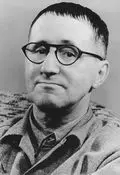
Bertolt Brecht was a highly influential German playwright, poet, and theatre director. He is renowned for his pioneering work in epic theatre, which aimed to provoke critical thought rather than emotional immersion. His writings often carried strong political and social messages, critiquing capitalism, war, and injustice. Brecht's innovative techniques, such as the alienation effect (Verfremdungseffekt), revolutionized modern theatre.

Poem of the day

Grass

Carl Sandburg
Pile the bodies high at Austerlitz and Waterloo.
Shovel them under and let me work
-I am the grass; I cover all.

And pile them high at Gettysburg
And pile them high at Ypres and Verdun.
Shovel them under and let me work.
Two years, ten years, and the passengers ask the conductor:

What place is this?
Where are we now?

I am the grass.
Let me work.
Read full poem

Born on this day

7
Bertolt Brecht

Bertolt Brecht was a highly influential German playwright, poet, and theatre director. He is renowned for his pioneering work in epic theatre, which aimed to provoke critical thought rather than emotional immersion. His writings often carried strong political and social messages, critiquing capitalism, war, and injustice. Brecht's innovative techniques, such as the alienation effect (Verfremdungseffekt), revolutionized modern theatre.

A Worker Reads History
Silvia Brito

Silvia Brito is a contemporary poet whose work stands out for its lyrical depth and her ability to explore the complexities of the human experience. Her writing navigates between the intimate and the universal, addressing themes such as memory, identity, the passage of time, and interpersonal relationships with a careful and imaginative language. Silvia Brito's poetry invites introspection, weaving a web of sensations and reflections that resonate with the reader's sensibility. Her contribution to contemporary poetry is manifested in the originality of her perspective and in how she manages to imbue the everyday with an aesthetic and philosophical dimension, establishing herself as a singular voice in the literary landscape.

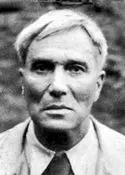
Boris Pasternak

Boris Pasternak was a highly acclaimed Russian poet, novelist, and translator, best known for his epic novel "Doctor Zhivago." His work often explores profound themes of love, nature, and the human condition, set against the backdrop of tumultuous historical events in Russia. Pasternak's lyrical and evocative poetry earned him international recognition, culminating in the Nobel Prize in Literature, though its acceptance led to significant personal and political turmoil. His literary contributions are marked by a deep engagement with Russian culture and a unique blend of modernist experimentation and traditional lyrical sensibility.

‘February. Take ink and weep,’
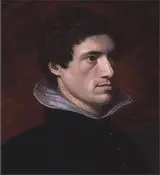
Charles Lamb

Charles Lamb was an English essayist, biographer, and writer. Born in London, he is best known for his work "Essays of Elia," which offers an intimate look into his life, observations, and feelings.

Maria Filomena Cabral

Maria Filomena Cabral is a Portuguese writer and ethnohistorian, known for her vast work that bridges literature with anthropological and historical research. With a keen eye for cultures, traditions, and the human condition, her writing reveals a profound sensitivity and intellectual rigor, exploring narratives that bring us closer to different social and historical realities.

Luis Álvarez Piñer

Luis Álvarez Piñer was a prominent Spanish philologist, university professor, and poet. His academic career and his passion for literature, especially poetry, marked his trajectory. He was a scholar of lyric poetry and dedicated himself to teaching, sharing his knowledge and love for the word with several generations of students.

Fleur Adcock

Fleur Adcock is a New Zealand-British poet, known for her clear, intelligent, and often ironic poetry, which explores themes of identity, gender, family, and culture. Her work frequently blends the personal with the observational, presenting an insightful look at human relationships and the experiences of modern life.

Died on this day

5
Álvaro Barreto

Álvaro Barreto was a Portuguese intellectual, poet, and playwright, a multifaceted figure in the cultural life of the 20th century. His poetic work, although less prolific than his dramatic work, reveals a refined sensibility for language and reflection on existence. As a playwright, he stood out for his ability to create incisive dialogues and explore social and human issues with depth.

Manuela de Azevedo

Manuela de Azevedo was a poet whose work stands out for its lyrical sensibility and exploration of themes such as nature, love, and the passage of time. Her poetry is characterized by careful language and intrinsic musicality, inviting contemplation and introspection. Her contributions to Portuguese literature enriched the poetic landscape with a distinctive and emotive voice, leaving a legacy of verses that resonate with their beauty and depth.

Desiderio Macías Silva

Desiderio Macías Silva is a writer and poet whose work is characterized by its strong connection to cultural roots and the exploration of social and human themes. His writing reflects a deep sensitivity and a commitment to expressing identity and collective experience. With a career dedicated to literature, Macías Silva has contributed to the appreciation of culture and language, offering narratives and poems that touch the reader through their authenticity and their ability to portray life in its various manifestations.

Macedonio Fernández

Macedonio Fernández was an Argentine writer, thinker, and poet, a central figure of the literary avant-garde of the early 20th century in Latin America. Known for his philosophical thought and literary experimentation, Fernández was a proponent of aesthetic and conceptual ruptures, significantly influencing authors like Jorge Luis Borges and other members of the "Martín Fierro" group. His work, often fragmented, playful, and marked by irony, challenges traditional narrative and poetic conventions. Despite his limited output published during his lifetime, his intellectual legacy and influence on the development of modern literature are invaluable. Fernández is remembered as a creator of literary "wit games" and a precursor to metafiction and textual deconstruction.