escritas.org since 1996
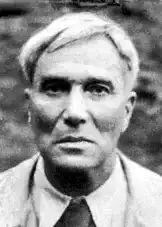
Boris Pasternak

Boris Pasternak

1890–1960 · lived 70 years RU RU

Boris Pasternak was a highly acclaimed Russian poet, novelist, and translator, best known for his epic novel "Doctor Zhivago." His work often explores profound themes of love, nature, and the human condition, set against the backdrop of tumultuous historical events in Russia. Pasternak's lyrical and evocative poetry earned him international recognition, culminating in the Nobel Prize in Literature, though its acceptance led to significant personal and political turmoil. His literary contributions are marked by a deep engagement with Russian culture and a unique blend of modernist experimentation and traditional lyrical sensibility.

n. 1890-02-10, Moscovo · m. 1960-05-30, Peredelkino

33,147 Views

The Weeping Garden

It’s terrible! – all drip and listening.
Whether, as ever, it’s loneliness,
splashing a branch, like lace, on the window,
or whether perhaps there’s a witness.


Choked there beneath its swollen
burden – earth’s nostrils, and audibly,
like August, far off in the distance,
midnight, ripening slow with the fields.


No sound. No one’s in hiding.
Confirming its pure desolation,
it returns to its game – slipping
from roof, to gutter, slides on.


I’ll moisten my lips, listening:
whether, as ever, I’m loneliness,
and ready maybe for weeping,
or whether perhaps there’s a witness.


But, silence. No leaves trembling.
Nothing to see: sobs, and cries
being swallowed, slippers splashing,
between them, tears and sighs.
Read full poem
Bio

Identification and basic context

Full name: Boris Leonidovich Pasternak. Pseudonyms or heteronyms: Not widely known. Date and place of birth: April 10, 1890, Moscow, Russian Empire. Date and place of death: February 2, 1960, Peredelkino, Moscow Oblast, Russian SFSR, Soviet Union. Family background, social class, and cultural context of origin: Born into an intellectual and artistic family; his father, Leonid Pasternak, was a renowned painter, and his mother, Rosa Kaufman, a concert pianist. The family was of Jewish heritage but later converted to Orthodox Christianity. His upbringing was steeped in art, literature, and intellectual discourse, with frequent visits from prominent cultural figures. Nationality and language(s) of writing: Russian. Historical context in which they lived: Lived through the Russian Revolution, World War I, the Stalinist era, and World War II. His life and work were profoundly shaped by these tumultuous periods, particularly the political and social changes in the Soviet Union.

Childhood and education

Family background and social environment: Grew up in a culturally rich environment in Moscow, influenced by his artist father and pianist mother, surrounded by intellectuals and artists. Formal education and self-education: Initially pursued music, then studied philosophy at Moscow University, followed by philosophy at the University of Marburg in Germany. He also studied law. Early influences (readings, culture, religion, politics): Early influences included Symbolist poetry, German philosophy (especially Kant and Hegel), and Russian classical literature. His father's artistic milieu and his mother's musical background were also significant. Literary, philosophical, or artistic movements absorbed: Initially drawn to Futurism, but later developed his own distinct style. Influenced by Symbolism and by German Expressionism. Significant events in youth: His fascination with music, his philosophical studies in Germany, and his initial alignment with avant-garde movements.

Literary trajectory

Beginning of writing (when and how it started): Began writing poetry in his early twenties, initially influenced by Futurism. His first collection, "A Childish Year," was published in 1917. Development over time (phases, changes in style): His early work was experimental, but he gradually moved towards a more lyrical and personal style. The period of the 1940s and 1950s saw the development of his most mature and celebrated works, including "Doctor Zhivago" and the "Poems of Yuri Zhivago." Chronological evolution of the work: Moved from youthful experimentation to a deeply personal, philosophical, and historically engaged lyrical voice. His prose writing, particularly "Doctor Zhivago," became internationally famous. Contributions to magazines, newspapers, and anthologies: Published extensively in literary journals. Activity as a critic, translator, or editor: Was a prolific and highly respected translator, translating works by Shakespeare, Goethe, Rilke, and others into Russian. His translations were considered literary achievements in themselves.

Works, style, and literary characteristics

Major works with dates and context of production: "A Childish Year" (1917), "My Sister, Life" (1922), "Themes and Variations" (1923), "The Second Birth" (1932), "On Early Trains" (1943), "Doctor Zhivago" (1957), "When the Storm Clears: New Poems" (1959). "Doctor Zhivago" was written during the 1940s and 1950s and published abroad due to censorship. Dominant themes — love, death, time, nature, identity, homeland, spirituality, etc.: Profound exploration of love (romantic and spiritual), the ephemeral nature of time, the beauty and resilience of nature, the search for individual identity amidst historical upheaval, the complex relationship with the homeland, and a deep spiritual quest. Form and structure — use of the sonnet, free verse, fixed forms, metrical experimentation: Masterful use of free verse, but also adept at traditional forms and metrical experimentation, often creating a unique musicality. Poetic devices (metaphor, rhythm, musicality): Renowned for his rich imagery, complex metaphors, striking juxtapositions, and a highly musical, almost song-like quality in his verse. Tone and poetic voice — lyrical, satirical, elegiac, epic, ironic, confessional: Primarily lyrical, confessional, and elegiac, with moments of epic scope and profound philosophical reflection. Poetic voice (personal, universal, fragmented, etc.): Often personal and confessional, yet reaching for universal truths and experiences. Language and style — vocabulary, imagery density, preferred rhetorical devices: Rich, evocative vocabulary, dense imagery, often drawing from nature and everyday life to convey profound meaning. Preferred rhetorical devices include metaphor, simile, personification, and striking contrasts. Formal or thematic innovations introduced into literature: Blended modernist techniques with a deeply humanistic and lyrical sensibility, creating a unique voice that resonated widely. His prose in "Doctor Zhivago" also showcased a poetic approach to narrative. Relationship with tradition and modernity: Sought to reconcile the traditions of Russian poetry with the challenges and innovations of modernism. Associated literary movements (e.g., symbolism, modernism): Associated with Russian Futurism early on, but developed a style that transcended specific movements, often seen as a bridge between Symbolism and later modernist poetry. Lesser-known or unpublished works: Numerous poems, early drafts, and extensive correspondence.

Cultural and historical context

Relationship with historical events (wars, revolutions, regimes): Directly experienced and profoundly depicted the Russian Revolution, the Civil War, and the Stalinist era. His novel "Doctor Zhivago" is a critical portrayal of these events and their impact on individuals. Relationship with other writers or literary circles: Associated with poets like Mayakovsky and Blok in his early career, but also maintained complex relationships with official literary circles, often facing criticism and ostracization. Generation or movement to which they belong (e.g., Romanticism, Modernism, Surrealism): Often considered part of the Silver Age of Russian poetry, straddling Symbolism and Futurism, and a key figure in Russian modernism. Political or philosophical stance: Initially drawn to revolutionary ideals but became increasingly disillusioned with the Soviet regime and its suppression of artistic freedom. His work reflects a deep humanism and a belief in individual conscience over state ideology. Influence of society and culture on the work: Russian society and culture, particularly its turbulent history and rich artistic heritage, were central to his work. Dialogues and tensions with contemporaries: Engaged in debates with other writers, particularly regarding artistic responsibility during times of political change. Critical reception during life vs. posthumous recognition: Received significant critical acclaim during his life, but also faced persecution from the Soviet authorities. Posthumously, his international fame, especially for "Doctor Zhivago," grew immensely.

Personal life

Significant emotional and family relationships and how they shaped the work: His complex relationships, particularly with women like Zinaida Nikolaevna Rikhter and Marina Tsvetaeva, influenced his intensely personal and lyrical poetry. His marriage to Zinaida was a central aspect of his life. Friendships and literary rivalries: Maintained friendships with many prominent cultural figures, but also experienced tensions and rivalries within the literary establishment. Personal experiences and crises, illnesses, or conflicts: Experienced periods of intense creative output interspersed with personal struggles, illness, and the constant pressure of living under a totalitarian regime. Parallel professions (if they did not live solely from poetry): Worked as a translator and, for a period, in various administrative roles within the literary world. Religious, spiritual, or philosophical beliefs: Explored spiritual and philosophical questions deeply, moving from a more secular outlook to a profound engagement with Christian themes, particularly in "Doctor Zhivago." Political positions and civic engagement: Initially sympathetic to the revolution but became a vocal critic of Soviet repression and censorship, leading to his ostracization and exile from the official literary world.

Recognition and reception

Place in national and international literature: Considered one of the greatest Russian poets of the 20th century and an internationally renowned novelist. Awards, distinctions, and institutional recognition: Awarded the Nobel Prize in Literature in 1958 for "Doctor Zhivago." Critical reception at the time and over time: Received mixed reception within the Soviet Union, with official condemnation alongside underground admiration. Internationally, his work, especially "Doctor Zhivago," was widely celebrated. Popularity vs. academic recognition: Highly popular internationally, particularly after the film adaptation of "Doctor Zhivago," and also a subject of extensive academic study.

Influences and legacy

Authors who influenced them: Alexander Pushkin, Mikhail Lermontov, Fyodor Tyutchev, Symbolist poets (e.g., Andrei Bely), Rainer Maria Rilke, Goethe, Shakespeare. Poets and movements they influenced: Greatly influenced subsequent generations of Russian poets, as well as poets internationally, particularly those exploring lyrical depth, complex imagery, and the intersection of personal experience with historical events. Impact on national and world literature and on later generations of poets: His work is a cornerstone of 20th-century Russian literature and has had a lasting impact on world literature through its profound humanism and artistic integrity. Inclusion in the literary canon: Universally included in the canon of Russian and world literature. Translations and international dissemination: Widely translated into numerous languages. Adaptations (music, theater, film): "Doctor Zhivago" has been adapted into a highly successful film (1965) and a television series. Academic studies dedicated to the work: Extensive academic scholarship exists on his poetry, prose, and translations.

Interpretation and critical analysis

Possible readings of the work: "Doctor Zhivago" has been interpreted as a critique of the Soviet system, a celebration of individual spirit and artistic freedom, and a profound meditation on fate and history. His poetry is analyzed for its complex interplay of nature, love, and spirituality. Philosophical and existential themes: Explores themes of free will versus determinism, the search for meaning in a chaotic world, the nature of suffering, and the enduring power of love and beauty. Controversies or critical debates: The most significant controversy surrounded the Nobel Prize and his subsequent denunciation by Soviet authorities, leading to intense debate about artistic freedom and political engagement.

Curiosities and lesser-known aspects

Lesser-known aspects of personality: Despite his profound lyrical gifts, he could be intensely private and sometimes stubborn. Contradictions between life and work: The contrast between the deeply spiritual and humanistic themes in his work and the often harsh, politically charged reality of his life in the Soviet Union. Significant or anecdotal episodes that illuminate the author’s profile: His refusal to participate in the denunciation of Akhmatova, his later difficult relationship with the state, and his eventual forced acceptance of exile in spirit, if not entirely in body. Objects, places, or rituals associated with poetic creation: The dacha at Peredelkino became a symbolic space for his later work. Writing habits: Known for intense periods of work, often revising extensively. Curious episodes: His son, Alexander Pasternak, was a notable artist and art critic. Manuscripts, diaries, or correspondence: His extensive correspondence provides deep insights into his life and thoughts.

Death and memory

Circumstances of death: Died of lung cancer. Posthumous publications: Numerous posthumous collections of his poetry and prose, including further works related to "Doctor Zhivago" and collections of his letters.

Poems

62

The Weeping Garden

It’s terrible! – all drip and listening.
Whether, as ever, it’s loneliness,
splashing a branch, like lace, on the window,
or whether perhaps there’s a witness.


Choked there beneath its swollen
burden – earth’s nostrils, and audibly,
like August, far off in the distance,
midnight, ripening slow with the fields.


No sound. No one’s in hiding.
Confirming its pure desolation,
it returns to its game – slipping
from roof, to gutter, slides on.


I’ll moisten my lips, listening:
whether, as ever, I’m loneliness,
and ready maybe for weeping,
or whether perhaps there’s a witness.


But, silence. No leaves trembling.
Nothing to see: sobs, and cries
being swallowed, slippers splashing,
between them, tears and sighs.
Read more →
759

To Anna Akhmatova

I think I can call on words
that will last: you are there.
But if I can’t, no matter –
I’ll persist, I won’t care.


I hear the muttering of wet roofs,
pale eclogues from stones and kerb.
From the opening lines, that city,
is alive in each sound, each word.


You can’t leave town though it’s spring,
and your customers won’t wait.
Dawn glows, by lamplight sewing
with unbowed back, eyes wet.


Breathing the calm of far-off Ladoga,
stumbling towards the water.
There’s no relief from such trips.
The shallows smell mustier, darker.


The wind dances, it’s a walnut shell,
a glitter, the warm wind blows
branches and stars, lights, and views,
as the seamstress watches the flow.


Eyesight can be sharp, differently,
form be precise in varying ways,
but a solvent of acid power’s
out there under the white night’s blaze.


That’s how I see your face and look.
Not that pillar of salt, in mind,
in which five years ago you fixed
our fears of looking behind.

From your first verses where grains
of clear speech hardened, to the last,
your eye, the spark that shakes the wire,
makes all things quiver with the past.
Read more →
704

In Memory of Marina Tsvetaeva

Dismal day, with the weather inclement.
Inconsolably rivulets run
Down the porch in front of the doorway;
Through my wide-open windows they come.


But behind the old fence on the roadside,
See, the public gardens are flooded.
Like wild beasts in a den, the rainclouds
Sprawl about in shaggy disorder.


In such weather, I dream of a volume
On the beauties of Earth in our age,
And I draw an imp of the forest
Just for you on the title-page.


Oh, Marina, I'd find it no burden,
And the time has been long overdue:
Your sad clay should be brought from Yelabuga
By a requiem written for you.


All the triumph of your homecoming
I considered last year in a place
Near a snow-covered bend in the river
Where boats winter, locked in the ice.


What can I do to be of service?
Convey somehow your own request,
For in the silence of your going
There's a reproach left unexpressed.


A loss is always enigmatic.
I hunt for clues to no avail,
And rack my brains in fruitless torment:
Death has no lineaments at all.


Words left half-spoken, self-deception,
Promises, shadows-all are vain,
And only faith in resurrection
Can give the semblance of a sign.


Step out into the open country:
Winter's a sumptuous funeral wake.
Add currants to the dusk, then wine,
And there you have your funeral cake.


The apple-tree stands in a snowdrift
Outside. All this year long, to me,
The snow-clad city's been a massive
Monument to your memory.


With your face turned to meet your Maker.
You yearn for Him from here on Earth,


As in the days when those upon it
Were yet to appreciate your worth
Read more →
678

White Night

I keep thinking of times that are long past,
Of a house in the Petersburg Quarter.
You had come from the steppeland Kursk Province,
Of a none-too-rich mother the daughter.


You were nice, you had many admirers.
On that distant white night we were sitting
On your window-sill, looking from high on
On the phantom-like scene of the city.


The street-lamps, like gauze butterflies fluttering,
Had been touched by the chill of the morning.
My soft words, as I opened my heart to you,
Matched the slumbering vistas before us.


We were plighted with timid fidelity
To the very same nebulous mystery
As the cityscape spreading unendingly
Far beyond the Neva, through the distances.


In that far-off impregnable wilderness,
Wrapped in springtime twilight ethereal,
Woodland glades and dense thickets were quivering
With mad nightingales' thunderous paeans.


Crazy resonant warbling ran riot,
And the voice of this plain-looking songster
Sowed derangement, ecstatic delight
In the depth of the mesmerised copsewood.


To those parts Night, a barefoot vagabond,
Stole its way along ditches and fences.
From our window-sill, after it tagging,
Was the trail of our cooed confidences.


To the words of this colloquy echoing
In the orchards beyond the tall palings
Spreading branches of apple and cherry trees
Swathed themselves in their pearly-white raiment.


And the trees, like so many pale phantoms,
Waved their farewell, along the road thronging,
To White Night, that all-seeing enchanter,
Who was now to North Regions withdrawing.
Read more →
648

August

This was its promise, held to faithfully:
The early morning sun came in this way
Until the angle of its saffron beam
Between the curtains and the sofa lay,


And with its ochre heat it spread across
The village houses, and the nearby wood,
Upon my bed and on my dampened pillow
And to the corner where the bookcase stood.


Then I recalled the reason why my pillow
Had been so dampened by those tears that fell
I'd
dreamt I saw you coming one by one
Across the wood to wish me your farewell.


You came in ones and twos, a straggling crowd;
Then suddenly someone mentioned a word:
It was the sixth of August, by Old Style,
And the Transfiguration of Our Lord.


For from Mount Tabor usually this day
There comes a light without a flame to shine,
And autumn draws all eyes upon itself
As clear and unmistaken as a sign.


But you came forward through the tiny, stripped,
The pauperly and trembling alder grove,
Into the graveyard's coppice, russet-red,
Which, like stamped gingerbread, lay there and glowed.


And with the silence of those high treetops
Was neighbour only the imposing sky
And in the echoed crowing of the cocks
The distances and distances rang by:


There in the churchyard underneath the trees,
Like some surveyor from the government
Death gazed on my pale face to estimate
How large a grave would suit my measurement.


All those who stood there could distinctly hear
A quiet voice emerge from where I lay:
The voice was mine, my past; prophetic words
That sounded now, unsullied by decay:


'Farewell, wonder of azure and of gold
Surrounding the Transfiguration's power:
Assuage now with a woman's last caress
The bitterness of my predestined hour!


'Farewell timeless expanse of passing years!
Farewell, woman who flung your challenge steeled


Against the abyss of humiliations:
For it is I who am your battlefield!


'Farewell, you span of open wings outspread,
The voluntary obstinacy of flight,
O figure of the world revealed in speech,
Creative genius, wonder-working might!'
Read more →
645

Fairy Tale

Once, in times forgotten,
In a fairy place,
Through the steppe, a rider
Made his way apace.


While he sped to battle,
Nearing from the dim
Distance, a dark forest
Rose ahead of him.


Something kept repeating,
Seemed his heart to graze:
Tighten up the saddle,
Fear the watering-place.


But he did not listen.
Heeding but his will,
At full speed he bounded
Up the wooded hill;


Rode into a valley,
Turning from the mound,
Galloped through a meadow,
Skirted higher ground;


Reached a gloomy hollow,
Found a trail to trace
Down the woodland pathway
To the watering-place.


Deaf to voice of warning,
And without remorse,
Down the slope, the rider
Led his thirsty horse.


Where the stream grew shallow,
Winding through the glen,
Eerie flames lit up the
Entrance to a den.


Through thick clouds of crimson
Smoke above the spring,
An uncanny calling
Made the forest ring.


And the rider started,
And with peering eye
Urged his horse in answer
To the haunting cry.


Then he saw the dragon,
And he gripped his lance;
And his horse stood breathless
Fearing to advance.


Thrice around a maiden
Was the serpent wound;
Fire-breathing nostrils
Cast a glare around.


And the dragon's body
Moved his scaly neck,
At her shoulder snaking
Whiplike forth and back.


By that country's custom
Was a young and fair
Captive brought as ransom
To the dragon's lair.


This then was the tribute
That the people owed
To the worm-protection
For a poor abode.


Now the dragon hugged his
Victim in alarm,
And the coils grew tighter
Round her throat and arm.


Skyward looked the horseman
With imploring glance,
And for the impending
Fight he couched his lance.


Tightly closing eyelids.
Heights and cloudy spheres.
Rivers. Waters. Boulders.
Centuries and years.


Helmetless, the wounded
Lies, his life at stake.
With his hooves the charger
Tramples down the snake.


On the sand, together-
Dragon, steed, and lance;
In a swoon the rider,


The maiden-in a trance.


Blue the sky; soft breezes
Tender noon caress.
Who is she? A lady?
Peasant girl? Princess?


Now in joyous wonder
Cannot cease to weep;
Now again abandoned
To unending sleep.


Now, his strength returning,
Opens up his eyes;
Now anew the wounded
Limp and listless lies.


But their hearts are beating.
Waves surge up, die down;
Carry them, and waken,
And in slumber drown.


Tightly closing eyelids.
Heights and cloudy spheres.
Rivers. Waters. Boulders.
Centuries and years.
Read more →
593

After the Interval

About three months ago, when first
Upon our open, unprotected
And freezing garden snowstorms burst
In sudden fury, I reflected


That I would shut myself away
And in seclusion write a section
Of winter poems, day by day,
To supplement my spring collection.


But nonsense piled up mountain-high,
Like snow-drifts hindering and stifling
And half the winter had gone by,
Against all hopes, in petty trifling.


I understood, alas, too late
Why winter-while the snow was falling,
Piercing the darkness with its flakes-
From outside at my house was calling;


And while with numb white-frozen lips
It whispered, urging me to hurry,
I sharpened pencils, played with clips,
Made feeble jokes and did not worry.


While at my desk I dawdled on
By lamp-light on an early morning,
The winter had appeared and gone-
A wasted and unheeded warning.
Read more →
623

Lessons of English

When Desdemona sang a ditty-
In her last hours among the living-
It wasn't love that she lamented,
And not her star-she mourned a willow.
When Desdemona started singing,
With tears near choking off her voice,
Her evil demon for her evil day
Stored up of weeping rills a choice.


And when Ophelia sang a ballad-
In her last hours among the living-
All dryness of her soul was carried
Aloft by gusts of wind, like cinders.


The day Ophelia started singing,
By bitterness of daydreams jaded,
What trophies did she clutch, when sinking?
A bunch of buttercups and daisies.


Their shoulders stripped of passion's tatters,
They took, their hearts a-quake with fear,
The Universe's chilly baptism-
To stun their loving forms with spheres.
Read more →
642

On Early Trains

This winter I was outside Moscow,
But when the time for work came round,
Through the blizzard, biting frost and snow,
I made the journey into town.


At the hour I stepped outside the door
Not a soul could be seen on the street,
And through the forest darkness drifted forth
The crunching echo of my tramping feet.


At the crossing I was greeted
By the willows of the vacant plot.
The constellations towered above the world
In the dark chill of January's pit.


And usually, there behind the yards,
The number forty or the early mail
Would overhaul me, pulling hard,
But the six forty-five was my own train.


Suddenly some invisible tentacles
Would draw into a circle lines of light,
As a massive searchlight hurtled past
On to the viaduct out of the night.


Once in the carriage's tuffy heat
I would allow myself to sink
Into the state of innate weakness
I imbibed with my mother's milk.


Through all the struggles of the past,
Through all the years of war and want,
I gazed on Russia'a unique face
In silent awe and wonderment.


Passing beyond this adoration,
I worshipped as I looked around
At countrywomen, students, workers
Living on the edge of town.


I could not see a single trace
Of servitude imposed by poverty.
Each new discomfort and each change
Was borne with lordly dignity.


Bunched close together in a group,
Boys and girls sat reading there,
Struck varied poses as they read,
Drinking in the words like vital air.


Moscow greeted us in darkness
Already lined with silver light,


As we emerged from underground,
Out of the ambiguity of night.

Our future pressed against the rails,
Flooding my senses as they went,
With floral soap's lingering trace
And honey-cakes' enticing scent.
Read more →
611

Change

I used to glorify the poor,
Not simply lofty views expressing:
Their lives alone, I felt, were true,
Devoid of pomp and window-dressing.


No stranger to the manor house,
Its finery and lordly tenor,
I was a friend of down-and-outs,
And shunned the idly sponging manner.


For choosing friendship in the ranks
Of working people, though no rebel,
I had the honour to be stamped
As also one among the rabble.


The state of basements, unadorned,
Of attics with no frills or curtains
Was tangible without pretence
And full of substance, weighty, certain.


And I went bad when rot defaced
Our time, and life became infested,
When grief was censured as disgrace
And all played optimists and yes-men.


My faith in those who seemed my friends
Was broken and our ties were sundered.
I, too, lost Man, the Human, since
He had been lost by all and sundry.
Read more →
621

Quotes

17

Videos

50

Comments (0)

Share
Log in to post a comment.

No comments yet. Be the first to comment.