
escritas.org since 1996
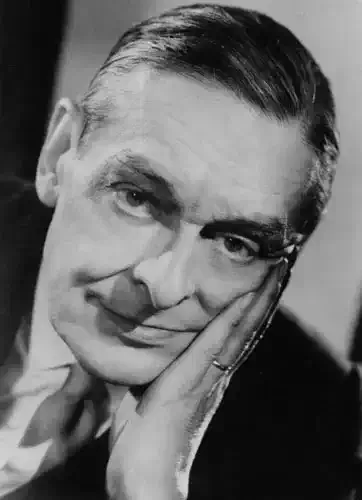
T. S. Eliot

T. S. Eliot

1888–1965 · lived 76 years GB GB

Thomas Stearns Eliot was an Anglo-American poet, playwright, literary critic, and editor, widely regarded as one of the most important English-language poets of the 20th century. His work is marked by a profound exploration of the human condition, spirituality, and the disintegration of modern society. Eliot is known for his erudite language, imagistic complexity, and his approach to themes such as time, memory, and faith.

n. 1888-09-26, St. Louis · m. 1965-01-04, Kensington

13,963 Views

The Love Song of J Alfred Prufrock

Sio credesse che mia risposta fosse

A persona che mai tornasse al mondo,

Questa fiamma staria senza piu scosse.

Ma perciocche giammai di questo fondo

Non torno vivo alcun, siodo il vero,

Senza tema dinfamia ti rispondo.

LET us go then, you and I,

When the evening is spread out against the sky

Like a patient etherised upon a table;

Let us go, through certain half-deserted streets,

The muttering retreats

Of restless nights in one-night cheap hotels

And sawdust restaurants with oyster-shells:

Streets that follow like a tedious argument

Of insidious intent

To lead you to an overwhelming question...

Oh, do not ask, "What is it?"

Let us go and make our visit.

In the room the women come and go

Talking of Michelangelo.

The yellow fog that rubs its back upon the window-panes,

The yellow smoke that rubs its muzzle on the window-panes

Licked its tongue into the corners of the evening,

Lingered upon the pools that stand in drains,

Let fall upon its back the soot that falls from chimneys,

Slipped by the terrace, made a sudden leap,

And seeing that it was a soft October night,

Curled once about the house, and fell asleep.

And indeed there will be time

For the yellow smoke that slides along the street,

Rubbing its back upon the window-panes;

There will be time, there will be time

To prepare a face to meet the faces that you meet;

There will be time to murder and create,

And time for all the works and days of hands

That lift and drop a question on your plate;

Time for you and time for me,

And time yet for a hundred indecisions,

And for a hundred visions and revisions,

Before the taking of a toast and tea.

In the room the women come and go

Talking of Michelangelo.

And indeed there will be time

To wonder, "Do I dare?" and, "Do I dare?"

Time to turn back and descend the stair,

With a bald spot in the middle of my hair—

[They will say: "How his hair is growing thin!"]

My morning coat, my collar mounting firmly to the chin,

My necktie rich and modest, but asserted by a simple pin—

[They will say: "But how his arms and legs are thin!"]

Do I dare

Disturb the universe?

In a minute there is time

For decisions and revisions which a minute will reverse.

For I have known them all already, known them all:—

Have known the evenings, mornings, afternoons,

I have measured out my life with coffee spoons;

I know the voices dying with a dying fall

Beneath the music from a farther room.

So how should I presume?

And I have known the eyes already, known them all—

The eyes that fix you in a formulated phrase,

And when I am formulated, sprawling on a pin,

When I am pinned and wriggling on the wall,

Then how should I begin

To spit out all the butt-ends of my days and ways?

And how should I presume?

And I have known the arms already, known them all—

Arms that are braceleted and white and bare

[But in the lamplight, downed with light brown hair!]

It is perfume from a dress

That makes me so digress?

Arms that lie along a table, or wrap about a shawl.

And should I then presume?

And how should I begin?

. . . . .
Shall I say, I have gone at dusk through narrow streets

And watched the smoke that rises from the pipes

Of lonely men in shirt-sleeves, leaning out of windows?...

I should have been a pair of ragged claws

Scuttling across the floors of silent seas.

. . . . .
And the afternoon, the evening, sleeps so peacefully!

Smoothed by long fingers,

Asleep ... tired ... or it malingers,

Stretched on the floor, here beside you and me.

Should I, after tea and cakes and ices,

Have the strength to force the moment to its crisis?

But though I have wept and fasted, wept and prayed,

Though I have seen my head [grown slightly bald] brought in upon a platter,

I am no prophet—and heres no great matter;

I have seen the moment of my greatness flicker,

And I have seen the eternal Footman hold my coat, and snicker,

And in short, I was afraid.

And would it have been worth it, after all,

After the cups, the marmalade, the tea,

Among the porcelain, among some talk of you and me,

Would it have been worth while,

To have bitten off the matter with a smile,

To have squeezed the universe into a ball

To roll it toward some overwhelming question,

To say: "I am Lazarus, come from the dead,

Come back to tell you all, I shall tell you all"—

If one, settling a pillow by her head,

Should say: "That is not what I meant at all.

That is not it, at all."

And would it have been worth it, after all,

Would it have been worth while,

After the sunsets and the dooryards and the sprinkled streets,

After the novels, after the teacups, after the skirts that trail along the floor—

And this, and so much more?—

It is impossible to say just what I mean!

But as if a magic lantern threw the nerves in patterns on a screen:

Would it have been worth while

If one, settling a pillow or throwing off a shawl,

And turning toward the window, should say:

"That is not it at all,

That is not what I meant, at all."

. . . . .
No! I am not Prince Hamlet, nor was meant to be;

Am an attendant lord, one that will do

To swell a progress, start a scene or two,

Advise the prince; no doubt, an easy tool,

Deferential, glad to be of use,

Politic, cautious, and meticulous;

Full of high sentence, but a bit obtuse;

At times, indeed, almost ridiculous—

Almost, at times, the Fool.

I grow old ... I grow old...

I shall wear the bottoms of my trousers rolled.

Shall I part my hair behind? Do I dare to eat a peach?

I shall wear white flannel trousers, and walk upon the beach.

I have heard the mermaids singing, each to each.

I do not think that they will sing to me.

I have seen them riding seaward on the waves

Combing the white hair of the waves blown back

When the wind blows the water white and black.

We have lingered in the chambers of the sea

By sea-girls wreathed with seaweed red and brown

Till human voices wake us, and we drown.

Read full poem
Bio

Identification and Basic Context

Thomas Stearns Eliot, known as T. S. Eliot, was born in St. Louis, Missouri, United States. He adopted British nationality in 1927. He wrote predominantly in English. The historical context in which he lived was marked by profound social, political, and technological transformations, including the First and Second World Wars, the Great Depression, and the development of modernism in arts and literature.

Childhood and Education

Eliot was born into a prominent St. Louis family with roots in Massachusetts and England. His father was a successful businessman and his mother an amateur writer. He attended Smith Academy and Milton Academy before entering Harvard University, where he studied philosophy and classical literature. During his university years, he was exposed to the philosophy of F.H. Bradley and the aesthetic movements of symbolism and Parnassianism. Reading works such as Baudelaire's "Les Fleurs du mal" and Huysmans' "À rebours," as well as Irving Babbitt's theories, had a significant impact on his formation.

Literary Career

Eliot began writing poetry in his youth. The publication of "The Love Song of J. Alfred Prufrock" in 1915 marked his entry into the modernist literary scene. In London, he befriended Ezra Pound, who encouraged him and helped him publish. Eliot worked as an editor for "The Egoist" magazine and later founded and edited the influential magazine "The Criterion." His poetry evolved from a more restrained lyricism to more complex and fragmented forms, exploring themes of disillusionment and spiritual seeking. He also distinguished himself as a literary critic, with seminal essays on Shakespeare, Dante, and the metaphysical poets.

Work, Style, and Literary Characteristics

Eliot's major works include "The Waste Land" (1922), "The Hollow Men" (1925), "Ash-Wednesday" (1930), and "Four Quartets" (1943). The dominant themes in his work are the disintegration of Western civilization, the search for spiritual meaning in a secularized world, time, memory, and the human condition. Eliot frequently used free verse but also demonstrated mastery in more traditional forms, experimenting with complex meters and structures. His poetic devices include bold metaphors, erudite allusions, fragmentation, and a particular musical rhythm. The tone of his poetry varies between existential despair, elegiac melancholy, and spiritual contemplation. The language is dense, imagistic, and often allusive, challenging the reader. Eliot is a central figure of literary Modernism, engaging with classical and religious tradition while reflecting the anxieties of his time.

Cultural and Historical Context

Eliot lived in a period of great instability, with the two world wars profoundly shaping his worldview and work, especially in "The Waste Land." He was a contemporary of Virginia Woolf, James Joyce, and Ezra Pound, with whom he shared a circle of modernist influences and innovations. His conversion to Anglicanism in 1927 and his subsequent defense of Western religious and cultural tradition placed him in critical dialogue with the more secular and experimental currents of his time. His work is a reflection of the crisis of values and the search for order in a rapidly changing society.

Personal Life

Eliot's personal life was marked by challenges. His first marriage to Vivienne Haigh-Wood was turbulent and contributed to his suffering and the exploration of themes of despair in his poetry. He worked in banking before dedicating himself more intensely to literature and editing. His conversion to Anglicanism was a significant event in his life, profoundly influencing his later work. Eliot was known for his reserved and intellectual personality.

Recognition and Reception

Eliot achieved international recognition during his lifetime. He received the Nobel Prize in Literature in 1948 "for his seminal contribution to modern poetry." His work was widely debated and studied, consolidating its position as a pillar of 20th-century literature. Although initially seen as an hermetic poet, his influence became undeniable, both in academia and among educated readers.

Influences and Legacy

Eliot was influenced by Dante, Shakespeare, the English metaphysical poets (such as John Donne), Baudelaire, and the French symbolists. He, in turn, influenced countless poets and writers worldwide, shaping the direction of modern poetry. His legacy lies in his ability to articulate the spiritual and cultural anxieties of his time through innovative and profound poetic language. "The Waste Land" is considered a defining work of Modernism.

Interpretation and Critical Analysis

Eliot's work has been the subject of numerous interpretations, focusing on themes such as cultural decay, the fragmentation of the self, the search for faith, and the crisis of modernity. His religious and mythological allusions offer layers of meaning that invite theological and philosophical analysis. Some critics have debated his apparent conservatism in contrast to the formal radicality of his poetry.

Curiosities and Lesser-Known Aspects

Eliot, despite his austere intellectual image, had a complex and sometimes painful personal life. The influence of his wife Vivienne on his work, especially in "The Waste Land," is a subject of study. His diaries reveal a man tormented by doubt and existential crises. He was an attentive observer of urban life and contemporary culture, elements that shine through in his poetry.

Death and Memory

T. S. Eliot passed away in London. His work continued to be extensively published and studied, cementing his place as one of the great poets in world literature. He is remembered as a master of form and a profound interpreter of the modern soul.

Poems

1

The Love Song of J Alfred Prufrock

Sio credesse che mia risposta fosse

A persona che mai tornasse al mondo,

Questa fiamma staria senza piu scosse.

Ma perciocche giammai di questo fondo

Non torno vivo alcun, siodo il vero,

Senza tema dinfamia ti rispondo.

LET us go then, you and I,

When the evening is spread out against the sky

Like a patient etherised upon a table;

Let us go, through certain half-deserted streets,

The muttering retreats

Of restless nights in one-night cheap hotels

And sawdust restaurants with oyster-shells:

Streets that follow like a tedious argument

Of insidious intent

To lead you to an overwhelming question...

Oh, do not ask, "What is it?"

Let us go and make our visit.

In the room the women come and go

Talking of Michelangelo.

The yellow fog that rubs its back upon the window-panes,

The yellow smoke that rubs its muzzle on the window-panes

Licked its tongue into the corners of the evening,

Lingered upon the pools that stand in drains,

Let fall upon its back the soot that falls from chimneys,

Slipped by the terrace, made a sudden leap,

And seeing that it was a soft October night,

Curled once about the house, and fell asleep.

And indeed there will be time

For the yellow smoke that slides along the street,

Rubbing its back upon the window-panes;

There will be time, there will be time

To prepare a face to meet the faces that you meet;

There will be time to murder and create,

And time for all the works and days of hands

That lift and drop a question on your plate;

Time for you and time for me,

And time yet for a hundred indecisions,

And for a hundred visions and revisions,

Before the taking of a toast and tea.

In the room the women come and go

Talking of Michelangelo.

And indeed there will be time

To wonder, "Do I dare?" and, "Do I dare?"

Time to turn back and descend the stair,

With a bald spot in the middle of my hair—

[They will say: "How his hair is growing thin!"]

My morning coat, my collar mounting firmly to the chin,

My necktie rich and modest, but asserted by a simple pin—

[They will say: "But how his arms and legs are thin!"]

Do I dare

Disturb the universe?

In a minute there is time

For decisions and revisions which a minute will reverse.

For I have known them all already, known them all:—

Have known the evenings, mornings, afternoons,

I have measured out my life with coffee spoons;

I know the voices dying with a dying fall

Beneath the music from a farther room.

So how should I presume?

And I have known the eyes already, known them all—

The eyes that fix you in a formulated phrase,

And when I am formulated, sprawling on a pin,

When I am pinned and wriggling on the wall,

Then how should I begin

To spit out all the butt-ends of my days and ways?

And how should I presume?

And I have known the arms already, known them all—

Arms that are braceleted and white and bare

[But in the lamplight, downed with light brown hair!]

It is perfume from a dress

That makes me so digress?

Arms that lie along a table, or wrap about a shawl.

And should I then presume?

And how should I begin?

. . . . .
Shall I say, I have gone at dusk through narrow streets

And watched the smoke that rises from the pipes

Of lonely men in shirt-sleeves, leaning out of windows?...

I should have been a pair of ragged claws

Scuttling across the floors of silent seas.

. . . . .
And the afternoon, the evening, sleeps so peacefully!

Smoothed by long fingers,

Asleep ... tired ... or it malingers,

Stretched on the floor, here beside you and me.

Should I, after tea and cakes and ices,

Have the strength to force the moment to its crisis?

But though I have wept and fasted, wept and prayed,

Though I have seen my head [grown slightly bald] brought in upon a platter,

I am no prophet—and heres no great matter;

I have seen the moment of my greatness flicker,

And I have seen the eternal Footman hold my coat, and snicker,

And in short, I was afraid.

And would it have been worth it, after all,

After the cups, the marmalade, the tea,

Among the porcelain, among some talk of you and me,

Would it have been worth while,

To have bitten off the matter with a smile,

To have squeezed the universe into a ball

To roll it toward some overwhelming question,

To say: "I am Lazarus, come from the dead,

Come back to tell you all, I shall tell you all"—

If one, settling a pillow by her head,

Should say: "That is not what I meant at all.

That is not it, at all."

And would it have been worth it, after all,

Would it have been worth while,

After the sunsets and the dooryards and the sprinkled streets,

After the novels, after the teacups, after the skirts that trail along the floor—

And this, and so much more?—

It is impossible to say just what I mean!

But as if a magic lantern threw the nerves in patterns on a screen:

Would it have been worth while

If one, settling a pillow or throwing off a shawl,

And turning toward the window, should say:

"That is not it at all,

That is not what I meant, at all."

. . . . .
No! I am not Prince Hamlet, nor was meant to be;

Am an attendant lord, one that will do

To swell a progress, start a scene or two,

Advise the prince; no doubt, an easy tool,

Deferential, glad to be of use,

Politic, cautious, and meticulous;

Full of high sentence, but a bit obtuse;

At times, indeed, almost ridiculous—

Almost, at times, the Fool.

I grow old ... I grow old...

I shall wear the bottoms of my trousers rolled.

Shall I part my hair behind? Do I dare to eat a peach?

I shall wear white flannel trousers, and walk upon the beach.

I have heard the mermaids singing, each to each.

I do not think that they will sing to me.

I have seen them riding seaward on the waves

Combing the white hair of the waves blown back

When the wind blows the water white and black.

We have lingered in the chambers of the sea

By sea-girls wreathed with seaweed red and brown

Till human voices wake us, and we drown.

2,507

Quotes

40

Videos

50

Comments (0)

Share
Log in to post a comment.

No comments yet. Be the first to comment.