
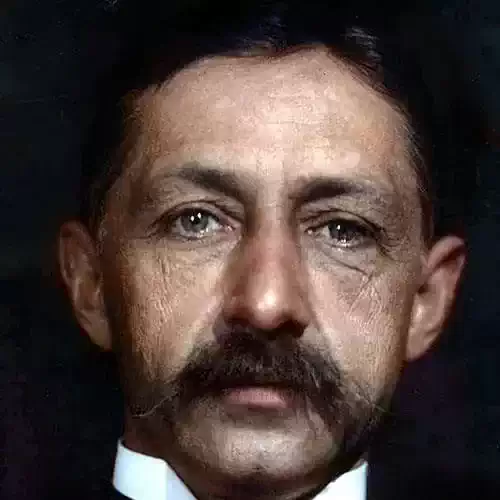
Ivan Bunin
1870–1953
· lived 83 years
 RU
RU
RU
Ivan Bunin was a Russian writer, Nobel laureate in Literature in 1933, being the first Russian writer to receive such an honor. His work, predominantly in prose, explores with melancholy and lyricism the landscapes of Russia and the dilemmas of the human soul, also having dedicated himself to poetry.
n. 1870-10-22, Voronej · m. 1953-11-08, 16.º arrondissement de Paris
78
Views
Bio
Identification and basic context
Ivan Alekseyevich Bunin (in Russian: Ива́н Алексе́евич Буни́н) was a Russian writer, poet, and playwright. He won the Nobel Prize in Literature in 1933, becoming the first Russian-language writer to be distinguished with this award. He was born into an impoverished noble family, and his work often reflects the landscapes and way of life of rural Russia and its declining aristocracy.Childhood and education
Bunin spent his childhood in the Voronezh province, where he had close contact with nature and peasant life, elements that would profoundly mark his work. He received a limited formal education but was largely self-taught, with the support of his older brother, Julius Bunin, who instilled in him a love for literature and science. He was influenced by Russian romantic poetry and classical literary tradition.Literary career
Bunin began publishing poetry in the late 1880s. Initially associated with more conservative literary movements, his work evolved into a melancholic lyricism and introspective prose that distinguished him. His literary career was marked by a constant production of short stories, novellas, and later, novels, which achieved great recognition. He collaborated in various literary publications of the time, consolidating his position in the Russian literary scene.Work, style, and literary characteristics
Work, style, and literary characteristics Among his most important works are "The Gentleman from San Francisco" (1916), "Mitya's Love" (1925), and the monumental novel "The Life of Arseniev" (1930). The central themes of his work include love, death, memory, the ephemeral beauty of nature, and the decay of Russian society. His style is characterized by crystalline prose, rich in sensory imagery, and a deep psychological exploration of characters. Bunin is a master in creating atmospheres and capturing emotional nuances, often with an elegiac tone. Although better known for his prose, his poetry is also notable for its musicality and lyrical introspection.Work, style, and literary characteristics
Cultural and historical context Bunin lived during a turbulent period in Russian history, witnessing the fall of the Russian Empire, the October Revolution, and the subsequent exile. His work reflects nostalgia for pre-revolutionary Russia and a profound disillusionment with the country's direction. Exiled in France after the revolution, he maintained a critical stance towards the Soviet regime, which distanced him from the literary scene of his homeland.Work, style, and literary characteristics
Personal life Bunin was married twice. His personal life was marked by a deep love for his second wife, Vera Muromtseva-Bunina, who accompanied him in exile and was a central figure in his life. His experience as an emigrant, far from his homeland, was a constant source of melancholy and reflection.Work, style, and literary characteristics
Recognition and reception Bunin was widely recognized during his lifetime, culminating in the Nobel Prize in Literature. His work was praised by international critics for its stylistic mastery and human depth. In Portugal and Brazil, his work also found admirers and was the subject of studies.Work, style, and literary characteristics
Influences and legacy Bunin was influenced by great names in Russian literature such as Tolstoy and Turgenev. His legacy lies in his ability to portray the Russian soul and the melancholic beauty of his country, as well as being one of the first Russians to receive the Nobel, paving the way for future laureates. His lyrical and introspective prose has influenced generations of writers.Work, style, and literary characteristics
Interpretation and critical analysis Bunin's work is often interpreted as a lament for the loss of Tsarist Russia and a meditation on the ephemerality of life and the search for beauty in a constantly changing world. His analyses of love and death are central to his production.Work, style, and literary characteristics
Curiosities and lesser-known aspects Bunin was known for his reserved temperament and a certain personal austerity. His dedication to writing was absolute, and he devoted a large part of his life to perfecting his style, both in prose and poetry.Work, style, and literary characteristics
Death and memory Ivan Bunin died in Paris in 1953. He left an immense literary legacy, and his work continues to be studied and appreciated worldwide, being considered one of the great masters of 20th-century Russian literature.Poems
0No poems found
Comments (0)
Log in
to post a comment.
No comments yet. Be the first to comment.