Dylan Thomas
Author of the day

Dylan Thomas

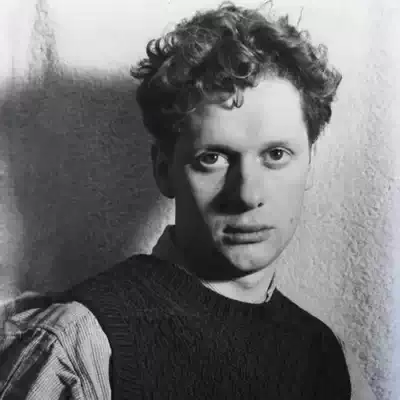
Dylan Thomas was a celebrated Welsh poet whose vivid imagery, lyrical intensity, and unique use of language captivated readers worldwide. His work, often characterized by its passionate exploration of life, death, love, and nature, combined a deep connection to his Welsh heritage with a modernist sensibility. Despite a tragically short and often tumultuous life, his poems possess an enduring power and musicality that have secured his place as one of the 20th century's most important poets.

Poem of the day

Do Not Go Gentle Into That Good Night

Dylan Thomas
Do not go gentle into that good night, 
Old age should burn and rave at close of day; 
Rage, rage against the dying of the light. 

Though wise men at their end know dark is right, 
Because their words had forked no lightning they 
Do not go gentle into that good night. 

Good men, the last wave by, crying how bright 
Their frail deeds might have danced in a green bay, 
Rage, rage against the dying of the light. 

Wild men who caught and sang the sun in flight, 
And learn, too late, they grieved it on its way, 
Do not go gentle into that good night. 

Grave men, near death, who see with blinding sight 
Blind eyes could blaze like meteors and be gay, 
Rage, rage against the dying of the light. 

And you, my father, there on that sad height, 
Curse, bless, me now with your fierce tears, I pray. 
Do not go gentle into that good night. 
Rage, rage against the dying of the light.
Read full poem

Born on this day

17
Tomás Castro

Tomás Castro is a Portuguese poet and writer whose work is characterized by a deep reflection on the human condition, memory, and the passage of time. His poetry is marked by careful language and the ability to evoke intense images and feelings. With a distinct authorial voice, Castro has established himself in the Portuguese literary scene, offering verses that dialogue with tradition, but also explore new sounds and themes, enriching contemporary Portuguese-language poetry.

Cacaso

Cacaso, pseudonym of Antônio de Pádua Danças, was a Brazilian poet and literary critic, a prominent figure in marginal poetry. His work is marked by irony, humor, and irreverence, addressing themes of urban daily life, social relations, and the human condition itself with a colloquial and accessible language. He stood out for his ability to blend the lyrical with the prosaic, the reflective with the fun, creating poetry that directly engaged the reader. His literary output, although concise, left a significant mark on contemporary Brazilian poetry, influencing later generations through its authenticity and the way it demystified poetic language, bringing it closer to life.

Paul Morand

Paul Morand was a French writer, diplomat, and journalist. Born in Paris in 1888, he was known for his elegant style and his depictions of high society and cosmopolitan life. His work often explored themes of modernity, travel, and the human condition.

Moacy Cirne

Moacy Cirne was a Brazilian poet, literary critic, and professor, an important figure in experimental and avant-garde poetry in Brazil. His work is marked by irreverence, formal exploration, and social criticism, often using language in an innovative and challenging way. Cirne also dedicated himself to the study of poetry and the dissemination of new literary trends, contributing to the renewal of the Brazilian cultural scene. His legacy lies in creative daring and the constant search for new forms of poetic expression.

Mahmoud Darwish

Mahmoud Darwish was a widely celebrated Palestinian poet, considered the national poet of Palestine. His poetic work, deeply rooted in the experience of exile, land, and Palestinian identity, achieved international recognition. Darwish explored universal themes such as love, loss, memory, and the pursuit of freedom, using a rich and evocative language that captivated readers worldwide. His poetry became a powerful voice for the Palestinian cause, but transcended the political context to speak of the universal human condition.

Inge Müller

Inge Müller was a German poet and playwright, known for her socially and politically engaged work. Her writing reflects the complexities and traumas of 20th-century Germany, addressing themes such as war, society, injustice, and the human condition. She is recognized for her strong voice and her ability to give expression to social and existential concerns. Müller's work is an important contribution to contemporary German literature, standing out for its authenticity and commitment to reality.

Kōtarō Takamura

Kōtarō Takamura was a Japanese sculptor and poet, known for his work that oscillates between symbolism and modernism. His poetry, often marked by deep introspection and exploration of themes such as love, beauty, and the human condition, reflects both Western influences and Japanese sensibility. Works like "Chijin no Ai" (A Fool's Love) are emblematic of his style.

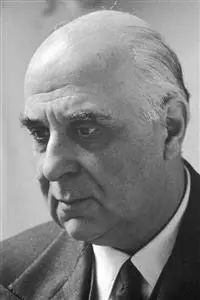
Giorgos Seferis

Giorgos Seferis was a prominent Greek poet and essayist, considered one of the central figures of 20th-century Greek literature and one of the greatest Greek-language poets. His work is marked by a deep reflection on Greek identity, history, memory, and the human condition, often set in the landscapes and myths of the Aegean. His poetry, though rooted in classical and Byzantine tradition, innovated by incorporating colloquial language and a modern existential approach, earning international recognition and a Nobel Prize in Literature.

António Homem de Melo

António Homem de Melo was a Portuguese writer, son of the first Count of Melo and D. Maria da Assunção da Silva Pereira. He graduated in Law from the University of Coimbra and practiced law in Porto. He actively collaborated in several literary publications and newspapers, demonstrating an early interest in writing and literary criticism.

Alfredo Bragança

Portuguese poet, Alfredo Bragança is known for his intimate and reflective poetry, which explores the complexities of human existence, time, memory, and the condition of being. His work, marked by careful language and lyrical sensibility, invites contemplation and introspection. Throughout his career, he has been consolidating his own space in contemporary Portuguese poetry, characterized by depth and the constant search for meaning.

João Rúben

João Rúben is a poet whose work delves into the disquietudes of existence, the transience of time, and the complexity of human relationships. With a singular poetic voice, he explores the depth of feeling and reflection through careful language and unique sensitivity. His poetry invites introspection and contemplation, leaving a distinctive mark on the literary landscape in which he is placed.

João Braz

João Braz is a contemporary poet whose work is characterized by the intersection between urban experience and lyrical introspection. His compositions explore the transience of moments, the complexity of human relationships in contemporary times, and the search for meaning in a world saturated with information and stimuli. Braz's poetry is distinguished by its direct, sometimes raw, but always deeply sensitive language. His style reflects a unique ability to capture the essence of everyday life, transforming the mundane into poetic reflection and inviting the reader to look at their own existence with new eyes.

Piero Chiara

Piero Chiara was a renowned Italian writer, known for his narratives that frequently portray the life and customs of Lombardy, his homeland. His work is marked by a lyrical style and a deep attention to detail, exploring human relationships with sensitivity and humor.

Jonathan Thirkield

Jonathan Thirkield is an American writer and composer known for his multidisciplinary approach to art. His work often combines literary elements with music and other forms of creative expression, resulting in unique and multifaceted artistic experiences. With a particular interest in the intersection between different media, Thirkield explores how narrative and composition can complement and enrich each other. His artistic output is marked by a relentless pursuit of new ways to tell stories and express complex ideas.

Pedro Miguel Lamet

Pedro Miguel Lamet was a Spanish poet, narrator, essayist, and literary critic, whose work is characterized by a deep reflection on the human condition, spirituality, and the passage of time. His poetry, often elegiac and reflective in tone, explores universal themes such as love, death, and the search for meaning in a changing world. He developed a prolific literary career, also tackling the novel and the essay, where he demonstrated a keen critical sense and great erudition. His figure is relevant in contemporary Spanish literature for his ability to combine lyrical tradition with a personal voice and a refined style.

Died on this day

6
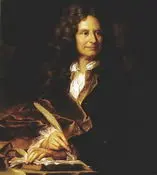
Nicolas Boileau

Nicolas Boileau-Despréaux, known as Boileau, was a French poet and literary critic, widely regarded as the "prince of critics." He played a pivotal role in defining the canons of French classicism, advocating for reason, clarity, and order in art. His work influenced generations of writers and established aesthetic standards that dominated French literature for centuries.

Alexandru Busuioceanu

Alexandru Busuioceanu was a Romanian poet, essayist, and literary critic, a prominent figure in Romania's literature. His work encompassed various literary forms, and he was recognized for his contribution to literary criticism and his introspective poetry.

Manuel da Câmara

Manuel da Câmara, also known by the pseudonym Nuno de Monte, was an Azorean poet whose work stands out for its lyricism and deep connection to the land and island identity. His poetry, although sometimes somber, reflects a refined sensitivity to landscapes, feelings, and existential issues. With a rich and expressive language, Câmara explored themes such as love, death, saudade, and the search for meaning, consolidating himself as a singular voice in Portuguese literature, especially that produced in the Azores.

Albino Forjaz de Sampaio

Albino Forjaz de Sampaio was a Portuguese writer, journalist, and politician, known for a multifaceted career that included poetry, novels, and interventionist prose. His work, while not entirely homogeneous, reflects a deep interest in social issues and national identity, in a style that sometimes oscillates between lyricism and realism.

Ivo Andrić

Ivo Andrić was a Yugoslav writer, winner of the Nobel Prize in Literature. His best-known work is 'The Bridge on the Drina', which narrates the story of a bridge in Višegrad, Bosnia, over centuries. Andrić is renowned for his dense and evocative prose, capturing the historical and cultural complexity of the Balkans.

Harold Massingham

Harold Massingham was a prominent English poet, known for his work that frequently explored nature, rural life, and the passage of time. His poetry is characterized by careful lyricism and a deep connection to the natural world, reflecting an admiration for the landscape and its cycles.