Poem of the day

Do Not Go Gentle Into That Good Night

Dylan Thomas
Do not go gentle into that good night, 
Old age should burn and rave at close of day; 
Rage, rage against the dying of the light. 

Though wise men at their end know dark is right, 
Because their words had forked no lightning they 
Do not go gentle into that good night. 

Good men, the last wave by, crying how bright 
Their frail deeds might have danced in a green bay, 
Rage, rage against the dying of the light. 

Wild men who caught and sang the sun in flight, 
And learn, too late, they grieved it on its way, 
Do not go gentle into that good night. 

Grave men, near death, who see with blinding sight 
Blind eyes could blaze like meteors and be gay, 
Rage, rage against the dying of the light. 

And you, my father, there on that sad height, 
Curse, bless, me now with your fierce tears, I pray. 
Do not go gentle into that good night. 
Rage, rage against the dying of the light.
Read full poem

Born on this day

2
José Santos Chocano

Peruvian poet, a towering figure of Hispanic-American modernism, Chocano is known for his grandiloquent style and his deep connection with the nature and history of America. His work is characterized by exuberant language, rich sensory imagery, and a patriotic fervor that exalts the identity and landscape of the continent. Throughout his life, he explored themes such as indigenism, the epic of the conquest, and the search for a poetic voice of his own that would resonate with the grandeur of the New World.

Roque Dalton García

Roque Dalton García was a Salvadoran poet, writer, and militant whose work is characterized by his social and political commitment, as well as deep irony and formal experimentation. His poetry fuses the lyrical with the testimonial, addressing themes such as national identity, social injustice, and the revolutionary struggle. Despite a life marked by exile and persecution, Dalton emerged as a powerful voice in contemporary Latin American poetry, leaving a legacy of combative and aesthetically bold writing.

Died on this day

12
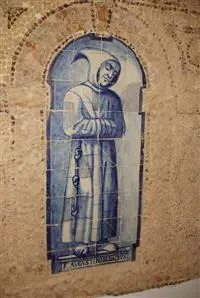
Frei Agostinho da Cruz

Friar Agostinho da Cruz was a 17th-century Portuguese friar and poet, a prominent figure of the literary Baroque. His poetic work, marked by spirituality and mysticism, reflects the profound religiosity of the era and the tension between the earthly and the divine. It is characterized by cultivated language, the exploration of themes such as the love of God, the ephemerality of life, and the search for transcendence, often through traditional poetic forms.

J. L. Moreno

Jacob Levy Moreno, known as J. L. Moreno, was a physician, psychiatrist, sociologist, and playwright of Austrian origin, who developed and popularized psychodrama, group therapy, and sociometry. His work revolutionized therapeutic approaches and the study of social relations, focusing on action, spontaneity, and creativity. Moreno believed that therapeutic change and social development could be achieved through the staging of real-life situations, allowing individuals to explore their emotions, roles, and relationships in a safe and constructive way. His legacy extends across various fields, from psychology to education and social organization.

Péricles Eugênio da Silva Ramos

Péricles Eugênio da Silva Ramos was a Brazilian poet, essayist, literary critic, and translator, a prominent figure of the Generation of 45. His poetic work is marked by a reflective and social tone, exploring themes such as national identity, Brazilian history, and the human condition. His writing is known for its erudition, formal rigor, and a restrained yet profound lyricism. In addition to his vast poetic production, Silva Ramos dedicated himself to literary criticism and translation, contributing significantly to the dissemination of Portuguese-language literature and the study of classical and modern authors. His cultural involvement was diverse and influential.

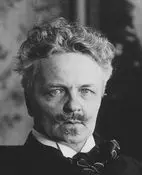
August Strindberg

Johan August Strindberg was a Swedish writer, playwright, and painter. He is considered one of the fathers of modern Swedish theater and a central figure in Swedish literature. His work is vast and ranges from novels and short stories to plays and essays, exploring themes such as class struggle, human psychology, and religion.

I hated her now with a hatred more fatal than indi
António Nunes

António Nunes was a Portuguese poet whose work is characterized by formal experimentation and the exploration of new poetic languages. His poetry challenges conventions, delving into dreamlike universes, reflections on identity, and subtle social critique. He is a unique figure in the Portuguese literary landscape, associated with avant-garde movements and a constant search for the renewal of poetic expression. Marked by an inventive and, at times, hermetic style, António Nunes left a legacy of verses that invite deciphering and contemplation, positioning him as a cult poet, appreciated by those who seek transgression and depth in contemporary poetry.

Luís Felício

Luís Felício is a name that, without additional context or specific identifier, can refer to different people. The absence of detailed information or a link to reliable sources such as Wikidata makes it impossible to construct an accurate biography. To provide concrete data, it would be necessary to specify which Luís Felício is the object of interest.

Karl Shapiro

Karl Shapiro was an American poet, known for his direct poetry, often socially and personally critical. He served in World War II, and this experience significantly influenced his work. His poetry is characterized by its use of colloquial language and its straightforward approach to themes such as war, identity, and American society.

Matthew Gregory

Matthew Gregory is an author who stands out for his ability to weave stories that combine elements of suspense and psychological depth. His writing is engaging, transporting the reader to universes where the emotions and internal conflicts of the characters are central. Gregory has a special talent for creating unexpected twists and keeping the reader in suspense.

Manuel del Cabral

Manuel del Cabral was a prominent Dominican poet, essayist, and diplomat, whose work is characterized by a deep exploration of Caribbean identity, the history of his land, and the human condition. His poetry, often laden with symbolism and musicality, addresses themes such as love, death, social injustice, and the search for freedom. Recognized for his lyrical style and social commitment, Del Cabral left an important legacy in the literature of the Dominican Republic and Latin America. His work as a diplomat also allowed him to promote Dominican culture abroad, establishing himself as a key figure in his country's representation.

Ramón de Garciasol

Ramón de Garciasol was a Spanish poet whose work is inscribed in the tradition of classical and contemporary poetry, with a marked influence of popular lyricism and Andalusian tradition. His poetry is characterized by the depth of his thought, the musicality of his verses, and a constant reflection on the human being, love, death, and transcendence. Throughout his career, he demonstrated exceptional mastery of poetic forms, exploring both the sonnet and free verse, and leaving a significant mark on Spanish literature.