
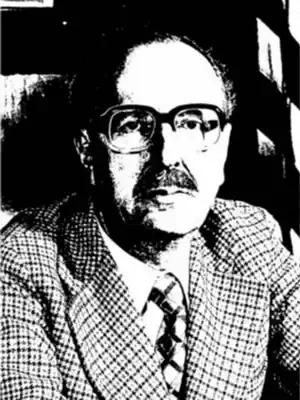
Péricles Eugênio da Silva Ramos
 BR
BR
Péricles Eugênio da Silva Ramos was a Brazilian poet, essayist, literary critic, and translator, a prominent figure of the Generation of 45. His poetic work is marked by a reflective and social tone, exploring themes such as national identity, Brazilian history, and the human condition. His writing is known for its erudition, formal rigor, and a restrained yet profound lyricism. In addition to his vast poetic production, Silva Ramos dedicated himself to literary criticism and translation, contributing significantly to the dissemination of Portuguese-language literature and the study of classical and modern authors. His cultural involvement was diverse and influential.
n. 1919-10-24, Lorena · m. 1992-05-14, São Paulo
Bio
Identification and basic context
Péricles Eugênio da Silva Ramos was a Brazilian poet, essayist, literary critic, and translator. Born in São Paulo, he is considered one of the central figures of the Generation of 45. His work is marked by a strong engagement with Brazilian culture, reflection on national history and identity, and poetry of great formal and intellectual rigor.Childhood and education
Silva Ramos had a solid education, studying Law and Philosophy. From a young age, he showed a great interest in literature, history, and the arts, absorbing influences from the Brazilian and universal literary tradition, as well as from philosophical and social thought. His intellectual formation profoundly shaped his worldview and his production.Literary career
Péricles Eugênio da Silva Ramos's career was multifaceted. He began his literary career as a poet, publishing books that quickly brought him prominence. In parallel, he developed intense activity as an essayist, literary critic, and translator, covering everything from classical poetry to modern authors. His work in literary newspapers and magazines was fundamental for articulating ideas and shaping opinion.Work, style, and literary characteristics
Silva Ramos's main poetic works include "Viagem em volta de mim", "O Gosto do Sabor", "Canto de uma Vênus sem espelhos", and "Coração de um português em São Paulo". His poetry is characterized by erudition, restrained lyricism, and reflection on existential, social, and historical themes. Love, homeland, memory, art, and the human condition are recurring themes. His style is marked by precise language, musicality, and remarkable formal rigor, often using free verse but with inherent musicality. The social dimension and reflection on Brazil are central aspects of his work, seeking a reconciliation between the universal and the particular.Cultural and historical context
Silva Ramos is one of the exponents of the Generation of 45, a movement that sought to renew Brazilian poetry after the modernist avant-gardes, proposing a return to greater formal rigor and more universal themes, without, however, abandoning reflection on Brazilian reality. His work dialogues with the historical and cultural context of Brazil in the mid-20th century, a period of intellectual and political effervescence.Personal life
His life was dedicated to study and literary production. Besides being a poet, he was an active intellectual, participating in debates and contributing to the cultural life of São Paulo and Brazil. His erudition and passion for letters shaped his personal and professional trajectory.Recognition and reception
Péricles Eugênio da Silva Ramos was widely recognized as one of the great Brazilian poets of his generation. He received several literary awards, and his work is studied in academic circles. His importance lies in his ability to unite erudition, lyricism, and social reflection, contributing to the consolidation of poetry of high aesthetic and intellectual quality.Influences and legacy
Silva Ramos was influenced by classical and modern poets, both from the Lusophone tradition and universal literature. His legacy lies in the consolidation of a poetry that articulates reflection on Brazil with the pursuit of universality, and in his contribution to literary criticism and translation, enriching the Brazilian cultural landscape.Interpretation and critical analysis
Silva Ramos's work is often analyzed from the perspective of his profound reflection on Brazilian identity, memory, and the human condition. His poetry is seen as a point of balance between form and content, the universal and the particular, the lyrical and the critical.Curiosities and lesser-known aspects
His vast culture and profound knowledge of various fields of knowledge are evident in his poetry and essays, lending intellectual density to his work.Death and memory
Péricles Eugênio da Silva Ramos passed away in 1997, leaving a rich and diverse literary legacy that continues to be a source of study and admiration for new generations of readers and writers.Poems
0No poems found
Comments (0)
No comments yet. Be the first to comment.