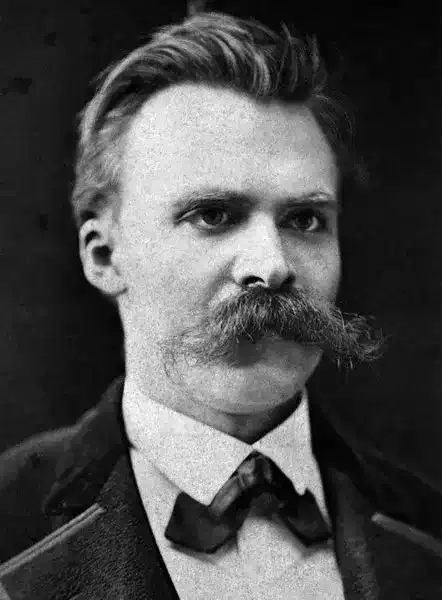
Friedrich Nietzsche
Author of the day

Friedrich Nietzsche

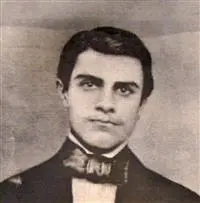
Friedrich Nietzsche was an influential German philosopher, philologist, and cultural critic. His work addresses themes such as morality, religion, truth, art, and the human condition, with a radical critique of traditional Western values. He is known for concepts such as the "death of God", the "superman" (Übermensch), and the "will to power" (Wille zur Macht). His writing is marked by an aphoristic and provocative style, which challenges the reader to rethink their beliefs and values.

Poem of the day

Grass

Carl Sandburg
Pile the bodies high at Austerlitz and Waterloo.
Shovel them under and let me work
-I am the grass; I cover all.

And pile them high at Gettysburg
And pile them high at Ypres and Verdun.
Shovel them under and let me work.
Two years, ten years, and the passengers ask the conductor:

What place is this?
Where are we now?

I am the grass.
Let me work.
Read full poem

Born on this day

14
Fernando Namora

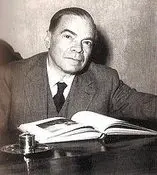
Fernando Namora was a Portuguese doctor and writer, a prominent figure of the 1940s generation, also known as the "Geração de Orpheu." His literary work, in both prose and poetry, reflects a deep humanism, a keen eye on the human condition, and a strong social commitment. He addressed themes such as memory, identity, loneliness, and the search for meaning, often drawing inspiration from his experiences as a doctor. His writings are marked by precise and sensitive language, capable of capturing the nuances of human behavior and the complexity of interpersonal relationships. Namora left an important legacy in Portuguese literature, with works that continue to be studied and appreciated for their literary quality and thematic depth.

Paulo Eiró

Paulo Eiró is a contemporary Portuguese poet, whose work falls within the line of more intimate and reflective poetry. With a refined language and an attentive eye on the small things in life and the complexities of the human being, Eiró creates poetry that dialogues with tradition, but affirms itself through its originality and the depth of its questions. His poems explore themes such as memory, time, inner landscape, and human relationships, in a style marked by expressive restraint and the search for subtle musicality, inviting the reader to a serene and, at times, melancholic contemplation.

Ronaldo Cagiano

Ronaldo Cagiano is a Brazilian poet and professor whose works explore the complexity of human existence through dense and imagistic language. His poetry is marked by reflection on time, memory, and the human condition, often with an introspective and melancholic tone. Cagiano moves between lyricism and the rawness of life, using formal resources to construct a singular and profound poetic universe.

Abgar Renault

Abgar Renault was a Brazilian jurist, university professor, and writer, whose literary work stands out for its lyricism and reflection on existential and social themes. His poetry, often marked by deep sensitivity and a critical view of the human condition, established him as a relevant figure in Brazilian literature, although his work in the legal and academic fields was also of great importance.

Henry James

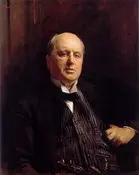
Henry James was an American writer who spent most of his adult life in England. He is known for his novels and short stories that explore the complex interplay between his characters' psychology and their social environment. His work often addresses themes of class, culture, and the clash between the Old and New Worlds.

Corrado Alvaro

Corrado Alvaro was a prominent Italian writer and journalist, known for his engaging prose and profound humanism. Born in San Luca, Calabria, on April 15, 1895, his work frequently explores themes of exile, identity, and the human condition in times of crisis. His writing reflects a strong connection to his southern roots, but also a universal vision of the anxieties and hopes of modern man. Alvaro was a keen observer of his time, documenting the social and political transformations of 20th-century Italy.

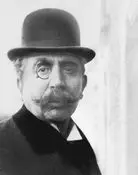
Jean Moréas

Jean Moréas was a Greek poet who became a naturalized French citizen, known for being one of the founders of Symbolism in poetry. Born in Athens, he moved to Paris where he became a prominent figure in literary circles, contributing to the renewal of poetic expression in France.

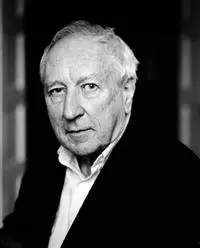
Tomas Tranströmer

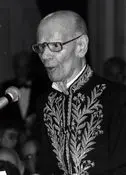
Tomas Tranströmer was a Swedish poet and psychologist, widely recognized for his lyrical and introspective work that explores the relationship between nature, the self, and the world. His poetry is characterized by clarity, imagination, and the ability to evoke deep moods through vivid imagery and a contemplative rhythm. He was awarded the Nobel Prize in Literature in 2011, distinguished for his unique voice in contemporary poetry.

Luís Forjaz Trigueiros

Luís Forjaz Trigueiros was a Portuguese poet and essayist, a figure linked to surrealism in Portugal. His poetic work is marked by formal experimentation, the exploration of the unconscious, and dreamlike language, characteristic of the surrealist movement. Besides poetry, he dedicated himself to essays, analyzing literature and culture with a critical and innovative eye.

Juan Carlos Mestre

Juan Carlos Mestre is a Spanish poet known for his lyrical and engaged work. His poetry explores themes such as memory, identity, and the human condition, often with accessible and evocative language. He stands out for the depth of his reflections and his ability to connect the personal to the universal.

Marga do Val

Marga do Val is a Galician poet and writer, known for her lyrical and contemplative poetry that addresses themes such as identity, memory, and the relationship with nature. Her work is distinguished by its sensitivity in exploring human emotions and by the search for a language that captures the essence of lived experiences, with a strong connection to the Galician universe.

Died on this day

9
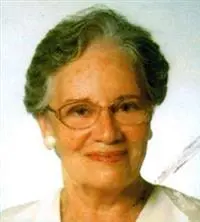
Maria Alberta Menéres

Maria Alberta Menéres was a multifaceted Portuguese writer, recognized for her extensive work aimed at children and youth, but also for her adult poetry of deep lyricism and existential reflection. Her literary career stood out for its ability to engage with the child's universe, giving it a unique pedagogical and aesthetic dimension, without ever neglecting the complexity of the human condition. She was a prominent figure in contemporary Portuguese literature, leaving a legacy of sensitivity and wisdom.

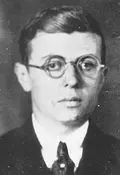
Jean-Paul Sartre

Jean-Paul Sartre was a French philosopher, writer, playwright, and literary critic, a central figure of atheistic existentialism. His vast and multifaceted work explores human freedom, individual responsibility, bad faith, and social commitment. Sartre rejected the Nobel Prize in Literature, advocating for a stance of refusal of bourgeois institutions. His thought profoundly influenced 20th-century philosophy, literature, and political debate, marking a generation with his emphasis on autonomy and the need for intervention in the world.

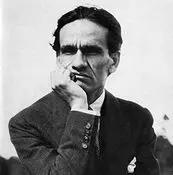
César Vallejo

César Vallejo was one of the most important poets in Spanish-language literature, whose work is marked by profound humanity and innovative linguistic experimentation. His poetry addresses universal themes such as pain, social injustice, loneliness, and death, but with a unique sensitivity that makes him universal. His writing reflects human anxieties in the face of the world, history, and his own destiny, using language that sometimes deviates from the norm to more intensely express the human condition.

Dante Milano

Dante Milano was a Brazilian poet, literary critic, and professor, known for his concise poetry and profound existential reflection. His work is marked by the exploration of themes such as time, memory, and the ephemerality of life, with a refined language and an introspective style. Milano also stood out as an important scholar of literature, especially Brazilian modernist poetry, leaving a significant legacy both as a creator and as a critic.

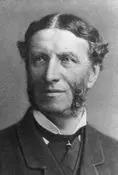
Matthew Arnold

Matthew Arnold (24 December 1822 – 15 April 1888) was an English poet and cultural critic. He was Professor of Poetry at the University of Oxford from 1857 to 1867. Arnold is remembered today for his poetry and for his critical insights into the social and religious trends of his time. He is also one of the most influential examiners of the 19th century. He was the son of Thomas Arnold, headmaster of Rugby School and historian.

Have something to say and say it as clearly as you
Amorim de Carvalho

Amorim de Carvalho was a Portuguese poet and writer. His poetic work, placed in modern literary contexts, explores sensitivity and lyrical expression. Through careful language and a strong imagistic charge, the poet addresses universal themes such as love, nature, and the human condition. His writing reflects a search for beauty and the depth of inner experience.