
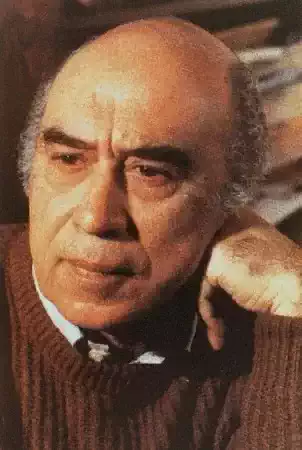
Fernando Namora
 PT
PT
Fernando Namora was a Portuguese doctor and writer, a prominent figure of the 1940s generation, also known as the "Geração de Orpheu." His literary work, in both prose and poetry, reflects a deep humanism, a keen eye on the human condition, and a strong social commitment. He addressed themes such as memory, identity, loneliness, and the search for meaning, often drawing inspiration from his experiences as a doctor. His writings are marked by precise and sensitive language, capable of capturing the nuances of human behavior and the complexity of interpersonal relationships. Namora left an important legacy in Portuguese literature, with works that continue to be studied and appreciated for their literary quality and thematic depth.
n. 1919-04-15, Condeixa-a-Nova · m. 1989-01-31, Lisboa
Bio
Identification and basic context
Fernando Namora, whose full name was Fernando Correia Namora, was a Portuguese doctor and writer. He was born in 1916 and died in 1989. He is considered one of the main figures of the 1940s generation in Portuguese literature. His work includes poetry, prose, and chronicles, always with a deep look at the human condition and society.Childhood and education
He was born in Vila de Conde, Portugal. His childhood and youth were marked by the cultural and social atmosphere of the time. He graduated in Medicine from the University of Coimbra, a formação that had a significant impact on his worldview and his writing, allowing him direct contact with social and human realities.Literary career
Fernando Namora's literary career began with the publication of poetry. Throughout his career, he established himself as one of the great names in Portuguese prose, especially with novels that explore daily life, human relationships, and social issues. He collaborated in various publications and anthologies, being recognized for his authentic and sensitive voice.Work, style, and literary characteristics
Among his best-known works are "O Homem dos Pés de Barro" (The Man of Clay Feet), "Retalhos da Vida de Um Médico" (Scraps from a Doctor's Life), and "Dom Quixote em Lisboa" (Don Quixote in Lisbon). His poetic work, although less extensive than his prose, is equally valued. Namora's style is characterized by realism, humanism, and a profound capacity for observation. He addresses themes such as loneliness, memory, the search for meaning, and the relationship between the individual and society. The language is refined, precise, and evocative, often with a melancholic, but also hopeful, tone.Work, style, and literary characteristics
Cultural and historical context Fernando Namora emerged in Portuguese literature in the post-war period and under an authoritarian regime, influencing and being influenced by the so-called Generation of 1940. His medical training and his life experiences in Portugal provided him with a unique perspective on the social and existential realities of his time. He engaged with other writers and intellectuals of the era, sharing a commitment to the faithful representation of life and its complexities.Work, style, and literary characteristics
Personal life As a doctor, Namora had an intimate connection with people and their stories, which is reflected in his writing. His personal life, marked by his profession and literary activity, was shaped by a keen sensitivity to human pains and joys.Work, style, and literary characteristics
Recognition and reception Fernando Namora is widely recognized as one of the most important authors of 20th-century Portuguese literature. His work received critical acclaim and reached a wide audience, being translated into several languages and being the subject of academic study.Work, style, and literary characteristics
Influences and legacy Namora's work is influenced by realism and existentialism, but he developed his own unmistakable voice. His legacy lies in how he managed to portray the complexity of the human soul and social ills with dignity and compassion, becoming a role model for generations of writers.Work, style, and literary characteristics
Interpretation and critical analysis Namora's work is frequently analyzed for its psychological depth and social portraiture. His characters are complex and credible, reflecting human struggles and aspirations. His writing invites reflection on the human condition and the need for empathy and solidarity.Work, style, and literary characteristics
Curiosities and lesser-known aspects Namora practiced medicine in rural areas and among disadvantaged communities, which gave him a privileged insight into the rawest realities of life. His dual role as a doctor and writer is one of the most striking aspects of his trajectory.Work, style, and literary characteristics
Death and memory Fernando Namora died in 1989, leaving behind a valuable literary collection. His works continue to be published, studied, and appreciated, keeping alive his memory and his impact on Portuguese culture.Poems
0No poems found
Videos
50
Comments (0)
No comments yet. Be the first to comment.