Poem of the day

Do Not Go Gentle Into That Good Night

Dylan Thomas
Do not go gentle into that good night, 
Old age should burn and rave at close of day; 
Rage, rage against the dying of the light. 

Though wise men at their end know dark is right, 
Because their words had forked no lightning they 
Do not go gentle into that good night. 

Good men, the last wave by, crying how bright 
Their frail deeds might have danced in a green bay, 
Rage, rage against the dying of the light. 

Wild men who caught and sang the sun in flight, 
And learn, too late, they grieved it on its way, 
Do not go gentle into that good night. 

Grave men, near death, who see with blinding sight 
Blind eyes could blaze like meteors and be gay, 
Rage, rage against the dying of the light. 

And you, my father, there on that sad height, 
Curse, bless, me now with your fierce tears, I pray. 
Do not go gentle into that good night. 
Rage, rage against the dying of the light.
Read full poem

Born on this day

12
João Ferry

João Ferry was a Portuguese poet whose work stands out for its connection to the surrealist movement and the exploration of a dreamlike and imagistic universe. His poetry is marked by formal freedom, the subversion of language, and the pursuit of an authentic expression of the unconscious. Ferry is recognized for his contribution to the renewal of Portuguese poetry in the 20th century, introducing new sensibilities and aesthetic approaches that challenged the literary conventions of his time.

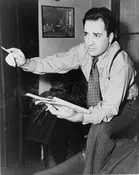
J. L. Moreno

Jacob Levy Moreno, known as J. L. Moreno, was a physician, psychiatrist, sociologist, and playwright of Austrian origin, who developed and popularized psychodrama, group therapy, and sociometry. His work revolutionized therapeutic approaches and the study of social relations, focusing on action, spontaneity, and creativity. Moreno believed that therapeutic change and social development could be achieved through the staging of real-life situations, allowing individuals to explore their emotions, roles, and relationships in a safe and constructive way. His legacy extends across various fields, from psychology to education and social organization.

Gabriel Mariano

Gabriel Mariano was a Cape Verdean poet whose work is deeply rooted in the identity and landscapes of the islands. His poetry is marked by a lyricism that celebrates the land, the sea, the culture, and the soul of the Cape Verdean people, exploring themes such as saudade, hope, resilience, and the human condition in an island context. With a language rich in imagery and musicality, Mariano captured the essence of the Cape Verdean experience, becoming an important voice in the literature of Cape Verde and the Lusophone world.

Robin Blaser

Robin Blaser was a Canadian poet, a prominent figure in Vancouver's literary scene, known for his dense, philosophical poetry and his influence on experimental poetry and writing about art. His work explores language, perception, and the relationship between humanity and the cosmos.

Eucanaã Ferraz

Eucanaã Ferraz is a Brazilian poet, translator, and essayist. His poetic work is distinguished by its intelligence, its capacity for articulation between the erudite and the popular, and its exploration of themes such as memory, history, the city, and language itself. He is one of the important names in contemporary Brazilian poetry, recognized for his original voice and formal quality.

Florêncio Terra

Florêncio Terra was a Portuguese poet whose work is part of the literary landscape of the late 19th and early 20th centuries. Known for his poetry reflecting on existential, social, and human condition themes, his work is marked by careful language and a strong reflective charge. He contributed to Portuguese literature as an attentive observer of the realities of his time.

Philippe Delaveau

Philippe Delaveau is a contemporary French writer, known for novels that explore the complexities of human relationships and moral dilemmas in realistic settings. His narrative is marked by psychological depth and attention to detail.

Jolanda Insana

Jolanda Insana is a contemporary Italian poet and writer, known for her lyrical and introspective poetry. Her work explores the complexities of the human experience, memory, and the relationship between the individual and the world. With evocative and sensitive language, Insana weaves verses that capture moments of intense emotion and reflection. Her writing invites the reader on an inner journey, permeated by a unique musicality and profound humanity.

Died on this day

6
Herculano Moraes

Herculano Moraes was a Brazilian poet and intellectual, whose work is marked by deep reflection on national identity, Brazilian culture, and the complexities of the human soul. His poetry moves between the lyrical and the philosophical, exploring themes such as love, death, spirituality, and the search for meaning. With a rich and elaborate language, Herculano Moraes captured the essence of Brazil and its challenges, offering a sensitive and critical view of society. His legacy lies in the depth of his verses and his ability to engage with the most diverse cultural and literary traditions, leaving an indelible mark on Portuguese-language poetry.

George Meredith

George Meredith was an English novelist and poet. He is known for his complex and psychologically insightful novels, often exploring themes of love, marriage, and the position of women in Victorian society.

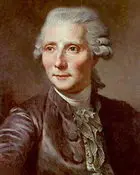
Pierre-Augustin Caron de Beaumarchais

Pierre-Augustin Caron de Beaumarchais was a French playwright, watchmaker, inventor, musician, diplomat, and journalist. He is best known for his plays, especially "The Barber of Seville" and "The Marriage of Figaro".

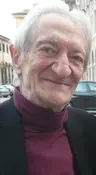
Edoardo Sanguineti

Edoardo Sanguineti was an Italian poet, literary critic, and academic, a prominent figure in experimental and neo-avant-garde Italian poetry. His work is marked by a profound interrogation of language, reality, and the human condition, exploring the tensions between the individual and society, the personal and the political. With an innovative and challenging style, Sanguineti left a significant legacy in contemporary poetry.

Joaquín Benito de Lucas

Joaquín Benito de Lucas is a recognized Spanish poet and university professor. His poetry is often associated with the 'Generation of 50' and is distinguished by its lyrical depth, existential reflection, and a critical view of society.