Poem of the day

Grass

Carl Sandburg
Pile the bodies high at Austerlitz and Waterloo.
Shovel them under and let me work
-I am the grass; I cover all.

And pile them high at Gettysburg
And pile them high at Ypres and Verdun.
Shovel them under and let me work.
Two years, ten years, and the passengers ask the conductor:

What place is this?
Where are we now?

I am the grass.
Let me work.
Read full poem

Born on this day

8
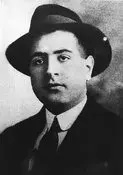
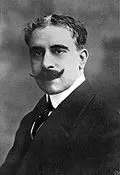
Júlio Dantas

Júlio Dantas was a prominent Portuguese doctor, playwright, poet, and politician. He distinguished himself through his literary work, especially theater, where he addressed historical and social themes with an elaborate style and a strong civic component. He was also an influential figure in Portuguese public life.

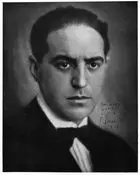
Mário de Sá-Carneiro

Mário de Sá-Carneiro was a Portuguese poet, novelist, and short-story writer, a prominent figure of the first generation of Portuguese Modernism. His work is marked by profound pessimism, the exploration of fragmented identity, existential anguish, and the search for an authentic "self", often in conflict with reality. His literary production, although limited due to his early death, is recognized for its emotional intensity, originality, and visionary character, anticipating themes and concerns that would become central to 20th-century literature.

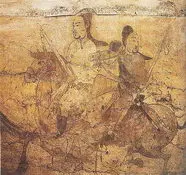
Li Po

Li Po was one of the most celebrated poets of the Tang Dynasty in China, known for his romantic and imaginative poetry. His work reflects a deep love for nature, friendship, and wine, often imbued with a Taoist spirit of freedom and spontaneity. He is considered one of the two greatest poets in Chinese history, alongside Du Fu.

Antônio Augusto de Mendonça

Antônio Augusto de Mendonça was a Brazilian poet known for his lyrical and reflective writing. His work delves into the complexities of human feeling, the ephemerality of life, and the search for transcendence. With a style that blends tradition with experimentation, Mendonça captured the essence of emotions in verses that resonate for their depth and beauty. His poetry invites introspection and contemplation, leaving a legacy of sensitivity and existential questioning.

Heliodoro Baptista

Heliodoro Baptista is a poet whose work is characterized by deep sensitivity and an exploration of poetic language. His poetry often delves into existential themes, love, and the beauty of the everyday, with a style that combines lyricism and introspection. Baptista is recognized for his contribution to contemporary poetry, leaving a record of verses that invite reflection and appreciation of literary art.

Died on this day

14
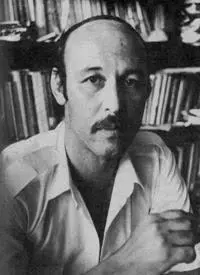
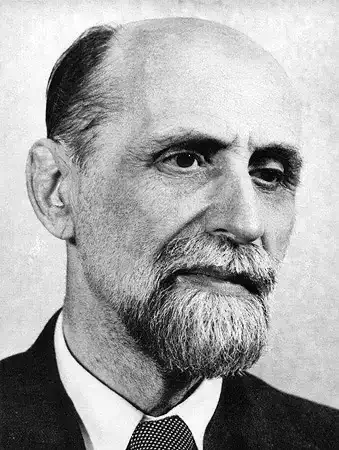
Elvio Romero

Elvio Romero was a prominent Paraguayan poet and journalist, known for his lyrical and engaged work. His poetry frequently addresses themes such as homeland, national identity, social injustice, and the pursuit of freedom, reflecting the political and social context of Paraguay and Latin America. With a rich and expressive language, Romero established himself as one of the most important voices in 20th-century Paraguayan poetry.

Ogden Nash

Ogden Nash was an American poet, best known for his unconventional, humorous verse. His poems often played with language, featuring irregular rhyme schemes and invented words. Nash's work provided lighthearted social commentary, tackling everyday life and common human foibles with wit and originality. His unique style made him a beloved figure in American literature, accessible to a wide audience.

À Bas Ben Adhem
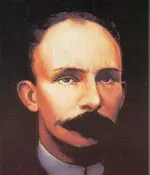
José Martí

José Martí was a Cuban poet, essayist, journalist, translator, and professor. He is considered one of Cuba's greatest intellectuals and politicians, and was one of the main leaders of the movement for Cuban independence from Spanish rule. His literary work is vast and includes poetry, prose, and essays, with a strong patriotic and social tone.

I wish to leave the world By its natural door; In
Jacinto do Prado Coelho

Jacinto do Prado Coelho was an eminent Portuguese poet, essayist, and literary critic, a central figure in the cultural life of the 20th century. His poetic work is marked by a profound reflection on the human condition, spirituality, and man's relationship with time and the universe, often expressed through dense and imagistic language. As an essayist and critic, Prado Coelho stood out for his erudition and the acuteness of his analyses of Portuguese and universal literature, influencing generations of readers and writers.

António Coimbra Martins

António Coimbra Martins was a Portuguese poet and essayist, known for his profound reflection on the human condition, poetry, and culture. His poetic work, marked by rigorous language and a critical vision, addresses themes such as identity, memory, and the relationship between the individual and society. As an intellectual, he also dedicated himself to the study and dissemination of literature, leaving a significant legacy in the field of literary criticism and theory.

Jaime Brasil

Jaime Brasil was a Portuguese poet whose work falls within the context of the late 19th and early 20th centuries. His poetry is marked by a strong lyrical sensibility and a melancholic tone, exploring universal themes such as love, saudade, and the transience of life. Although less prominent than other figures of his time, Brasil left an indelible mark on Portuguese poetry through his authenticity and the musicality of his verses.

José Coelho da Cunha

José Coelho da Cunha is an author whose literary work, particularly his poetry, is characterized by reflective depth and the exploration of existential themes. His writing, marked by precise language and keen sensitivity, addresses the human condition, time, memory, and the search for meaning, inviting the reader on an introspective journey. His poetry tends to be lyrical and contemplative, revealing a thoughtful perspective on life and the universe.

Concha Espina

Concha Espina was a renowned Spanish writer, whose work stood out for its engaging prose and social themes. In her novels and short stories, she addressed the realities of daily life, the complexities of human relationships, and social injustices, with a critical and sensitive eye. Her writing, marked by realism and strong empathy with her characters, earned her recognition and literary awards. Concha Espina is remembered as one of the most important female voices in Spanish literature, with a body of work that remains relevant for its literary quality and its portrayal of society.

Lola Ridge

Lola Ridge was an Australian-American modernist poet, known for her engaged and socially conscious poetry. Her work addresses themes such as social injustice, workers' conditions, and urban life, with a strong and innovative language.

Ignacio de Luzán

Ignacio de Luzán was an influential Spanish writer and intellectual of the 18th century, a key figure of the Enlightenment in Spain. His most important work, "La Poética" (1737), is considered a milestone in Spanish literary criticism, introducing the principles of Neoclassicism and laying the groundwork for a renewal of literary theory and practice in the country. He stood out for his erudition and his defense of reason, clarity, and good taste in art and literature, advocating for the imitation of classical models and the adaptation of aesthetic norms to the Spanish reality.