Poem of the day

Do Not Go Gentle Into That Good Night

Dylan Thomas
Do not go gentle into that good night, 
Old age should burn and rave at close of day; 
Rage, rage against the dying of the light. 

Though wise men at their end know dark is right, 
Because their words had forked no lightning they 
Do not go gentle into that good night. 

Good men, the last wave by, crying how bright 
Their frail deeds might have danced in a green bay, 
Rage, rage against the dying of the light. 

Wild men who caught and sang the sun in flight, 
And learn, too late, they grieved it on its way, 
Do not go gentle into that good night. 

Grave men, near death, who see with blinding sight 
Blind eyes could blaze like meteors and be gay, 
Rage, rage against the dying of the light. 

And you, my father, there on that sad height, 
Curse, bless, me now with your fierce tears, I pray. 
Do not go gentle into that good night. 
Rage, rage against the dying of the light.
Read full poem

Born on this day

13
Maria Teresa Horta

Maria Teresa Horta is a Portuguese writer, poet, and journalist, a prominent figure in contemporary literature. Her work, marked by the exploration of the female condition, sexuality, freedom, and identity, is distinguished by its boldness, transgressive language, and profound reflection on the body and desire. Recognized for her interventionist and feminist writing, Maria Teresa Horta has consistently challenged social and literary conventions, promoting a discourse of emancipation and affirmation of the female voice in society and art. She is one of the most unique and influential voices in Portuguese literature of recent decades.

J. G. de Araújo Jorge

J. G. de Araújo Jorge was a prominent Brazilian poet, short story writer, and columnist, known for his rich contribution to literature. His work covers a variety of themes, from everyday life to existential reflection, with a style characterized by musicality, rich vocabulary, and keen observation. He was also an important figure in journalism and radio, demonstrating a creative versatility that made him a multifaceted figure in Brazilian culture. His poetry is appreciated for its lyrical depth and ability to capture the nuances of human experience.

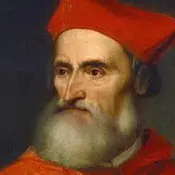
Pietro Bembo

Pietro Bembo (1470-1547) was an Italian cardinal, humanist, poet, and literary theorist. Born in Venice, he distinguished himself through his work in prose and poetry, being a central figure in the Italian Renaissance. Bembo was a proponent of Florentine as the standard Italian literary language and played a crucial role in codifying the grammar and style of the language. His influence extended throughout Europe, shaping the development of Renaissance literature.

Gabriel Ferrater

Gabriel Ferrater was a Catalan poet, literary critic, and linguist, a prominent figure of social poetry and cultural resistance in Francoist Spain. His work, marked by raw realism and a profound reflection on the human condition, language, and social reality, is in continuity with avant-garde poetry but strongly anchored in everyday life. He is recognized for his direct language, his irony, and his ability to transform the prosaic into the poetic.

José Nunes da Ponte

José Nunes da Ponte was a Portuguese poet whose work is part of the literary context of the 19th century. His poetic production, although less celebrated than that of some contemporaries, contributes to the richness of Portuguese poetry with themes that explore sensibility, nature, and existential reflections. His poetry, marked by a characteristic style of the era, offers a lyrical perspective on human emotions and the vision of the world.

Marcelino dos Santos

Marcelino dos Santos, also known by the pseudonym Kalaf Epalanga, was a central figure in the struggle for Mozambique's independence and one of the most important Mozambican poets. His poetic work, deeply marked by the experience of colonization, resistance, and nation-building, is a cry for freedom and the affirmation of African identity. Poet, politician, and activist, dos Santos dedicated his life to the cause of liberation and the promotion of Mozambican culture, leaving an invaluable literary and political legacy.

Philippe Chabaneix

Philippe Chabaneix was a French poet and literary critic. His poetic work is often associated with an introspective lyricism and a reflection on the human condition, the passage of time, and the search for meaning. Chabaneix also stood out as a keen observer of the literature of his time, writing reviews and essays that reveal a deep knowledge and sharp sensibility. He cultivated a writing style that, although often discreet, possessed an expressive force and a particular elegance. His work as a critic contributed to the dissemination and understanding of contemporary authors, positioning him as an important voice in the French intellectual landscape, especially regarding poetry and introspective prose.

Antonio Deltoro

Antonio Deltoro is a renowned Mexican poet and translator. His poetic work is recognized for its conciseness, depth, and a keen eye on everyday reality and human experiences. As a translator, he plays an important role in the dissemination of other literatures into Spanish.

Alejandro Dolina

Alejandro Dolina is a distinguished Argentine writer, musician, composer, and radio host, known for his unique style that blends humor, fantasy, and profound reflection on the human condition. His literary work, marked by a colloquial yet poetic and evocative language, has captivated audiences of diverse generations. With a prolific career spanning literature, music, and the media, Dolina has established himself as a cultural figure of great relevance in the Spanish-speaking world, offering a singular and endearing perspective on the world.

Died on this day

13
António de Navarro

António de Navarro was a Portuguese poet, whose works belong to the Modernism period, but with a singular voice and a style that frequently deviated from the dominant currents. His poetry is marked by deep introspection and an exploration of the human condition, with subtle and, at times, melancholic lyricism.

Luís Guimarães Júnior

Luís Guimarães Júnior was a Brazilian poet and professor. His poetic work is marked by reflection on the human condition, the passage of time, and the search for meaning amidst life's complexities. With a style that oscillates between lyricism and introspection, he approached universal themes with sensitivity and depth, leaving a legacy of verses that invite contemplation.

Eneida Alves Regado

Eneida Alves Regado is a Portuguese writer and poet, whose work is distinguished by its lyricism addressing nature, love, memory, and identity, with a delicate and profound style. Her poetry reflects a strong connection with the landscapes and culture of Minho, where she was born and lived most of her life. With sensitive and reflective writing, Eneida Alves Regado contributes to Portuguese literature with an authentic voice marked by careful observation of the inner and outer world.

Julião Soares Sousa

Julião Soares Sousa was an Angolan poet whose work is part of the line of interventionist poetry and the exaltation of African identity. His poetic compositions are often marked by strong lyricism, by the exploration of the Angolan landscape and culture, and by the expression of a feeling of belonging and national pride. His poetry seeks to celebrate the roots and resilience of the Angolan people, in a context of cultural affirmation and the pursuit of a promising future. His writing reflects a deep connection to the land and traditions, positioning him as a relevant voice in Angolan literature.

Max Beerbohm

Sir Henry Maximilian Beerbohm was an English writer, essayist, critic, and caricaturist. Known for his elegant and witty style, he stood out in the literature of his time. His most famous work is "The Works of Max Beerbohm" (1921), a collection of his essays, and the novel "Zuleika Dobson" (1911). Beerbohm was also a talented caricaturist, producing satirical portraits of prominent figures of Edwardian society.

Verner von Heidenstam

Carl Gustaf Verner von Heidenstam was a Swedish poet and writer, awarded the Nobel Prize in Literature in 1916. He is considered one of the main representatives of the neo-romantic movement in Swedish literature. His work is marked by strong nationalism, a celebration of Swedish history and culture, and a lyrical and evocative language. He sought to invigorate Swedish national identity through literature.

Infante D. Pedro

D. Pedro of Portugal, Infante of Portugal, was a notable figure of the 15th century, known for his curious spirit and his openness to the cultural novelties of Europe. Through his travels and contacts, he introduced knowledge of various cultures and customs to Portugal, exerting a significant influence on the development of the Infante of Portugal. His figure is associated with the Age of Discoveries and Portuguese maritime expansion.

A. Lopes Cardoso

A. Lopes Cardoso is a poet whose work is distinguished by its lyrical depth and exploration of themes that resonate with the human condition, nature, and the passage of time. His writing is marked by careful language and unique sensitivity, giving him a prominent place in contemporary poetry. He has been consolidating a literary career marked by reflection and formal beauty.

John Gould Fletcher

John Gould Fletcher was an American poet associated with the Imagist movement. His work is known for its exploration of complex themes and formal experimentation. He sought to capture the essence of his observations and feelings through vivid imagery and precise language, reflecting a modern sensibility in his poetry.

Francisco Brines

Francisco Brines was a Spanish poet, considered one of the most important voices in Spanish poetry in the second half of the 20th century. His work is characterized by a deep reflection on the human condition, the passage of time, memory, love, and nature, with a lyrical and restrained language. Brines explored existential themes with particular sensitivity, seeking beauty in everyday experiences and in the contemplation of the natural world. His poetry, although often melancholic, possesses an inner strength and serenity that invite introspection, consolidating him as a master of contemporary Spanish lyricism.

Michael Van Walleghen

Michael Van Walleghen was an American poet whose work is marked by a peculiar sense of humor, vivid imagination, and an exploration of the absurd and the everyday. His poetry often bridges the serious and the comical, using surprising imagery and accessible language to touch on existential themes and social observations.

José María Blanco-White

José María Blanco-White was a Spanish writer, poet, journalist, and critic, known for his essayistic and poetic work. His critical thinking and deep reflection on Spanish identity and culture earned him a prominent place in the literature of his time. He was a keen observer of society and a defender of liberal ideas, which was reflected in his journalism and literary production.

John Clare

John Clare was an English poet celebrated for his vivid and unsentimental depictions of the English countryside and rural life. Despite a challenging life marked by poverty, social isolation, and eventual mental breakdown, Clare produced a vast body of work filled with lyrical beauty and keen observation. His poetry stands out for its authentic voice, detailed imagery of nature, and its poignant reflection on the loss of traditional rural ways of life due to industrialization and enclosure. Clare's work has gained increasing recognition for its originality, its profound connection to the natural world, and its empathetic portrayal of ordinary lives.

A vision