Poem of the day

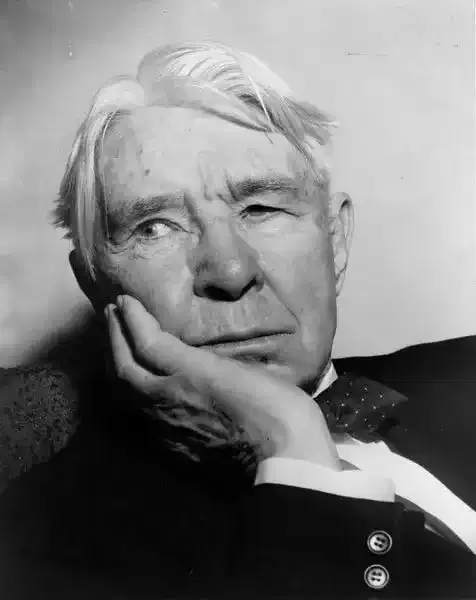
Grass

Carl Sandburg
Pile the bodies high at Austerlitz and Waterloo.
Shovel them under and let me work
-I am the grass; I cover all.

And pile them high at Gettysburg
And pile them high at Ypres and Verdun.
Shovel them under and let me work.
Two years, ten years, and the passengers ask the conductor:

What place is this?
Where are we now?

I am the grass.
Let me work.
Read full poem

Born on this day

10
Olga Savary

Olga Savary was a prominent figure in Brazilian literature, known for her introspective poetry and her tireless work in cultural dissemination. Her work addresses profound themes such as identity, love, loneliness, and the human condition, with a language that is both lyrical and forceful. Beyond her poetic production, Olga Savary distinguished herself as a translator, essayist, and organizer of important anthologies and literary events, contributing significantly to Brazil's cultural scene and to the projection of other writers.

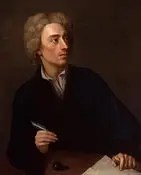
Alexander Pope

Alexander Pope was a towering figure of English Neoclassical literature, renowned for his sharp wit, satirical genius, and masterful command of the heroic couplet. A key figure of the Augustan age, his poetry often explored moral and philosophical themes with clarity, elegance, and precision. His translations of Homer and his original works remain cornerstones of English poetry, celebrated for their intellectual rigor and polished style.

Pride, the never-failing vice of fools.
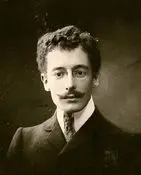
Émile Verhaeren

Émile Verhaeren was a Belgian poet and art critic, known for his work in the French language. He is considered one of the greatest Symbolist poets and a prominent figure in Belgian literature. His works explore themes such as urban life, nature, religion, and the human condition, with a rich and expressive language.

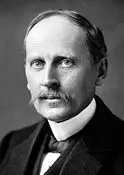
Romain Rolland

Romain Rolland was a prominent French novelist, playwright, and musicologist, who was awarded the Nobel Prize in Literature in 1915. Born in Clamecy, France, in 1866, he is famous for his work "Jean-Christophe", a cycle of ten novels that narrates the life of a German composer. His work is marked by a profound humanism, pacifism, and an interest in music and spirituality.

Paulo José Miranda

Paulo José Miranda was a Portuguese poet, known for his work marked by dense, hermetic language and deep existential reflection. His poetry explores the limits of language and perception, addressing themes such as solitude, time, memory, and the search for meaning in a complex world. He was an important figure in contemporary Portuguese poetry, with a unique and innovative style.

René Tavernier

No biographical information was found for this author.

Robert Creeley

Robert Creeley was an American poet, a central figure in post-war poetry and associated with the Black Mountain poets. His work is characterized by colloquial language, concision, and a deep exploration of personal experience and the human condition. He influenced generations of poets with his innovative approach. Creeley had a prolific career and an important role as an educator and editor, contributing significantly to the development of contemporary poetry.

Libero de Libero

Libero de Libero was an Italian poet and writer known for his lyrical work and his profound exploration of the human condition. His poetry is marked by evocative language and keen sensibility, addressing themes such as love, death, memory, and the passage of time. With a literary career spanning several decades, de Libero left a significant legacy in 20th-century Italian poetry. His writing reflects a constant search for beauty and truth, in an attempt to capture the nuances of existential experience.

José Carlos Becerra

José Carlos Becerra was a Spanish poet and essayist whose work is primarily framed in the second half of the 20th century. His poetry is characterized by deep introspection, the exploration of existential themes, and careful formal elaboration. Becerra is recognized for his ability to combine lyrical tradition with a personal and contemporary voice, addressing the human condition with particular sensitivity.

Died on this day

13
Fernando Py

Fernando Py is a contemporary Portuguese poet, essayist, and literary critic, whose work stands out for its intellectual depth, formal rigor, and exploration of themes such as identity, memory, art, and the human condition. His poetry is marked by a constant dialogue with literary and philosophical tradition, combined with a keen sensitivity to contemporary issues.

António Arnaut

António Arnaut was a Portuguese jurist, professor, and poet. A Doctor of Law from the University of Coimbra, he dedicated his life to the study and teaching of Law, with a particular emphasis on the areas of Civil Law and Labor Law. Parallel to his academic and legal career, he developed a discreet but notable poetic work, marked by a profound reflection on the human condition, spirituality, and the relationship between man and the cosmos.

Carlos Góes

Carlos Góes was a Brazilian poet and professor whose poetic work stands out for its lyrical depth and reflection on human existence. His writing, often marked by precise language and evocative imagery, explored universal themes such as love, the passage of time, and the search for meaning. Góes left an important legacy in contemporary poetry, with a style recognized for its authenticity and sensitivity. Throughout his career, he was not limited to poetry, also acting as a professor and promoter of literature. His work continues to be studied and appreciated, reaffirming his position as a relevant voice in Brazilian literature.

Yolanda Bedregal

Yolanda Bedregal was a Bolivian poet, writer, and educator, with a work marked by lyrical sensitivity and the exploration of themes such as identity, nature, and the human condition. Her poetry is recognized for its expressive power and musicality. As an educator, she dedicated herself to the formation of young people, transmitting cultural and literary values. Her work contributed to the valorization of Bolivian literature and the training of new generations of readers and writers.

René Daumal

René Daumal was a French writer and poet, a singular figure linked to surrealism and mysticism. His work, although relatively scarce, is profoundly marked by spiritual seeking and literary experimentation. Daumal explored the limits of language and consciousness, leaving an intriguing legacy for contemporary literature and thought.

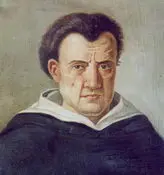
Tommaso Campanella

Tommaso Campanella was an Italian Dominican friar, philosopher, theologian, and poet. A prolific and controversial thinker, he is known for his work 'The City of the Sun,' a political utopia describing an ideal society based on reason and community. Campanella spent much of his life in prison due to his ideas, considered heretical and subversive.

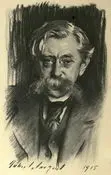
Victor Segalen

Victor Segalen was a French poet, novelist, ethnographer, and physician, whose work is marked by the exploration of exotic cultures, aesthetic sensibility, and the search for innovative language. His poetry, in particular, is known for its musicality, richness of imagery, and profound reflection on identity, alterity, and the passage of time. Segalen moved between literature and anthropology, leaving a legacy that combines erudition with a deeply personal and artistic vision of the world. His work, although sometimes associated with movements such as symbolism and surrealism, possesses a uniqueness that transcends easy classifications, exploring the boundaries between East and West, the known and the unknown.

Francisco de Sá de Meneses

Francisco de Sá de Meneses was a Portuguese poet and nobleman, a prominent figure in Portuguese Baroque poetry. His work, marked by formal complexity and depth of thought, reflects the spirit of the era, with its contrasts and expressive intensity. He is recognized for his mastery in exploring themes such as love, the transience of life, and religion, using elaborate stylistic resources that established him as one of the great names of Arcadian and Baroque poetry.

Eduardo de Lacerda

Eduardo de Lacerda was a poet whose poetic work is characterized by the exploration of themes related to intimacy, existential reflection, and observation of daily life. His writing tends to be marked by careful language and an introspective tone, where subjectivity and the search for meaning intertwine with the description of the surrounding world. Lacerda demonstrates a sharp sensibility for the nuances of human experience.

Pedro José Constâncio

Pedro José Constâncio was a multifaceted figure in the Portuguese intellectual scene, standing out as a poet, doctor, and scholar. His poetic work, although sometimes less prominent than his scientific and academic contributions, reveals a particular sensitivity and mastery of language. Constâncio navigated between scientific knowledge and artistic expression, reflecting a curious and eclectic mind.

Antonio Deltoro

Antonio Deltoro is a renowned Mexican poet and translator. His poetic work is recognized for its conciseness, depth, and a keen eye on everyday reality and human experiences. As a translator, he plays an important role in the dissemination of other literatures into Spanish.

Andrés Eloy Blanco

Andrés Eloy Blanco was a Venezuelan poet, playwright, and politician, one of the most emblematic figures of modernism and social poetry in Venezuela. His work, characterized by deep lyricism, sharp humor, and strong social denunciation, has touched the hearts of several generations. Recognized for his mastery of language and his ability to intertwine criticism of injustice with the celebration of life and love, Blanco became a symbol of resistance and hope. His figure transcends literature to stand as a moral and cultural reference in Venezuela and Latin America.