
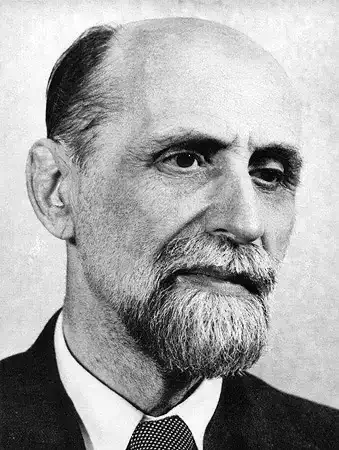
Juan Ramón Jiménez
1881–1958
· lived 76 years
 ES
ES
ES
Juan Ramón Jiménez was a Spanish poet, awarded the Nobel Prize in Literature in 1956. His work, profoundly marked by symbolism and the desire for "pure poetry," evolved towards an incessant search for beauty and transcendence. His poetry explores themes such as nature, spirituality, love, and the very essence of poetry, with a refined, musical, and visionary style. He is considered one of the great renovators of 20th-century Spanish poetry.
n. 1881-12-23, Moguer · m. 1958-05-29, San Juan Puerto Rico Temple
199
Views
Bio
Identification and basic context
Juan Ramón Jiménez Mantecón was a Spanish poet, born in Moguer, Huelva. He is one of the central figures of the Generation of 1956, known for his profound renovation of Spanish poetry. He received the Nobel Prize in Literature in 1956.Childhood and education
Born into a wealthy family, Jiménez studied Law at the University of Seville, but quickly dedicated himself to literature. His youth was marked by great sensitivity and an intense inner life. His education was largely self-taught, with readings that included French Symbolist poets and classical Spanish poetry.Literary career
Juan Ramón Jiménez's literary career is marked by a constant search for perfection and "pure poetry." He began his career within the scope of Spanish Modernism, but soon distanced himself from its more superficial manifestations to develop his own style. His work spans a long period, divided into several phases, each with its own characteristics and thematic and formal deepening.Work, style, and literary characteristics
Jiménez's main works include "Ninfeas" (1900), "Almas de violeta" (1900), "Arias tristes" (1903), "Jardines lejanos" (1904), "Elegías" (1909-1910), "Poemas Mágicos y Reales" (1923), "Eternidades" (1918), and the monumental "Diario de un poeta recién casado" (1916), which marks a turning point in his work. His style evolved from an initial, more subjective and melancholic lyricism to a more refined, metaphysical, and transcendent poetry, in search of essence. He explores themes such as nature (seen as a reflection of the inner state), love, death, the search for identity, and the nature of poetry itself. His language is musical, precise, with a carefully chosen vocabulary and great imagistic density.Work, style, and literary characteristics
Cultural and historical context Jiménez lived in a period of intense transformations in Spain, including the loss of the last colonies, the dictatorship of Primo de Rivera, and the Spanish Civil War. His self-imposed exile in the United States and Puerto Rico, after the Civil War, profoundly marked his later years and his work. He was one of the greatest exponents of the so-called "Generation of 1956" or "Generation of 14," a group of intellectuals and artists who sought to renew Spanish culture.Work, style, and literary characteristics
Personal life Juan Ramón Jiménez's life was intensely marked by his marriage to Zenobia Camprubí, who was his companion, collaborator, and translator. His fragile health and introspective nature led him to a relatively reclusive life, dedicated to poetry and reflection. Exile was one of the most difficult moments of his life.Work, style, and literary characteristics
Recognition and reception Although he was a respected figure in Spain during his lifetime, international recognition was consolidated with the award of the Nobel Prize in Literature in 1956. His work has been the subject of study and admiration worldwide, being considered one of the most important poets in the Spanish language.Work, style, and literary characteristics
Influences and legacy Jiménez was influenced by poets such as Garcilaso de la Vega, Fray Luis de León, the French Symbolists (Verlaine, Mallarmé), and Rubén Darío. His legacy is immense, having influenced generations of Spanish-language poets, who found in his "pure poetry" a model of aesthetic refinement and existential search. His work is widely studied and translated.Work, style, and literary characteristics
Interpretation and critical analysis Jiménez's work is often interpreted as a spiritual and aesthetic journey in search of absolute beauty and transcendence. His "pure poetry" is seen as a way of apprehending reality in its most intimate essence, surpassing appearances.Work, style, and literary characteristics
Curiosities and lesser-known aspects His "diary of a newlywed poet" is considered one of the most innovative books in Spanish poetry, mixing prose and verse, and addressing the experience of marriage and travel in an unprecedented way. His dedication to "pure poetry" led him to extreme self-demand, which shaped his entire literary output.Work, style, and literary characteristics
Death and memory Juan Ramón Jiménez died in San Juan, Puerto Rico. His memory is celebrated as that of one of the greatest poets in the Spanish language, a master of words, and an explorer of the depths of the human soul and poetry itself.Poems
0No poems found
Quotes
8No poems found
Videos
50
Comments (0)
Log in
to post a comment.
No comments yet. Be the first to comment.