William Blake
Author of the day

William Blake

William Blake was an English poet, painter, and printmaker whose visionary works explored profound spiritual and philosophical themes. He is renowned for his prophetic books, which combine his unique mythology with his distinct artistic style, often characterized by intense symbolism and imaginative power. Blake's work defied easy categorization, blending elements of Romanticism with his own highly personal brand of mysticism. His poetry, such as "Songs of Innocence and of Experience," continues…

Poem of the day

Do Not Go Gentle Into That Good Night

Dylan Thomas
Do not go gentle into that good night, 
Old age should burn and rave at close of day; 
Rage, rage against the dying of the light. 

Though wise men at their end know dark is right, 
Because their words had forked no lightning they 
Do not go gentle into that good night. 

Good men, the last wave by, crying how bright 
Their frail deeds might have danced in a green bay, 
Rage, rage against the dying of the light. 

Wild men who caught and sang the sun in flight, 
And learn, too late, they grieved it on its way, 
Do not go gentle into that good night. 

Grave men, near death, who see with blinding sight 
Blind eyes could blaze like meteors and be gay, 
Rage, rage against the dying of the light. 

And you, my father, there on that sad height, 
Curse, bless, me now with your fierce tears, I pray. 
Do not go gentle into that good night. 
Rage, rage against the dying of the light.
Read full poem

Born on this day

5
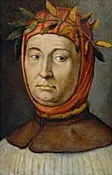
Francesco Petrarca

Francesco Petrarca was an Italian scholar and poet, considered one of the founders of Humanism and one of the greatest lyric poets in Western literature. His work "Il Canzoniere" is a collection of poems, predominantly sonnets, dedicated to Laura, his inspirational muse, and explores themes such as platonic love, female beauty, the transience of time, and the pursuit of glory and salvation. Petrarca is revered for his formal mastery, especially in the use of the sonnet, which he perfected and popularized, influencing poets for centuries. His work marked a transition between the Middle Ages and the Renaissance, emphasizing the value of the individual, classical culture, and the expression of human feelings with unprecedented depth.

Irineu Filho

Irineu Filho is a Brazilian poet, whose work stands out for its strong lyrical vein and exploration of themes such as nature, love, and subjectivity. His poetry is characterized by accessible, yet profound language, which captivates the reader with its sensitivity and originality.

Claude Aveline

Claude Aveline, real name René-Victorault, was a French writer, editor, and bookseller. He is known for his vast literary work and his role in promoting literature.

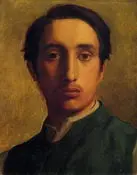
Edgar Degas

Edgar Degas was a French painter and sculptor, best known for his portraits of ballerinas, horse races, and scenes of Parisian daily life. He was one of the founders of Impressionism, although he considered himself more of a realist.

Francisco Matos de Sá

Francisco Matos de Sá is a poet distinguished by his exploration of the depths of the human soul and his ability to weave verses of intense existential reflection. His work is marked by an elaborate language and an often melancholic and philosophical tone, addressing universal themes such as the passage of time, the fragility of existence, and the search for meaning. He is an author who invites introspection.

Died on this day

8
Cesário Verde

Cesário Verde was a Portuguese poet, considered one of the precursors of modern poetry in Portugal. His work, marked by a detailed observation of reality and the exploration of daily life, especially in Lisbon, is distinguished by its innovative language and sensitivity in capturing sensations. Despite a relatively small literary output published posthumously, his impact on subsequent Portuguese poetry was profound, paving the way for modernism.

José Maria Cançado

José Maria Cançado is a poet whose work is part of the lyrical tradition, characterized by deep sensitivity and a constant exploration of universal themes such as love, nature, and the human condition. His poetry is distinguished by its musicality, rich imagery, and an often melancholic tone, yet always tinged with hope. Cançado invites the reader on an inner journey, where the beauty of language combines with existential reflection.

Emílio Burlamaqui

Emílio Burlamaqui was a Brazilian poet, journalist, and literary critic, known for his participation in the modernist movement and for his writing that moved between lyricism and formal experimentation. His work addressed themes such as the city, the ephemerality of life, and the complexities of human feeling, with a language that reflected the aesthetic innovations of his time. As a journalist and critic, he contributed to the dissemination and debate of Brazilian literary production, exerting influence on the cultural scene of his time. His work was marked by the pursuit of new forms of poetic expression.

Rubem Alves

Rubem Alves was a Brazilian psychoanalyst, pastor, and writer, known for his work that spans philosophy, psychology, and poetry. With accessible language and a tone that was sometimes playful, sometimes profound, he addressed themes such as love, happiness, childhood, and the meaning of life, inspiring readers of all ages. His vast literary production, which includes children's books and essays, left a legacy of reflection and tenderness about human existence.

Aníbal Teófilo

Aníbal Teófilo was a poet who stood out in Brazilian literature for his sensitivity and his ability to express, through poetry, the complexities of the human soul. His work is marked by deep lyricism and carefully crafted language, exploring themes such as love, nature, and the ephemerality of life. Teófilo left a poetic legacy that continues to be appreciated for its beauty and depth.

Leonida Répaci

Leonida Répaci was an Italian writer, journalist, and anti-fascist, known for his work that frequently portrays life in Calabria and the experiences of humble people. His writing is marked by a strong sense of realism, attention to social details, and direct, expressive language. Répaci was also politically engaged, using his writing as a tool for denunciation and social reflection.

José María Pemán

José María Pemán was a Spanish writer, journalist, and playwright known for his poetry and his work as a lecturer. His poetic work, often traditional in style and with a marked nationalist character, earned him great popularity in his time. He was a very active public figure, participating in discussion groups and cultural events, and his figure was closely linked to the events of 20th-century Spain, especially the Civil War and the Franco dictatorship. His literary legacy is a subject of debate, but his impact on the Spanish culture of his time is undeniable.