Poem of the day

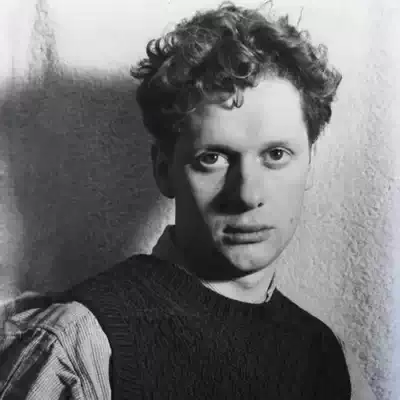
Do Not Go Gentle Into That Good Night

Dylan Thomas
Do not go gentle into that good night, 
Old age should burn and rave at close of day; 
Rage, rage against the dying of the light. 

Though wise men at their end know dark is right, 
Because their words had forked no lightning they 
Do not go gentle into that good night. 

Good men, the last wave by, crying how bright 
Their frail deeds might have danced in a green bay, 
Rage, rage against the dying of the light. 

Wild men who caught and sang the sun in flight, 
And learn, too late, they grieved it on its way, 
Do not go gentle into that good night. 

Grave men, near death, who see with blinding sight 
Blind eyes could blaze like meteors and be gay, 
Rage, rage against the dying of the light. 

And you, my father, there on that sad height, 
Curse, bless, me now with your fierce tears, I pray. 
Do not go gentle into that good night. 
Rage, rage against the dying of the light.
Read full poem

Born on this day

11
Francisco Vilela Barbosa

Francisco Vilela Barbosa, also known as Conselheiro Vilela, was a prominent figure in the Brazilian political and literary scene of the 19th century. As a jurist, politician, and writer, he dedicated himself to the defense of liberal ideals and to the reflection on the society and culture of his time. His work, though not vast in volume, reflects an intellectual engaged with the issues of imperial Brazil, addressing themes such as law, politics, and social customs, with an erudite language and a style characteristic of the era.

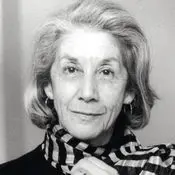
Nadine Gordimer

Nadine Gordimer was a South African novelist and short-story writer, awarded the Nobel Prize in Literature in 1991. Her work explored life in South Africa under apartheid, addressing themes of race, politics, and social justice. Gordimer was known for her insightful prose and her commitment to the fight against oppression, even facing censorship and persecution. She remained a prominent voice in literature and activism until her death.

The solitude of writing is … quite frightening. It
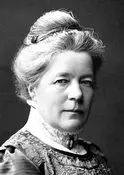
Selma Lagerlöf

Selma Ottilia Lovisa Lagerlöf was a Swedish writer and the first woman to receive the Nobel Prize in Literature. Her work is known for its deep connection to Swedish folklore, fairy tales, and legends, featuring narratives rich in detail and with strong emotional appeal. Lagerlöf explored themes such as faith, love, sacrifice, and the search for identity, often setting her stories in rural Swedish landscapes.

He who is sorrowful can force himself to smile, bu
António de Serpa Pimentel

António de Serpa Pimentel was a Portuguese politician and jurist. He stood out in his public career, having held several important government positions. His connection to poetry is less prominent, but it fits within the literary and intellectual context of his time. His poetic work reflects the values and concerns of the society in which he lived.

Guilherme Centazzi

Guilherme Centazzi is a contemporary Brazilian poet, whose work is characterized by the exploration of language and the search for new forms of poetic expression. His verses frequently address existential and social themes, as well as the condition of art itself, in a writing that challenges conventions and invites critical reflection. Centazzi is recognized for his formal experimentation and his ability to engage the reader in an intense and provocative manner.

Francisco de Paula Medina e Vasconcelos

Francisco de Paula Medina e Vasconcelos was a Portuguese poet and playwright. His literary work spans a diversity of genres, reflecting an interest in both lyric poetry and theatrical expression. Noted for his ability to combine poetic sensibility with dramatic construction, he left a mark on the literary landscape of his time.

Maria Armanda Tavares Belo

Maria Armanda Tavares Belo is a poet whose work focuses on the exploration of themes such as identity, memory, the female condition, and the relationship with nature. Her poetry is often marked by a lyrical and introspective language, which invites reflection on the deepest human emotions and experiences. Through sensitive and imagistic writing, the author weaves a poetic universe where the inner landscape and the external world intersect, reflecting on the ephemerality of life and the search for meaning.

Fernando Ferreira

Fernando Ferreira, known for his participation in the modernist and surrealist movements, is a poet who stands out for his ability to transfigure reality through a dreamlike and imagistic language. His work explores the unconscious, dreams, and the irrational dimension of existence, challenging literary conventions and inviting the reader to new perceptions. With an innovative and provocative style, Ferreira crafted a poetry that became a landmark in Portuguese-language literature, influencing later generations of artists and writers to explore the limits of expression and imagination.

John Frederick Nims

John Frederick Nims was an American poet, literary critic, and editor, known for his poetry with a more classical approach and a fine lyrical sensibility. His work often explored universal themes such as love, time, and mortality, with careful language and polished structure. Nims also had a significant career as an editor, contributing to the dissemination of modern poetry. His work as a critic and educator helped shape the literary landscape, solidifying his role as a respected figure in American poetry.

Died on this day

6
Abade de Jazente

The Abbot of Jazente was an 18th-century Portuguese poet whose works reflect the context of Arcadianism in Portugal. His poetry, often satirical and critical, addresses social and moral themes, using irony and allegory to comment on the society of his time. His writing stands out for its clarity, its verse fluidity, and its keen observation, contributing to the renewal of Portuguese poetry with a more critical and engaged tone.

Minerva Margarita Villarreal

Minerva Margarita Villarreal is a writer and poet recognized for her work that delves into the complexities of the female experience and social issues. Her writing is marked by intelligence, sensitivity, and a critical view of the world. With a consolidated literary career, Villarreal has stood out for the depth of her reflections and the strength of her prose and poetry. Her work is an invitation to empathy and understanding of the diverse realities that shape the lives of women and society in general.