Poem of the day

Do Not Go Gentle Into That Good Night

Dylan Thomas
Do not go gentle into that good night, 
Old age should burn and rave at close of day; 
Rage, rage against the dying of the light. 

Though wise men at their end know dark is right, 
Because their words had forked no lightning they 
Do not go gentle into that good night. 

Good men, the last wave by, crying how bright 
Their frail deeds might have danced in a green bay, 
Rage, rage against the dying of the light. 

Wild men who caught and sang the sun in flight, 
And learn, too late, they grieved it on its way, 
Do not go gentle into that good night. 

Grave men, near death, who see with blinding sight 
Blind eyes could blaze like meteors and be gay, 
Rage, rage against the dying of the light. 

And you, my father, there on that sad height, 
Curse, bless, me now with your fierce tears, I pray. 
Do not go gentle into that good night. 
Rage, rage against the dying of the light.
Read full poem

Born on this day

7
Ruy Guerra

Ruy Guerra is a poet, filmmaker, playwright, and translator born in Mozambique and based in Brazil. His poetic work is marked by concise yet meaningful language, exploring themes such as memory, identity, the human condition, and social criticism. His artistic career is multifaceted, encompassing various forms of cultural expression.

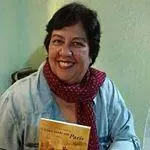
Giselle del Pino

Giselle del Pino is a prominent figure in contemporary poetry, known for her introspective approach and deep exploration of universal themes. Her poetic work is distinguished by the intrinsic musicality of its verses and its ability to evoke vivid images through precise and emotive language.

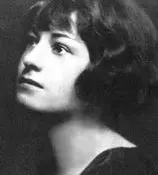
Dorothy Parker

Dorothy Parker was an American poet, short story writer, critic, and satirist, celebrated for her sharp wit and cynical observations. A founding member of the Algonquin Round Table, she became a prominent voice in early 20th-century American literature. Her work, often characterized by its brevity and poignant irony, explored themes of love, loss, and societal hypocrisy, cementing her reputation as a master of the epigram and a keen social commentator.

Star Light, Star Bright--
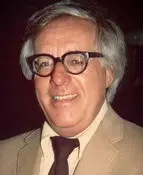
Ray Bradbury

Ray Bradbury was a prolific American author known for his works of science fiction, fantasy, and horror. His writing often explores themes of technology, humanity, and the future. Bradbury is one of the most celebrated authors of the 20th century.

Find out what your hero or heroine wants, and when
Manuela Odete Neves

Manuela Odete Neves is a Portuguese poet whose work stands out for its lyrical depth and exploration of themes such as memory, identity, and the human condition. With sensitive and reflective writing, the author constructs poetic universes that resonate with individual and collective experience. Her literary journey is marked by an authentic voice and a constant search for the expression of the nuances of feeling. Neves' poetry invites introspection, encouraging the reader to engage with their own emotions and perceptions of the world.

Zakari Dramani-Issifou

Zakari Dramani-Issifou is a writer whose work is part of contemporary African literature, focusing on narratives that address the identity, history, and social realities of his continent. His writing is often praised for the depth of its characters and the way it portrays the nuances of life in his works, inviting reflection on cultural and existential issues.

Luis Felipe Vivanco

Luis Felipe Vivanco was a Spanish poet and literary critic, associated with the Generation of 36 and the movement called "Rationalist Poetry" (Poesía Racionalista). His poetic work, although less numerous than that of some contemporaries, is recognized for its expressive force, existential reflection, and formal rigor. He explored themes such as anguish, solitude, the search for meaning, and social reality, with clear and objective language. As a critic, Vivanco contributed to the analysis and dissemination of the work of other poets, playing an important role in the understanding and appreciation of the poetry of his time. His literary trajectory represents a testament to the complexity and concerns that marked Spanish literature in the mid-20th century.

Died on this day

9
Amélia Rodrigues

Amélia Rodrigues was a Portuguese poet, known for her religious and mystical work, with strong Marian inspiration and in the figure of Fátima. Her poetic compositions express deep devotion and a search for transcendence, reflecting her faith and her connection with the apparitions of Fátima. Her writing is marked by simplicity, tenderness, and the strength of her spirituality, which touched many readers in Portugal and abroad.

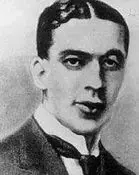
Juó Bananére

Juó Bananére was a Brazilian poet and columnist, known for his work marked by humor, irreverence, and social criticism disguised in simple verses. His writing frequently explored everyday life, popular characters, and the peculiarities of urban life with accessible language and a keen eye on the human condition. Although his literary production occurred in a specific period, his peculiar style and the originality of his poetic voice distinguish him in Brazilian literature.

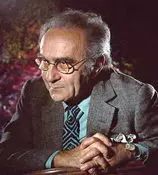
Jacob Bronowski

Jacob Bronowski was a Polish-British mathematician, scientist, philosopher, literary critic, playwright, and historian of science. He is best known for his BBC television series and book "The Ascent of Man," which explore the history and impact of science on human civilization. His work sought to connect the natural sciences with the humanities, emphasizing the unity of knowledge and the crucial role of human creativity in scientific and cultural progress. Bronowski was a brilliant communicator, capable of making complex concepts accessible to a wide audience.

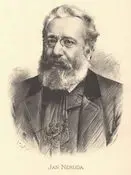
Jan Neruda

Jan Neruda was a prominent Czech writer, journalist, and poet, considered one of the central figures of the Czech literary movement in the second half of the 19th century. His work portrays the daily life, customs, and social transformations of Prague, with a sharp eye for the nuances of the human soul.

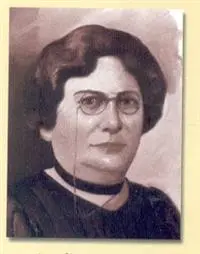
Maria Lucília Moita

Maria Lucília Moita was a notable Portuguese poet and short story writer, whose work is recognized for its sensitivity and exploration of themes such as identity, memory, and human relationships. Her writing, marked by lyrical language and deep empathy, reflects a particular vision of the world and the female condition. Author of a diverse body of work, including poetry and prose, Moita left a significant legacy in contemporary Portuguese literature, captivating readers with her authenticity and emotional depth.

José María Hinojosa

Spanish poet, a prominent figure of the Generation of '27, although his work is inscribed within the avant-garde and surrealism. His poetry, marked by a deep sensuality and a bold exploration of the erotic and the Dionysian, is characterized by its impactful language and provocative imagery. Despite a brief literary production, his influence was felt in the avant-garde currents of the time.

Virgilio Dávila

Virgilio Dávila was a Puerto Rican poet, educator, and politician, primarily known for his lyrical work that evokes the lush nature of his native island and his love for his homeland. His poetry, characterized by great musicality and sensitivity, is part of the Romantic and Modernist tradition, exploring themes such as the Caribbean landscape, national identity, and the deepest human feelings. Dávila played an important role in the cultural and political life of Puerto Rico, leaving a literary legacy that celebrates the beauty and spirit of his land.