Guillaume Apollinaire
Author of the day

Guillaume Apollinaire

Guillaume Apollinaire was a highly influential French poet, playwright, short story writer, novelist, and art critic. He is considered one of the most important figures of early 20th-century European literature, particularly associated with the Symbolist movement and the development of Surrealism. Apollinaire is credited with coining the term 'Surrealism' and is renowned for his innovative use of language, experimental typography, and exploration of modern themes. His poetry often blends lyricis…

Poem of the day

Grass

Carl Sandburg
Pile the bodies high at Austerlitz and Waterloo.
Shovel them under and let me work
-I am the grass; I cover all.

And pile them high at Gettysburg
And pile them high at Ypres and Verdun.
Shovel them under and let me work.
Two years, ten years, and the passengers ask the conductor:

What place is this?
Where are we now?

I am the grass.
Let me work.
Read full poem

Born on this day

10
Antonio Machado

Antônio Machado was a Spanish poet, a prominent figure of the Generation of '27, although his work is often associated with the Generation of '98 due to its deep reflection on Spanish identity and the Castilian landscape. His poetry is marked by introspection, melancholy, and a constant search for the meaning of life, death, and time. He stands out for his contained lyricism, philosophical reflection, and exploration of memory and dreams.

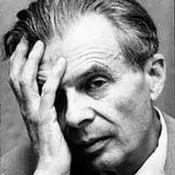
Aldous Huxley

Aldous Huxley was a prominent English writer, known for his vast body of work spanning novels, essays, short stories, and poetry. His writing is marked by profound intelligence, a critical view of society, and a constant exploration of themes such as technology, spirituality, sexuality, and human potential. "Brave New World" is his most celebrated work, a visionary dystopia that continues to resonate for its insight into humanity's future.

Eduardo Martins

Eduardo Martins is a Brazilian poet whose work stands out for its lyrical depth and exploration of existential themes and the human condition. His poetry is marked by a dense and imagistic language, capable of evoking sensations and reflections on love, death, time, and the search for meaning. With a style that moves between the confessional and the universal, Martins has built a body of work that resonates with its authenticity and its ability to touch the deepest chords of the reader, consolidating himself as a significant voice in contemporary Portuguese-language literature.

Ferro do Lago

Ferro do Lago is a literary pseudonym of an author whose identity is kept confidential. His poetic work explores the depths of the human condition, the mysteries of existence, and the fleeting beauty of the natural world. Through language rich in imagery and symbolism, the author constructs a particular universe where melancholy intertwines with hope, and philosophical reflection finds an echo in attentive observation of daily life.

Cassiano Ricardo

Cassiano Ricardo was a Brazilian poet, journalist, and literary critic, a prominent figure of Modernism. He was one of the founders of the magazine "Klaxon", an important vehicle for disseminating modernist ideas. His work, marked by formal and thematic experimentation, addressed themes such as national identity, urbanization, and social criticism, contributing significantly to the renovation of Brazilian poetry.

Diogo de Paiva de Andrade

Diogo de Paiva de Andrade was a Portuguese humanist, jurist, and poet of the 16th century. A prominent figure of the Renaissance in Portugal, he stood out for his vast erudition and his role in defending classical culture and humanistic studies. His poetic work, although less voluminous than his prose and legal production, reflects the influence of classical models and Renaissance sensibility.

Francisco José Lahmeyer Bugalho

Francisco José Lahmeyer Bugalho was a Portuguese poet, diplomat, and jurist, whose lyrical work is marked by erudition and a profound reflection on identity, history, and memory. His poetry, which combines formal rigor with dense and evocative language, often addresses themes such as the passage of time, longing for his homeland, and the complexity of human relationships. A career diplomat, Lahmeyer Bugalho lived and worked in several countries, experiences that are reflected in his writing, giving him a cosmopolitan perspective on existential issues. His work is a testament to his sharp intellect and artistic sensitivity, consolidating him as a relevant voice in contemporary Portuguese literature.

Edgar Bogardus

Edgar Bogardus is an American author known for his work in the field of fiction. His writing focuses on exploring relevant and universal themes, presented through engaging narratives and well-constructed characters. Throughout his career, Bogardus has dedicated himself to refining his literary art, always seeking new ways to connect with his readers and provoke reflection through his stories. He is recognized for his careful approach to writing.

Died on this day

8
Henrique Castriciano

Henrique Castriciano was a Brazilian poet and writer, a notable figure in the literature of Rio Grande do Norte. His work is often associated with regionalism, but it transcends local boundaries by exploring universal themes such as identity, land, and the human condition. Castriciano stood out for his rich poetic language and his ability to portray the soul of the northeastern sertão.

Guilherme Braga

Guilherme Braga is a poet whose work is distinguished by its lyrical depth and exploration of universal themes such as love, loss, and the ephemerality of existence. His poetry, often marked by careful language and a unique musicality, invites introspection and contemplation on the human condition. Braga belongs to the tradition of reflective poetry, addressing life's complexities with a sensitivity that resonates with readers seeking meaning and beauty.

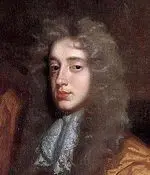
John Wilmot

John Wilmot, 2nd Earl of Rochester, was an English writer of the Restoration period. He is known for his satirical and licentious poetry, which frequently criticized the court and the morality of his time. His life was marked by excesses, dueling, and a sharp intellect.

Luis Álvarez Piñer

Luis Álvarez Piñer was a prominent Spanish philologist, university professor, and poet. His academic career and his passion for literature, especially poetry, marked his trajectory. He was a scholar of lyric poetry and dedicated himself to teaching, sharing his knowledge and love for the word with several generations of students.

Charles Juliet

Charles Juliet is a French writer known for his introspective and deeply personal work, which often explores themes such as childhood, memory, the relationship with the body, and the search for meaning amidst life's adversities. His writing is marked by a brutal honesty and an exploration of the complexities of the human psyche. His work, which includes novels and diaries, is a continuous attempt to understand himself and the world, often through a raw and unadorned language that reveals great sensitivity and vulnerability.

Lee Harwood

Lee Harwood was an English poet associated with the counterculture and experimental poetry. His work is known for its fragmented, often surrealist approach, and for exploring themes of perception, language, and everyday life. Harwood is remembered as an important figure in British poetry of the second half of the 20th century, with a distinctive style that challenged literary conventions.

Manuel Altolaguirre

Manuel Altolaguirre was a Spanish poet, linked to the Generation of '27 movement. His work is characterized by an intimate and reflective lyricism, often tinged with melancholy and a deep connection to the Andalusian landscape. He explored themes such as love, the passage of time, and the transience of existence, employing a refined and musical language. His work as a publisher and cultural manager was also significant, contributing to the dissemination of the poetry of his time.