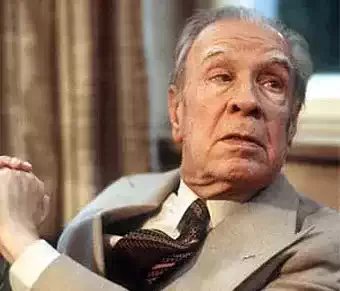
Jorge Luis Borges
Author of the day

Jorge Luis Borges

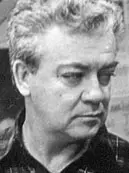
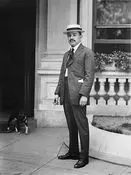
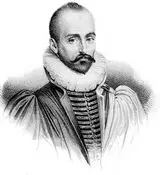
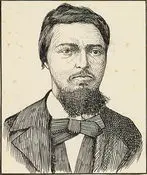
Jorge Luis Borges was an Argentine writer, poet, essayist, and translator. His work is characterized by its philosophical depth, intricate plots, and exploration of themes such as time, infinity, identity, and the nature of reality. Borges is considered one of the most significant literary figures of the 20th century, renowned for his innovative use of literary devices and his profound influence on postmodern literature.

Poem of the day

Grass

Carl Sandburg
Pile the bodies high at Austerlitz and Waterloo.
Shovel them under and let me work
-I am the grass; I cover all.

And pile them high at Gettysburg
And pile them high at Ypres and Verdun.
Shovel them under and let me work.
Two years, ten years, and the passengers ask the conductor:

What place is this?
Where are we now?

I am the grass.
Let me work.
Read full poem

Born on this day

12
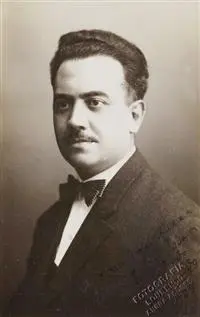
Armando Cortes-Rodrigues

Armando Cortes-Rodrigues was a Portuguese poet and writer, whose work is part of the Symbolist and Modernist movements. His poetry is marked by a deep musicality, a melancholic tone, and an exploration of themes such as death, time, and saudade, often evoked through language rich in symbolism and sensory imagery. He was also an important promoter of Portuguese literature and culture.

Paulo Mendes Campos

Paulo Mendes Campos was a Brazilian poet, columnist, and journalist, known for his lyrical and introspective poetry, which addresses themes such as love, longing, the ephemerality of time, and the small joys and sorrows of everyday life. His work stands out for its simplicity of language, the musicality of its verses, and its profound tenderness. With a style that captivates with its delicacy and ability to capture the essence of human emotions, Mendes Campos left an important legacy in Brazilian literature. His equally appreciated columns reveal an attentive eye on urban life and human relationships, consolidating him as a multifaceted and beloved author by the public.

Geir Campos

Geir Campos was a prominent Brazilian poet, translator, and literary critic, an important figure in the cultural scene of his time. His poetic work is marked by intelligence, irony, and a deep observation of Brazilian reality, often with a critical eye on society. As a translator, he played a fundamental role in introducing important works of foreign literature to the Brazilian public, especially in the field of poetry. His work spanned various aspects of literary activity, consolidating him as a multifaceted intellectual.

José Vasconcelos

José Vasconcelos was a Brazilian writer, politician, and educator, a central figure of Brazilian Modernism. His work spanned various fields, including philosophy, sociology, and literary criticism, but it is in poetry that his lyrical vein and the search for a national identity are most intensely manifested. Vasconcelos left a significant intellectual legacy, with a body of work that sought to fuse tradition with modernity and propose a renewed vision of Brazilian culture.

Linhares Filho

Linhares Filho is a poet whose work is marked by profound introspection and the exploration of existential themes, such as memory, the passage of time, and the search for identity. His writing is characterized by dense, imagistic language, where the musicality and rhythm of the verses create an immersive atmosphere. Filho's poetry invites an inner journey, encouraging the reader to confront their own anxieties and longings in an intimate and universal dialogue.

Francisco de Sousa e Almada

Francisco de Sousa e Almada was a Portuguese lawyer and poet, born in Lisbon. His poetic work, although not extensive, reveals a lyrical sensibility and a concern for form, characteristic of his time. His connection to the legal world did not distance him from the literary universe, where he left a record of a particular poetic voice, attentive to the nuances of existence.

Alberto de Monsaraz

Alberto de Monsaraz was a Portuguese poet whose work is part of the panorama of contemporary poetry. His writing is marked by a deep reflection on the human condition, exploring themes such as the passage of time, memory, and the ephemerality of existence. With a careful style and evocative language, Monsaraz built a poetic work that distinguishes itself by its sensitivity and its ability to transmute the everyday into lyrical matter. His poetry invites contemplation and introspection, leaving an indelible mark on Portuguese literature.

Marcela Paz

Marcela Paz, whose real name was Esther Huneeus Cox, was a Chilean writer widely known as the creator of "Papelucho", a very popular children's book series. Her work focused on the children's universe, humorously and sensitively portraying a child's adventures and thoughts, winning over generations of readers.

José Coronel Urtecho

José Coronel Urtecho was a multifaceted figure in Nicaraguan art and culture, primarily recognized for his work as a poet and for being one of the founders of the avant-garde movement in Nicaragua. His poetic work is distinguished by its experimentalism, humor, irreverence, and its deep connection to Nicaraguan identity, exploring themes such as history, mythology, and daily life with bold and original language. In addition to his prolific literary career, Coronel Urtecho was a distinguished painter, diplomat, and cultural critic, leaving an indelible mark on the artistic and intellectual landscape of his country.

Died on this day

11
Aureliano Lessa

Aureliano Lessa is an intriguing figure in the literary scene, known for his writing that straddles lyricism and insightful observation of the human condition. His work is marked by a reflective depth and a style that, while sometimes colloquial, carries a notable semantic density. A poet and translator, Lessa explores themes such as memory, time, identity, and interpersonal relationships in his verses, often with a touch of melancholy and irony. His literary career demonstrates a continuous search for new forms of expression and constant dialogue with tradition and modernity.

Aurélio Buarque de Holanda Ferreira

Aurélio Buarque de Holanda Ferreira was a prominent Brazilian lexicographer, philologist, professor, and poet. He is best known as the author of "Aurélio", one of the most widely used Portuguese language dictionaries in Brazil. As a poet, his work is marked by erudition, reflection on language, and exploration of themes such as time, memory, and the human condition, with a classic and rigorous style.

Rodrigo Otávio

Rodrigo Otávio was a notable Brazilian intellectual, whose work spanned poetry, prose, and literary criticism. His work is marked by profound lyricism, reflection on national identity, and exploration of the nuances of the human soul. With an elaborate language and distinctive style, Otávio contributed significantly to the enrichment of Brazilian literature, addressing universal themes with a perspective deeply rooted in his country's culture and history. His legacy lies in the artistic quality and depth of his reflections.

Gabriel Mariano

Gabriel Mariano was a Cape Verdean poet whose work is deeply rooted in the identity and landscapes of the islands. His poetry is marked by a lyricism that celebrates the land, the sea, the culture, and the soul of the Cape Verdean people, exploring themes such as saudade, hope, resilience, and the human condition in an island context. With a language rich in imagery and musicality, Mariano captured the essence of the Cape Verdean experience, becoming an important voice in the literature of Cape Verde and the Lusophone world.

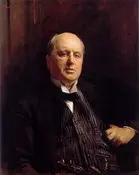
Henry James

Henry James was an American writer who spent most of his adult life in England. He is known for his novels and short stories that explore the complex interplay between his characters' psychology and their social environment. His work often addresses themes of class, culture, and the clash between the Old and New Worlds.

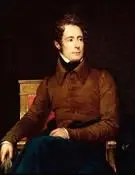
Alphonse de Lamartine

Alphonse de Lamartine was a French poet, writer, and politician, a prominent figure of Romanticism. His poetic work, particularly 'Méditations Poétiques', had a significant impact on French literature, introducing themes of love, nature, and melancholy. He also played an important role in French politics during the Second Republic.

Sometimes, when one person is missing, the whole w
Mario Luzi

Mario Luzi was one of the most important Italian poets of the 20th century, known for his introspective, meditative poetry deeply rooted in the human condition. His work, marked by an incessant search for meaning and by a dense, evocative language, explores themes such as faith, doubt, time, memory, and man's relationship with the sacred. Throughout his extensive career, he demonstrated a remarkable capacity for renewal and reflection on the great existential dilemmas, becoming a central figure in contemporary Italian and European poetry.

Pe. António de Carvalho

Fr. António de Carvalho was a notable Portuguese poet, whose work stands out for its spiritual depth and exploration of religious and existential themes. His writing, often imbued with lyrical and reflective sensibility, addresses faith, doubt, transcendence, and the human condition in light of a theological and philosophical perspective. His poetry is a testament to his dedication to art and spirituality, leaving a legacy of verses that invite contemplation and introspection.

Liliane Wouters

Liliane Wouters was a notable Belgian poet and novelist. Her work is characterized by a deep exploration of the human condition, memory, and the passage of time, often immersed in a lyrical and evocative language. She addressed themes such as identity, love, and loneliness, weaving narratives that resonate with the complexity of human emotions. Her unique literary style established her as an important voice in contemporary literature.

Alvaro Cunqueiro

Alvaro Cunqueiro was a prominent Galician narrator and poet, known for his deep connection with the mythology and folklore of Galicia. His work is characterized by a rich and evocative prose, often tinged with a melancholic lyricism and subtle humor. His literary output encompasses both poetry and narrative, exploring universal themes through a prism deeply rooted in Galician culture, which has earned him a prominent place in Galician and Spanish language literature.