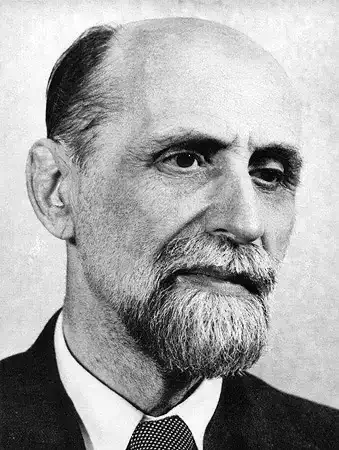
Walt Whitman
Author of the day

Walt Whitman

Walt Whitman was an American poet, essayist, journalist, and a deliberate humanist who became one of the most influential figures in American poetry. He is often called the "father of free verse." His seminal work, "Leaves of Grass," was a radical departure from the conventional poetry of its time, celebrating the individual, democracy, the body, and the spirit in expansive, cataloging lines. Whitman's poetry embraced a wide range of subjects, from the natural world and urban life to the experi…

Poem of the day

Grass

Carl Sandburg
Pile the bodies high at Austerlitz and Waterloo.
Shovel them under and let me work
-I am the grass; I cover all.

And pile them high at Gettysburg
And pile them high at Ypres and Verdun.
Shovel them under and let me work.
Two years, ten years, and the passengers ask the conductor:

What place is this?
Where are we now?

I am the grass.
Let me work.
Read full poem

Born on this day

10
Sidónio Muralha

Sidónio Muralha was a Portuguese poet and writer, whose work is part of the currents of experimental poetry and interventionist poetry. His writing is marked by the search for new forms of expression, by social criticism, and by the exploration of language as a means of transformation and reflection on reality. His poetry, often challenging and innovative, reflects a keen eye on the contemporary world, its conflicts, and its contradictions. Muralha stood out for his ability to transgress the conventional boundaries of poetry, proposing a language that is simultaneously artistic and politically engaged.

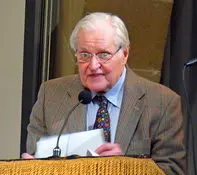
John Ashbery

John Ashbery was one of the most influential American poets of the second half of the 20th century, known for his challenging and innovative poetry. His work explores the nature of language, consciousness, and reality, often through lengthy, stream-of-consciousness poems. Ashbery demonstrated a remarkable ability to blend the colloquial with the sublime, the personal with the impersonal, creating a unique style that defies easy categorization. He was also a respected literary critic and teacher, leaving a lasting legacy on contemporary poetry.

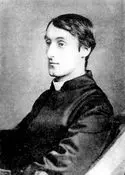
Gerard Manley Hopkins

Gerard Manley Hopkins was an English Jesuit poet, known for his innovative approach to meter and the intensity of his poetic language. His work, marked by profound spirituality and keen observation of nature, was only widely published after his death but influenced generations of modern poets. He is celebrated for his unique use of 'sprung rhythm' and his ability to capture the vitality and beauty of the natural and spiritual world.

José dos Santos Ferreira

José dos Santos Ferreira, known as Q302250 on Wikidata, was a poet whose work is part of the context of interventionist poetry with a strong social and political tone. His writing is marked by a deep sense of justice and a commitment to denouncing oppression and inequalities. His poetry, with direct language and a vehement tone, sought to give voice to the marginalized and inspire the struggle for a more just world.

Darío Jaramillo Agudelo

Darío Jaramillo Agudelo was a Colombian poet, editor, and diplomat. His poetic work is known for its lyrical intensity, exploration of themes such as love, death, loneliness, and memory, and for a language that combines tradition with modernity. As an editor and diplomat, Jaramillo also played an important role in disseminating Latin American culture and literature. His poetry is marked by authenticity and the ability to evoke deep emotions.

Alan Brownjohn

Alan Brownjohn is an English poet and literary critic, known for his poetry that reflects on life in post-war Britain, addressing themes such as social change, popular culture, and the urban experience with a lucid and often ironic perspective. His work is characterized by clear and direct language, combined with careful observation of the nuances of daily life and cultural transformations. He frequently explores the relationship between the individual and society, questioning established norms and values. Throughout his career, Brownjohn has maintained a commitment to the realistic representation of the world around him, avoiding rhetorical excesses and focusing on the authenticity of his observations. His poetry has a reflective and critical quality, inviting readers to consider the complexities of their time. As a critic, he has also contributed to the understanding of modern poetry, offering insightful analyses of other writers. He is recognized as an important voice in contemporary English poetry, appreciated for his integrity and his ability to capture the spirit of his age.

Julie Carr

Julie Carr is an American poet and theorist, known for her poetry that often intertwines the personal with the political and the social. Her work explores themes of motherhood, feminism, ecology, and the search for meaning in a complex world, using language that is both lyrical and ingenious.

Gloria Fuertes

Spanish poet known for her direct, simple, and deeply human style, which often moves between tenderness, irony, and social protest. Her work, accessible to all audiences, addresses themes such as love, loneliness, injustice, childhood, and nature with an unmistakable voice, full of musicality and sensitivity. Gloria Fuertes became a symbol of popular and committed poetry, leaving an indelible legacy in Spanish and Latin American literature.

Died on this day

8
Maria A. Oliveira

Maria A. Oliveira is a poetic figure whose work stands out for its lyrical depth and exploration of universal themes such as love, loss, and the passage of time. Her writing, characterized by careful language and intrinsic musicality, invites reflection on the human condition and its complexities. Her poetic compositions resonate with a unique sensibility, touching the reader with their authenticity and the beauty of their imagery.

Paul Eldridge

Paul Eldridge, born Joseph-Émile Mathon, was a French writer and poet. His work, marked by a Symbolist and mystical style, explores themes such as love, death, and transcendence. He was one of the founders of the literary magazine 'Le Mercure de France'.

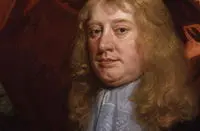
Abraham Cowley

Abraham Cowley was an influential English poet and essayist of the Baroque period, known for his exuberant style and his exploration of philosophical and moral themes. His poetic works frequently employ complex metaphors and allegories, reflecting the taste of the era for elaboration and ingenuity. As an essayist, Cowley addressed a variety of subjects, from nature and society to the human condition, with a prose that combines erudition and insight.

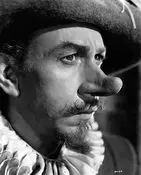
Cyrano de Bergerac

Cyrano de Bergerac was a French writer, poet, and playwright, known for his science fiction works and satirical plays. Born in Paris on March 6, 1619, he is most famous for his descriptions of space travel and his vivid imagination. His works "The State and Empire of the Moon" and "The State and Empire of the Sun" are considered precursors of modern science fiction, exploring concepts of interplanetary travel and utopian/dystopian societies with a critical and philosophical tone.

Zbigniew Herbert

Zbigniew Herbert was a Polish poet, essayist, and playwright, widely recognized as one of the most important European poets of the second half of the 20th century. His work is marked by a profound reflection on the human condition, history, morality, and classical culture, expressed in precise and rigorous language. He was a voice of integrity and intellectual resistance in times of oppression. Herbert is known for his ironic and often stoic perspective on the great themes of life, frequently using the figure of "Mr. Cogito" to explore the complexity of existence and the struggle for dignity.

Luís Ribeira Seca

Luís Ribeira Seca was a poet whose work stands out for its originality and its ability to capture the essence of the human experience through careful poetic language. His poetry, although sometimes enigmatic, invites reflection on universal themes such as love, solitude, and the search for meaning. His figure is a testament to the vitality of poetic expression.

Rodrigo Rodrigues

Rodrigo Rodrigues is a poet whose work is characterized by the exploration of themes such as identity, memory, and the inner landscape. With a language that moves between the lyrical and the reflective, his poems invite an immersion in subjectivity and the search for meaning. His writing, marked by a sharp sensibility, reflects an attentive gaze on the nuances of human experience and the individual's relationship with the world.

Tamara Kamenszain

Tamara Kamenszain (1947-2021) was a renowned Argentine poet, essayist, and professor, internationally recognized for her lyrical and essayistic work of profound originality and intellectual rigor. Her poetry is marked by a constant exploration of the limits of language, memory, identity, and the feminine experience, often engaging with other arts and with the social and political context. Kamenszain stood out not only as a creator but also as an important critical and theoretical voice, dedicating herself to the study of poetry and the dissemination of culture. Her work, permeated by a fine irony and acute sensibility, left a lasting legacy in the Spanish-language literature, influencing generations of writers and readers.

Community birthdays

1