Poem of the day

Do Not Go Gentle Into That Good Night

Dylan Thomas
Do not go gentle into that good night, 
Old age should burn and rave at close of day; 
Rage, rage against the dying of the light. 

Though wise men at their end know dark is right, 
Because their words had forked no lightning they 
Do not go gentle into that good night. 

Good men, the last wave by, crying how bright 
Their frail deeds might have danced in a green bay, 
Rage, rage against the dying of the light. 

Wild men who caught and sang the sun in flight, 
And learn, too late, they grieved it on its way, 
Do not go gentle into that good night. 

Grave men, near death, who see with blinding sight 
Blind eyes could blaze like meteors and be gay, 
Rage, rage against the dying of the light. 

And you, my father, there on that sad height, 
Curse, bless, me now with your fierce tears, I pray. 
Do not go gentle into that good night. 
Rage, rage against the dying of the light.
Read full poem

Born on this day

11
Abus Novas

Abus Novas is a poet whose work is distinguished by a deep exploration of the human condition, addressing themes such as the ephemerality of time, the search for meaning, and the complexity of interpersonal relationships. His writing is marked by evocative language and a unique sensitivity in the construction of poetic images that resonate with the reader. His literary career demonstrates growing maturity, with a notable evolution in the form and content of his compositions. Abus Novas has consolidated himself as a relevant voice in the contemporary poetic landscape, with a style that combines introspection and keen observation of the world, creating poems that invite reflection and dialogue with existence.

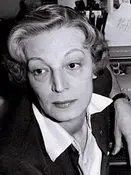
Adalgisa Nery

Adalgisa Nery was a Brazilian poet, journalist, and political activist, known for her lyrical and social poetry, which addressed themes such as love, the condition of women, social injustice, and hope. With a body of work that moves between intimate lyricism and civic engagement, Adalgisa Nery marked 20th-century Brazilian literature. Her poetic voice, strong and sensitive, echoed her work as a defender of humanitarian and social causes.

Bernardo de Passos

Bernardo de Passos is a poet whose writing is characterized by lyrical depth and reflection on the passage of time and the ephemerality of existence. His poetry, often imbued with a subtle melancholy, explores human emotions and the individual's relationship with the world around them, inviting contemplation and introspection.

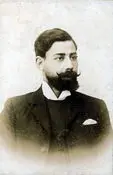
Rui de Noronha

Rui de Noronha was a Portuguese poet, whose works, although scarce and sometimes of uncertain attribution, are part of the context of Renaissance and Mannerist poetry in Portugal. His writing is marked by the influence of classical and Italian models, exploring themes such as love, saudade, and existential reflection. With a style that demonstrates formal mastery, Noronha contributed to the literary landscape of the time with verses that reflect the sensibility and aesthetic concerns of his era. His work, although limited in volume, is appreciated for its quality and its place in the evolution of Portuguese poetry.

Nelson Motta

Nelson Motta is a renowned Brazilian journalist, writer, music producer, and lyricist. With a multifaceted career, he stood out for his sharp critical vision and his ability to move between different artistic languages. His literary work, often permeated by reflections on Brazilian popular music and urban culture, is marked by a direct and engaging style.

Zbigniew Herbert

Zbigniew Herbert was a Polish poet, essayist, and playwright, widely recognized as one of the most important European poets of the second half of the 20th century. His work is marked by a profound reflection on the human condition, history, morality, and classical culture, expressed in precise and rigorous language. He was a voice of integrity and intellectual resistance in times of oppression. Herbert is known for his ironic and often stoic perspective on the great themes of life, frequently using the figure of "Mr. Cogito" to explore the complexity of existence and the struggle for dignity.

Joaquim da Costa Cascais

Joaquim da Costa Cascais was a poet whose writing is distinguished by its reflective depth and the exploration of existential themes, such as the fleeting nature of time and the search for transcendence. His poetry, marked by precise language and an engaging sound, reflects a keen sensitivity and a unique ability to capture the nuances of human experience. Although not a central figure in the literary pantheon, his work is a valuable testament to the power of poetry in articulating complex feelings and thoughts.

Beatriz Pinheiro de Lemos

Beatriz Pinheiro de Lemos was a Portuguese poet whose works explore the depths of the human soul, the passage of time, and the ephemeral beauty of existence. Her writing is marked by a refined sensibility, introspective lyricism, and careful language, frequently addressing themes such as saudade, nature, and reflection on the inner life. With a singular poetic voice, Lemos wove verses that invite contemplation and introspection, leaving a legacy of poetry that resonates for its delicacy and its ability to touch the deepest emotions of the reader.

Porfírio Silva

Porfírio Silva is a poet whose work is characterized by expressive force and the exploration of social and existential themes with an often raw and visceral language. His poetry reflects an attentive gaze upon the realities of everyday life, the human condition, and social injustices, utilizing a rich vocabulary and a unique musicality. With an unmistakable poetic voice, Porfírio Silva navigates between lyricism and rawness, addressing life, death, love, and revolt. His work is an invitation to reflect on the world around us and our place in it, marked by an authenticity that deeply resonates with his readers.

Stephanie Borges

Stephanie Borges is a Brazilian writer who has been making a name for herself in the contemporary literary scene with her engaging narratives and memorable characters. Her work explores the complexity of human relationships and the challenges faced by today's society. With a style that moves between the poetic and the introspective, Borges crafts stories that invite reflection on themes such as identity, belonging, and the diverse facets of love. Her prose is marked by sensitivity and the ability to capture the subtleties of everyday life.

Died on this day

4
Ana Cristina Cesar

Ana Cristina Cesar was a Brazilian poet, essayist, and translator whose work stands out for its lyrical intensity, exploration of subjectivity, and the intersection between life and writing. Her poetry, marked by a unique voice and a language that blends the colloquial and the erudite, addresses themes such as love, identity, memory, the city, and the female condition. Her short but prolific career left a significant legacy in contemporary Brazilian literature.

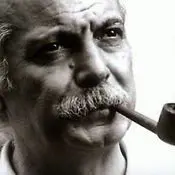
Georges Brassens

Georges Brassens was a French poet and singer-songwriter, known for his poetry that addresses themes such as freedom, friendship, love, and social criticism in an ironic and sometimes subversive way. His songs, often accompanied only by guitar, stand out for their colloquial language, metrical mastery, and ability to evoke deep emotions with simplicity and authenticity. Considered one of the greatest poets of the French language in the 20th century, Brassens left a lasting legacy in music and literature, influencing generations of artists with his humanist vision and rebellious spirit.

Liz Christine

Liz Christine is a contemporary poet whose work stands out for its exploration of themes such as love, the ephemerality of life, and the search for identity in a constantly changing world. Her poetry, often marked by a confessional and introspective tone, uses accessible language rich in sensory imagery. The author moves between the personal and the universal, inviting the reader to a profound reflection on human emotions and experiences. Her writing reflects the sensibilities and concerns of the current generation.

Araripe Coutinho

Araripe Coutinho is a poet whose work is part of the context of contemporary Portuguese poetry. His writing explores the human condition, the ephemerality of time, and the search for meaning in a constantly changing world. Through careful language and a strong imagistic charge, Coutinho constructs verses that resonate for their depth and their ability to evoke universal emotions. His poetry reflects a refined sensitivity to the nuances of existence, addressing themes such as memory, saudade, and transcendence. The influence of diverse literary traditions is evident in his ability to combine classical form with experimentation, creating a singular and striking poetic voice.