Poem of the day

Grass

Carl Sandburg
Pile the bodies high at Austerlitz and Waterloo.
Shovel them under and let me work
-I am the grass; I cover all.

And pile them high at Gettysburg
And pile them high at Ypres and Verdun.
Shovel them under and let me work.
Two years, ten years, and the passengers ask the conductor:

What place is this?
Where are we now?

I am the grass.
Let me work.
Read full poem

Born on this day

12
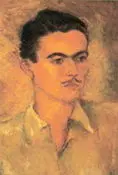
João Linneu

João Linneu is a Portuguese poet whose work fits within the context of Modernism, particularly its more experimental and avant-garde aspects. His poetry is characterized by formal freedom, the exploration of new languages, and approaches to contemporary themes, often with a touch of irreverence. Although his figure and work are not as prominent as those of other modernists, João Linneu represents an important facet of 20th-century Portuguese poetry, marked by the relentless search for new forms of expression and the desire to engage with his time.

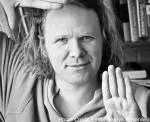
Teresa Brandão

Teresa Brandão is a notable figure in contemporary Portuguese-language poetry, known for her lyrical voice and her exploration of intimate and universal themes. Her work stands out for its sensitivity in approaching issues such as time, memory, and the complexities of human relationships. With carefully crafted language and a strong capacity for evocation, Brandão builds poems that resonate with emotional depth and imagistic plasticity, establishing her as a significant poet in current literature.

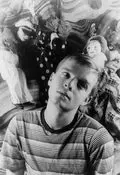
Paulo Bomfim

Paulo Bomfim was a Brazilian poet known for his introspective and reflective lyricism. His work often explores themes such as the passage of time, memory, and the human condition, with careful language and musical rhythm. Throughout his career, he established himself as an important voice in contemporary Brazilian poetry, recognized for the depth of his verses and the sensitivity with which he addresses the complexities of life. His poetic style is marked by concision, the use of suggestive imagery, and intrinsic musicality, inviting contemplation. Bomfim dedicated himself to poetry with a passion that shines through in every verse, leaving a legacy of works that continue to resonate with readers and critics for their relevance and beauty.

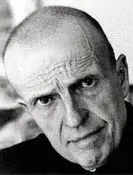
Jalāl ad-Dīn Muḥammad Balkhī, Rūmī

Jalāl ad-Dīn Muḥammad Balkhī, more commonly known as Rumi, was a 13th-century Persian poet, jurist, theologian, and Islamic mystic. Born in the region of Greater Khorasan, he migrated with his family to escape the Mongol invasion, eventually settling in Konya, in the Sultanate of Rum, from which he derives his honorific name. His work, deeply spiritual and mystical, is central to the Sufi tradition, exploring divine love, union with the Absolute, and the journey of the soul. Rumi is celebrated worldwide for his lyrical poetry, particularly the "Masnavi," a six-volume allegorical epic, and the "Divan-e Shams-e Tabrizi," a vast collection of lyrical poems and ruba'iyat. His legacy transcends cultural and religious boundaries, being considered one of the most influential and beloved poets in history.

Barrie Phillip Nichol

Barrie Phillip Nichol was a Canadian poet known for his experimental and visual approach to poetry. His work challenged literary conventions, exploring new forms of expression that integrated visual and sonic elements. He was an influential figure in contemporary Canadian poetry, leaving a legacy of innovation and experimentation. Nichol worked with diverse media, including the creation of poetic objects, films, and performances. His experimentation sought to expand the boundaries of what poetry could be, making it a more holistic and multi-sensory experience.

Charles Juliet

Charles Juliet is a French writer known for his introspective and deeply personal work, which often explores themes such as childhood, memory, the relationship with the body, and the search for meaning amidst life's adversities. His writing is marked by a brutal honesty and an exploration of the complexities of the human psyche. His work, which includes novels and diaries, is a continuous attempt to understand himself and the world, often through a raw and unadorned language that reveals great sensitivity and vulnerability.

William S. Merwin

William S. Merwin was a prolific American poet, translator, and environmental activist, recipient of the Pulitzer Prize for Poetry. His work is marked by the exploration of themes such as memory, nature, spirituality, and language, often with an introspective and innovative style.

Arturo Corcuera

Arturo Corcuera was a Spanish poet known for his playful and innovative approach to language. His work stands out for its formal experimentation and exploration of themes such as memory, identity, and the relationship between man and nature. Corcuera is recognized for his contribution to contemporary poetry, with a style that shifts between the colloquial and the erudite.

Rafael Montesinos

Rafael Montesinos is a Spanish poet and essayist. His work is marked by a profound reflection on existence, language, and poetry itself. He stands out for his erudition and his ability to dialogue with the literary tradition, while renewing it with a personal and contemporary perspective. His poetic style is characterized by musicality, vocabulary precision, and a fertile imagination, exploring universal themes with unique sensitivity. In addition to his lyrical production, Montesinos has also dedicated himself to the study of literature, contributing critical essays that deepen the understanding of various authors and movements.

Alexandra Domínguez

Alexandra Domínguez is a Spanish writer and poet, whose poetic work is widely recognized for its sensitivity and expressive force. Her writing addresses themes such as identity, memory, and the individual's relationship with the world around them. With a lyrical and imagistic language, Domínguez manages to convey deep feelings and subtle reflections, earning a prominent place in contemporary Spanish-language poetry. Her work invites introspection and contemplation of beauty in the little things in life.

Died on this day

6
Michel Leiris

Michel Leiris was a French writer, ethnographer, and surrealist poet, known for his autobiographical work and his investigations into the human condition and culture. His writing is characterized by deep introspection, exploration of identity, memory, and the body, and a lyrical, fragmentary style. Leiris was a central figure in the surrealist movement and participated in important ethnographic expeditions.

Joaquim Mendes dos Remédios

Joaquim Mendes dos Remédios was a Portuguese poet and professor, a prominent figure in the literary and intellectual landscape of his time. His poetic work, although sometimes less known to the general public, reveals a refined sensibility and a deep interest in themes such as nature, spirituality, and the human condition. As an educator, he dedicated himself to education, leaving an important legacy in the field of teaching. His literary output, whether in verse or prose, reflects thoughtful consideration and careful language, contributing to the richness of Portuguese literature.

Francisco Dias Gomes

Francisco Dias Gomes was a Portuguese poet whose work is part of the Romantic movement. His poetry is marked by a strong lyrical vein, with themes often centered on love, saudade (longing), and nature. It is characterized by a style that, while rooted in the conventions of his time, reveals a particular sensibility and a careful use of poetic language. His literary legacy, though perhaps less prominent than that of other Romantics, represents a valuable contribution to 19th-century Portuguese poetry. His work reflects the ideals and sensibilities of an era of great social and cultural transformations.

António Aurélio Gonçalves

António Aurélio Gonçalves was a distinguished Portuguese writer, literary critic, and university professor. His work, marked by profound erudition and rigorous style, spanned narrative, essay, and poetry. He stood out for his insightful analysis of literature and his contribution to the study of Portuguese culture, being an influential figure in the intellectual landscape of the 20th century.

Patrick White

Patrick White was an Australian novelist, awarded the Nobel Prize in Literature in 1973. He is considered one of the most important Australian writers of the 20th century, known for his exploration of Australia's inner and outer landscape and the psychological complexity of his characters.

In all directions stretched the great Australian E