

Awards
Queen's Gold Medal for Poetry
Description
Origins and Creation
The Queen's Gold Medal for Poetry is one of the most prestigious literary awards in the United Kingdom, with a rich history and profound significance in the poetic landscape. Instituted in 1933 at the initiative of Poet Laureate John Masefield, the medal was originally conceived to recognize excellence in poetry, both nationally and imperially. Its creation was an important milestone, as it offered formal, high-caliber recognition for poetic work, something that was less common at the time.
Selection Process
Over the decades, the medal has been awarded to some of the most influential and celebrated poets in the English language. Its unique nature lies in the fact that it is not awarded annually on a fixed basis, but rather when the occasion warrants it and when a candidate of exceptional merit is identified. This intermittence, far from diminishing its value, accentuates its exclusivity and the weight of the decision. The choice is made by a committee of experts, generally under the recommendation of the UK Poet Laureate, and final approval rests with the reigning monarch.
Award Criteria
The criteria for awarding the Queen's Gold Medal for Poetry are, by nature, broad, but focus on literary excellence and the lasting impact of the poet's work. It is not about awarding a specific book, but rather the poet's body of work, or an exceptional contribution to the art of poetry. This allows for the recognition of both prolific and influential careers, as well as moments of particularly notable poetic brilliance. The medal has been seen as a royal seal of approval for the highest poetic quality, conferring special status on its recipients.
Significance and Laureates
Its relevance transcends mere individual recognition. The medal symbolizes the Crown's support for art and culture, and particularly for poetry, which is seen as a fundamental form of expression for national and cultural identity. Throughout its history, the medal has been awarded to poets from diverse backgrounds and styles, reflecting the vitality and diversity of British poetry. Among the laureates are names such as W. B. Yeats, T. S. Eliot, Philip Larkin, Ted Hughes, Seamus Heaney, Carol Ann Duffy, and Geoffrey Hill, among many others. Each name added to the list of winners reinforces the award's legacy and its continuing importance.
International Dimension and Ceremonies
An interesting curiosity is that, although it is a British award, the medal has been awarded to poets from other parts of the Commonwealth, reflecting its initial imperial origin and its reach in the English language. The award ceremony, when it occurs, is a significant event, often held at Buckingham Palace or other royal venues, underlining the prestige associated with the award. The Queen's Gold Medal for Poetry continues to be a beacon of poetic excellence, celebrating and encouraging the art of poetry in the United Kingdom and beyond.
Winners

Michael Laskey


George Szirtes

Mimi Khalvati

Mimi Khalvati is an Iranian-American poet known for her lyrical and formal poems that explore themes of identity, memory, exile, and the search for belonging. Her poetry is marked by a distinct musicality and a careful exploration of form, often using traditional structures in innovative ways. Khalvati writes with a sensitivity that intertwines her Persian heritage with her life in America, addressing the tensions and dialogues between different cultures and experiences. Her work is appreciated for its emotional depth, imagistic precision, and a poetic voice that is both personal and universal.

Selima Hill

Paul Durcan

David Constantine

Lorna Goodison


Simon Armitage

Paul Muldoon


Gillian Allnutt

Moniza Alvi

Imtiaz Dharker

Imtiaz Dharker is a poet, visual artist, and documentary filmmaker of Pakistani origin, based in the United Kingdom. Her poetic work is known for its exploration of themes such as identity, faith, exile, migration, and the condition of women in different cultures. Dharker combines powerful language with strong imagery, addressing social and political issues with sensitivity and urgency.

Douglas Dunn
Douglas Dunn is an acclaimed Scottish poet, known for his poetry that often reflects on life in Scotland, the working class, and the human experience in its various facets. His work combines colloquial language with moments of deep lyrical reflection, addressing themes such as work, family, loss, and the passage of time with authenticity and empathy.

John Agard

Jo Shapcott

Gillian Clarke

Don Paterson
Don Paterson is an acclaimed Scottish poet, known for his technical skill, dry wit, and exploration of themes such as fatherhood, relationships, and the human condition. His poetry combines a rigorous attention to form with colloquial and accessible language, often imbued with reflections on life, music (he is also a talented jazz guitarist), and the search for meaning.

John Beynon

Fleur Adcock

Fleur Adcock is a New Zealand-British poet, known for her clear, intelligent, and often ironic poetry, which explores themes of identity, gender, family, and culture. Her work frequently blends the personal with the observational, presenting an insightful look at human relationships and the experiences of modern life.

Hugo Williams

U. A. Fanthorpe

Peter Porter

Michael Longley

Edwin Morgan
Edwin Morgan was a Scottish poet, translator, and literary critic, widely regarded as one of the most important figures in 20th-century Scottish poetry. His work is notable for its diversity of styles and themes, ranging from experimental and futuristic to lyrical and conversational. Morgan was a pioneer in exploring language in new ways, often incorporating elements of science and popular culture into his poetry.

Les Murray


Peter Redgrove

Kathleen Raine

Judith Wright

Sorley MacLean

Allen Curnow
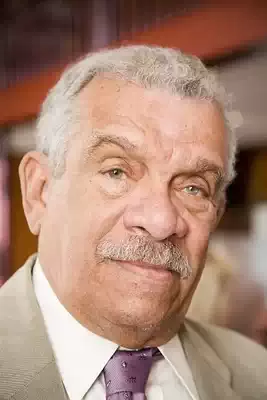
Derek Walcott

Derek Walcott was a Saint Lucian poet and playwright, celebrated for his sweeping epics and lyrical meditations on Caribbean identity, history, and the enduring power of the natural world. His work often explored the complex legacy of colonialism, the interplay of different cultures, and the search for selfhood in a postcolonial landscape. Educated in the British tradition yet deeply rooted in the Caribbean, Walcott's poetry is characterized by its rich imagery, classical allusions, and masterful use of language, often blending European literary forms with the rhythms and spirit of his native islands. He received numerous accolades for his contributions to literature, including the Nobel Prize in Literature.

Norman MacCaig
Norman MacCaig was a Scottish poet known for his lyrical and observational poetry, often centered on the landscape of the Scottish Highlands and the lives of its inhabitants. His work is marked by a subtle humor, precise language, and a deep appreciation for the beauty of the natural world and the interconnectedness of life. He also explored themes of identity and belonging.

D. J. Enright

Norman Nicholson
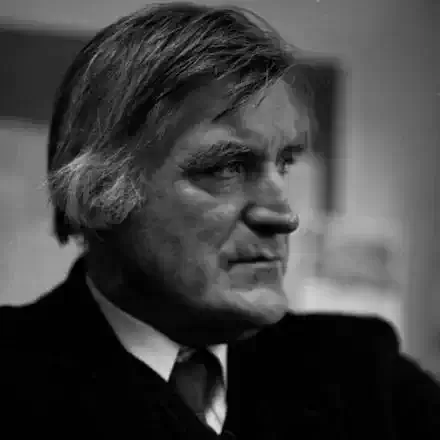
Ted Hughes
Ted Hughes was a prominent English poet, translator, and children's writer, celebrated for his powerful and visceral depictions of the natural world and its raw, primal forces. His poetry is characterized by its intensity, rugged language, and exploration of myth, the animal kingdom, and the darker aspects of human nature. Hughes's work often draws upon mythologies and folk traditions, imbuing his verse with a profound sense of elemental power and ancient wisdom.

John Heath-Stubbs
John Heath-Stubbs was an English poet whose work is known for its erudition, ironic humor, and deep connection to the literary tradition. He explored themes such as mythology, religion, and the search for meaning in a modern world, often using classical poetic forms with a contemporary touch. His poetry reflects a complex worldview, balancing skepticism with a longing for transcendence.

Stephen Spender

Roy Fuller
Roy Fuller was an English poet and novelist whose work is marked by a strong sense of social realism and a deep concern with the political and moral issues of his time. His poetry, often characterized by direct language and a restrained rhythm, explores themes of work, class, identity, and the passage of time.

Stevie Smith
Stevie Smith was an English poet and novelist known for her unique and eccentric voice, which combined humor, melancholy, and a peculiar social insight. Her work, often characterized by an apparent simplicity that hides deep reflections on life, death, and faith, has earned a special place in 20th-century literature.

Robert Graves
Robert Graves was an English poet, novelist, and scholar, known for his extensive poetic work and evocative prose. His writing explored themes of mythology, love, war, and the nature of art, often with a personal and reflective touch. Graves left a significant literary legacy, influencing generations of writers with his insight and stylistic mastery.

Charles Causley

Philip Larkin
Philip Larkin was an English poet, novelist, and librarian, widely regarded as one of the most important British writers of the second half of the 20th century. His poetic work is characterized by raw realism, a frequently melancholic and cynical tone, and a profound reflection on themes such as love, death, time, and disillusionment. Larkin is also recognized for his clear and accessible style, albeit laden with existential depth and irony.

D. M. Thomas

William Plomer


Christopher Fry

John Betjeman

Frances Cornford
Frances Cornford was an English poet known for her brief and witty poems, often with a touch of irony and social observation. Her work celebrates the simple joys of life, the beauty of nature, and human relationships, with clear and accessible language.

Siegfried Sassoon

Siegfried Sassoon was an English poet and soldier, renowned for his raw and often brutal war poetry written during World War I. His work vividly depicted the horrors of trench warfare, starkly contrasting with the patriotic fervor of the time. Sassoon's poems are characterized by their directness, anger, and profound sense of disillusionment, making him a prominent voice against the romanticization of conflict. He later explored themes of loss, faith, and the complexities of human relationships in his post-war writings.

Edmund Blunden

Ruth Pitter

Ralph Hodgson

Arthur Waley
Arthur Waley was a renowned British sinologist and translator, known for his translations of classic Chinese and Japanese works into English. His ability to convey the cultural and literary richness of the East to a Western audience was fundamental to the dissemination of these works. Waley stood out for the elegance and fidelity of his translations, which allowed classics such as "The Tale of Genji" and "Water Margin" to gain a new audience. His passion for Asian literature and his deep knowledge of Eastern languages and cultures established him as a central figure in Asian studies and comparative literature.

Andrew Young

Michael Thwaites
Michael Thwaites was an Australian poet, playwright, and writer. He was known for his poetic work that frequently explored themes of nature, mythology, and the human condition, with a lyrical and reflective style. His writing sought to capture the beauty and complexity of the world around him, often with a philosophical perspective. In addition to his poetry, Thwaites also ventured into theater and other literary genres, demonstrating versatility in his artistic expression. He is remembered for his contribution to Australian literature, offering a unique and distinct voice in his compositions.

W. H. Auden
W. H. Auden was a British poet, naturalized American, widely considered one of the greatest poets of the 20th century. His work is characterized by thematic and stylistic diversity, addressing issues from social and political matters to intimate reflections on love, death, and faith. Auden stood out for his sharp intellect, mastery of language, and ability to move between the colloquial and the elevated.

Laurence Whistler
Laurence Whistler was a British poet and writer known for his lyrical style and his reflections on themes such as nature, art, and the inner life. His poetic work is valued for its clarity, musicality, and the depth of his observations.