

Awards
Premio Internacional de Poesía Federico García Lorca
Premio Federico García Lorca
Description
Lorca's Poetic Legacy Lives On in Granada
Origin and Purpose of the Award
The Federico García Lorca International Poetry Award is a prestigious distinction in the Hispanic and international literary scene, dedicated to celebrating excellence in poetry and honoring the memory of one of the greatest figures of Spanish literature, Federico García Lorca. Established in 1997, this award is organized by the City Council of Granada, the city where Lorca lived and developed much of his work. Its primary objective is to promote the dissemination of poetry and recognize authors who, through their work, significantly contribute to the enrichment of poetic language and the reflection on the human condition.
Selection Criteria and Literary Quality
The selection criteria for the Federico García Lorca Award are rigorous and aim to identify works that demonstrate not only exceptional technical mastery of poetic form but also thematic depth, originality, and the ability to resonate with the audience. The award distinguishes a book of poetry published in Spanish, valuing its intrinsic literary quality, cultural relevance, and contemporary impact. It is not merely a recognition of an individual author but also a celebration of poetry as an art form and as a vehicle for expressing universal ideas and emotions.
The Connection to Federico García Lorca
The award's significance lies in its connection to Federico García Lorca, whose work transcends borders and generations, serving as a symbol of creativity, passion, and the struggle for freedom of expression. By lending his name to this award, Granada affirms its commitment to culture and the promotion of a literary legacy that continues to inspire poets and readers worldwide. The choice of Granada as the award's venue lends it a special aura, evoking the settings and atmosphere that inspired many of Lorca's works.
Winners and Cultural Impact
Over the years, the Federico García Lorca Award has been presented to internationally renowned poets whose works are considered milestones in contemporary literature in Spanish. The list of winners includes names that have become essential references in the poetic universe, attesting to the jury's seriousness and rigor and the award's importance. The award ceremony, usually held in Granada, is a prominent cultural event that brings together poets, literary critics, publishers, and poetry lovers, fostering the exchange of ideas and strengthening the poetic community.
International Reach and Significance
One of the distinctive features of this award is its emphasis on publication in Spanish, positioning it as one of the most important recognitions for poetry written in this language. However, its influence and the recognition it confers extend beyond the Hispanic world, attracting the attention of critics and academics globally. Its ability to identify and reward avant-garde works, without neglecting tradition, makes it a barometer of the vitality of contemporary poetry.
A Living Tribute to Poetry
In summary, the Federico García Lorca International Poetry Award is not just an award but a living tribute to poetry and one of its most brilliant exponents. It is a beacon that illuminates poetic paths, encourages creation, and ensures that the voice of poetry continues to echo with strength and beauty, just as the voice of Federico García Lorca did.
Winners

Jaime Siles

Jaime Siles is a Spanish poet, literary critic, and university professor, known for his poetry that combines formal rigor with a deep reflection on literary tradition, memory, and the human condition. His work is marked by notable erudition and precise, evocative language.

Coral Bracho

Coral Bracho is a renowned Mexican poet, essayist, and translator, recognized for her profound connection with nature and her exploration of language as a tool to apprehend the sensible world. Her work is distinguished by lush imagery, enveloping rhythms, and a sensitivity that captures the textures, colors, and movements of the natural and human environment. With a literary career spanning several decades, Bracho has established herself as one of the most original and influential poetic voices in contemporary Mexican literature. Her poetry invites a sensory and reflective experience, revealing the interconnections between being, matter, and the cosmos.

Circe Maia

Circe Maia is a Uruguayan poet and professor, whose works explore with delicacy and depth themes such as nature, everyday life, memory, and the passage of time. Her poetry, often characterized by apparent simplicity, reveals great sensitivity and a unique ability to capture the essence of human experiences and the natural world.

Raúl Zurita

Luis Alberto de Cuenca
Spanish poet, literary critic, and translator, Luis Alberto de Cuenca is a prominent figure in the poetry of the second half of the 20th century and the early 21st century. His work is characterized by profound erudition, a conversational tone, and constant intertextuality with popular culture and literary tradition. Through poetry that is accessible yet rich in nuance, he explored universal themes such as love, death, and the passage of time, often with an undertone of melancholy and existential reflection.

Yolanda Pantin

Yolanda Pantin is a Venezuelan poet, essayist, and editor. Her poetic work is known for its lyrical strength, for the exploration of themes such as the city, memory, the body, and everyday experience, with a language that moves between the colloquial and the metaphorical. As an essayist and editor, Pantin has contributed to the Venezuelan literary scene, promoting the work of other writers and reflection on literature. Her poetry is marked by authenticity and the ability to capture the essence of modern life.

Julia Uceda

Darío Jaramillo Agudelo

Darío Jaramillo Agudelo was a Colombian poet, editor, and diplomat. His poetic work is known for its lyrical intensity, exploration of themes such as love, death, loneliness, and memory, and for a language that combines tradition with modernity. As an editor and diplomat, Jaramillo also played an important role in disseminating Latin American culture and literature. His poetry is marked by authenticity and the ability to evoke deep emotions.

Pere Gimferrer
Poet, essayist, and literary critic from Spain, Pere Gimferrer is a central figure in contemporary Catalan and Spanish literature. His poetic work is characterized by profound erudition, constant formal experimentation, and a desire to dialogue between popular culture and high culture. Throughout his extensive career, he has explored themes such as memory, identity, cinema, painting, and mythology, creating a rich and multifaceted lyrical universe. His influence extends to various generations of writers, consolidating his position as one of the most important authors of Catalan and Spanish literature of the 20th and 21st centuries. His work as an essayist and critic has been equally fundamental to understanding the literature and art of his time.

Ida Vitale

Rafael Cadenas
Rafael Cadenas is a Venezuelan poet, essayist, and critic, considered one of the most important voices in contemporary Spanish-language poetry. His work is characterized by a profound reflection on existence, time, memory, and the human condition, often tinged with a serene melancholy and a moving lucidity. Through refined language and apparent simplicity, Cadenas manages to address life's great questions with exceptional intellectual acuity and sensitivity, establishing himself as an indispensable reference for understanding contemporary poetry.

Rafael Guillén

Eduardo Lizalde
Eduardo Lizalde was a Spanish poet, essayist, and literary critic, whose work is marked by a profound reflection on existence, art, and the human condition. His poetry, often enigmatic and philosophical, invites introspection and questioning. Lizalde also stood out for his activity as a critic, incisively analyzing literature and culture.

Pablo García Baena
Pablo García Baena was a distinguished Spanish poet, recognized for his lyrical work of profound sensuality and his connection to surrealism and the Generation of '50. His poetry is characterized by the exploration of themes such as eroticism, the beauty of the body, classical mythology, and decadence, often tinged with a melancholic tone and great verbal plasticity. Baena cultivated a language rich in sensory images and symbolism, creating a poetic universe that is both intimate and universal. His literary career was recognized with important awards, consolidating him as a unique and fundamental figure in contemporary Spanish poetry.

Fina García Marruz

Fina García Marruz was a Cuban poet, essayist, and researcher, considered one of the central figures of 20th-century Cuban poetry and one of the most relevant female voices in Spanish-language literature. Her work is marked by erudition, philosophical depth, and the exploration of identity, memory, and the human condition. With precise and evocative language, García Marruz wove a universe of reflection in her verses about love, death, faith, and the search for transcendence. Her poetry, both intimate and universal, invites contemplation and the discovery of new perspectives on existence.

María Victoria Atencia
María Victoria Atencia is a prominent figure in 20th and 21st-century Spanish poetry, known for her erudition-marked work, formal mastery, and profound reflection on time, memory, and the human condition. Her poetry, of great stylistic rigor, explores themes such as beauty, the ephemerality of existence, spirituality, and love, using dense and imagistic language. Atencia is recognized for her ability to combine literary tradition with innovation, creating a unique work of great relevance in the contemporary poetic landscape.

José Manuel Caballero Bonald
José Manuel Caballero Bonald was a Spanish poet and novelist, a prominent figure of the Generation of '50. His work is characterized by a deep social and existential charge, addressing themes such as injustice, marginalization, historical memory, and the human condition with a powerful and often heartbreaking language. He was a chronicler of the reality of his time, especially of Andalusia, capturing in his writing the harshness of rural life and the aftermath of the war and post-war period. His literary legacy is immense and his recognition encompasses numerous awards and distinctions.

Tomás Segovia

Francisco Brines
Francisco Brines was a Spanish poet, considered one of the most important voices in Spanish poetry in the second half of the 20th century. His work is characterized by a deep reflection on the human condition, the passage of time, memory, love, and nature, with a lyrical and restrained language. Brines explored existential themes with particular sensitivity, seeking beauty in everyday experiences and in the contemplation of the natural world. His poetry, although often melancholic, possesses an inner strength and serenity that invite introspection, consolidating him as a master of contemporary Spanish lyricism.
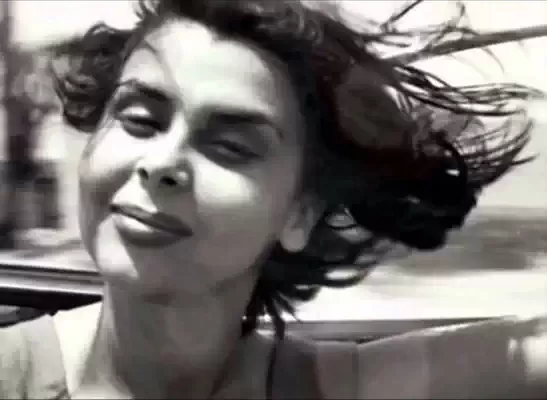
Blanca Varela

Blanca Varela was a Peruvian poet of great relevance, whose work is characterized by philosophical depth, the exploration of language, and the search for the essence of existence. Her poems address themes such as identity, time, solitude, and the relationship of the human being with the universe, with a style marked by conciseness and imagistic power.

José Emilio Pacheco
Mexican poet, essayist, narrator, translator, and academic. Known for his introspective lyricism and his sharp reflection on time, memory, and identity. His work is characterized by deep melancholy, precise language, and a constant interconnection between the personal and the social. He reflected on history, popular culture, and the human condition in the modern world. He stood out for his ability to move between high culture and daily life, integrating diverse elements into a unique poetic worldview.
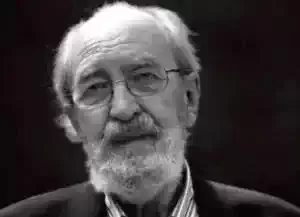
Angel González
Ángel González was a Spanish poet, one of the most representative figures of the so-called "Generation of the 50s" or "Post-war Generation." His poetry is characterized by a colloquial, ironic, and often critical tone, which addresses daily life, love, memory, and the human condition from a lucid and disillusioned perspective. With direct and accessible language, González managed to connect with a broad audience, distancing himself from grandiloquent rhetoric. His work is a mirror of the social and sentimental reality of his time, with a deep reflection on identity and the fleetingness of existence.