
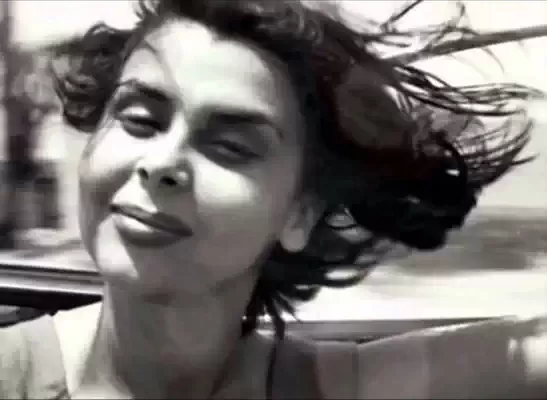
Blanca Varela
1926–2009
· lived 82 years
 PE
PE
PE
Blanca Varela was a Peruvian poet of great relevance, whose work is characterized by philosophical depth, the exploration of language, and the search for the essence of existence. Her poems address themes such as identity, time, solitude, and the relationship of the human being with the universe, with a style marked by conciseness and imagistic power.
n. 1926-08-10, Lima · m. 2009-03-12, Lima
53
Views
Bio
Identification and basic context
Blanca Varela was one of the most important poetic voices in Peru and Latin America in the 20th and early 21st centuries. She was born in Peru and wrote in Spanish. Recognized for her introspective work and her exploration of poetic language.Childhood and education
Blanca Varela had a childhood marked by a refined sensitivity to art and literature. She graduated in Letters from the National University of San Marcos, in Lima, where she came into contact with important intellectual and literary figures of the time. Her academic training and her experiences in diverse cultural environments were fundamental to the development of her thought and poetic expression.Literary career
Her literary career began early, with the publication of poems in literary magazines. Her work evolved from an initial phase more influenced by the avant-garde to her own style, marked by philosophical reflection and the search for the exact word. She published several poetry books that earned her national and international recognition.Work, style, and literary characteristics
Work, style, and literary characteristics Blanca Varela's work is extensive and complex, exploring themes such as identity, being, time, death, solitude, memory, and the individual's relationship with the cosmos. Her style is characterized by conciseness, imagistic density, and the search for a precise yet evocative language. She frequently uses free verse, but with an implicit formal rigor in the choice of words and the structure of the poems. Her poetic voice is both personal and universal, capable of touching upon deep anxieties and reflections.Work, style, and literary characteristics
Cultural and historical context Blanca Varela lived and produced in a context of great transformations in Peru and Latin America. Her work dialogues with the Hispano-American literary tradition, but also with the philosophical and existential currents of the 20th century. She was a contemporary of important poets and intellectuals, with whom she shared debates and influences.Work, style, and literary characteristics
Personal life Her personal life, though discreet, was marked by her dedication to poetry and her intellectual involvement. Her intimate experiences and reflections were the raw material for her poetry, which, although not strictly confessional, is deeply rooted in her subjectivity.Work, style, and literary characteristics
Recognition and reception Blanca Varela received numerous awards and distinctions throughout her career, consolidating herself as one of Peru's most important poetic voices. Her work has been widely studied and acclaimed by critics, both in her country and internationally.Work, style, and literary characteristics
Influences and legacy Influenced by poets such as César Vallejo and the tradition of universal poetry, Blanca Varela, in turn, influenced generations of poets with her originality and the depth of her vision. Her legacy lies in her ability to have renewed poetry in the Spanish language, exploring the limits of language and human expression.Work, style, and literary characteristics
Interpretation and critical analysis Varela's work is often the subject of critical analysis that explores its philosophical layers, its relationship with metaphysics, and its exploration of the human condition in the face of the mystery of existence. Her poetry challenges the reader to confront fundamental questions.Work, style, and literary characteristics
Curiosities and lesser-known aspects Blanca Varela was known for her discretion and her almost monastic dedication to poetry. Her home was a sanctuary where she dedicated herself to reading, writing, and contemplation, essential elements of her creative process.Work, style, and literary characteristics
Death and memory Blanca Varela passed away, leaving an immense poetic legacy. Her work continues to be published, studied, and admired, ensuring her memory and relevance in the contemporary literary landscape.Poems
0No poems found
Comments (0)
Log in
to post a comment.
No comments yet. Be the first to comment.