

Awards
Premio Boscán de Poesía
Boscán de Poesía
Description
Origin and Homage
The Premio Boscán de Poesía is a literary distinction based in Spain, dedicated to celebrating and encouraging poetic production. The prize was created in homage to Joan Boscà (1493-1542), a Catalan poet considered one of the precursors of modern poetry in the Catalan language and an important renovator of Renaissance lyric poetry in Spanish. His work, marked by Italian influence and the introduction of the sonnet in Castilian, left a significant legacy in Iberian literature.
Purpose and Importance
Although detailed information about the exact foundation and continuous history of the prize may be scarce in easily accessible public sources, its existence underscores the importance of figures like Boscà in the literary landscape. The awarding of this prize therefore aims not only to recognize contemporary poetic works of merit but also to keep alive the memory and influence of a poet who contributed to the diversity and richness of poetic expression in Spain.
Selection Criteria
The selection criteria for the Premio Boscán de Poesía generally focus on the intrinsic literary quality of the submitted works. This includes thematic and formal originality, mastery of language, expressive depth, and the ability to innovate within poetic traditions. Given the homage to Joan Boscà, it is likely that the prize values poems that demonstrate a deep understanding of poetic form, as well as a refined aesthetic sensibility. The language of submission for the works may vary, but it is common for prizes of this nature to welcome works in Castilian and, possibly, in other co-official languages of Spain, such as Catalan, in recognition of the linguistic and cultural duality that Boscà represented.
Structure and Literary Relevance
The prize categories may include unpublished or published works, depending on the specific editions of the competition. Frequently, these prizes are organized by cultural institutions, publishing houses, or foundations that seek to promote literature and support emerging or established authors. The relevance of the Premio Boscán de Poesía lies in its contribution to the Spanish literary ecosystem, offering a platform for the dissemination of new poetic voices and for reflection on the evolution of poetry. Its existence helps maintain the dialogue between the past and present of poetry in Spain, inspiring new generations of poets to explore the potential of the word.
Cultural Impact
Interestingly, the figure of Joan Boscà, despite being a historical reference, is not always widely known to the general public, making prizes like this important tools for cultural dissemination. The homage to a Renaissance poet in the context of modern literary prizes can also spark interesting debates about the timelessness of poetry and its capacity to transcend eras. The continuity of the prize, even with interruptions or changes in format, demonstrates the persistent interest in poetry and the legacy of founding literary figures.
Winners

JoaquÃn Márquez


Francisco Toledano

Rolando Camozzi

José Luis Alegre Cudós
José Luis Alegre Cudós is a Spanish writer and professor, known for his contribution to literature and education. His work frequently explores themes related to culture, history, and society, reflecting a deep connection with his roots and the context in which he lives. As an educator, Alegre Cudós has dedicated part of his career to teaching and disseminating knowledge, seeking to inspire and train new generations. His writing is marked by rich language and an analytical vision, making him a relevant figure in the contemporary Spanish literary scene.

Ángel García López

José García Nieto

Spanish poet whose work is part of the Generation of '50. His poetry is characterized by a deep reflection on the human being, time, and the existential condition, often tinged with melancholy and a search for transcendence. García Nieto explored both traditional form and free verse, imbuing his verses with great musicality and emotional depth.

Justo Jorge Padrón

José Luis RodrÃguez Argenta

Manuel Ríos Ruiz

Rafael Alfaro
Rafael Alfaro is a name associated with several public figures, one of the most prominent being that of a Spanish entrepreneur and philanthropist. His business activities cover different sectors, with a focus on investments and business development. In addition to his business career, Alfaro is recognized for his involvement in philanthropic activities and support for social and cultural causes, demonstrating a commitment to the well-being of the community.

Rafael Guillén

Gabriel GarcÃa Narezo

Carlos Murciano
Carlos Murciano was a Spanish poet and journalist, known for his lyrical and socially engaged poetry. His work addresses themes such as the land, humble people, injustice, and the search for a fairer world. With a direct and emotional style, Murciano captured the essence of everyday life and the aspirations of the people. His work as a journalist also brought him closer to social reality, profoundly influencing his literary vision and his commitment to popular causes.

Andrés Quintanilla Buey

Luis Feria

JoaquÃn Buxó Montesinos

Eduardo Zepeda-HenrÃquez

José Corredor-Matheos

Carlos Sahagún

Rafael Santos Torroella
Rafael Santos Torroella was a renowned Spanish poet, essayist, and art critic. His poetic work is characterized by deep sensitivity, restrained lyricism, and a reflection on existence and beauty. As an essayist and art critic, he dedicated himself to analyzing and disseminating the work of various artists, with a special focus on Spanish contemporary art. His critical perspective and his profound knowledge of the artistic world enriched the cultural debate of his time.

José Manuel Caballero Bonald
José Manuel Caballero Bonald was a Spanish poet and novelist, a prominent figure of the Generation of '50. His work is characterized by a deep social and existential charge, addressing themes such as injustice, marginalization, historical memory, and the human condition with a powerful and often heartbreaking language. He was a chronicler of the reality of his time, especially of Andalusia, capturing in his writing the harshness of rural life and the aftermath of the war and post-war period. His literary legacy is immense and his recognition encompasses numerous awards and distinctions.

Jesús Lizano
Jesús Lizano was a Spanish poet, novelist, essayist, and literary critic, known for his vast and diverse work. His writing spans from lyrical poetry to narrative and critical reflection, demonstrating remarkable versatility. Associated with surrealism and experimental poetry, Lizano explored new forms of expression, seeking to break with literary conventions. His work is an invitation to explore language and imagination, with a strong innovative streak.

José Agustín Goytisolo
José Agustín Goytisolo was a Spanish poet and translator, recognized for his socially and existentially oriented poetry. His work, marked by a deep commitment to reality and a lucid, often critical poetic voice, addresses themes such as injustice, memory, identity, and the human condition. In addition to his literary work, Goytisolo was an intellectual committed to the social and political causes of his time, which was reflected in his writing and activism.

Concha Zardoya

PÃo Gómez Nisa

Eugenio de Nora

José Ramón Medina

Victoriano Crémer
Victoriano Crémer was a Spanish poet whose work is characterized by profound lyricism and a constant exploration of the human condition. His verses address themes such as love, death, time, and loneliness, with a refined language and great sensitivity. Belonging to the Generation of the 50s, his poetry is distinguished by its emotional honesty and its reflection on existence, often rooted in the experience of landscape and memory.
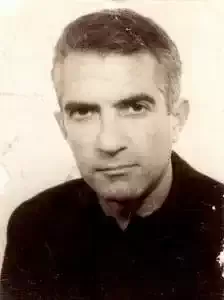
Blas de Otero
Blas de Otero was one of the most relevant Spanish poets of the second half of the 20th century, a key figure of the so-called "social poetry." His work is characterized by a deep human and ethical commitment, addressing themes such as injustice, solidarity, hope, and the search for freedom. With a direct and emotional language, Otero managed to connect with a wide audience, becoming the voice of many who longed for a more just world. His poetry, marked by formal simplicity and expressive force, remains a reference for committed poetry in Spanish.

Alfonso Costafreda
Alfonso Costafreda was a Spanish poet and writer, known for his work that blends literary tradition with a modern sensibility. His poetry explores themes such as nature, love, the passage of time, and the human condition, with a style that values musicality and linguistic precision. Costafreda stood out for his ability to capture the essence of emotions and landscapes in his verses, creating vivid and evocative imagery. His work reflects a deep reflection on life and art, consolidating him as an important voice in the Spanish-language literature of his generation.