
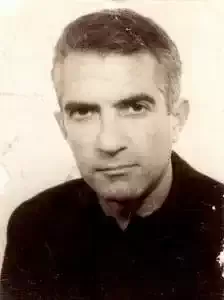
Blas de Otero
 --
--
Blas de Otero was one of the most relevant Spanish poets of the second half of the 20th century, a key figure of the so-called "social poetry." His work is characterized by a deep human and ethical commitment, addressing themes such as injustice, solidarity, hope, and the search for freedom. With a direct and emotional language, Otero managed to connect with a wide audience, becoming the voice of many who longed for a more just world. His poetry, marked by formal simplicity and expressive force, remains a reference for committed poetry in Spanish.
n. 1916-03-15, Bilbau · m. 1979-06-29, Madrid
Bio
Identification and basic context
Blas de Otero was a Spanish poet born and died in Madrid. He is one of the most important figures of post-war Spanish poetry, especially known for his "social poetry." His work spans the 20th and early 21st centuries.Childhood and education
Born in Madrid, his childhood was marked by the Spanish Civil War and the subsequent post-war period, experiences that would leave a deep mark on his work. He studied Law and Philosophy and Letters, and from a young age showed a great interest in literature and social commitment.Literary career
Blas de Otero's literary career began with a more intimate and existentialist poetry, but it soon evolved towards "social poetry" that sought to give voice to the oppressed and denounce injustices. He was one of the most widely read and representative poets of his generation, publishing numerous poetry collections and actively participating in cultural life.Work, style, and literary characteristics
Otero's work is characterized by its deep humanity and its commitment to the social problems of his time. His poetry is a call for solidarity, hope, and the struggle for freedom. It addresses themes such as poverty, oppression, war, death, and the search for a better world. His style is direct, emotional, and of great expressive force, using accessible language but loaded with meaning. Although primarily associated with social poetry, he also explored love and reflective lyrics. Among his most outstanding works are "Ángel fieramente humano" (1950), "Redoble del son" (1954), "En castellano" (1957), "Miedo y esperanza" (1957), and "Todo al amor" (1960).Cultural and historical context
Otero lived much of his life under the Franco dictatorship, which profoundly marked his work and activism. He belonged to a generation of writers who used poetry as a tool for denunciation and resistance. His work engages with the great themes of the era: repression, inequality, and the aspiration for democracy.Personal life
Blas de Otero's life was marked by social and political commitment. He was a deeply compassionate man and a defender of human rights. His personal experiences, such as his temporary exile, also influenced his worldview and his poetry.Recognition and reception
Blas de Otero is one of the most recognized Spanish poets of the post-war period. His work has been the subject of numerous studies and anthologies, and has been translated into several languages. He enjoyed great popularity in his time for the connection he achieved with the feelings of society.Influences and legacy
He was influenced by poets such as Miguel Hernández and Antonio Machado. His legacy is that of committed "social poetry" that inspired many other poets to use their work as a vehicle for social transformation. His voice continues to resonate as a call to consciousness and action.Interpretation and critical analysis
Otero's work has been analyzed from the perspective of his ethical and political commitment, his ability to express collective pain, and his faith in the possibility of a better future. His direct language and emotionality are key aspects for understanding his impact.Childhood and education
Although primarily known for his social poetry, Otero also cultivated love poetry with great sensitivity. His figure is an example of the union between artistic creation and vital commitment.Death and memory
Blas de Otero died in Madrid in 2004. His memory endures through the reading of his poems, which continue to inspire new generations of readers and writers committed to justice and humanity.Poems
0No poems found
Comments (0)
No comments yet. Be the first to comment.