
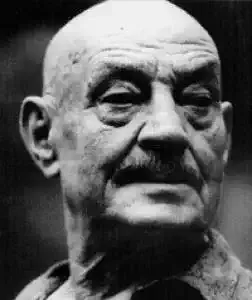
José Hierro
 --
--
José Hierro was a Spanish poet, one of the central figures of post-war social poetry and one of the innovators of poetic language in Spain. His work is characterized by a profound humanism, a concern for social and existential reality, and constant formal and thematic experimentation. His poetry is distinguished by its reflective tone, its commitment to the human condition, and its search for a language that can name the complexity of the world and of being. Hierro is considered a poet of doubt, of constant questioning, and his work is a testament to the search for meaning in an often turbulent and contradictory world.
n. 1922-04-03, Madrid · m. 2002-12-20, Madrid
Bio
Identification and basic context
José Hierro del Real was a Spanish poet, whose work is mainly framed within the Spanish post-war period and the so-called "social poetry". He is considered one of the great innovators of 20th-century Spanish lyricism.Childhood and education
Born in Madrid, his childhood and youth were marked by the Spanish Civil War, an event that would leave a deep mark on his life and work. Despite the difficulties, he showed an early literary vocation and was largely self-taught, combining readings with formal studies.Literary career
His literary career began to emerge in the 1940s. His first book, "Teatro en verso", appeared in 1945, but it was with "Hoja de servicios" (1947) and "Acero de Madrid" (1952) that his poetic voice consolidated. Throughout his career, he explored various stages and styles, always from a deep reflection on existence and society.Work, style, and literary characteristics
Hierro's work is characterized by a strong component of realism and social commitment, without renouncing a deep exploration of the human interior. Themes such as injustice, solitude, memory, the passage of time, and the search for identity are recurrent. His style evolved from a more direct and narrative language to more complex and experimental forms. He used resources such as metaphor, symbol, and interior monologue to express his vision of the world.Cultural and historical context
He lived and developed his work in Franco's Spain, a context marked by censorship, repression, and the need to find forms of expression that would circumvent the imposed limitations. He belonged to a generation of poets who, despite the adversities, sought to give voice to the longings and sufferings of society.Personal life
His life was marked by economic difficulties and the experience of war. Despite this, he was a committed intellectual and a tireless worker. He maintained a discreet life, but his work reflects a deep sensitivity towards human problems.Recognition and reception
José Hierro received considerable recognition throughout his career, being awarded important literary prizes, such as the Adonáis Prize and the National Poetry Prize. His work has been translated into several languages and is considered fundamental for understanding contemporary Spanish poetry.Influences and legacy
He was influenced by poets such as Miguel Hernández and by the Spanish poetic tradition. His legacy lies in his ability to integrate life experience with poetic reflection, and in his renovation of lyrical language, opening paths for subsequent generations of poets in Spain.Interpretation and critical analysis
Critics have highlighted the honesty, formal rigor, and human depth of Hierro's work. He is recognized for his ability to address social and existential themes from a personal and unique perspective, achieving universality in his discourse.Childhood and education
Hierro worked in various trades throughout his life to make a living, which allowed him direct contact with the social reality he would later capture in his poetry. His writing method was meticulous and reflective.Death and memory
He died in Madrid, leaving behind a poetic work that continues to be read and studied, consolidated as a pillar of 20th-century Spanish literature. His memory remains alive through the persistence of his poems and studies of his work.Poems
0No poems found
Comments (0)
No comments yet. Be the first to comment.