

Awards
Premio Nacional de las Letras Españolas
Description
The Legacy of the Written Word in Spanish
The Premio Nacional de las Letras Españolas (National Award for Spanish Literature) is one of Spain's most prestigious literary accolades, awarded by the Ministry of Culture and Sport. It was created in 1984 with the aim of distinguishing the overall work of a writer, in any literary genre, who has contributed significantly to the enrichment of Spanish-language literature. Unlike other awards that focus on specific works, this award celebrates the author's entire career, their unique voice, and the lasting impact of their literary legacy.
Selection Criteria and Jury
The selection criteria emphasize the literary quality, originality, thematic depth, and cultural influence of the author's work. The jury, composed of renowned figures from the literary world, such as academics, literary critics, and established writers, evaluates the candidate's complete career, considering their output in prose, poetry, essay, or drama. The final decision falls upon an author whose work has left an indelible mark on Spanish literature and, by extension, on Spanish-language literature.
Importance and Recognition
The importance of this award lies in its ability to recognize and celebrate the diversity of literary production in Spanish. Over the years, the award has been presented to authors from different generations and styles, reflecting the richness and vitality of contemporary literature. Its bestowal is seen as a mark of excellence and public recognition of the author's work's significance to Hispanic culture.
Distinguished Laureates
Among the laureates are key figures in Spanish-language literature, such as Camilo José Cela, Miguel Delibes, Carmen Martín Gaite, Francisco Ayala, Antonio Buero Vallejo, Eduardo Galeano, Juan Marsé, Ana María Matute, Mario Vargas Llosa, Ida Vitale, among many others. Each of these authors represents a fundamental pillar in the construction of the Spanish-language literary landscape, and the award serves as a way to honor their dedication and mastery.
Distinctive Features
One of the distinctive features of the Premio Nacional de las Letras Españolas is its broad scope. It is not limited to a specific literary genre, allowing poets, novelists, essayists, and playwrights to compete on equal footing. This universality ensures that the award can celebrate the breadth and depth of literary expression in Spanish.
Ceremony and Prestige
The award is accompanied by a monetary prize, which, while not the main attraction, provides financial recognition for the author's work. However, the prestige and public recognition that accompany the award's bestowal are undoubtedly its greatest value. The award ceremony, usually held in Madrid, is a significant cultural event, bringing together the literary community and celebrating the power of the written word.
In summary, the Premio Nacional de las Letras Españolas is not just an award, but a beacon that illuminates the careers of writers who have shaped and continue to shape the literary identity in the Spanish language, reaffirming its relevance and impact on the global cultural scene.
Winners

María Victoria Atencia

María Victoria Atencia is a prominent figure in 20th and 21st-century Spanish poetry, known for her erudition-marked work, formal mastery, and profound reflection on time, memory, and the human condition. Her poetry, of great stylistic rigor, explores themes such as beauty, the ephemerality of existence, spirituality, and love, using dense and imagistic language. Atencia is recognized for her ability to combine literary tradition with innovation, creating a unique work of great relevance in the contemporary poetic landscape.

Manuel Rivas

Cristina Fernández Cubas

Luis Landero

José María Merino

Luis Mateo Díez

Bernardo Atxaga

Bernardo Atxaga is a prominent Basque writer, known primarily for his poetic and narrative work in Euskera (Basque). His writing is characterized by a deep connection to Basque culture and identity, often exploring themes of memory, belonging, and the complexity of human relationships in the context of the Basque Country. With a lyrical and evocative prose, Atxaga has managed to transcend linguistic and cultural borders, becoming one of the most important contemporary authors of Euskera literature. His work invites reflection on the human condition through stories that intertwine the real and the fantastic, the historical and the intimate.

Francisca Aguirre
Francisca Aguirre was a Spanish poet and writer, known for her lyrical work and her unique poetic voice. Her poetry is characterized by emotional intensity, the exploration of themes such as freedom, passion, and rebellion against social conventions. She is considered an important figure in Spanish poetry.

Rosa Montero

Juan Eduardo Zúñiga

Carme Riera

Emilio Lledó

Luis Goytisolo
Luis Goytisolo is a Spanish novelist and poet, whose work is characterized by its psychological depth, formal experimentation, and exploration of themes such as memory, identity, lack of communication, and the human condition. Born in Barcelona, he went into exile in France in 1956, where he developed a large part of his literary career and came into contact with European intellectual circles. His writing is distinguished by a refined and often introspective prose, which addresses the complexity of human relationships and the search for meaning in a contemporary world marked by fragmentation. He is considered a relevant figure in Spanish literature of the second half of the 20th century.

Francisco Rodríguez Adrados

José Luis Sampedro

Josep Maria Castellet

Rafael Sánchez Ferlosio

Juan Goytisolo

Ana María Matute

Raúl Guerra Garrido

José Manuel Caballero Bonald
José Manuel Caballero Bonald was a Spanish poet and novelist, a prominent figure of the Generation of '50. His work is characterized by a deep social and existential charge, addressing themes such as injustice, marginalization, historical memory, and the human condition with a powerful and often heartbreaking language. He was a chronicler of the reality of his time, especially of Andalusia, capturing in his writing the harshness of rural life and the aftermath of the war and post-war period. His literary legacy is immense and his recognition encompasses numerous awards and distinctions.

Félix Grande

Leopoldo de Luis

Joan Perucho
Joan Perucho was a prominent Catalan writer and literary critic. His work is marked by rich language and overflowing imagination, exploring themes such as the fantastic, the historical, and the exotic. He is known for his elaborate prose and his ability to create unique literary universes, where reality blends with fantasy in a hypnotic way. His influence on contemporary Catalan literature is notable, and his texts continue to be appreciated for their originality and depth.

Miquel Batllori

Martín de Riquer

Francisco Brines
Francisco Brines was a Spanish poet, considered one of the most important voices in Spanish poetry in the second half of the 20th century. His work is characterized by a deep reflection on the human condition, the passage of time, memory, love, and nature, with a lyrical and restrained language. Brines explored existential themes with particular sensitivity, seeking beauty in everyday experiences and in the contemplation of the natural world. His poetry, although often melancholic, possesses an inner strength and serenity that invite introspection, consolidating him as a master of contemporary Spanish lyricism.

Pere Gimferrer
Poet, essayist, and literary critic from Spain, Pere Gimferrer is a central figure in contemporary Catalan and Spanish literature. His poetic work is characterized by profound erudition, constant formal experimentation, and a desire to dialogue between popular culture and high culture. Throughout his extensive career, he has explored themes such as memory, identity, cinema, painting, and mythology, creating a rich and multifaceted lyrical universe. His influence extends to various generations of writers, consolidating his position as one of the most important authors of Catalan and Spanish literature of the 20th and 21st centuries. His work as an essayist and critic has been equally fundamental to understanding the literature and art of his time.

Francisco Umbral

Antonio Buero Vallejo

Manuel Vázquez Montalbán

Carmen Martín Gaite

Carlos Bousoño
Carlos Bousoño was a distinguished Spanish poet and literary critic, a central figure in post-war Spanish poetry and one of the foremost experts on the work of Juan Ramón Jiménez. His poetic work, marked by a profound reflection on being, time, and reality, is characterized by its formal rigor, careful language, and constant search for truth and beauty. As a critic, his analysis of contemporary poetry and his erudition established him as an undisputed authority in the Spanish literary sphere.

José Jiménez Lozano

Miguel Delibes
Miguel Delibes was one of the most important Spanish writers of the 20th century, known for portraying the rural life of Castile and traditional values. His work is characterized by a realistic style, accessible language, and a profound social and environmental concern. He is recognized for his ability to give voice to peasants and for his subtle critique of modernity.
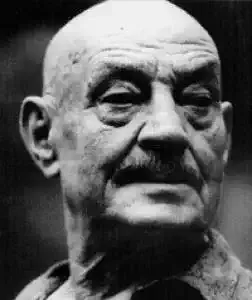
José Hierro
José Hierro was a Spanish poet, one of the central figures of post-war social poetry and one of the innovators of poetic language in Spain. His work is characterized by a profound humanism, a concern for social and existential reality, and constant formal and thematic experimentation. His poetry is distinguished by its reflective tone, its commitment to the human condition, and its search for a language that can name the complexity of the world and of being. Hierro is considered a poet of doubt, of constant questioning, and his work is a testament to the search for meaning in an often turbulent and contradictory world.

Joan Coromines

Francisco Ayala

Rosa Chacel
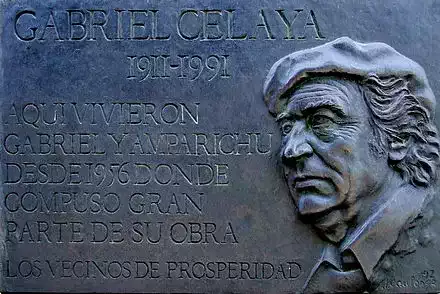
Gabriel Celaya
Gabriel Celaya was an influential Spanish poet, known for his social and existential poetry. His work addresses themes such as the human condition, social injustice, and the search for identity in a changing world.

Julio Caro Baroja
