

Awards
Premio Internacional Menéndez Pelayo
Premio Menéndez Pelayo
Description
History and Origin of the Award
The Premio Internacional Menéndez Pelayo, established by the Universidad Internacional Menéndez Pelayo (UIMP) in 1987, is one of the most prestigious awards in Spain in the field of humanities and social sciences. The award aims to honor and distinguish internationally renowned personalities whose professional and intellectual careers have significantly contributed to the advancement of knowledge, critical reflection, and the dissemination of thought in areas such as philosophy, history, sociology, literature, art, and law.
Tribute to Marcelino Menéndez Pelayo
The award's name is a tribute to Marcelino Menéndez Pelayo, one of the most prominent Spanish intellectuals of the 19th century and early 20th century, a philologist, historian, literary critic, and essayist, whose work is a landmark in Spanish culture.
The Organizing Institution
The UIMP, the organizing institution, is a summer higher education institution based in Santander, founded in 1932, which aims to promote cultural and scientific exchange, hosting an extensive program of courses, seminars, and conferences annually with the participation of distinguished academics and personalities from various fields.
Selection Criteria and Process
The award is not limited to a single category but rather recognizes a global body of work or career, valuing the depth of research, the originality of proposals, the ability to dialogue between different disciplines, and the social and cultural impact of the laureate's work. The selection criteria, while not rigidly defined in terms of specific categories, focus on academic excellence, the relevance of the contribution to human knowledge, and the ability to inspire and train new generations of thinkers.
The jury is composed of renowned personalities in the academic and cultural world, ensuring impartiality and rigor in the selection of winners.
Diversity of Laureates
Over the years, the Premio Internacional Menéndez Pelayo has been awarded to a diverse range of intellectuals, including philosophers, historians, sociologists, jurists, writers, and artists, of different nationalities, reflecting the universality of knowledge and the importance of international cooperation in the advancement of the humanities.
Award Ceremony
The award ceremony, which usually takes place in Santander during the summer, is an event of great cultural significance, bringing together academics, students, authorities, and the general public, and serves as a platform for reflection on contemporary challenges and the role of the humanities in society.
Impact and Importance of the Award
The importance of the award lies not only in the individual recognition of the laureates but also in the valorization of the fields of knowledge it celebrates, in a context where the humanities and social sciences sometimes face challenges of funding and public recognition. The Premio Menéndez Pelayo thus acts as a beacon, illuminating and promoting critical thinking and in-depth research, essential for understanding the world and building a more just and informed future. Its longevity and the caliber of its laureates attest to its solidity and its fundamental role in the international cultural and academic landscape.
Winners

José Manuel Sánchez Ron


Álvaro Pombo

Concepción Company


Ruy Pérez Tamayo

Aurora Egido

Juan Velarde Fuertes

Miguel Ãngel Garrido Gallardo

Manuel Seco

Pedro Cerezo Galán

Ciriaco Morón

Ernesto de la Peña

VÃctor GarcÃa de la Concha

José Luis Sampedro

Margit Frenk

Victoria Camps

Belisario Betancur


Eduardo GarcÃa de EnterrÃa
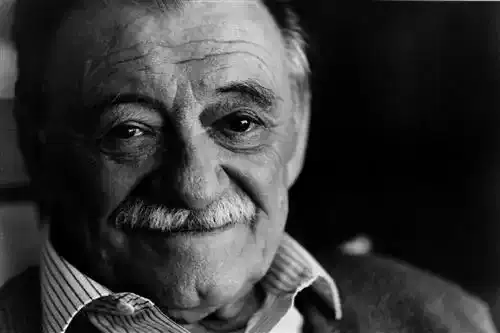
Mario Benedetti

Mario Benedetti was a renowned Uruguayan writer, poet, playwright, and journalist, considered one of the most important names in Latin American literature. His work is characterized by accessible language, a colloquial tone, and deep social sensitivity. Benedetti addressed universal themes such as love, loneliness, politics, and daily life, connecting with a vast readership through poetry and prose that reflect the anxieties and hopes of the common person.

Emilio Lledó

Nélida Piñon

Julián MarÃas

Miguel León Portilla

José MarÃa Jover

Mario Vargas Llosa

Francisco Rico
Ernesto Sabato

Luis DÃez del Corral

José Luis MartÃnez

Fernando Lázaro Carreter

José Manuel Blecua

Carlos Fuentes

Pedro LaÃn Entralgo

Martín de Riquer

Julio Caro Baroja

Emilio GarcÃa Gómez
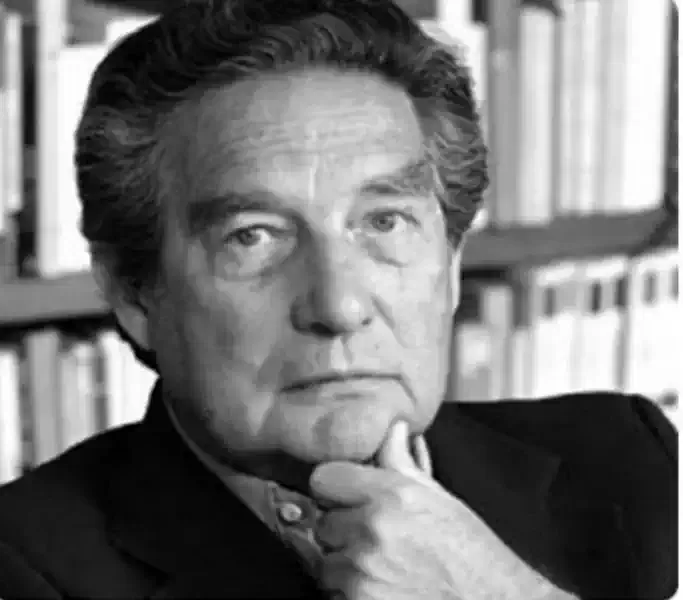
Octavio Paz
Octavio Paz was one of the most important poets and essayists of the 20th century, awarded the Nobel Prize in Literature in 1990. His work is vast and multifaceted, exploring themes such as love, solitude, Mexican identity, the human condition, time, and the search for transcendence. With a rich and innovative language, Paz moved between lyrical poetry, philosophical reflection, and cultural criticism, leaving an invaluable intellectual and artistic legacy.