

Quotes in this theme
Ethics and Morality
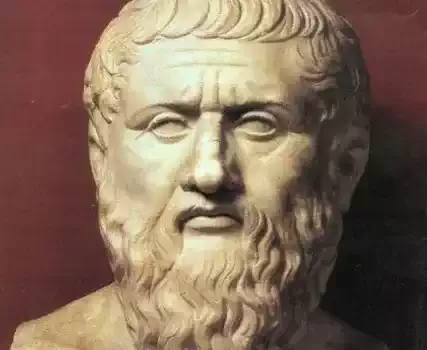
Platão
Until philosophers are kings, or the kings and princes of this world have the spirit and power of philosophy, and political greatness and wisdom meet in one, and those commoner natures who pursue either to the exclusion of the other are compelled to stand aside, cities will never have rest from their evils — no, nor the human race, as I believe — and then only will this our State have a possibility of life and behold the light of day.
14
Platão
To the rulers of the state then, if to any, it belongs of right to use falsehood, to deceive either enemies or their own citizens, for the good of the state: and no one else may meddle with this privilege.
17
Platão
There can be no fairer spectacle than that of a man, who combines the possession of moral beauty in his soul with the outward beauty of form, corresponding and harmonizing with the former, because the same great pattern enters both.
19
Platão
The State which we have founded must possess the four cardinal virtues of wisdom, courage, discipline and justice ... Justice is the principle which has in fact been followed throughout, the principle of one man one job, of minding ones own business, in the sense of doing the job for which one is naturally fitted and not interfering with other people.
16
Platão
The thing to be done does not choose, I imagine, to tarry the leisure of the doer, but the doer must be at the beck of the thing to be done, and not treat it as a secondary affair.
17
Platão
The point which I should first wish to understand is whether the pious or holy is beloved by the gods because it is holy, or holy because it is beloved of the gods.
13
Platão
The partisan, when he is engaged in a dispute, cares nothing about the rights of the question, but is anxious only to convince his hearers of his own assertions.
17
Platão
The love, more especially, which is concerned with the good, and which is perfected in company with temperance and justice, whether among gods or men, has the greatest power, and is the source of all our happiness and harmony, and makes us friends with the gods who are above us, and with one another.
21
Platão
The makers of fortunes have a second love of money as a creation of their own, resembling the affection of authors for their own poems, or of parents for their children, besides that natural love of it for the sake of use and profit which is common to them and all men. And hence they are very bad company, for they can talk about nothing but the praises of wealth.
18
Platão
The good are like one another, and friends to one another; and ... the bad, as is often said of them, are never at unity with one another or with themselves, but are passionate and restless: and that which is at variance and enmity with itself is not likely to be in union or harmony with any other thing.
19
Platão
The like is not the friend of the like in as far as he is like; still the good may be the friend of the good in as far as he is good.
16
Platão
Strange times are these in which we live when old and young are taught falsehoods in school. And the person that dares to tell the truth is called at once a lunatic and fool
24