

Literature and Words
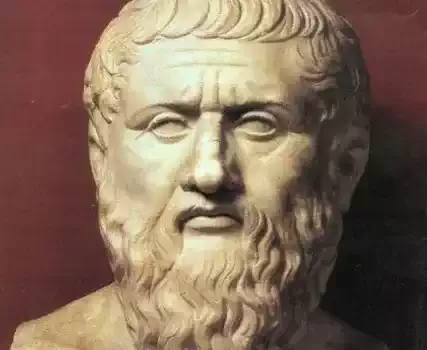

Laura Riding Jackson
O vocables of love, The end of an end is an echo, A last cry follows a last cry. Finality of finality Is perfection’s touch of folly.
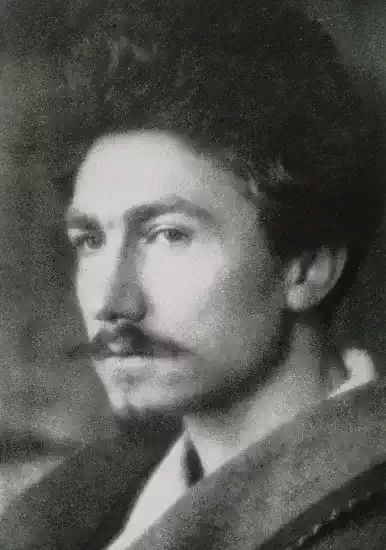
Ezra Pound
To have gathered from the air a live tradition or from a fine old eye the unconquered flame

E.M. Forster
[I]n the novel we can know people perfectly, and, apart from the general pleasure of reading, we can find here a compensation for their dimness in life.
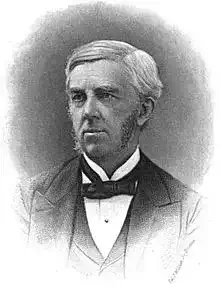
Oliver Wendell Holmes
We find it hard to get and to keep any private property in thought. Other people are all the time saying the same things we are hoarding to say when we get ready.
E.M. Forster
A sentence begins quite simply, then it undulates and expands, parentheses intervene like quick-set hedges, the flowers of comparison bloom, and three fields off, like a wounded partridge, crouches the principal verb, making one wonder as one picks it up, poor little thing, whether after all it was worth such a tramp, so many guns, and such expensive dogs, and what, after all, is its relation to the main subject, potted so gaily half a page back, and proving finally to have been in the accusative case.
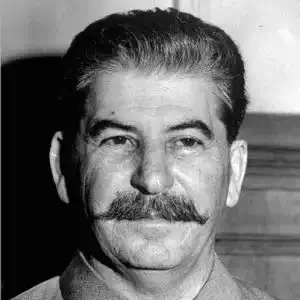
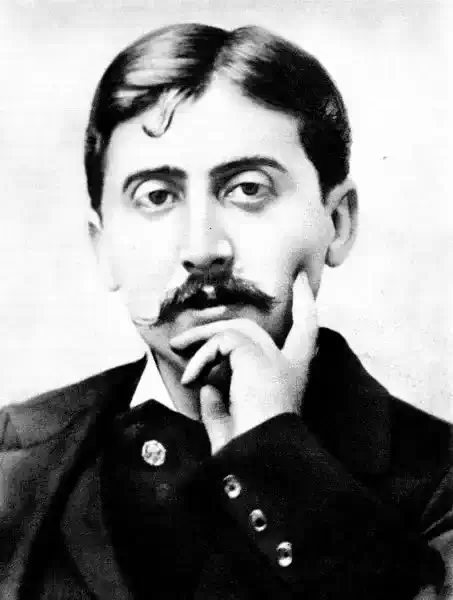
Marcel Proust
There are perhaps no days of our childhood we lived so fully as those we believe we left without having lived them: those we spent with a favorite book.
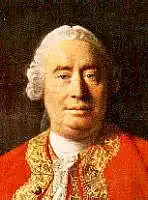
David Hume
Never literary attempt was more unfortunate than my Treatise of Human Nature. It fell dead-born from the press.
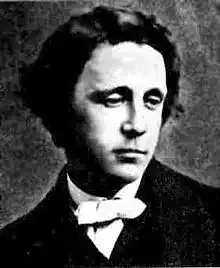

J.R.R. Tolkien
Do not laugh! But once upon a time (my crest has long since fallen) I had a mind to make abody of more or less connected legend, rangingfrom the large and cosmogonic, to the level ofromantic fairy-story—the larger founded onthe lesser in contact with the earth, the lesserdrawing splendor from the vast backcloths—which I could dedicate simply to: to England; tomy country.

C.P. Snow
A good many times I have been present at gatherings of people who, by the standards of the traditional culture, are thought highly educated and who have with considerable gusto been expressing their incredulity at the illiteracy of scientists. Once or twice I have been provoked and have asked the company how many of them could describe the Second Law of Thermodynamics. The response was cold: it was also negative. Yet I was asking something which is about the scientific equivalent of: Have you read a work of Shakespeare’s?
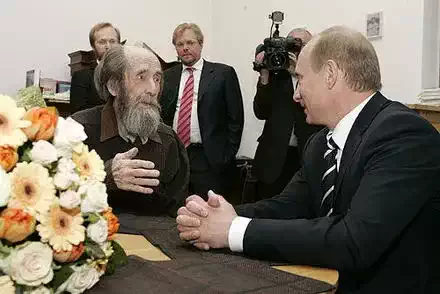
Alexander Solzhenitsyn
A great writer is, so to speak, a second government. That’s why no regime anywhere has ever loved its great writers, only its minor ones.
C.P. Snow
The separation between the two cultures has been getting deeper under our eyes; there is now precious little communication between them. . . . The traditional culture . . . is, of course, mainly literary . . . the scientific culture is expansive, not restrictive.
C.P. Snow
Literary intellectuals at one pole—at the other scientists, and as the most representative, the physical scientists. Between the two a gulf of mutual incomprehension—sometimes (particularly among the young) hostility and dislike, but most of all lack of understanding.

Flannery O'Connor
Everywhere I go I’m asked if I think the universities stifle writers. My opinion is that they don’t stifle enough of them. There’s many a best-seller that could have been prevented by a good teacher. The idea of being a writer attracts a good many shiftless people, those who are merely burdened with poetic feelings or afflicted with sensibility.
Oliver Wendell Holmes
The truth is, that the law is always approaching, and never reaching, consistency. It is forever adopting new principles from life at one end, and it always retains old ones from history at the other, which have not yet been absorbed or sloughed off. It will become entirely consistent only when it ceases to grow.
Oliver Wendell Holmes
The law embodies the story of a nation’s development through many centuries, and it cannot be dealt with as if it contained only the axioms and corollaries of a book of mathematics.
Oliver Wendell Holmes
The life of the law has not been logic: it has been experience. The felt necessities of the time, the prevalent moral and political theories, intuitions of public policy, avowed or unconscious, even the prejudices which judges share with their fellow-men, have had a good deal more to do than the syllogism in determining the rules by which men should be governed.