

Poems in this topic
Relationships and Family

Henry Lawson
Joseph’s Dreams and Reuben's Brethren [A Recital in Six Chapters]
Joseph’s Dreams and Reuben's Brethren [A Recital in Six Chapters]
CHAPTER I
I cannot blame old Israel yet,
For I am not a sage—
I shall not know until I get
The son of my old age.
The mysteries of this Vale of Tears
We will perchance explain
When we have lived a thousand years
And died and come again.
No doubt old Jacob acted mean
Towards his father’s son;
But other hands were none too clean,
When all is said and done.
There were some things that had to be
In those old days, ’tis true—
But with old Jacob’s history
This tale has nought to do.
(They had to keep the birth-rate up,
And populate the land—
They did it, too, by simple means
That we can’t understand.
The Patriarchs’ way of fixing things
Would make an awful row,
And Sarah’s plain, straightforward plan
Would never answer now.)
his is a tale of simple men
And one precocious boy—
A spoilt kid, and, as usual,
His father’s hope and joy
(It mostly is the way in which
The younger sons behave
That brings the old man’s grey hairs down
In sorrow to the grave.)
Old Jacob loved the whelp, and made,
While meaning to be kind,
A coat of many colours that
Would strike a nigger blind!
It struck the brethren green, ’twas said—
I’d take a pinch of salt
Their coats had coloured patches too—
But that was not their fault.
Young Joseph had a soft thing on,
And, humbugged from his birth,
You may depend he worked the thing
For all that it was worth.
And that he grafted not but crowed,
You don’t need to be told,
And he was mighty cocky, with
His “Lo!” and his “Behold!”
He took in all his brothers said,
And went and told his Dad,
And then, when someone split on him,
No wonder they were mad.
But still he wasn’t satisfied,
And it would almost seem
He itched to rile his brethren, for
He went and dreamed a dream,
And told it to his brothers straight
(So Genesis believes):—
“Lo! we were working in the field,
And we were binding sheaves,
And my sheaf rose and stood upright,
And, straightway, for a sign,
Your sheaves came round about and made
Obeisance to mine!”
The brethren stared and made comment
In words that were not mild,
And when the meaning dawned on them
You bet that they were wild!
And Joseph left those angry men
To boil and blow off steam,
And ambled, chuckling, home agen
To dream another dream.
“Behold! I’ve dreamed a dream once more!”
He told ’em, frank and free—
“The sun, moon, and eleven stars
Have likewise bowed to me!”
(Perhaps Astronomy has changed
Since Joseph saw the light,
But I have wondered what the sun
Was doing out at night.)
And when they dropped!—you never heard,
In sheds or shanty bars,
Such awful language as escaped
From those eleven stars.
You know how Jacob-Israel loved
His hopeful youngest pup;
But, when he heard the latest dream,
It shook the old man up.
But Joseph talked his father round,
Who humoured every whim
(Perhaps old Jacob half-believed
They would bow down to him):
But, anyway, as always was,
He backed the youngest son,
And sent the others with the sheep
Out to the Check-’em run.
CHAPTER II
Now Jacob, with that wondrous tact
That doting parents show,
Or, anxious for his sons out back,
Sent, of all others, Joe!
To see if it was well with them
(And they were not asleep),
With one eye on his brothers’ camp,
And one eye on the sheep.
He drew a blank on Check-’em run—
Got bushed, too, you’ll be bound.
A certain cove—there’s always one—
Saw Joseph mooning round.
He asked him how it came to pass,
And what it was about,
And said, “They’re trav-lin’ now for grass
In Doothen—further out.”
He also muttered, “Strike me blue!”
While staring at the clothes—
He’d never seen a jackaroo
With such a coat as Joe’s.
He set the nameless on the track,
And scratched his head to think,
But gave it best, and, riding back,
Said firmly, “Strike me pink!”
’Twas blazing hot in Doothen then,
The sweat ran down in streams—
It melted out the memory
Of even Joseph’s dreams!
They’d had some trouble with the sheep,
Some Arabs and a “shirk”—
It was a favourable time
For Joe to get to work.
They saw him coming, “afar off”—
In this case, you might note,
Their eyesight wasn’t wonderful,
Considering the coat.
And what with sheep, and dust, and flies,
And damned shirks in the swim
With sheep stealers, the brethren were
For absenteeing him.
And, add to that, he scared the kine
With his infernal coat—
They trampled on the sheep and swine
And startled every goat.
The brethren had to round up then
As fast as ass could go,
And when they got to camp agen
They’d fixed it up for Joe.
Save poor old Rube—he had the blight,
But, grafting all the same,
He only looked on family rows
As just a blooming shame.
Like many an easy-going man,
He had a cunning soul.
He said, “We will not kill the kid,
But shove him in a hole,
And leave him there to dream o’ things”—
There’s not the slightest doubt
He meant to slip round after dark
And pull the youngster out,
And fill his gourd and tucker-bag,
And tell him “Not to mind”,
And start him on the back-track with
A gentle kick behind.
Some ’Tothersider prospectors
Had been there poking round;
You may depend that Reuben knew
’Twas “dry and shallow ground”.
They dropped young Joseph in a hole—
The giddy little goat—
And left him there, to cool his heels,
Without his overcoat.
(Don’t think that Moses, such a whale
On dry facts, thought it wet
To say, when they’d chucked Joseph in,
It was an empty pit!
So many things are preached and said
Where’er the Bible is
To prove that Moses never read
The “proofs” of Genesis.)
But let’s get on. While having grub,
A brethren sniffed and “seen”
Some Ishmaelites pass through the scrub—
Or O-asses, I mean.
They’d been right out to Gilead—
A rather longish trip—
For camel-loads of balm, and myrrh,
And spicery for ’Gyp.
(I’ve often seen the Afghans pass
With camel strings out back,
And thought ’twas somewhat similar
On that old Bible track.
I don’t know much of balm and myrrh,
Whatever they may be,
But e’en when sheepskins were not there,
I’ve smelt the spicery.)
It was the same in Canaan then
As it is here to-day:
A sudden thought jerked Judah up
For “brofit “ straight away.
The brethren got on one end too
When Judah jumped and said,
“We’ll sell the kid for what he brings!
He’s no good when he’s dead.”
And, to be short, they being Jews—
The “chosing” of the earth—
They sold him to the Ishmaelites
For more than twice his worth.
(Some Midianitish auctioneers
Were also on the job.)
’Twas “twenty bits of silver”, which
I s’pose was twenty bob.
So they most comfortably got
Young Joseph off their hands,
For Ishmael never bothered much
About receipts or brands.
(They spake not of his dreams and cheek,
His laziness, or “skite”;
No doubt they thought the Ishmaelites
Would see to that all right.)
Then Reuben came; he’d been around
To watch the sheep a bit,
And on his way back to the camp
He slipped round by the pit
To give young Joe a drink. He stared,
And, thinking Joe was dead,
He rent his gown like mad, and ran
For ashes for his head.
(As if that would do any good!
I only know that I
Cannot afford to rend my clothes
When my relations die.
I don’t suppose they would come back,
Or that the world would care,
If I went howling for a year
With ashes in my hair.)
You say he counted on a new
Rig-out? Yes? And you know
That Jacob tore his garment too,
So that old cock won’t crow.
Look here! You keep your smart remarks
Till after I am gone.
I won’t have Reuben silver-tailed—
Nor Pharaoh, later on.
The brethren humbugged Reuben well,
For fear he’d take the track,
And sneak in on the Ishmaelites,
And steal young Joseph back,
Or fight it out if he was caught,
And die—as it might be—
Or, at the best, go down with Joe
And into slavery.
Young Simeon slipped into the scrub,
To where the coat was hid,
And Judah stayed and wept with Rube,
While Levi killed a kid.
So they fixed up the wild-beast yarn,
And Hebrews sadly note—
Considering the price of cloth—
They had to spoil the coat.
(There was a yam about old Rube
That all true men despise,
Spread by his father’s concubines—
A vicious strumpet’s lies.
But I believe old Moses was,
As we are, well aware
That Reuben stood in this last scene
The central figure there.)
I feel for poor old Israel’s grief,
Believing all the same
(And not with atheist unbelief)
That Jacob was to blame.
’Twas ever so, and shall be done,
While one fond fool has breath—
Fond folly drives the youngest son
To ruin and to death.
The caravan went jogging on
To Pharaoh’s royal town,
But Genesis gives no account
Of Joseph’s journey down.
I wouldn’t be surprised to hear
He found it pretty rough,
But there’s a bare chance that his hide,
As well as cheek, was tough.
I see them toiling through the heat,
In patches and in dirt,
With sand-grooved sandals on their feet,
And slaves without a shirt—
The dust-caked thirst, the burning ground,
The mad and maddening flies,
That gathered like black goggles round
The piccaninnies’ eyes.
The Ishmaelites had tempers brief,
And whips of hide and gut,
And sometimes, p’raps, for Hagar’s sake,
Gave Joe an extra cut.
When, fainting by the way, he felt
The stimulating touch,
I have no doubt he often wished
He hadn’t dreamed so much.
He didn’t dream much on that trip,
Although he thought a lot.
However, they got down to ’Gyp
In good time, where he got
A wash and rest—he needed both—
And in the old slave-yard
Was sold to Captain Potiphar,
Of Pharaoh’s body-guard.
INTERLUDE
I PAUSE to state that later on
(And it seems worth the halt)
Smart Judah gat into a mess,
Though it was not his fault.
And I would only like to say,
In this most thankless task,
Wives sell to husbands every day,
And that without a mask.
But, what with family rows and drought,
And blessed women too,
The fathers of terrestrial tribes
Had quite enough to do.
They had to graft both day and night,
With no rest, save the last,
For when they were not grafting they
Were populating fast.
CHAPTER III
The Captain was a casual man,
But seemed a shrewd one too;
He got young Joseph’s measure soon,
And saw what he could do.
The Lord was with Joe, Moses said—
I know that Joe had pluck—
But I believe ’twas mostly check,
And his infernal luck.
The Captain made him manager,
Housekeeper, overseer,
And found that this arrangement paid—
That much at least is clear.
And what with merchants, clerks, and slaves,
Joe led a busy life,
With one eye on the maid-servants,
And “Jeames” and Potty’s wife.
The Captain seemed a casual man,
And “’Gyp” was on the glide:
There was a growing tendency
To live and let things slide.
He left all things in Joseph’s hands—
According to old Mose—
And knew not what he had besides
His tucker and his clothes.
I guess he had a shrewd idea,
For it is now, as then—
The world most often makes mistakes
With easy-going men.
The Captain often went away
For quietness and rest,
And, maybe, for some other things—
Well, Potiphar knew best.
Perhaps the missus knew it too—
At least, she should have known—
And Joe was handsome, strange, and new,
And she was much alone.
It seems a funny business now,
But I was never there—
Perhaps so long as cheques came in
The Captain didn’t care.
’Tis strange that Moses, such a whale
On details out of joint,
Should always come, in such a case,
So bluntly to the point.
He says Joe had a goodly form—
Or person it should be—
He says that she cast eyes on Joe,
And she said, “Lie with me.”
It took young Joseph sudden like.
He’d heard, while on the run,
Of other women who could lie,
And in more ways than one;
Of men who had been gaoled or hanged—
As they are here to-day—
(Likewise of lovers who were banged),
And so he edged away.
She never moved, and so he stayed
While she was there to hear,
For his infernal vanity
Was stronger than his fear.
He bragged his opportunity,
His strength, and godliness:
“There is no greater in the house
Than I.” (She made him less.)
’Twas cant to brag of purity
And right in that household,
For what was he if not a slave,
And basely bought and sold?
Unmanly for a man to treat
A love-starved woman so,
And cowardly to humiliate
A spirit thrust so low.
She knew that Joseph was a spy
On her and all the rest,
And this, with his outspoken “scorn”,
Made reasons manifest.
She had her passions (don’t be shocked,
For you have yours, no doubt),
And meant to take young Joseph down
And pay her husband out.
He was a slave, and bought and sold,
And I will say right here
His preaching was too manifold
And glib to be sincere,
When youth and “looks” turn goody-good—
You’ll see it at a glance—
They have one eye to woman’s help
And both on the main chance.
Now, had old Rube been in his place
(All honour to his name),
I’ll swear he would have taken things
Exactly as they came,
And kept it dark—or fought it out,
As the ungodly can—
But, whatsoe’er he might have done,
He would have been a man!
Howbeit, the missus stuck to Joe,
Vindictive, vicious, grim,
And bore his sermons and rebuffs
Until she cornered him. . . .
He left his garment in her hand,
And gat him out of that. . . .
About the merits of the case
I’ll say no more—that’s flat.
(He knew all right what she was at,
And Potiphar was out,
He went alone into the house
When no one was about.
He may have been half-drunk or mad,
He certainly was blind,
To run no further than the yard,
And leave his coat behind!)
But, seeing how our laws are fixed,
If I get in such dirt,
I’ll straightway get me out of that
If—I’ve to leave my shirt.
But I will keep the running up,
If I have common-sense,
Nor stop this side of Jericho
To think of my defence.
Joe should have streaked for Suez straight,
And tried his luck in flight
For Canaan, where they looked on things
In quite another light.
Old Jacob had experience,
And he’d have stuck to Joe.
He was a match for women’s lies
That flabbergast us so.
The missus told the self-same tale,
And in the self-same way,
As our enfranchised females do
In police courts every day.
Too cowardly to breathe a breath
Against the vilest rip,
We send straight men to gaol or death,
Just as they did in ’Gyp.
Now, Potiphar was wondrous mild—
Suspiciously, to say
The least. He didn’t operate
On Joseph straight away.
Perhaps he knew his wife no less
Than Joe, yet had regard
For his own peace and quietness—
So Joe got two years’ hard.
CHAPTER IV
The Lord was with him, Moses said,
Yet his luck didn’t fail,
For he got on the right side of
The governor of the gaol.
Perhaps he’d heard of Mrs P.,
And cases like to Joe’s,
And knew as much of woman’s work
As anybody knows.
He made Joe super-lag—a sort
Of deputy-retained
(The easy-going tendency
In Egypt seemed ingrained)—
Left everything in Joseph’s hands,
Except, maybe, the keys;
And thereafter he let things slide,
And smoked his pipe in peace.
Now Pharaoh had some trouble with
His butler and his cook,
But Pharaoh seemed most lenient
With asses bought to book—
He didn’t cut the weak end off
Each absent-minded wretch,
But mostly sent the idiots up
To “chokey” for a “stretch”.
They found themselves in Joseph’s care,
And it would almost seem
They’d got wind of his weaknesses,
For each one dreamed a dream.
“They dreamed a dream; both of them. Each
Man his dream in one night:
Each man according to his dream”
(And his own dream)—that’s right.
Next morning they made up their “mugs”,
And Joseph, passing through,
Asked them if they were feeling cronk,
And why they looked so blue?
They told him they had dreamed two dreams
(One each), and any dunce
Can understand how such remarks
Would int’rest Joe at once.
And there was no interpreter,
They said—and that was why
Joe said that that belonged to God—
But he would have a try.
I’ve noticed this with “Christians” since,
And often thought it odd—
They cannot keep their hands from things
They say belong to God.
The butler dreamed—or, anyway,
He said so (understand)—
He’d made some wine in Pharaoh’s cup,
And placed it in his hand—
And Pharaoh placed the wine inside,
I s’pose. But, anyways,
There were three branches in the dream,
Which were, of course, three days.
The butler might have one again,
And Joseph, going strong,
By evil chance get wind of it,
And diagnose it wrong!
The cook had been the butler’s mate,
And he thought (was it odd?)
That nightmare students such as Joe
Were safer far in quod.
He did repent him of his fault—
Though it was rather late—
For Pharaoh’s dreams had called a halt,
A reason of some weight.
The butler hoped to score, but ’twas
A risky thing to do,
And you will wonder, later on,
If Joe “forgat” him too.
’Twas plain to any fool, so Joe
Said: “Yet within three days
Shall Pharaoh lift thine head up, and
Restore thee to thy place.
Thou shalt deliver Pharaoh’s cup
Into his hand once more.
(And he shall drink the liquor down
Just as it was before.)
“But promise, when thou art all right,
And nothing is amiss,
To speak to Pharaoh of my case,
And get me out of this.
For I was kidnapped, likewise gaoled,
For nothing that I know.”
(And, granting his celibacy,
’Twould seem that that was so.)
The cook, he was a godless cook,
But quietly he stood,
’Til Joseph’s inspiration came—
And he saw it was good.
And then his dream he did unfold,
All straight and unrehearsed
(Without a “Lo!” or a “Behold!”
Or windmill business first):
“I’d three old baskets on me ’ed—
Now I ain’t tellin’ lies!—
The top ’un full of fancy bread
An’ pork ’n’ kidney pies.
I didn’t bother looking up,
For it was blazin’ ’ot—
There come a flock of crimson crows
And scoffed the bleedin’ lot.”
The cook he was a clever cook,
But he’d been on the spree—
He put the case as man to man,
And put it frank and free.
He patted Joseph on the back,
Told him to go ahead,
And Joseph met the cook half way,
And (man to man) he said:
“Within three days shall Pharaoh lift
Thine head from off of thee,
And he shall hang thee by the heels
To the most handy tree.
A flock of crows shall pick thy bones
(And, to be trebly sure,
His slaves shall pound them up with stones
And use them for manure).”
The butler passed an anxious night—
He wanted matters fixed—
For what if Joe’s prescriptions should
By some fool chance get mixed?
The cook—who was a careless cook—
Wrote scoff words on the wall,
But, when the time was up, he wished
He hadn’t dreamed at all.
And Pharaoh gave a feast—he’d got
Another chef this trip—
And his old butler he restored
Unto his butlership;
But hanged the cook. And after that—
Or this is how it seems—
The butler straight away forgat
Young Joseph and his dreams.
And maybe he was wise, for all
That anybody knows,
He’d seen the headless baker hanged,
And picked clean by the crows.
It struck him, too, when looking back
While calm and free from cares,
That Joseph had an off hand way
Of fixing up nightmares.
CHAPTER V
The gaol did Joseph little good,
Except by starts and fits,
But saved old Egypt for a while,
And brightened up his wits.
And, lest you thought me most unjust
In matters lately gone,
You read and know how holy Joe
Sold Egypt later on.
Her weather prophets were as good
As ours are, every bit,
But Pharaoh took to dreaming dreams,
And made a mess of it.
(And but for that—I do not care
What anybody thinks—
I’d not have lost my overcoat,
And watch and chain, and links.)
Now Joseph’s and the prisoners’ dreams
Were plain as dreams could be,
And more especially Pharaoh’s dreams,
As far as I can see—
The same man who invented them
Could well have read them too,
But any third-rate showman knows
That that would never do.
There must be “Lo’s”, “Beholds”, and “Yets”,
And “It must come to pass”,
’Til floods are gone, and tanks are dry,
And there’s no crops nor grass.
And “Likewise”, “Alsoes”, “Says unto”,
And countless weary “Ands”,
Until Japan sends Chinamen
To irrigate the lands.
And Pharaoh must take off his ring
(The one from off his hand),
To put upon Joe’s little fin,
That all might understand.
And they must ride in chariots,
Have banquets everywhere,
And launch trips up the Hawkesbury,
To see Australia there.
(I dreamed last night that cattle fed
Along the river flats,
They bore the brands of all the States,
And looked like “Queensland fats”.
And lo! a mob of strangers came,
All bones, from horn to heel,
But they had nostrils breathing flame,
And they had horns of steel.
I dreamed that seven sheep were shorn
That went by seven tracks,
And strove to live the winter through
With sackcloth on their backs.
And lo! I dreamed, from east and west
There came two blades of heat—
One blackened all the towns like fire,
Like drought one burnt the wheat.
A black slave and a white slave laid
A golden carpet down,
And yellow guards stood round about,
And he that came was brown.
Men slaved beneath the whip in pits,
Who now slave willingly—
They sold their birthright for a “score”.
Now read those dreams for me!)
But Joseph fixed up Pharaoh’s dreams
As quick as I can tell—
And, for Australia’s sake, I wish
That mine were fixed as well,
And nationalized from trusts and rings
And shady covenants;
But—we have thirteen little kings
Of thirteen Parliaments.
The years of plenty soon run out,
And, from the cricket score,
We’ll turn to face the years of drought
And might-be years of war.
With neither money, men, nor guns,
With nothing but despair—
But I get tired of printing truths
For use—no matter where.
Joe said to seek a wise man out,
And Pharaoh took the Jew—
Adventurers fix up our dreams,
And we elect them too.
I mean no slur on any tribe
(My best friend was a Yid),
But we let boodlers shape our ends,
And just as Pharaoh did.
But Joseph did spy out the land,
If not for his own good
(He only boodled on the grand,
It must be understood).
He made a corner first in wheat,
And did it thoroughly—
No “trust” has ever seen since then
So great a shark as he.
And when the fearful famine came,
And corn was in demand,
He grabbed, in God’s and Pharaoh’s name,
The money, stock, and land.
(He knew the drought was very bad
In Canaan; crops were gone;
But never once inquired how his
Old Dad was getting on.)
CHAPTER VI
And after many barren years
Of spirit-breaking work,
I see the brethren journeying down
From Canaan’s West-o’-Bourke
And into Egypt to buy corn—
As, at this very hour,
My brethren toil through blazing heat
The weary miles for flour.
’Twas noble of our Joseph then,
The Governor of the land,
To bait those weary, simple men,
With “monies” in their hand;
To gratify his secret spite,
As only cowards can;
And preen his blasted vanity,
And strike through Benjamin.
He put a cup in Benny’s sack,
And sent them on their way,
And sent the Pleece to bring ’em back
Before they’d gone a day.
The constable was well aware
Of Joseph’s little plan,
And most indignant when he caught
The wretched caravan.
He yelped: “Have such things come to pass?
Howld hard there! Jerk ’em up!
Put down yer packs from every ass,
And fork out Phairey’s cup!
It makes me sick, upon my soul,
The gratichood of man!
Ye had the feast, and then ye shtole
His silver billy-can.”
They swore that they had seen no cup,
And after each had sworn
They said the sandstorm coming up
Would simply spoil the corn.
They begged that he would wait until
They reached the nearest barn.
He said, “O that’s a wind that shook
The barley sort of yarn!
“(Now I’m no sergeant, understand—
Ye needn’t call me that—
Oi want no sugar wid me sand
Whin Joseph smells a rat.)
Take down yer sacks from off yer backs—
The other asses too—
And rip the neck of every sack—
The boys will see yer through.”
The cup was found in Benjamin’s,
As all the world’s aware—
The constable seemed most surprised,
Because he’d put it there.
“A greenhorn raised on asses’ milk!
Well, this beats all I know!”
And then, when he had cautioned them,
He took the gang in tow.
And when they started out to rend
Their turbans and their skirts,
He said, “Ye drunken lunatics,
Ye needn’t tear yer shirts—
Ye’re goin’ where there’s ladies now,
So keep yer shirts on, mind.
(The Guvnor got in trouble wanst
For leavin’ his behind.)”
And Joseph gaoled and frightened them.
(The “feast” was not amiss:
It showed him most magnanimous
With all that wasn’t his.)
He took some extra graveyard pulls
At his old Dad’s grey hairs,
’Til Judah spoke up like a man—
And spoke up unawares.
Then Joseph said that he was Joe,
With Egypt in his clutch—
You will not be surprised to know
It didn’t cheer them much.
And when he saw they were afraid,
And bowed beneath the rod,
He summoned snuffle to his aid,
And put it all on God.
And now the brethren understood,
With keen regret, no doubt,
That sin is seldom any good
Unless it’s carried out.
For after that heart-breaking trip
Across the scorching sands
They found themselves in Joseph’s grip,
With Benny on their hands.
(Poor Reuben, to persuade his dad
To let the youngster come,
Had left his own sons’ lives in pledge
For Benjamin, at home.
But life is made of many fires
And countless frying-pans—
As fast as we get rid of Joe’s
We’re plagued by Benjamin’s.)
Joe had a use for them, so he
Bade them to have no fear.
He said to them, “It was not you,
But God, who sent me here.
He sent me on to save your lives;
He hath sent you to me,
To see to you and all your wives,
And your posterity.
“The Lord God hath exalted me,
And made me His right hand—
A father unto Pharaoh, and
A ruler in the land,
And likewise lord of Egypt”—
He said a few things more,
And then he got to business straight—
I’ve heard such cant before.
Those who have read will understand
I never mean to scoff,
But I hate all hypocrisy
And blasted showing-off.
How cunningly our holy Joe
Fixed up his tribe’s affairs
For his own ends, and sprang the job
On Pharaoh unawares.
“The fame was heard in Pharaoh’s house,”
Where peace and kindness thrived,
Saying, “Joseph’s brethren are come”
(Joe’s brothers have arrived).
And Pharaoh heard, and was well pleased,
For he was white all through.
(And Moses says, without remark,
It pleased the servants too.)
But Pharaoh promptly put an end
To Joseph’s mummery.
He said, “Send waggons up, and bid
Thy people come to me.
Thou art commanded! Furnish them
With money and with food;
And say that I will give them land,
And see that it is good.”
And Jacob’s sons chucked up their runs
With blessings short and grim,
And Jacob took the stock and gear
And all his seed with him.
They sent the family tree ahead,
And Pharaoh read that same
(They found him very tired, ’twas said,
And misty when they came).
And Pharaoh unto Joseph spake
Most kind, though wearily:
“Thy father and thy brethren all
Are now come unto thee;
And Egypt is before thee now,
So in the best land make
Thy father and thy brethren dwell—
The land of Goshen take;
“And there, unhindered, let them thrive,
In comfort let them dwell,
Apart and free. My people love
All shepherds none too well—
But if thou knowest amongst them men
Of proved activity,
Then make them rulers over all
My flocks and herds for me.”
They brought five brethren unto him,
And he was very kind—
Perhaps he looked those brethren through,
And saw what lay behind.
His head he rested on his hand,
And smoothed his careworn brow,
He gazed on Israel thoughtfully,
And asked, “How old art thou?”
And Jacob told him, and was touched.
He said his days were few
And evil. They had not attained
To those his father knew.
But Jacob only had himself,
And no one else, to thank
If Joe had given his grey hairs
A second graveyard yank.
I think that Pharaoh was a man
Who always understood,
But was content to stand aside
If for his people’s good,
And seem not missed the while. He knew
His merits—and no pride—
And ’twas a grievous day for Jew
And Gentile when he died.
You know the rest of Joseph’s tale,
And well the poor Egyptians knew—
House agent on the grand old scale,
He boodled till the land was blue.
He squeezed them tight, and bled them white—
. . . . .
Until a Pharaoh came in sight
Who didn’t know him from a crow.
The Patriarchs, right back from Dad
To where the line begins,
Were great at passing “blessings” on,
Together with their sins.
Old Noah was about the first—
Cursed Ham till all was blue,
But ’twas with some effect he cursed,
And with good reason too.
And when the time had come to pass
For Jacob to be gone,
He polished up his father’s sins
And calmly passed them on.
He called his twelve sons round his bed
(Lest some good might befall),
He called his twelve sons to be blessed,
And cursed them, one and all
Save Joseph; and the rest had cause
To curse him ere they got
The English, who have every day
More cause to damn the lot.
And if they crossed the Red Sea now,
I guess we’d let them go,
With “Satan hurry Kohenstein”
And “God speed Ikey Mo!”
And lest my Jewish friends be wroth—
As they won’t be with me—
I’ll say that there is Jewish blood
In my posterity.
This verse, I trust, shall profit him
When he has ceased to grow—
My firstborn, who was known as “Jim”,
But whose true name is “Joe”.
AFTERWORD
I’ve written much that is to blame,
But I have only sought to show
That hearts of men were just the same
Some forty centuries ago.
All kindness comes with woman’s love—
That which she claims is due to her—
Not man! not man! but God above
Dare judge the wife of Potiphar.
And Jacob shall be ever blind
To reason and posterity,
In that “fond folly” of mankind
That is born of impotency.
No parents’ love or parents’ wealth
Shall ever fairly portioned be,
Faith shall not come, except by stealth,
Nor justice in one family.
And Joseph proved unto this hour—
Just what he was in Holy Writ—
A selfish tyrant in his power,
And, up or down, a hypocrite.
And Joseph still, whate’er befall,
But gives his place to Benjamin,
And Reuben bears the brunt of all,
Though Judah does the best he can.
The hearts of men shall never change
While one man dies and one is born,
We journey yet, though ways seem strange,
Down into Egypt to buy corn.
Some prosper there, and they forget;
And some go down, and are forgot;
And Pride and Self betray us yet,
Till Pharaohs rise that know us not.
But kindliness shall live for aye,
And, though we well our fate deserve,
Samaritans shall pass that way,
And kings like Pharaoh rule to serve.
We’re fighting out of Egypt’s track—
And, ah! the fight is ever grand—
Although, in Canaan or Out Back,
We never reach the Promised Land.
169
Henry Lawson
Hannah Thomburn
Hannah Thomburn
They lifted her out of a story
Too sordid and selfish by far,
They left me the innocent glory
Of love that was pure as a star;
They left me all guiltless of “evil”
That would have brought years of distress
When the chance to be man, god or devil,
Was mine, on return from Success.
With a name and a courage uncommon
She had come in the soul striving days,
She had come as a child, girl and woman—
Come only to comfort and praise.
There was never a church that could marry,
For never a court could divorce,
In the season of Hannah and Harry
When the love of my life ran its course.
Her hair was red gold on head Grecian,
But fluffed from the parting away,
And her eyes were the warm grey Venetian
That comes with the dawn of the day.
No Fashion nor Fad could entrap her,
And a simple print work dress wore she,
But her long limbs were formed for the “wrapper”
And her fair arms were meant to be free.
(Oh, I knew by the thrill of pure passion
At the touch of her elbow, or hand—
By the wife’s loveless eyes that would flash on
The feeling I could not command.
Oh, I knew when revulsion came rushing—
Oh, I knew by the brush strokes that hurt
At the sight of a sculptor friend brushing
The clay from the hem of her skirt.)
She was mine on return from succeeding
In a struggle that no one shall know;
She only knew my heart was bleeding,
She only knew what dealt the blow.
I had fought back the friends that were clutching,
I had forced back the heart-scalding tears
Just to lay my hot head to her touching
And to weep for Two Terrible Years.
Oh! the hand on my hair that was greying!
Oh! the kiss on my brow that was lined!
Oh! the peace when my reason was straying
And the rest and relief for my mind.
Till, no longer world shackled or frightened,
The voice of the past would be stilled,
Hearts quickened, cheeks flushed and eyes brightened,
And the love of our lives be fulfilled!
It was Antwerp, and Plymouth—th’ Atlantic
And, so well had Love’s network been laid,
That I heard of her illness, grown frantic,
At Genoa, Naples—Port Said.
I was mad just to reach her and “tell her”,
But a sandbank at Suez tripped me,
And we limped, with a crippled propeller,
Through all Hades adown the Red Sea.
Through the monsoon we rolled like a Jumbo
With a second blade shaken away,
There was never a dock in Colombo
So the captain drank hard to Bombay.
Then a “point” in the south like an anthill
Or seawastes—then hove into sight—
I called for no news at Fremantle
For I wanted to hope through the Bight.
There’s a gentleman, reading, shall know it,
There’s an earl who will now understand
Why I “slighted” the son of their poet
(And a vice regal lord of the land)—
Semaphore—and a burst through the wicket
On platform left guards in distress—
A run without luggage or ticket,
A cab, and the Melbourne Express.
’Twas a brother-in-grief of mine told me
With harsh eyes unwontedly dim,
With a hand on my shoulder to hold me
And a grip on my own—to hold him.
A dry choke, and words cracked and hurried,
A stare, as of something afraid,
And he told me that Hannah was buried
On the day I reached Port Adelaide.
They could greet me—let Heaven or Hell come,
They could weep—for the grave by the sea
Oh! the mother and father could welcome
And the kinsfolk without fear of me.
For they watched her safe out of a story
Where she slaved and suffered alone—
They could weep to the tune of the hoary
Old lie “If we only had known”.
But I have the letter that followed
That she wrote to England and me—
That crossed us perchance as we wallowed
That birthday of mine on the sea,
That she wrote on the eve of her going,
Hopeful and loving and brave,
To keep me there, prosperous, knowing,
No care save the far away grave.
They have lifted her out of a story
Too sordid and selfish by far,
And left me the innocent glory
Of love that was pure as a star:
That was human and strong though she hid it
To write before death in last lines—
And I kneel to the angels who did it
And I bow to the fate that refines.
250
Henry Lawson
Genoa
Genoa
A long farewell to Genoa
That rises to the skies,
Where the barren coast of Italy
Like our own coastline lies.
A sad farewell to Genoa,
And long my heart shall grieve,
The only city in the world
That I was loath to leave.
No sign of rush or strife is there,
No war of greed they wage.
The deep cool streets of Genoa
Are rock-like in their age.
No garish signs of commerce there
Are flaunting in the sun.
A rag hung from a balcony
Is by an artist done.
And she was fair in Genoa,
And she was very kind,
Those pale blind-seeming eyes that seem
Most beautifully blind.
Oh they are sad in Genoa,
Those poor soiled singing birds.
I had but three Italian words
And she three English words.
But love is cheap in Genoa,
Aye, love and wine are cheap,
And neither leaves an aching head,
Nor cuts the heart too deep;
Save when the knife goes straight, and then
There’s little time to grieve—
The only city in the world
That I was loath to leave.
I’ve said farewell to tinted days
And glorious starry nights,
I’ve said farewell to Naples with
Her long straight lines of lights;
But it is not for Naples but
For Genoa that I grieve,
The only city in the world
That I was loath to leave.
296
Henry Lawson
Do You Think That I Do Not Know?
Do You Think That I Do Not Know?
They say that I never have written of love,
As a writer of songs should do;
They say that I never could touch the strings
With a touch that is firm and true;
They say I know nothing of women and men
In the fields where Love's roses grow,
And they say I must write with a halting pen
Do you think that I do not know?
When the love-burst came, like an English Spring,
In days when our hair was brown,
And the hem of her skirt was a sacred thing
And her hair was an angel's crown.
The shock when another man touched her arm,
Where the dancers sat round in a row;
The hope and despair, and the false alarm
Do you think that I do not know?
By the arbour lights on the western farms,
You remember the question put,
While you held her warm in your quivering arms
And you trembled from head to foot.
The electric shock from her finger tips,
And the murmuring answer low,
The soft, shy yielding of warm red lips
Do you think that I do not know?
She was buried at Brighton, where Gordon sleeps,
When I was a world away;
And the sad old garden its secret keeps,
For nobody knows to-day.
She left a message for me to read,
Where the wild wide oceans flow;
Do you know how the heart of a man can bleed
Do you think that I do not know?
I stood by the grave where the dead girl lies,
When the sunlit scenes were fair,
And the white clouds high in the autumn skies,
And I answered the message there.
But the haunting words of the dead to me
Shall go wherever I go.
She lives in the Marriage that Might Have Been
Do you think that I do not know?
They sneer or scoff, and they pray or groan,
And the false friend plays his part.
Do you think that the blackguard who drinks alone
Knows aught of a pure girl's heart?
Knows aught of the first pure love of a boy
With his warm young blood aglow,
Knows aught of the thrill of the world-old joy
Do you think that I do not know?
They say that I never have written of love,
They say that my heart is such
That finer feelings are far above;
But a writer may know too much.
There are darkest depths in the brightest nights,
When the clustering stars hang low;
There are things it would break his strong heart to write
Do you think that I do not know?
They say that I never have written of love,
As a writer of songs should do;
They say that I never could touch the strings
With a touch that is firm and true;
They say I know nothing of women and men
In the fields where Love's roses grow,
And they say I must write with a halting pen
Do you think that I do not know?
When the love-burst came, like an English Spring,
In days when our hair was brown,
And the hem of her skirt was a sacred thing
And her hair was an angel's crown.
The shock when another man touched her arm,
Where the dancers sat round in a row;
The hope and despair, and the false alarm
Do you think that I do not know?
By the arbour lights on the western farms,
You remember the question put,
While you held her warm in your quivering arms
And you trembled from head to foot.
The electric shock from her finger tips,
And the murmuring answer low,
The soft, shy yielding of warm red lips
Do you think that I do not know?
She was buried at Brighton, where Gordon sleeps,
When I was a world away;
And the sad old garden its secret keeps,
For nobody knows to-day.
She left a message for me to read,
Where the wild wide oceans flow;
Do you know how the heart of a man can bleed
Do you think that I do not know?
I stood by the grave where the dead girl lies,
When the sunlit scenes were fair,
And the white clouds high in the autumn skies,
And I answered the message there.
But the haunting words of the dead to me
Shall go wherever I go.
She lives in the Marriage that Might Have Been
Do you think that I do not know?
They sneer or scoff, and they pray or groan,
And the false friend plays his part.
Do you think that the blackguard who drinks alone
Knows aught of a pure girl's heart?
Knows aught of the first pure love of a boy
With his warm young blood aglow,
Knows aught of the thrill of the world-old joy
Do you think that I do not know?
They say that I never have written of love,
They say that my heart is such
That finer feelings are far above;
But a writer may know too much.
There are darkest depths in the brightest nights,
When the clustering stars hang low;
There are things it would break his strong heart to write
Do you think that I do not know?
238
Henry Lawson
Cameron's Heart
Cameron's Heart
The diggings were just in their glory when Alister Cameron came,
With recommendations, he told me, from friends and a parson `at hame';
He read me his recommendations -- he called them a part of his plant --
The first one was signed by an Elder, the other by Cameron's aunt.
The meenister called him `ungodly -- a stray frae the fauld o' the Lord',
And his aunt set him down as a spendthrift, `a rebel at hame and abroad'.
He got drunk now and then and he gambled (such heroes are often the same);
That's all they could say in connection with Alister Cameron's name.
He was straight and he stuck to his country
and spoke with respect of his kirk;
He did his full share of the cooking, and more than his share of the work.
And many a poor devil then, when his strength and his money were spent,
Was sure of a lecture -- and tucker, and a shakedown in Cameron's tent.
He shunned all the girls in the camp,
and they said he was proof to the dart --
That nothing but whisky and gaming had ever a place in his heart;
He carried a packet about him, well hid, but I saw it at last,
And -- well, 'tis a very old story -- the story of Cameron's past:
A ring and a sprig o' white heather, a letter or two and a curl,
A bit of a worn silver chain, and the portrait of Cameron's girl.
. . . . .
It chanced in the first of the Sixties that Ally and I and McKean
Were sinking a shaft on Mundoorin, near Fosberry's puddle-machine.
The bucket we used was a big one, and rather a weight when 'twas full,
Though Alister wound it up easy, for he had the strength of a bull.
He hinted at heart-disease often, but, setting his fancy apart,
I always believed there was nothing the matter with Cameron's heart.
One day I was working below -- I was filling the bucket with clay,
When Alister cried, `Pack it on, mon! we ought to be bottomed to-day.'
He wound, and the bucket rose steady and swift to the surface until
It reached the first log on the top,
where it suddenly stopped, and hung still.
I knew what was up in a moment when Cameron shouted to me:
`Climb up for your life by the footholes.
I'LL STICK TAE TH' HAUN'LE -- OR DEE!'
And those were the last words he uttered.
He groaned, for I heard him quite plain -There's
nothing so awful as that when it's wrung from a workman in pain.
The strength of despair was upon me; I started, and scarcely drew breath,
But climbed to the top for my life in the fear of a terrible death.
And there, with his waist on the handle, I saw the dead form of my mate,
And over the shaft hung the bucket, suspended by Cameron's weight.
I wonder did Alister think of the scenes in the distance so dim,
When Death at the windlass that morning took cruel advantage of him?
He knew if the bucket rushed down it would murder or cripple his mate --
His hand on the iron was closed with a grip that was stronger than Fate;
He thought of my danger, not his, when he felt in his bosom the smart,
And stuck to the handle in spite of the Finger of Death on his heart.
296
Henry Lawson
Bush Hay
Bush Hay
The stamp of Scotland is on his face,
But he sailed to the South a lad,
And he does not think of the black bleak hills
And the bitter hard youth he had;
He thinks of a nearer and dearer past
In the bright land far away,
When the teams went up and the teams came down,
In the days when they made bush hay.
The fare was rough and the bush was grim
In the “years of his pilgrimage”,
But he gained the strength that is still with him
In his hale, late middle age.
He thinks of the girl at the halfway inn
They use as a barn to-day—
Oh, she was a dumpling and he was thin
In the days when they made bush hay.
The ration teams to the Bathurst Plains
Were often a fortnight full.
And they branched all ways in the early days
And back to the port with wool.
They watched for the lights of old Cobb & Co.
That flashed to the West away,
When drivers drove six on a twelve-mile stage
In the days when they made bush hay.
He has made enough, and he’s sold his claim,
And he goes by the morning train,
From the gold-field town in the sultry West
To his home by the sea again,
Where a bustling old body’s expecting him
Whose hair is scarcely grey,
And she was the girl of the halfway house
In the days when they made bush hay.
209
Henry Lawson
Break o’ Day
Break o’ Day
You love me, you say, and I think you do,
But I know so many who don’t,
And how can I say I’ll be true to you
When I know very well that I won’t?
I have journeyed long and my goal is far,
I love, but I cannot bide,
For as sure as rises the morning star,
With the break of day I’ll ride.
I was doomed to ruin or doomed to mar
The home wherever I stay,
But I’ll think of you as the morning star
And they call me Break o’ Day.
They well might have named me the Fall o’ Night,
For drear is the track I mark,
But I love fair girls and I love the light,
For I and my tribe were dark.
You may love me dear, for a day and night,
You may cast your life aside;
But as sure as the morning star shines bright
With the break of day I’ll ride.
There was never a lover so proud and kind,
There was never a friend so true;
But the song of my life I have left behind
In the heart of a girl like you.
There was never so deep or cruel a wrong
In the land that is far away,
There was never so bitter a broken heart
That rode at the break of day.
God bless you, dear, with your red-gold hair
And your pitying eyes of grey—
Oh! my heart forbids that a star so fair
Should be marred by the Break o’ Day.
Live on, my girl, as the girl you are,
Be a good and a true man’s bride,
For as sure as beckons the evening star
With the fall o’ night I’ll ride.
I was born to ruin or born to mar
The home wherever I light.
Oh! I wish that you were the Evening Star
And that I were the Fall o’ Night.
202
Henry Lawson
Black Bonnet
Black Bonnet
A day of seeming innocence,
A glorious sun and sky,
And, just above my picket fence,
Black Bonnet passing by.
In knitted gloves and quaint old dress,
Without a spot or smirch,
Her worn face lit with peacefulness,
Old Granny goes to church.
Her hair is richly white, like milk,
That long ago was fair --
And glossy still the old black silk
She keeps for "chapel wear";
Her bonnet, of a bygone style,
That long has passed away,
She must have kept a weary while
Just as it is to-day.
The parasol of days gone by --
Old days that seemed the best --
The hymn and prayer books carried high
Against her warm, thin breast;
As she had clasped -- come smiles come tears,
Come hardship, aye, and worse --
On market days, through faded years,
The slender household purse.
Although the road is rough and steep,
She takes it with a will,
For, since she hushed her first to sleep
Her way has been uphill.
Instinctively I bare my head
(A sinful one, alas!)
Whene'er I see, by church bells led,
Brave Old Black Bonnet pass.
For she has known the cold and heat
And dangers of the Track:
Has fought bush-fires to save the wheat
And little home Out Back.
By barren creeks the Bushman loves,
By stockyard, hut, and pen,
The withered hands in those old gloves
Have done the work of men.
.....
They called it "Service" long ago
When Granny yet was young,
And in the chapel, sweet and low,
As girls her daughters sung.
And when in church she bends her head
(But not as others do)
She sees her loved ones, and her dead
And hears their voices too.
Fair as the Saxons in her youth,
Not forward, and not shy;
And strong in healthy life and truth
As after years went by:
She often laughed with sinners vain,
Yet passed from faith to sight --
God gave her beauty back again
The more her hair grew white.
She came out in the Early Days,
(Green seas, and blue -- and grey) --
The village fair, and English ways,
Seemed worlds and worlds away.
She fought the haunting loneliness
Where brooding gum trees stood;
And won through sickness and distress
As Englishwomen could.
.....
By verdant swath and ivied wall
The congregation's seen --
White nothings where the shadows fall,
Black blots against the green.
The dull, suburban people meet
And buzz in little groups,
While down the white steps to the street
A quaint old figure stoops.
And then along my picket fence
Where staring wallflowers grow -World-
wise Old Age, and Common-sense! --
Black Bonnet, nodding slow.
But not alone; for on each side
A little dot attends
In snowy frock and sash of pride,
And these are Granny's friends.
To them her mind is clear and bright,
Her old ideas are new;
They know her "real talk" is right,
Her "fairy talk" is true.
And they converse as grown-ups may,
When all the news is told;
The one so wisely young to-day,
The two so wisely old.
At home, with dinner waiting there,
She smooths her hair and face,
And puts her bonnet by with care
And dons a cap of lace.
The table minds its p's and q's
Lest one perchance be hit
By some rare dart which is a part
Of her old-fashioned wit.
.....
Her son and son's wife are asleep,
She puts her apron on --
The quiet house is hers to keep,
With all the youngsters gone.
There's scarce a sound of dish on dish
Or cup slipped into cup,
When left alone, as is her wish,
Black Bonnet "washes up."
269
Henry Lawson
Andy's Return
Andy's Return
With pannikins all rusty,
And billy burnt and black,
And clothes all torn and dusty,
That scarcely hide his back;
With sun-cracked saddle-leather,
And knotted greenhide rein,
And face burnt brown with weather,
Our Andy’s home again!
His unkempt hair is faded
With sleeping in the wet,
He’s looking old and jaded;
But he is hearty yet.
With eyes sunk in their sockets—
But merry as of yore;
With big cheques in his pockets,
Our Andy’s home once more!
Old Uncle’s bright and cheerful;
He wears a smiling face;
And Aunty’s never tearful
Now Andy’s round the place.
Old Blucher barks for gladness;
He broke his rusty chain,
And leapt in joyous madness
When Andy came again.
With tales of flood and famine,
On distant northern tracks,
And shady yarns—‘baal gammon!’
Of dealings with the blacks,
From where the skies hang lazy
On many a northern plain,
From regions dim and hazy
Our Andy’s home again!
His toil is nearly over;
He’ll soon enjoy his gains.
Not long he’ll be a drover,
And cross the lonely plains.
We’ll happy be for ever
When he’ll no longer roam,
But by some deep, cool river
Will make us all a home.
345
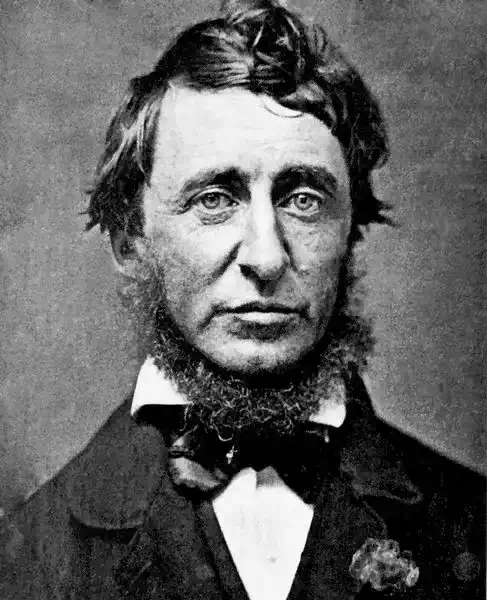
Henry David Thoreau
They Who Prepare My Evening Meal Below
They Who Prepare My Evening Meal Below
They who prepare my evening meal below
Carelessly hit the kettle as they go
With tongs or shovel,
And ringing round and round,
Out of this hovel
It makes an eastern temple by the sound.
At first I thought a cow bell right at hand
Mid birches sounded o'er the open land,
Where I plucked flowers
Many years ago,
Spending midsummer hours
With such secure delight they hardly seemed to flow.
162
Henry David Thoreau
Rumors from an Aeolian Harp
Rumors from an Aeolian Harp
There is a vale which none hath seen,
Where foot of man has never been,
Such as here lives with toil and strife,
An anxious and a sinful life.
There every virtue has its birth,
Ere it descends upon the earth,
And thither every deed returns,
Which in the generous bosom burns.
There love is warm, and youth is young,
And poetry is yet unsung.
For Virtue still adventures there,
And freely breathes her native air.
And ever, if you hearken well,
You still may hear its vesper bell,
And tread of high-souled men go by,
Their thoughts conversing with the sky.
318
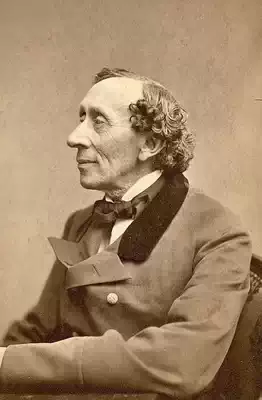
Hans Christian Andersen
June
June
'Glemt er nu Vaarens Kamp og Vinter-Sorgen,
Til Glæde sig forvandler hvert et Suk.
Skjøn som en Brud, den anden Bryllups-Morgen,
Ei længer Barn, og dog saa ung og smuk,
Den skjønne Junimaaned til os kommer;
Det er Skærsommer!
*
De høie Popler hæve sig saa slanke,
I Hyldetræet qviddrer Fuglen smukt.
Paa Gjærdet groer den grønne Humle-Ranke,
Og Æble-Blomstret former sig til Frugt.
Den varme Sommerluft fra Skyen strømmer,
Sødt Hjertet drømmer!
Paa Engen slaae de Græs; hør, Leen klinger.
Paa Himlen smukke Sommerskyer staae.
Og Kløvermarken Røgelse os svinger,
Mens høit i Choret alle Lærker slaae.
-Med Vandringsstav hist Ungersvenden kommer
Hjem i Skærsommer.
Ungersvenden.
Alt jeg Kirketaarnet øiner,
Spiret kneiser stolt derpaa.
Og hvor Marken hist sig høiner,
End de fire Pile staae.
Her er Skoven. Store Rødder
Før af Træerne der laae.
Her, som Dreng, jeg plukked' Nødder,
Og trak Jordbær paa et Straa!
-Barndoms Minder mig besjæle!
Jeg vil flyve, jeg vil dvæle!
Grønne Skov, min Barndoms Ven,
Kan Du kjende mig igjen?
Grønne Hæk, du brune Stamme,
Jeg, som før, er end den samme,
Har vel seet og hørt lidt meer,
Ellers Du den Samme seer! -
Her er Pladsen end med Vedet,
Godt jeg kjender Parken der!
Her er Stenten tæt ved Ledet,
Gud, hvor lille den dog er!
Alt jeg kjender her saa godt,
Men det er saa nært, saa smaat -
Det var stort, da jeg var liden,
Jeg er bleven større siden! -
Lille Fugl paa grønne Qvist,
Saae Du mig derude hist,
Naar jeg stundom sorgfuld sad?
Seer Du nu - - nu er jeg glad!
Var der ude Himlen graae
Hjemmet bar jeg i min Tanke,
Hjemmet jeg i Solskin saae,
Derfor maatte Hjertet banke.
-Moder er vist ældet lidt,
Jeg har tænkt paa Dig saa tidt.
Fader! fuld af Kraft og Mod! -
Gode Gud, Du er saa god.
Jeg kan ei min Glæde bære,
Din jeg er, Din vil jeg være! -
Jeg i Sjælen er saa glad,
Kysse maa jeg Blomst og Blad;
Glemt er Længsel, Suk og Vee,
Gamle Venner skal jeg see,
Og den smaa Marie-Moer -
Ja, nu er hun bleven stor! -
O, med hvilken Lyst og Gammen
Har vi to dog leget sammen!
Mit Theater var ei stort,
Men jeg havde selv det gjort.
O, jeg har det grant i Minde.
Jeg forglemmer ingensinde
Mine smaa Marionetter,
O, med Guld og Paillietter,
Hun besyed' een og hver.
Store Stykker gav' vi der.
Blanka, Hakon Jarl, saa net,
Selv Rolf Blaaskjæg, som Ballet.
Hvis ei andre saae derpaa,
Altid Bedstemoder saae;
Og om der var allerflest,
Hun dog klapped allermeest! -
Hende skal jeg ikke see,
O, det gjør mit Hjerte Vee!
Afskeds-Kysset hun mig gav, -
Græs nu groer paa hendes Grav.
O jeg kunde næsten græde!
-Nei! Du lever - seer min Glæde
Lever! lever! mig omsvæver!
Tanken Du til Himlen hæver.
Det er Aarets bedste Dag!
Alt jeg skuer Hjemmets Tag!
Her ved Poppelpilens Rod,
I den kolde Vinter-Scene,
Var det jo min Sneemand stod,
Pyntet ud med Kul og Stene.
Her er Bækken, reen og klar,
Den min Sommer-Snekke bar!
Her staaer Haugen, sommergrøn - -
Moder, see - her er Din Søn!
Moder! kjender Du min Stemme!
O, nu er jeg atter hjemme!
*
Sønnen hviler ved sin Moders Bryst,
Faderen ham kysser glad, men stille;
Hunden logrer ved hans Fod med Lyst,
Og de store brune Øine spille.
'See, Marie! vi ham har igjen -'
Jubler høit den lykkelige Moder;
Pigen rødmer, rækker Haanden hen
Til den kjære, kjære Legebroder.
'Han er voxet i de sidste Aar!
Kom! paa Døren end hans Mærke staaer.
Eduard! o! Gud har hørt min Bøn;
Seer Du Fader, han er bleven kjøn?
Er saa god - ja! ja! jeg veed det nøie.
Jeg maa kysse ham paa Mund og Øie!
-Kjender Dagligstuen Du igjen?
Men Du er vist træt? Sæt Dig dog hen!
Seer Du, hvad der staaer paa mit Klaveer?
(O, den søde Dreng! nei see, han leer)!
Dit Theater, dine Dukker smaae -
Ja, det har Marie fundet paa, -'
Saadan gaaer det fort, glad Hjertet banker,
Kun Marie falder hen i Tanker. -
Nu vi dem i Spisestuen see.
Dækketøiet skinner som en Snee,
Sommersolen mildt fra Ruden straaler,
Jordbær dufte fra crystalne Skaaler;
Kun de bedste har Marie bragt;
Og paa Bordet smukt en Krands er lagt,
Friske Blomster der i Vasen prange,
Medens Lærken synger Velkomst-Sange.
*
Det er ud paa Aftnen snart,
Men endnu det er saa klart.
Solen synker hist bag Byen,
Ild og Roser staae paa Skyen;
Høet dufter sødt paa Marken,
Og hist henne over Parken
Dandse Myggene i Ring,
Medens Blomster rundt omkring
See til Maanen, som nu kommer
I den deilige Skærsommer!
Hør, fra Skovens dunkle Sal
Fløiter smukt en Nattergal.
Hvem gaaer hist i Haugen ene
Under Æbletræets Grene? -
Kjolen sig ved Hækken hæfter -
Tys, der kommer Nogen efter!
Pigen rødmer der og standser,
Mens det sidste Blomsterblad,
Som endnu paa Træet sad,
Falder ned og Lokken Krandser;
Træet pynter hende ud,
Som det tænkte, hun var Brud.
Eduard.
Er det Dig, som gaaer og spøger?
Marie.
Nei, om Stikkelsbær jeg søger,
Om de største jeg kan faae.
Mange Stedmo'ers-Blomster staae
I Salaten her saa net;
Jeg har plukket en Bouqvet,
Maa jeg Blomsterne Dig byde?
Eduard.
Veed Du vel, hvad de betyde?
Blomstersproget, kan jeg troe,
Kjender Du til Punkt og Prikke.
Marie.
Nei saa lærd, det er jeg ikke.
-Er det noget godt?
Eduard.
Ih jo!
Vel for mig, men
(spøgende)
Dig? - desværre!
Giv dog aldrig nogen Herre
Slige Blomster, Gud bevar' os!
Tænk Dig, hvis det galt forklares;
Jo, der har Du handlet net!
Marie.
Nu, saa giv mig min Bouqvet!
Eduard.
Nei, see kun, hvor rød Du bliver!
-Jeg den ene Blomst dig giver,
Resten faaer Du ikke meer,
Skjøndt Du saa alvorligt seer.
Lad nu Bærrene kun være,
Vi har talt saa grumme lidt!
Marie.
Skal jeg Blomstersproget lære?
Nu er det jo saa forslidt!
Eduard.
Naa, hvor Du seer ud i Haaret!
Grenen paa Toupeen slaer.
Har Du hele Dagen baaret
Æbleblomster i dit Haar?
Marie (spøgende).
Hjertet faaer kun Spot og Trængsel;
See, det har man for sin Længsel,
Nu, han er her, gjør han Nar.
Eduard.
Efter mig Du længtes har!
O, saa tidt mit Hjertes Stemme
Kaldte mig til Dig her hjemme.
Du har ofte tænkt paa mig?
O, jeg holder ret af Dig!
Men Du skrev saa korte Breve!
Tidt kun, naar de andre skreve,
Jeg fra Dig, det var Din Skik,
Bare Efterskriften fik.
Jeg mig maatte forestille,
At Du endnu var den Lille,
Og saa er Du nu saa stor! -
O, Marie, lad os vandre
Her i Haven med hverandre.
Hvert et Træ, som her jo groer
Kjender jeg fra gamle Dage.
Marie.
Gud skee Lov, Du kom tilbage!
Du er dog min kjære Broder!
-Skal vi nu gaae op til Moder?
Eduard.
Lad mig see Dig i dit Øie!
Hvert et Træk jeg kjender nøie.
Ældre, mere smuk Du staaer,
Og dog, som for otte Aar! -
Marie.
- Skal vi nu gaae op til Moder? -
Eduard.
(kysser hende paa Panden).
Det tør jeg jo nok - som Broder.
En lille Fugl (i Træet).
Hjertet maa af Elskov slaae
Baade Nat og lyse Dage!
Kjærlighed jeg synge maa,
Har dog ingen Mage!
Glade To i Havens Gang,
Jeg til Eder kommer,
Synger Eders Bryllups-Sang
Næste Aars Skærsommer!
Ja Skærsommer skal det staae,
Den har smukke Dage!
-Kjærlighed jeg synge maa,
Har dog ingen Mage!
355
Hans Christian Andersen
April
April
'- Frihed, synger Du, April!
med nyfødt Grønt og Sommer-Smiil.'
*
(Strandveien).
En ung Herre (til Hest).
O, April! en deilig Maaned!
En Champagne-Maaned er Du!
Gjennem Snee og Vinterkulde
Du fremsprudler Liv og Varme.
Sommersol og Vinterhagel,
Marken Grøn, og dog lidt Snee!
Mig i Sind og Skind Du ligner,
Som en Draabe ligner Draaben.
Ungdomsglad jeg slynger Armen
Om hver buttet deilig Pige,
Trykker Kys paa Barm og Læbe;
Sværmer nu hos Pleisch og Minni, 1
Siger Vittighed, par Diable!
-Andre Tider Regn og Taage,
Slemme Breve uden Penge;
Creditorer slaae paa Døren. -
Det er nu en Hagelbyge!
Solen skinner! - bort med Griller!
Du April, min egen Maaned!
En Champagne-Maaned er du!
(han jager afsted).
Elskeren (under Træet).
Høit paa Grenen Fuglen gynger;
Hører dog, hvor smukt den synger!
Qviddrer lystigt, hvad den veed,
Synger om min Kjærlighed;
Nævner over tusind' Gange
Hendes Navn i sine Sange.
Hjertet finder atter Ro,
Thi jeg veed, hun er mig tro!
Fuglen.
Vinter-Kulden mig bortskræmmed'.
Bryllup er der nu i Hjemmet;
Bruden var Din Hjertenskjær,
-Du forstaaer ei Sangen her - !
Elskeren.
Budskab den fra hende bringer,
O, saa saligt , sødt det klinger!
Mig hun seer paa Tankens Strøm
Og i hendes bedste Drøm.
Fuglen.
-Brud og Brudgom sad nu sammen,
Der var Lystighed og Gammen,
Smukt om Troskab blev der talt,
Men, - ak! Dig ei Talen gjaldt.
Elskeren.
Gud! til Dig jeg Tak vil sende;
Fader, ja Du gav mig hende!
Hun, min første Kjærlighed
Min i Tid og Evighed!
Lille Fugl! løft glad Din Vinge,
Hilsen Du til hende bringe;
Du om Troskab synge maa,
Ogsaa hun vil Dig forstaae!
*
Chor af de Kjørende.
Med Graad i Øie, med Smiil paa Kind,
I Elskovs Drømme, i Sind og Skind,
Hvor ligner Du - o, Pigelil!
-April.
See Haabet med sin Blomsterkrands,
Dets hele Liv er kun en Dands!
Hvad fandt Du i dets Graad og Smiil?
-April!
For Laurbærkrandsen paa sin Grav
Saa mangen Helt sit Liv hengav;
Maaskee han løb mod Dødens Piil
April!
Fortuna med sit Hersker-Blik,
Og Brittens Tro 2 i Politik,
Hvor ligne I og Eders Smiil
April!
Den hele Jord, det hele Liv,
Med Kjærlighed, med Sorg og Kiv,
Er med sin Stræben, Kamp og Smiil
April!
*
Vandringsmanden.
Nei, Frihed synger Du, April,
Med nyfødt Grønt og Sommer-Smiil!
Stolt svulmer frem hver Aae, hver Bæk,
Alt grønnes her den brune Hæk,
Og Sneen smelter bort paa Vang,
Mens Fuglen synger Friheds Sang!
En lille Fugl (paa Grenen).
Hen over Sø og salten Vand
Jeg kommer fra et fremmed Land;
Nær Polens Grændse Landet laae,
I Byen jeg en Galge saae,
Der var saa mange Navne paa.
Men Heltenavne man kun skrev,
Og Hædersstøtte Galgen blev,
Thi bøiede sig hver en Fri
Ærbødigt, mens han gik forbi,
Og aarle, alt ved Lærkens Slag,
Den stod bekrandset næste Dag.*
Jeg satte mig paa Støtten lidt,
Og sang mit Friheds Qvirrevit!
*Historisk Sandhed.
Eccho.
'Qvirrevit!'
Fuglen.
Ak! er min Friheds Sang ei meer?
Eccho.
'Ei meer!'
En skikkelig Mand.
Hvad behager? Her er allerede saadan en Qvinkeleren og Qviddren med Spurve og
Lærker! Alt det Fugle-Rak, vor Herre lader skabe, kommer strax og giver deres Besyv!
-Nu kan de da snart faae lidt i Skrotten igjen, nu Sommeren kommer! Hvor det ellers
er et deiligt Veir.
En Kritiker.
Hr. Forfatter! Gud bevare os! hvad tænker De paa? At lade saadan en Person komme
ind her? Er det Orden? Er det Logik? Hvad skal denne skikkelige Mand i Friheds
Maaneden?
Forfatteren.
Det er just en poetisk Frihed.
Kritikeren .
Vil De bare see at faae ham ud! eller jeg skal lære Dem [rettet fra 'dem'] begge to! ['!'
rettet fra '?']
Den skikkelige Mand.
Hvad? Faae mig ud! - Har jeg ikke Lov at spadsere i April Maaned? - Jeg fornærmer
ingen, og jeg skylder, Gud skee Lov, heller ingen Noget.
Kritikeren.
Jeg skal rive ham ned 3 i Kritikkerne!
Den skikkelige Mand.
Kom han mig ikke saa! for jeg har en Søstersøn, der skal op til første Examen næste
Aar, og han har allerede længe skrevet den Ene og den Anden en X for et U 4 i
Bladene; - men uden Navn - det er en Fandens Dreng, tag han sig i Agt for ham. -
Forfatteren.
O Gud, mine Herrer, De sætte mig i den største Forskrækkelse! Kom dog ikke op at
slaaes. -
Kritikeren.
Vil De forbyde os det! Hvad vil De med Deres skikkelige Mand her? Er De ikke selv
Skyld i det Hele. Nu vil jeg banke ham -
Forfatteren.
Ja Gud bevare os! det er jo Frihedens Maaned.
(trækker sig tilbage).
En ung Maler.
(kommer med sin Mappe og sine Tegne-Redskaber).
Den friske grønne Eng med sine Damme,
Den knopped' brune Skov, den aabne Sø,
Og Skyerne ved Firmamentets Ramme,
Der i en violetblaa Taage døe,
Dem maler jeg, de blive skal mit Eie.
(Han sætter sig paa en Steen under Træet).
Smukt hæver sig det lille Fiskerleie!
See, Garnet hænger udspændt høit ved Strand!
Her ligger Baaden trukket op paa Land,
Og Græsset under den, for Solen skjult,
Staaer høit og tykt, men med et grønligt Guult.
To Smaa-Børn lege foran Huset hist
Med tørre Pinde og en Bøgeqvist. ['.' indsat her]
De plante dem en Have smukt i Solen,
Mens Bedstemoder her i Lænestolen
Maa tage Plads og lege med de Smaae.
De [',' slettet] som to muntre Vaarens [',' slettet] Alfer staae
Ved Vintrens Snee, hvor mangt et Minde hviler.
Ømt til de kjære Smaae den Gamle smiler!
Vandringsmanden.
Hvor festligt klinger over Bondens Vang
Fra Kirketaarnet Klokkens dybe Klang,
Mens Havets Bølger synge med fra Stranden;
Hør, det er Paaske, Christus er opstanden!
Bølgerne.
Sæt Dig her paa Stenen, ved det brune Tang,
Vi skal Dig fortælle mangen Havfrue-Sang.
Dybt, saa dybt dernede, paa den vaade Grund,
Bygge Havets Piger, under Øresund.
Der er' [',' slettet] smukke Blomster, Tangen er saa grøn,
Og - som Søens Lillier er den Havfrue skjøn!
Tidt i Sommer-Natten hun fra Dybet gaaer,
Leger da heroppe med sit lange Haar.
Hver April hun bringer, under Bølge-Sang,
Danmark Friheds-Krandsen af sit grønne Tang;
Og mens Vinter-Kysten blomstrer smukt igjen,
Synger Danmarks frelse ved Niels Ebbesen;*
Synger Brittens Skjændsel og hans fule 5 Smiil,
Mens hun skjænker Danmark Krandsen for April!**
376

Gwendolyn Brooks
the vacant lot
the vacant lot
Mrs. Coley’s three-flat brick
Isn’t here any more.
All done with seeing her fat little form
Burst out of the basement door;
And with seeing her African son-in-law
(Rightful heir to the throne)
With his great white strong cold squares of teeth
And his little eyes of stone;
And with seeing the squat fat daughter
Letting in the men
When majesty has gone for the day—
And letting them out again.
345
Gwendolyn Brooks
the sonnet-ballad
the sonnet-ballad
Oh mother, mother, where is happiness?
They took my lover's tallness off to war,
Left me lamenting. Now I cannot guess
What I can use an empty heart-cup for.
He won't be coming back here any more.
Some day the war will end, but, oh, I knew
When he went walking grandly out that door
That my sweet love would have to be untrue.
Would have to be untrue. Would have to court
Coquettish death, whose impudent and strange
Possessive arms and beauty (of a sort)
Can make a hard man hesitate--and change.
And he will be the one to stammer, "Yes."
Oh mother, mother, where is happiness?
Oh mother, mother, where is happiness?
They took my lover's tallness off to war,
Left me lamenting. Now I cannot guess
What I can use an empty heart-cup for.
He won't be coming back here any more.
Some day the war will end, but, oh, I knew
When he went walking grandly out that door
That my sweet love would have to be untrue.
Would have to be untrue. Would have to court
Coquettish death, whose impudent and strange
Possessive arms and beauty (of a sort)
Can make a hard man hesitate--and change.
And he will be the one to stammer, "Yes."
Oh mother, mother, where is happiness?
289
Gwendolyn Brooks
The Ballad of Rudolph Reed
The Ballad of Rudolph Reed
Rudolph Reed was oaken.
His wife was oaken too.
And his two good girls and his good little man
Oakened as they grew.
"I am not hungry for berries.
I am not hungry for bread.
But hungry hungry for a house
Where at night a man in bed
"May never hear the plaster
Stir as if in pain.
May never hear the roaches
Falling like fat rain.
"Where never wife and children need
Go blinking through the gloom.
Where every room of many rooms
Will be full of room.
"Oh my home may have its east or west
Or north or south behind it.
All I know is I shall know it,
And fight for it when I find it."
The agent's steep and steady stare
Corroded to a grin.
Why you black old, tough old hell of a man,
Move your family in!
Nary a grin grinned Rudolph Reed,
Nary a curse cursed he,
But moved in his House. With his dark little wife,
And his dark little children three.
A neighbor would look, with a yawning eye
That squeezed into a slit.
But the Rudolph Reeds and children three
Were too joyous to notice it.
For were they not firm in a home of their own
With windows everywhere
And a beautiful banistered stair
And a front yard for flowers and a back for grass?
The first night, a rock, big as two fists.
The second, a rock big as three.
But nary a curse cursed Rudolph Reed.
(Though oaken as man could be.)
The third night, a silvery ring of glass.
Patience arched to endure,
But he looked, and lo! small Mabel's blood
Was staining her gaze so pure.
Then up did rise our Roodoplh Reed
And pressed the hand of his wife,
And went to the door with a thirty-four
And a beastly butcher knife.
He ran like a mad thing into the night
And the words in his mouth were stinking.
By the time he had hurt his first white man
He was no longer thinking.
By the time he had hurt his fourth white man
Rudolph Reed was dead.
His neighbors gathered and kicked his corpse.
"Nigger--" his neighbors said.
Small Mabel whimpered all night long,
For calling herself the cause.
Her oak-eyed mother did no thing
But change the bloody gauze.
292
Gwendolyn Brooks
Sadie and Maud
Sadie and Maud
Maud went to college.
Sadie stayed home.
Sadie scraped life
With a fine toothed comb.
She didn't leave a tangle in
Her comb found every strand.
Sadie was one of the livingest chicks
In all the land.
Sadie bore two babies
Under her maiden name.
Maud and Ma and Papa
Nearly died of shame.
When Sadie said her last so-long
Her girls struck out from home.
(Sadie left as heritage
Her fine-toothed comb.)
Maud, who went to college,
Is a thin brown mouse.
She is living all alone
In this old house.
322
Gwendolyn Brooks
A Penitent Considers Another Coming of Mary
A Penitent Considers Another Coming of Mary
For Reverend Theodore Richardson
If Mary came would Mary
Forgive, as Mothers may,
And sad and second Saviour
Furnish us today?
She would not shake her head and leave
This military air,
But ratify a modern hay,
And put her Baby there.
Mary would not punish men—
If Mary came again.
For Reverend Theodore Richardson
If Mary came would Mary
Forgive, as Mothers may,
And sad and second Saviour
Furnish us today?
She would not shake her head and leave
This military air,
But ratify a modern hay,
And put her Baby there.
Mary would not punish men—
If Mary came again.
298
Gwendolyn Brooks
She did not scream.
She did not scream.
She stood there.
But a hatred for him burst into glorious flower,
And its perfume enclasped them--big,
Bigger than all magnolias.
The last bleak news of the ballad.
The rest of the rugged music.
The last quatrain.
She stood there.
But a hatred for him burst into glorious flower,
And its perfume enclasped them--big,
Bigger than all magnolias.
The last bleak news of the ballad.
The rest of the rugged music.
The last quatrain.
270
Guillaume Apollinaire
Vitam Impendere Amori
Vitam Impendere Amori
(Vitam Impendere Amori: To Threaten Life for Love)
Love is dead within your arms
Do you remember his encounter
He’s dead you restore the charms
He returns at your encounter
Another spring of springs gone past
I think of all its tenderness
Farewell season done at last
You’ll return as tenderly
****
In the evening light that’s faded
Where our several loves brush by
Your memory lies enchained
Far from our shades that die
O hands bound by memory
Burning like a funeral pyre
Where the last black Phoenix
Perfection comes to respire
Link by link the chain wears thin
Deriding us your memory
Flies ah hear it you who rail
I kneel again at your feet
****
You’ve not surprised my secret yet
Already the cortège moves on
But left to us is the regret
of there being no connivance none
The rose floats at the water’s edge
The maskers have passed by in crowds
It trembles in me like a bell
This heavy secret you ask now
****
Evening falls and in the garden
Women tell their histories
to Night that not without disdain
spills their dark hair’s mysteries
Little children little children
Your wings have flown away
But you rose that defend yourself
Throw your unrivalled scents away
For now’s the hour of petty theft
Of plumes of flowers and of tresses
Gather the fountain jets so free
Of whom the roses are mistresses
****
You descended through the water clear
I drowned my self so in your glance
The soldier passes she leans down
Turns and breaks away a branch
You float on nocturnal waves
The flame is my own heart reversed
Coloured as that comb’s tortoiseshell
The wave that bathes you mirrors well
****
O my abandoned youth is dead
Like a garland faded
Here the season comes again
Of suspicion and disdain
The landscape’s formed of canvasses
A false stream of blood flows down
And under the tree the stars glow fresh
The only passer by’s a clown
The glass in the frame has cracked
An air defined uncertainly
Hovers between sound and thought
Between ‘to be’ and memory
O my abandoned youth is dead
Like a garland faded
Here the season comes again
Of suspicion and disdain
1,477