

Poems in this topic
Relationships and Family
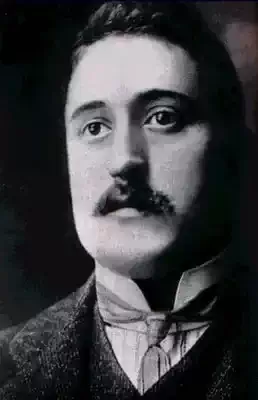
Guillaume Apollinaire
The Ninth Secret Poem
The Ninth Secret Poem
I worship your fleece which is the perfect triangle
Of the Goddess
I am the lumberjack of the only virgin forest
O my Eldorado
I am the only fish in your voluptuous ocean
You my lovely Siren
I am the climber on your snowy mountains
O my whitest Alp
I am the heavenly archer at your beautiful mouth
O my darling quiver
I am the hauler of your midnight hair
O lovely ship on the canal of my kisses
And the lilies of your arms are beckoning me
O my summer garden
The fruits of your breast are ripening their honey for me
O my sweet-smelling orchard
And I am raising you O Madeleine O my beauty above the earth
Like the torch of all light
893
Guillaume Apollinaire
The Skirt
The Skirt
Hallo Germaine that's a fine skirt you have
A fine skirt for a queen A cruel queen
Let's feel the silk of it Silk from Japan
And trimmed with wide lace made on no machine
Your skirt's a silken bell whose double clapper
Your legs have struck the passing of my fancies
O Germaine now I ring it my breast heaving
My hands press down upon your willing haunches
Your bedroom O my bell is a fine belfry
My hands touch silk and seem to tear my ears
Those pegs are gallows on which skirts are hanging
Those hanging men are dazzling my eyes
Motionless as an owl the oil lamp watches
763
Guillaume Apollinaire
Mareye
Mareye
Mareye était très douce étourdie et charmante
Moi je l'aimais d'Amour m'aimait-elle, qui sait?
Je revois parfois à la lueur tremblotante
Des lointains souvenirs cet Amour trépassé.
Sur ma bouche je sens celle de mon amante
Je sens ses petites mains sur mon front glacé
Ses mains dont doucement elle me caressait
Ses rares mains de sainte pâle ou bien d'infante
Mon amante d'antant dans quels bras t'endors-tu
Pendant l'hiver saison d'amour où les vents pleurent
Où les amants ont froid où les passants se meurent
Sous les tristes sapins meurent en écoutant
Les elfes rire au vent et corner aux rafales?
Songes-tu quelquefois quand les nuits sont bien pâles
Que telles nos amours sont mortes les étoiles?
811
Guillaume Apollinaire
La Chanson Du Malaime
La Chanson Du Malaime
Un soir de demi-brume à Londres
Un voyou qui ressemblait à
Mon amour vint à ma rencontre
Et le regard qu'il me jeta
Me fit baisser les yeux de honte
Je suivis ce mauvais garçon
Qui sifflotait mains dans les poches
Nous semblions entre les maisons
Onde ouverte de la mer Rouge
Lui les Hébreux moi Pharaon
Qui tombent ces vagues de briques
Si tu ne fus pas bien aimée
Je suis le souverain d'Egypte
Sa soeur-épouse son armée
Si tu n'es pas l'amour unique.
856
Guillaume Apollinaire
Annie
Annie
Sur la côte du Texas
Entre Mobile et Galveston il y a
Un grand jardin tout plein de roses
Il contient aussi une villa
Qui est une grande rose
Une femme se promène souvent
Dans le jardin toute seule
Et quand je passe sur la route bordée de tilleuls
Nous nous regardons
Comme cette femme est mennonite
Ses rosiers et ses vêtements n'ont pas de boutons
Il en manque deux à mon veston
La dame et moi suivons le même rite.
981

George Herbert
Love (I)
Love (I)
Immortal love, authour of this great frame,
Sprung from that beautie which can never fade;
How hath man parcel’d out thy glorious name,
And thrown it on that dust which thou hast made,
While mortall love doth all the title gain!
Which siding with invention, they together
Bear all the sway, possessing heart and brain,
(Thy workmanship) and give thee share in neither.
Wit fancies beautie, beautie raiseth wit:
The world is theirs; they two play out the game,
Thou standing by: and though thy glorious name
Wrought our deliverance from th’ infernall pit,
Who sings thy praise? onely a skarf or glove
Doth warm our hands, and make them write of love.
276

Lord Byron
Written Shortly After The Marriage Of Miss Chaworth
Written Shortly After The Marriage Of Miss Chaworth
Hills of Annesley, bleak and barren,
Where my thoughtless childhood stray'd,
How the northern tempests, warring,
Howl above thy tufted shade!
Now no more, the hours beguiling,
Former favourite haunts I see;
Now no more my Mary smiling
Makes ye seem a heaven to me.
Hills of Annesley, bleak and barren,
Where my thoughtless childhood stray'd,
How the northern tempests, warring,
Howl above thy tufted shade!
Now no more, the hours beguiling,
Former favourite haunts I see;
Now no more my Mary smiling
Makes ye seem a heaven to me.
456
Lord Byron
Translation Of The Romaic Song
Translation Of The Romaic Song
I enter thy garden of roses,
Beloved and fair Haidée,
Each morning where Flora reposes,
For surely I see her in thee.
Oh, Lovely! thus low I implore thee,
Receive this fond truth from my tongue,
Which utters its song to adore thee,
Yet trembles for what it has sung;
As the branch, at the bidding of Nature,
Adds fragrance and fruit to the tree,
Through her eyes, through her every feature,
Shines the soul of the young Haidée.
But the loveliest garden grows hateful
When Love has abandon'd the bowers;
Bring me hemlock since
mine is ungrateful,
That herb is more fragrant than flowers.
The poison, when pour 'd from the chalice,
Will deeply embitter the bowl;
But when drunk to escape from thy malice,
The draught shall be sweet to my soul.
Too cruel! in vain I implore thee
My heart from these horrors to save:
Will nought to my bosom restore thee?
Then open the gates of the grave.
As the chief who to combat advances
Secure of his conquest before,
Thus thou, with those eyes for thy lances,
Halt pierced through my heart to its core.
Ah, tell me, my soul! must I perish
By pangs which a smile would dispel?
Would the hope, which thou once bad'st me cherish,
For torture repay me too well?
Now sad is the garden of roses,
Beloved but false Haidée!
There Flora all wither'd reposes,
And mourns o'er thing absence with me.
511
Lord Byron
Translation Of A Romaic Love Song
Translation Of A Romaic Love Song
Ah! Love was never yet without
The pang, the agony, the doubt,
Which rends my heart with ceaseless sigh,
While day and night roll darkling by.
Without one friend to hear my woe,
I faint, I die beneath the blow.
That Love had arrows well I knew;
Alas! I find them poison'd too.
Birds, yet in freedom, shun the net
Which Love around your haunts hath set;
Or, circled by his fatal fire,
Your hearts shall burn, your hopes expire.
A bird of free and careless wing
Was I through many a smiling spring;
But caught within the subtle snare,
I burn, and feebly flutter there.
Who ne'er have loved, and loved in vain,
Can neither feel nor pity pain,
The cold repulse, the look askance,
The lightning of Love's angry glance.
In flattering dreams I deem'd thee mine;
Now hope, and he who hoped, decline'
Like melting wax, or withering flower,
I feel my passion, and thy power.
My light of life! ah, tell me why
That pouting lip, and alter'd eye?
My bird of love! my beauteous mate!
And art thou changed, and canst thou hate?
Mine eyes like wintry streams o'erflow:
What wretch with me would barter woe?
My bird! relent: one note could give
A charm to bid thy lover live.
My curdling blood, my madd'ning brain,
In silent anguish I sustain
And still thy heart, without partaking
One pang, exults while
mine is breaking.
Pour me the poison; fear not thou!
Thou canst not murder more than now:
I've lived to curse my natal day,
And Love, that thus can lingering slay.
My wounded soul, my bleeding breast,
Can patience preach thee into rest?
Alas! too late, I dearly know
That joy is harbinger of woe.
628
Lord Byron
To Woman
To Woman
Woman! experience might have told me,
That all must love thee who behold thee:
Surely experience might have taught
Thy firmest promises are nought:
But, placed in all thy charms before me,
All I forget, but to adore thee.
Oh memory! Thou choicest blessing
When join'd with hope, when still possessing;
But how much cursed by every lover
When hope is fled and passion's over.
Woman, that fair and fond deceiver,
How throbs the pulse when first we view
The eye that rolls in glossy blue,
Or sparkles black, or mildly throws
A beam from under hazel brows!
How quick we credit every oath,
And hear her plight the willing troth!
Fondly we hope't will last for aye,
When, lo! she changes in a day.
This record will for ever stand,
'Woman, thy vows are traced in sand.'
523
Lord Byron
To Romance
To Romance
Parent of golden dreams, Romance!
Auspicious Queen of childish joys,
Who lead'st along, in airy dance,
Thy votive train of girls and boys;
At length, in spells no longer bound,
I break the fetters of my youth;
No more I tread thy mystic round,
But leave thy realms for those of Truth.
And yet 'tis hard to quit the dreams
Which haunt the unsuspicious soul,
Where every nymph a goddess seems,
Whose eyes through rays immortal roll;
While Fancy holds her boundless reign,
And all assume a varied hue;
When Virgins seem no longer vain,
And even Woman's smiles are true.
And must we own thee, but a name,
And from thy hall of clouds descend?
Nor find a Sylph in every dame,
A Pylades in every friend?
But leave, at once, thy realms of air i
To mingling bands of fairy elves;
Confess that woman's false as fair,
And friends have feeling forthemselves?
With shame, I own, I've felt thy sway;
Repentant, now thy reign is o'er;
No more thy precepts I obey,
No more on fancied pinions soar;
Fond fool! to love a sparkling eye,
And think that eye to truth was dear;
To trust a passing wanton's sigh,
And melt beneath a wanton's tear!
Romance! disgusted with deceit,
Far from thy motley court I fly,
Where Affectation holds her seat,
And sickly Sensibility;
Whose silly tears can never flow
For any pangs excepting thine;
Who turns aside from real woe,
To steep in dew thy gaudy shrine.
Now join with sable Sympathy,
With cypress crown'd, array'd in weeds,
Who heaves with thee her simple sigh,
Whose breast for every bosom bleeds;
And call thy sylvan female choir,
To mourn a Swain for ever gone,
Who once could glow with equal fire,
But bends not now before thy throne.
Ye genial Nymphs, whose ready tears
On all occasions swiftly flow;
Whose bosoms heave with fancied fears,
With fancied flames and phrenzy glow
Say, will you mourn my absent name,
Apostate from your gentle train
An infant Bard, at least, may claim
From you a sympathetic strain.
Adieu, fond race! a long adieu!
The hour of fate is hovering nigh;
E'en now the gulf appears in view,
Where unlamented you must lie:
Oblivion's blackening lake is seen,
Convuls'd by gales you cannot weather,
Where you, and eke your gentle queen,
Alas! must perish altogether.
579
Lord Byron
To M. S. G.
To M. S. G.
Whene'er I view those lips of thine,
Their hue invites my fervent kiss;
Yet, I forego that bliss divine,
Alas! it wereunhallow'd
bliss.
Whene'er I dream of that pure breast,
How could I dwell upon its snows!
Yet, is the daring wish represt,
For that,would
banish its repose.
A glance from thy soulsearching
eye
Can raise with hope, depress with fear;
Yet, I conceal my love,and
why?
I would not force a painful tear.
I ne'er have told my love, yet thou
Hast seen my ardent flame too well;
And shall I plead my passion now,
To make thy bosom's heaven a hell?
No! for thou never canst be mine,
United by the priest's decree:
By any ties but those divine,
Mine, my belov'd, thou ne'er shalt be.
Then let the secret fire consume,
Let it consume, thou shalt not know:
With joy I court a certain doom,
Rather than spread its guilty glow.
I will not ease my tortur'd heart,
By driving doveey'd
peace from thine;
Rather than such a sting impart,
Each thought presumptuous I resign.
Yes! yield those lips, for which I'd brave
More than I here shall dare to tell;
Thy innocence and mine to save,I
bid thee now a last farewell.
Yes! yield that breast, to seek despair
And hope no more thy soft embrace;
Which to obtain, my soul would dare,
All, all reproach, but thy disgrace.
At least from guilt shalt thou be free,
No matron shall thy shame reprove;
Though cureless pangs may prey on me,
No martyr shalt thou be to love.
470
Lord Byron
To Emma
To Emma
Since now the hour is come at last,
When you must quit your anxious lover;
Since now our dream of bliss is past,
One pang, my girl, and all is over.
Alas! that pang will be severe,
Which bids us part to meet no more;
Which tears me far from one so dear,
Departing for a distant shore.
Well! we have pass'd some happy hours,
And joy will mingle with our tears;
When thinking on these ancient towers,
We shelter of our infant years;
Where from this Gothic casement's height,
We view's the lake, the park, the dell,
And still, though tears obstruct our sight,
We lingering look a last farewell,
O'er fields through which we used to run,
And spend the hours in childish play;
O'er shades where, when our race was done,
Reposing on my breast you lay;
Whilst I, admiring, too remiss,
Forgot to scare the hovering flies,
Yet envied every fly the kiss
It dared to give your slumbering eyes:
See still the little painted bark,
In which I row'd you o'er the lake;
See there, high waving o'er the park,
The elm I clamber'd for your sake.
These times are past — our joys are gone,
You leave me, leave this happy vale;
These scenes I must retrace alone:
Without thee what will they avail?
Who can conceive, who has not proved,
The anguish of a last embrace?
When, torn from all you fondly loved,
You bid a long adieu to peace.
This is the deepest of our woes,
For this these tears our cheeks bedew;
This is of love the final close,
Oh, God! the fondest, last adieu!
518
Lord Byron
To Caroline: When I Hear That You Express An Affection So Warm
To Caroline: When I Hear That You Express An Affection So Warm
When I hear that you express an affection so warm,
Ne'er think, my beloved, that I do not believe;
For your lip would the soul of suspicion disarm,
And your eye beams a ray which can never deceive.
Yet, still, this fond bosom regrets, while adoring,
That love, like the leaf, must fall into the sear;
That age will come on, when remembrance, deploring,
Contemplates the scenes of her youth with a tear;
That the time must arrive, when, no longer retaining
Their auburn, those locks must wave thin to the breeze,
When a few silver hairs of those tresses remaining
Prove nature a prey to decay and disease.
'Tis this, my beloved, which spreads gloom o'er my features,
Though I ne'er shall presume to arraign the decree,
Which God has proclaim'd as the fate of his creatures,
In the death which will one day deprive you of me.
Mistake not, sweet sceptic, the cause of emotion,
No doubt can the mind of your lover invade;
He worships each look with such faithful devotion,
A smile can enchant, or a tear can dissuade.
But as death, my beloved, soon or late shall o'ertake us,
And our breasts, which alive with such sympathy glow,
Will sleep in the grave till the blast shall awake us,
When calling the dead, in earth's bosom laid low,
Oh! then let us drain, while we may, draughts of pleasure,
Which from passion like ours may unceasingly flow;
Let us pass round the cup of love's bliss in full measure,
And quaff the contents as our nectar below.
1805
457
Lord Byron
To Anne: Oh, Say Not, Sweet Anne
To Anne: Oh, Say Not, Sweet Anne
Oh, say not, sweet Anne, that the Fates have decreed
The heart which adores you should wish to dissever;
Such Fates were to me most unkind ones indeed,
To bear me from love and from beauty for ever.
Your frowns, lovely girl, are the Fates which alone
Could bid me from fond admiration refrain;
By these, every hope, every wish were o'erthrown,
Till smiles should restore me to rapture again.
As the ivy and oak, in the forest entwined,
The rage of the tempest united must weather;
My love and my life were by nature design'd
To flourish alike, or to perish together.
Then say not, sweet Anne, that the Fates have decreed
Your lover should bid you a lasting adieu;
Till Fate can ordain that his bosom shall bleed,
His soul, his existence, are centred in you.
540
Lord Byron
To Caroline
To Caroline
Think'st thou I saw thy beauteous eyes,
Suffus'd in tears, implore to stay;
And heard unmov'd thy plenteous sighs,
Which said far more than words can say?
Though keen the grief thy tears exprest,
When love and hope lay both o'erthrown;
Yet still, my girl, this bleeding breast
Throbb'd, with deep sorrow, as thine own.
But, when our cheeks with anguish glow'd,
When thy sweet lips were join'd to mine;
The tears that from my eyelids flow'd
Were lost in those which fell from thine.
Thou could'st not feel my burning cheek,
Thy gushing tears had quench'd its flame,
And, as thy tongue essay'd to speak,
In sighs alone it breath'd my name.
And yet, my girl, we weep in vain,
In vain our fate in sighs deplore;
Remembrance only can remain,
But that, will make us weep the more.
Again, thou best belov'd, adieu!
Ah! if thou canst, o'ercome regret,
Nor let thy mind past joys review,
Our only hope is, to forget!
541
Lord Byron
To A Vain Lady
To A Vain Lady
Ah! heedless girl! why thus disclose
What ne'er was meant for other ears:
Why thus destroy thine own repose
And dig the source of future tears?
Oh, thou wilt weep, imprudent maid,
While lurking envious foes will smile,
For all the follies thou hast said
Of those who spoke but to beguile.
Vain girl! thy ling'ring woes are nigh,
If thou believ'st what striplings say:
Oh, from the deep temptation fly,
Nor fall the specious spoiler's prey.
Dost thou repeat, in childish boast,
The words man utters to deceive?
Thy peace, thy hope, thy all is lost,
If thou canst venture to believe.
While now amongst thy female peers
Thou tell'st again the soothing tale,
Canst thou not mark the rising sneers
Duplicity in vain would veil?
These tales in secret silence hush,
Nor make thyself the public gaze:
What modest maid without a blush
Recounts a flattering coxcomb's praise?
Will not the laughing boy despise
Her who relates each fond conceit Who,
thinking Heaven is in her eyes,
Yet cannot see the slight deceit?
For she who takes a soft delight
These amorous nothings in revealing,
Must credit all we say or write,
While vanity prevents concealing.
Cease, if you prize your beauty's reign!
No jealousy bids me reprove:
One, who is thus from nature vain,
I pity, but I cannot love.
January 15,1807.
481
Lord Byron
To An Oak At Newstead
To An Oak At Newstead
Young Oak! when I planted thee deep in the ground,
I hoped that thy days would be longer than mine;
That thy dark‑waving branches would flourish around,
And ivy thy trunk with its mantle entwine.
Such, such was my hope, when in infancy's
On the land of my fathers I rear'd thee with pride;
They are past, and I water thy stem with my tears,
Thy decay not the weeds that surround thee can hide.
I left thee, my Oak, and, since that fatal hour,
A stranger has dwelt in the hall of my sire;
Till manhood shall crown me, not mine is the power,
But his, whose neglect may have bade thee expire.
Oh! hardy thou wenteven
now little care
Might revive thy young head, and thy wounds gently heal:
But thou went not fated affection to shareFor
who could suppose that a stranger would feel!
Ah, droop not, my Oak! lift thy head for a while;
Ere twice round yon Glory this planet shall run,
The hand of thy Master will teach thee to smile,
When Infancy's years of probation are done.
Oh, live then, my Oak! tow'r aloft from the weeds,
That clog thy young growth, and assist thy decay,
For still in thy bosom are life's early seeds,
And still may thy branches their beauty display.
Oh! yet, if maturity's years may be thine,
Though I shall lie low in the cavern of death,
On thy leaves yet the day‑beam of ages may shine,
Uninjured by time, or the rude winter's breath.
For centuries still may thy boughs lightly wave
O'er the Gorse of thy lord in thy canopy laid;
While the branches thus gratefully shelter his grave,
The chief who survives may recline in thy shade.
And as he, with his boys, shall revisit this spot,
He will tell them is whispers more softly to tread.
Oh! surely, by these I shall ne'er be forgot;
Remembrance still hallows the dust of the dead.
And here, will they say, when in life's glowing prime,
Perhaps he has pour'd forth his young simple lay,
And here must he sleep, till the moments of time
Are lost in the hours of Eternity's day.
556
Lord Byron
To A Lady, Who Presented The Author With The Velvet Band Which Bound Her
To A Lady, Who Presented The Author With The Velvet Band Which Bound Her
Tresses
This Band, which bound thy yellow hair,
Is mine, sweet girl! Thy pledge of love;
It claims my warmest, dearest care,
Like relics left of saints above.
Oh! I will wear it next my heart;
'Twill blind my soul in bonds to thee;
From me again 't will ne'er depart,
But mingle in the grave with me.
The dew I gather from thy lip
Is not so dear to me as this;
That I but for a moment sip,
And banquet on a transient bliss:
This will recall each youthful scene,
E'en when our lives are on the wane;
The leaves of Love will still be green
When Memory bids them bud again.
Oh! little lock of golden hue,
In gently waving ringlet curl'd
By the dear head on which you grow,
I would not lose you for a world.
Not though a thousand more adorn
The polish'd brow where once you shone,
Like rays which gild a cloudless morn,
Beneath Columbia's fervid zone.
499
Lord Byron
To A Lady
To A Lady
O! had my Fate been join'd with thine,
As once this pledge appear'd a token,
These follies had not, then, been mine,
For, then, my peace had not been broken.
To thee, these early faults I owe,
To thee, the wise and old reproving:
They know my sins, but do not know
'Twas thine to break the bonds of loving.
For once my soul, like thine, was pure,
And all its rising fires could smother;
But, now, thy vows no more endure,
Bestow'd by thee upon another.
Perhaps, his peace I could destroy,
And spoil the blisses that await him;
Yet let my Rival smile in joy,
For thy dear sake, I cannot hate him.
Ah! since thy angel form is gone,
My heart no more can rest with any;
But what it sought in thee alone,
Attempts, alas! to find in many.
Then, fare thee well, deceitful Maid!
'Twere vain and fruitless to regret thee;
Nor Hope, nor Memory yield their aid,
But Pride may teach me to forget thee.
Yet all this giddy waste of years,
This tiresome round of palling pleasures;
These varied loves, these matrons' fears,
These thoughtless strains to Passion's measures
If thou wert mine, had all been hush'd:This
cheek, now pale from early riot,
With Passion's hectic ne'er had flush'd,
But bloom'd in calm domestic quiet.
Yes, once the rural Scene was sweet,
For Nature seem'd to smile before thee;
And once my Breast abhorr'd deceit,For
then it beat but to adore thee.
But, now, I seek for other joysTo
think, would drive my soul to madness;
In thoughtless throngs, and empty noise,
I conquer half my Bosom's sadness.
Yet, even in these, a thought will steal,
In spite of every vain endeavor;
And fiends might pity what I feelTo
know that thou art lost for ever.
562
Lord Byron
There Be None of Beauty's Daughters
There Be None of Beauty's Daughters
There be none of Beauty's daughters
With a magic like Thee;
And like music on the waters
Is thy sweet voice to me:
When, as if its sound were causing
The charméd ocean's pausing,
The waves lie still and gleaming,
And the lull'd winds seem dreaming:
And the midnight moon is weaving
Her bright chain o'er the deep,
Whose breast is gently heaving
As an infant's asleep:
So the spirit bows before thee
To listen and adore thee;
With a full but soft emotion,
Like the swell of Summer's ocean.
452
Lord Byron
There Was A Time, I Need Not Name
There Was A Time, I Need Not Name
There was a time, I need not name,
Since it will ne'er forgotten be,
When all our feelings were the same
As still my soul hath been to thee.
And from that hour when first thy tongue
Confess'd a love which equall'd mine,
Though many a grief my heart hath wrung,
Unknown, and thus unfelt, by thine,
None, none hath sunk so deep as thisTo
think how all that love hath flown;
Transient as every faithless kiss,
But transient in thy breast alone.
And yet my heart some solace knew,
When late I heard thy lips declare,
In accents once imagined true,
Remembrance of the days that were.
Yes! my adored, yet most unkind!
Though thou wilt never love again,
To me 'tis doubly sweet to find
Remembrance of that love remain.
Yes! 'tis a glorious thought to me,
Nor longer shall my soul repine,
Whate'er thou art or e'er shalt be,
Thou hast been dearly, solely mine.
555
Lord Byron
The Spell Is Broke, The Charm Is Flown!
The Spell Is Broke, The Charm Is Flown!
The spell is broke; the charm is flown!
Thus is it with life's fitful fever:
We madly smile when we should groan:
Delirium is our best deceiver.
Each lucid interval of thought
Recalls the woes of Nature's charter;
And he that acts as wise men ought,
But lives, as saints have died, a martyr.
The spell is broke; the charm is flown!
Thus is it with life's fitful fever:
We madly smile when we should groan:
Delirium is our best deceiver.
Each lucid interval of thought
Recalls the woes of Nature's charter;
And he that acts as wise men ought,
But lives, as saints have died, a martyr.
385