

Poems in this topic
Society and the World
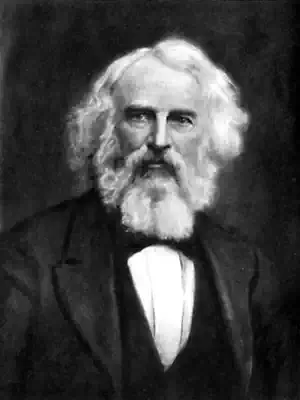
Henry Wadsworth Longfellow
Travels By The Fireside. (Birds Of Passage. Flight The Fourth)
Travels By The Fireside. (Birds Of Passage. Flight The Fourth)
The ceaseless rain is falling fast,
And yonder gilded vane,
Immovable for three days past,
Points to the misty main,
It drives me in upon myself
And to the fireside gleams,
To pleasant books that crowd my shelf,
And still more pleasant dreams,
I read whatever bards have sung
Of lands beyond the sea,
And the bright days when I was young
Come thronging back to me.
In fancy I can hear again
The Alpine torrent's roar,
The mule-bells on the hills of Spain,
The sea at Elsinore.
I see the convent's gleaming wall
Rise from its groves of pine,
And towers of old cathedrals tall,
And castles by the Rhine.
I journey on by park and spire,
Beneath centennial trees,
Through fields with poppies all on fire,
And gleams of distant seas.
I fear no more the dust and heat,
No more I feel fatigue,
While journeying with another's feet
O'er many a lengthening league.
Let others traverse sea and land,
And toil through various climes,
I turn the world round with my hand
Reading these poets' rhymes.
From them I learn whatever lies
Beneath each changing zone,
And see, when looking with their eyes,
Better than with mine own.
The ceaseless rain is falling fast,
And yonder gilded vane,
Immovable for three days past,
Points to the misty main,
It drives me in upon myself
And to the fireside gleams,
To pleasant books that crowd my shelf,
And still more pleasant dreams,
I read whatever bards have sung
Of lands beyond the sea,
And the bright days when I was young
Come thronging back to me.
In fancy I can hear again
The Alpine torrent's roar,
The mule-bells on the hills of Spain,
The sea at Elsinore.
I see the convent's gleaming wall
Rise from its groves of pine,
And towers of old cathedrals tall,
And castles by the Rhine.
I journey on by park and spire,
Beneath centennial trees,
Through fields with poppies all on fire,
And gleams of distant seas.
I fear no more the dust and heat,
No more I feel fatigue,
While journeying with another's feet
O'er many a lengthening league.
Let others traverse sea and land,
And toil through various climes,
I turn the world round with my hand
Reading these poets' rhymes.
From them I learn whatever lies
Beneath each changing zone,
And see, when looking with their eyes,
Better than with mine own.
326
Henry Wadsworth Longfellow
To William E. Channing
To William E. Channing
The pages of thy book I read,
And as I closed each one,
My heart, responding, ever said,
"Servant of God! well done!"
Well done! Thy words are great and bold;
At times they seem to me,
Like Luther's, in the days of old,
Half-battles for the free.
Go on, until this land revokes
The old and chartered Lie,
The feudal curse, whose whips and yokes
Insult humanity.
A voice is ever at thy side
Speaking in tones of might,
Like the prophetic voice, that cried
To John in Patmos, "Write!"
Write! and tell out this bloody tale;
Record this dire eclipse,
This Day of Wrath, this Endless Wail,
This dread Apocalypse!
The pages of thy book I read,
And as I closed each one,
My heart, responding, ever said,
"Servant of God! well done!"
Well done! Thy words are great and bold;
At times they seem to me,
Like Luther's, in the days of old,
Half-battles for the free.
Go on, until this land revokes
The old and chartered Lie,
The feudal curse, whose whips and yokes
Insult humanity.
A voice is ever at thy side
Speaking in tones of might,
Like the prophetic voice, that cried
To John in Patmos, "Write!"
Write! and tell out this bloody tale;
Record this dire eclipse,
This Day of Wrath, this Endless Wail,
This dread Apocalypse!
435
Henry Wadsworth Longfellow
To William E. Channing
To William E. Channing
The pages of thy book I read,
And as I closed each one,
My heart, responding, ever said,
"Servant of God! well done!"
Well done! Thy words are great and bold;
At times they seem to me,
Like Luther's, in the days of old,
Half-battles for the free.
Go on, until this land revokes
The old and chartered Lie,
The feudal curse, whose whips and yokes
Insult humanity.
A voice is ever at thy side
Speaking in tones of might,
Like the prophetic voice, that cried
To John in Patmos, "Write!"
Write! and tell out this bloody tale;
Record this dire eclipse,
This Day of Wrath, this Endless Wail,
This dread Apocalypse!
The pages of thy book I read,
And as I closed each one,
My heart, responding, ever said,
"Servant of God! well done!"
Well done! Thy words are great and bold;
At times they seem to me,
Like Luther's, in the days of old,
Half-battles for the free.
Go on, until this land revokes
The old and chartered Lie,
The feudal curse, whose whips and yokes
Insult humanity.
A voice is ever at thy side
Speaking in tones of might,
Like the prophetic voice, that cried
To John in Patmos, "Write!"
Write! and tell out this bloody tale;
Record this dire eclipse,
This Day of Wrath, this Endless Wail,
This dread Apocalypse!
435
Henry Wadsworth Longfellow
To William E. Channing
To William E. Channing
The pages of thy book I read,
And as I closed each one,
My heart, responding, ever said,
"Servant of God! well done!"
Well done! Thy words are great and bold;
At times they seem to me,
Like Luther's, in the days of old,
Half-battles for the free.
Go on, until this land revokes
The old and chartered Lie,
The feudal curse, whose whips and yokes
Insult humanity.
A voice is ever at thy side
Speaking in tones of might,
Like the prophetic voice, that cried
To John in Patmos, "Write!"
Write! and tell out this bloody tale;
Record this dire eclipse,
This Day of Wrath, this Endless Wail,
This dread Apocalypse!
The pages of thy book I read,
And as I closed each one,
My heart, responding, ever said,
"Servant of God! well done!"
Well done! Thy words are great and bold;
At times they seem to me,
Like Luther's, in the days of old,
Half-battles for the free.
Go on, until this land revokes
The old and chartered Lie,
The feudal curse, whose whips and yokes
Insult humanity.
A voice is ever at thy side
Speaking in tones of might,
Like the prophetic voice, that cried
To John in Patmos, "Write!"
Write! and tell out this bloody tale;
Record this dire eclipse,
This Day of Wrath, this Endless Wail,
This dread Apocalypse!
435
Henry Wadsworth Longfellow
To William E. Channing
To William E. Channing
The pages of thy book I read,
And as I closed each one,
My heart, responding, ever said,
"Servant of God! well done!"
Well done! Thy words are great and bold;
At times they seem to me,
Like Luther's, in the days of old,
Half-battles for the free.
Go on, until this land revokes
The old and chartered Lie,
The feudal curse, whose whips and yokes
Insult humanity.
A voice is ever at thy side
Speaking in tones of might,
Like the prophetic voice, that cried
To John in Patmos, "Write!"
Write! and tell out this bloody tale;
Record this dire eclipse,
This Day of Wrath, this Endless Wail,
This dread Apocalypse!
The pages of thy book I read,
And as I closed each one,
My heart, responding, ever said,
"Servant of God! well done!"
Well done! Thy words are great and bold;
At times they seem to me,
Like Luther's, in the days of old,
Half-battles for the free.
Go on, until this land revokes
The old and chartered Lie,
The feudal curse, whose whips and yokes
Insult humanity.
A voice is ever at thy side
Speaking in tones of might,
Like the prophetic voice, that cried
To John in Patmos, "Write!"
Write! and tell out this bloody tale;
Record this dire eclipse,
This Day of Wrath, this Endless Wail,
This dread Apocalypse!
435
Henry Wadsworth Longfellow
To Italy. (From Filicaja)
To Italy. (From Filicaja)
Italy! Italy! thou who'rt doomed to wear
The fatal gift of beauty and possess
The dower funest of infinite wretchedness
Written upon thy forehead by despair;
Ah! would that thou wert stronger or less fair,
That they might fear thee more or love thee less,
Who in the splendour of thy loveliness
Seem wasting, yet to mortal combat dare!
Then from the Alps I should not see descending
Such torrents of armed men, nor Gallic horde
Drinking the wave of Po, distained with gore,
Nor should I see thee girded with a sword
Not thine, and with the stranger's arm contending,
Victor or vanquished, slave for evermore.
Italy! Italy! thou who'rt doomed to wear
The fatal gift of beauty and possess
The dower funest of infinite wretchedness
Written upon thy forehead by despair;
Ah! would that thou wert stronger or less fair,
That they might fear thee more or love thee less,
Who in the splendour of thy loveliness
Seem wasting, yet to mortal combat dare!
Then from the Alps I should not see descending
Such torrents of armed men, nor Gallic horde
Drinking the wave of Po, distained with gore,
Nor should I see thee girded with a sword
Not thine, and with the stranger's arm contending,
Victor or vanquished, slave for evermore.
313
Henry Wadsworth Longfellow
To Italy. (From Filicaja)
To Italy. (From Filicaja)
Italy! Italy! thou who'rt doomed to wear
The fatal gift of beauty and possess
The dower funest of infinite wretchedness
Written upon thy forehead by despair;
Ah! would that thou wert stronger or less fair,
That they might fear thee more or love thee less,
Who in the splendour of thy loveliness
Seem wasting, yet to mortal combat dare!
Then from the Alps I should not see descending
Such torrents of armed men, nor Gallic horde
Drinking the wave of Po, distained with gore,
Nor should I see thee girded with a sword
Not thine, and with the stranger's arm contending,
Victor or vanquished, slave for evermore.
Italy! Italy! thou who'rt doomed to wear
The fatal gift of beauty and possess
The dower funest of infinite wretchedness
Written upon thy forehead by despair;
Ah! would that thou wert stronger or less fair,
That they might fear thee more or love thee less,
Who in the splendour of thy loveliness
Seem wasting, yet to mortal combat dare!
Then from the Alps I should not see descending
Such torrents of armed men, nor Gallic horde
Drinking the wave of Po, distained with gore,
Nor should I see thee girded with a sword
Not thine, and with the stranger's arm contending,
Victor or vanquished, slave for evermore.
313
Henry Wadsworth Longfellow
To Italy. (From Filicaja)
To Italy. (From Filicaja)
Italy! Italy! thou who'rt doomed to wear
The fatal gift of beauty and possess
The dower funest of infinite wretchedness
Written upon thy forehead by despair;
Ah! would that thou wert stronger or less fair,
That they might fear thee more or love thee less,
Who in the splendour of thy loveliness
Seem wasting, yet to mortal combat dare!
Then from the Alps I should not see descending
Such torrents of armed men, nor Gallic horde
Drinking the wave of Po, distained with gore,
Nor should I see thee girded with a sword
Not thine, and with the stranger's arm contending,
Victor or vanquished, slave for evermore.
Italy! Italy! thou who'rt doomed to wear
The fatal gift of beauty and possess
The dower funest of infinite wretchedness
Written upon thy forehead by despair;
Ah! would that thou wert stronger or less fair,
That they might fear thee more or love thee less,
Who in the splendour of thy loveliness
Seem wasting, yet to mortal combat dare!
Then from the Alps I should not see descending
Such torrents of armed men, nor Gallic horde
Drinking the wave of Po, distained with gore,
Nor should I see thee girded with a sword
Not thine, and with the stranger's arm contending,
Victor or vanquished, slave for evermore.
313
Henry Wadsworth Longfellow
To The Driving Cloud
To The Driving Cloud
Gloomy and dark art thou, O chief of the mighty Omahas;
Gloomy and dark as the driving cloud, whose name thou hast taken!
Wrapped in thy scarlet blanket, I see thee stalk through the city's
Narrow and populous streets, as once by the margin of rivers
Stalked those birds unknown, that have left us only their
footprints.
What, in a few short years, will remain of thy race but the
footprints?
How canst thou walk these streets, who hast trod the green turf
of the prairies!
How canst thou breathe this air, who hast breathed the sweet air
of the mountains!
Ah! 'tis in vain that with lordly looks of disdain thou dost
challenge
Looks of disdain in return, and question these walls and these
pavements,
Claiming the soil for thy hunting-grounds, while down-trodden
millions
Starve in the garrets of Europe, and cry from its caverns that
they, too,
Have been created heirs of the earth, and claim its division!
Back, then, back to thy woods in the regions west of the Wabash!
There as a monarch thou reignest. In autumn the leaves of the
maple
Pave the floors of thy palace-halls with gold, and in summer
Pine-trees waft through its chambers the odorous breath of their
branches.
There thou art strong and great, a hero, a tamer of horses!
There thou chasest the stately stag on the banks of the Elkhorn,
Or by the roar of the Running-Water, or where the Omaha
Calls thee, and leaps through the wild ravine like a brave of the
Blackfeet!
Hark! what murmurs arise from the heart of those mountainous
deserts?
Is it the cry of the Foxes and Crows, or the mighty Behemoth,
Who, unharmed, on his tusks once caught the bolts of the thunder,
And now lurks in his lair to destroy the race of the red man?
Far more fatal to thee and thy race than the Crows and the Foxes,
Far more fatal to thee and thy race than the tread of Behemoth,
Lo! the big thunder-canoe, that steadily breasts the Missouri's
Merciless current! and yonder, afar on the prairies, the
camp-fires
Gleam through the night; and the cloud of dust in the gray of the
daybreak
Marks not the buffalo's track, nor the Mandan's dexterous
horse-race;
It is a caravan, whitening the desert where dwell the Camanches!
Ha! how the breath of these Saxons and Celts, like the blast of
the east-wind,
Drifts evermore to the west the scanty smokes of thy wigwams!
Gloomy and dark art thou, O chief of the mighty Omahas;
Gloomy and dark as the driving cloud, whose name thou hast taken!
Wrapped in thy scarlet blanket, I see thee stalk through the city's
Narrow and populous streets, as once by the margin of rivers
Stalked those birds unknown, that have left us only their
footprints.
What, in a few short years, will remain of thy race but the
footprints?
How canst thou walk these streets, who hast trod the green turf
of the prairies!
How canst thou breathe this air, who hast breathed the sweet air
of the mountains!
Ah! 'tis in vain that with lordly looks of disdain thou dost
challenge
Looks of disdain in return, and question these walls and these
pavements,
Claiming the soil for thy hunting-grounds, while down-trodden
millions
Starve in the garrets of Europe, and cry from its caverns that
they, too,
Have been created heirs of the earth, and claim its division!
Back, then, back to thy woods in the regions west of the Wabash!
There as a monarch thou reignest. In autumn the leaves of the
maple
Pave the floors of thy palace-halls with gold, and in summer
Pine-trees waft through its chambers the odorous breath of their
branches.
There thou art strong and great, a hero, a tamer of horses!
There thou chasest the stately stag on the banks of the Elkhorn,
Or by the roar of the Running-Water, or where the Omaha
Calls thee, and leaps through the wild ravine like a brave of the
Blackfeet!
Hark! what murmurs arise from the heart of those mountainous
deserts?
Is it the cry of the Foxes and Crows, or the mighty Behemoth,
Who, unharmed, on his tusks once caught the bolts of the thunder,
And now lurks in his lair to destroy the race of the red man?
Far more fatal to thee and thy race than the Crows and the Foxes,
Far more fatal to thee and thy race than the tread of Behemoth,
Lo! the big thunder-canoe, that steadily breasts the Missouri's
Merciless current! and yonder, afar on the prairies, the
camp-fires
Gleam through the night; and the cloud of dust in the gray of the
daybreak
Marks not the buffalo's track, nor the Mandan's dexterous
horse-race;
It is a caravan, whitening the desert where dwell the Camanches!
Ha! how the breath of these Saxons and Celts, like the blast of
the east-wind,
Drifts evermore to the west the scanty smokes of thy wigwams!
359
Henry Wadsworth Longfellow
To The Driving Cloud
To The Driving Cloud
Gloomy and dark art thou, O chief of the mighty Omahas;
Gloomy and dark as the driving cloud, whose name thou hast taken!
Wrapped in thy scarlet blanket, I see thee stalk through the city's
Narrow and populous streets, as once by the margin of rivers
Stalked those birds unknown, that have left us only their
footprints.
What, in a few short years, will remain of thy race but the
footprints?
How canst thou walk these streets, who hast trod the green turf
of the prairies!
How canst thou breathe this air, who hast breathed the sweet air
of the mountains!
Ah! 'tis in vain that with lordly looks of disdain thou dost
challenge
Looks of disdain in return, and question these walls and these
pavements,
Claiming the soil for thy hunting-grounds, while down-trodden
millions
Starve in the garrets of Europe, and cry from its caverns that
they, too,
Have been created heirs of the earth, and claim its division!
Back, then, back to thy woods in the regions west of the Wabash!
There as a monarch thou reignest. In autumn the leaves of the
maple
Pave the floors of thy palace-halls with gold, and in summer
Pine-trees waft through its chambers the odorous breath of their
branches.
There thou art strong and great, a hero, a tamer of horses!
There thou chasest the stately stag on the banks of the Elkhorn,
Or by the roar of the Running-Water, or where the Omaha
Calls thee, and leaps through the wild ravine like a brave of the
Blackfeet!
Hark! what murmurs arise from the heart of those mountainous
deserts?
Is it the cry of the Foxes and Crows, or the mighty Behemoth,
Who, unharmed, on his tusks once caught the bolts of the thunder,
And now lurks in his lair to destroy the race of the red man?
Far more fatal to thee and thy race than the Crows and the Foxes,
Far more fatal to thee and thy race than the tread of Behemoth,
Lo! the big thunder-canoe, that steadily breasts the Missouri's
Merciless current! and yonder, afar on the prairies, the
camp-fires
Gleam through the night; and the cloud of dust in the gray of the
daybreak
Marks not the buffalo's track, nor the Mandan's dexterous
horse-race;
It is a caravan, whitening the desert where dwell the Camanches!
Ha! how the breath of these Saxons and Celts, like the blast of
the east-wind,
Drifts evermore to the west the scanty smokes of thy wigwams!
Gloomy and dark art thou, O chief of the mighty Omahas;
Gloomy and dark as the driving cloud, whose name thou hast taken!
Wrapped in thy scarlet blanket, I see thee stalk through the city's
Narrow and populous streets, as once by the margin of rivers
Stalked those birds unknown, that have left us only their
footprints.
What, in a few short years, will remain of thy race but the
footprints?
How canst thou walk these streets, who hast trod the green turf
of the prairies!
How canst thou breathe this air, who hast breathed the sweet air
of the mountains!
Ah! 'tis in vain that with lordly looks of disdain thou dost
challenge
Looks of disdain in return, and question these walls and these
pavements,
Claiming the soil for thy hunting-grounds, while down-trodden
millions
Starve in the garrets of Europe, and cry from its caverns that
they, too,
Have been created heirs of the earth, and claim its division!
Back, then, back to thy woods in the regions west of the Wabash!
There as a monarch thou reignest. In autumn the leaves of the
maple
Pave the floors of thy palace-halls with gold, and in summer
Pine-trees waft through its chambers the odorous breath of their
branches.
There thou art strong and great, a hero, a tamer of horses!
There thou chasest the stately stag on the banks of the Elkhorn,
Or by the roar of the Running-Water, or where the Omaha
Calls thee, and leaps through the wild ravine like a brave of the
Blackfeet!
Hark! what murmurs arise from the heart of those mountainous
deserts?
Is it the cry of the Foxes and Crows, or the mighty Behemoth,
Who, unharmed, on his tusks once caught the bolts of the thunder,
And now lurks in his lair to destroy the race of the red man?
Far more fatal to thee and thy race than the Crows and the Foxes,
Far more fatal to thee and thy race than the tread of Behemoth,
Lo! the big thunder-canoe, that steadily breasts the Missouri's
Merciless current! and yonder, afar on the prairies, the
camp-fires
Gleam through the night; and the cloud of dust in the gray of the
daybreak
Marks not the buffalo's track, nor the Mandan's dexterous
horse-race;
It is a caravan, whitening the desert where dwell the Camanches!
Ha! how the breath of these Saxons and Celts, like the blast of
the east-wind,
Drifts evermore to the west the scanty smokes of thy wigwams!
359
Henry Wadsworth Longfellow
To The Driving Cloud
To The Driving Cloud
Gloomy and dark art thou, O chief of the mighty Omahas;
Gloomy and dark as the driving cloud, whose name thou hast taken!
Wrapped in thy scarlet blanket, I see thee stalk through the city's
Narrow and populous streets, as once by the margin of rivers
Stalked those birds unknown, that have left us only their
footprints.
What, in a few short years, will remain of thy race but the
footprints?
How canst thou walk these streets, who hast trod the green turf
of the prairies!
How canst thou breathe this air, who hast breathed the sweet air
of the mountains!
Ah! 'tis in vain that with lordly looks of disdain thou dost
challenge
Looks of disdain in return, and question these walls and these
pavements,
Claiming the soil for thy hunting-grounds, while down-trodden
millions
Starve in the garrets of Europe, and cry from its caverns that
they, too,
Have been created heirs of the earth, and claim its division!
Back, then, back to thy woods in the regions west of the Wabash!
There as a monarch thou reignest. In autumn the leaves of the
maple
Pave the floors of thy palace-halls with gold, and in summer
Pine-trees waft through its chambers the odorous breath of their
branches.
There thou art strong and great, a hero, a tamer of horses!
There thou chasest the stately stag on the banks of the Elkhorn,
Or by the roar of the Running-Water, or where the Omaha
Calls thee, and leaps through the wild ravine like a brave of the
Blackfeet!
Hark! what murmurs arise from the heart of those mountainous
deserts?
Is it the cry of the Foxes and Crows, or the mighty Behemoth,
Who, unharmed, on his tusks once caught the bolts of the thunder,
And now lurks in his lair to destroy the race of the red man?
Far more fatal to thee and thy race than the Crows and the Foxes,
Far more fatal to thee and thy race than the tread of Behemoth,
Lo! the big thunder-canoe, that steadily breasts the Missouri's
Merciless current! and yonder, afar on the prairies, the
camp-fires
Gleam through the night; and the cloud of dust in the gray of the
daybreak
Marks not the buffalo's track, nor the Mandan's dexterous
horse-race;
It is a caravan, whitening the desert where dwell the Camanches!
Ha! how the breath of these Saxons and Celts, like the blast of
the east-wind,
Drifts evermore to the west the scanty smokes of thy wigwams!
Gloomy and dark art thou, O chief of the mighty Omahas;
Gloomy and dark as the driving cloud, whose name thou hast taken!
Wrapped in thy scarlet blanket, I see thee stalk through the city's
Narrow and populous streets, as once by the margin of rivers
Stalked those birds unknown, that have left us only their
footprints.
What, in a few short years, will remain of thy race but the
footprints?
How canst thou walk these streets, who hast trod the green turf
of the prairies!
How canst thou breathe this air, who hast breathed the sweet air
of the mountains!
Ah! 'tis in vain that with lordly looks of disdain thou dost
challenge
Looks of disdain in return, and question these walls and these
pavements,
Claiming the soil for thy hunting-grounds, while down-trodden
millions
Starve in the garrets of Europe, and cry from its caverns that
they, too,
Have been created heirs of the earth, and claim its division!
Back, then, back to thy woods in the regions west of the Wabash!
There as a monarch thou reignest. In autumn the leaves of the
maple
Pave the floors of thy palace-halls with gold, and in summer
Pine-trees waft through its chambers the odorous breath of their
branches.
There thou art strong and great, a hero, a tamer of horses!
There thou chasest the stately stag on the banks of the Elkhorn,
Or by the roar of the Running-Water, or where the Omaha
Calls thee, and leaps through the wild ravine like a brave of the
Blackfeet!
Hark! what murmurs arise from the heart of those mountainous
deserts?
Is it the cry of the Foxes and Crows, or the mighty Behemoth,
Who, unharmed, on his tusks once caught the bolts of the thunder,
And now lurks in his lair to destroy the race of the red man?
Far more fatal to thee and thy race than the Crows and the Foxes,
Far more fatal to thee and thy race than the tread of Behemoth,
Lo! the big thunder-canoe, that steadily breasts the Missouri's
Merciless current! and yonder, afar on the prairies, the
camp-fires
Gleam through the night; and the cloud of dust in the gray of the
daybreak
Marks not the buffalo's track, nor the Mandan's dexterous
horse-race;
It is a caravan, whitening the desert where dwell the Camanches!
Ha! how the breath of these Saxons and Celts, like the blast of
the east-wind,
Drifts evermore to the west the scanty smokes of thy wigwams!
359
Henry Wadsworth Longfellow
To an Old Danish Song-Book
To an Old Danish Song-Book
Welcome, my old friend,
Welcome to a foreign fireside,
While the sullen gales of autumn
Shake the windows.
The ungrateful world
Has, it seems, dealt harshly with thee,
Since, beneath the skies of Denmark,
First I met thee.
There are marks of age,
There are thumb-marks on thy margin,
Made by hands that clasped thee rudely,
At the alehouse.
Soiled and dull thou art;
Yellow are thy time-worn pages,
As the russet, rain-molested
Leaves of autumn.
Thou art stained with wine
Scattered from hilarious goblets,
As the leaves with the libations
Of Olympus.
Yet dost thou recall
Days departed, half-forgotten,
When in dreamy youth I wandered
By the Baltic,--
When I paused to hear
The old ballad of King Christian
Shouted from suburban taverns
In the twilight.
Thou recallest bards,
Who in solitary chambers,
And with hearts by passion wasted,
Wrote thy pages.
Thou recallest homes
Where thy songs of love and friendship
Made the gloomy Northern winter
Bright as summer.
Once some ancient Scald,
In his bleak, ancestral Iceland,
Chanted staves of these old ballads
To the Vikings.
Once in Elsinore,
At the court of old King Hamlet
Yorick and his boon companions
Sang these ditties.
Once Prince Frederick's Guard
Sang them in their smoky barracks;--
Suddenly the English cannon
Joined the chorus!
Peasants in the field,
Sailors on the roaring ocean,
Students, tradesmen, pale mechanics,
All have sung them.
Thou hast been their friend;
They, alas! have left thee friendless!
Yet at least by one warm fireside
Art thou welcome.
And, as swallows build
In these wide, old-fashioned chimneys,
So thy twittering songs shall nestle
In my bosom,--
Quiet, close, and warm,
Sheltered from all molestation,
And recalling by their voices
Youth and travel.
Welcome, my old friend,
Welcome to a foreign fireside,
While the sullen gales of autumn
Shake the windows.
The ungrateful world
Has, it seems, dealt harshly with thee,
Since, beneath the skies of Denmark,
First I met thee.
There are marks of age,
There are thumb-marks on thy margin,
Made by hands that clasped thee rudely,
At the alehouse.
Soiled and dull thou art;
Yellow are thy time-worn pages,
As the russet, rain-molested
Leaves of autumn.
Thou art stained with wine
Scattered from hilarious goblets,
As the leaves with the libations
Of Olympus.
Yet dost thou recall
Days departed, half-forgotten,
When in dreamy youth I wandered
By the Baltic,--
When I paused to hear
The old ballad of King Christian
Shouted from suburban taverns
In the twilight.
Thou recallest bards,
Who in solitary chambers,
And with hearts by passion wasted,
Wrote thy pages.
Thou recallest homes
Where thy songs of love and friendship
Made the gloomy Northern winter
Bright as summer.
Once some ancient Scald,
In his bleak, ancestral Iceland,
Chanted staves of these old ballads
To the Vikings.
Once in Elsinore,
At the court of old King Hamlet
Yorick and his boon companions
Sang these ditties.
Once Prince Frederick's Guard
Sang them in their smoky barracks;--
Suddenly the English cannon
Joined the chorus!
Peasants in the field,
Sailors on the roaring ocean,
Students, tradesmen, pale mechanics,
All have sung them.
Thou hast been their friend;
They, alas! have left thee friendless!
Yet at least by one warm fireside
Art thou welcome.
And, as swallows build
In these wide, old-fashioned chimneys,
So thy twittering songs shall nestle
In my bosom,--
Quiet, close, and warm,
Sheltered from all molestation,
And recalling by their voices
Youth and travel.
332
Henry Wadsworth Longfellow
Tide Rises, the Tide Falls, The
Tide Rises, the Tide Falls, The
The tide rises, the tide falls,
The twilight darkens, the curlew calls;
Along the sea-sands damp and brown
The traveler hastens toward the town,
And the tide rises, the tide falls.
Darkness settles on roofs and walls,
But the sea, the sea in darkness calls;
The little waves, with their soft, white hands
Efface the footprints in the sands,
And the tide rises, the tide falls.
The morning breaks; the steeds in their stalls
Stamp and neigh, as the hostler calls;
The day returns, but nevermore
Returns the traveler to the shore.
And the tide rises, the tide falls.
The tide rises, the tide falls,
The twilight darkens, the curlew calls;
Along the sea-sands damp and brown
The traveler hastens toward the town,
And the tide rises, the tide falls.
Darkness settles on roofs and walls,
But the sea, the sea in darkness calls;
The little waves, with their soft, white hands
Efface the footprints in the sands,
And the tide rises, the tide falls.
The morning breaks; the steeds in their stalls
Stamp and neigh, as the hostler calls;
The day returns, but nevermore
Returns the traveler to the shore.
And the tide rises, the tide falls.
319
Henry Wadsworth Longfellow
The Witnesses
The Witnesses
In Ocean's wide domains,
Half buried in the sands,
Lie skeletons in chains,
With shackled feet and hands.
Beyond the fall of dews,
Deeper than plummet lies,
Float ships, with all their crews,
No more to sink nor rise.
There the black Slave-ship swims,
Freighted with human forms,
Whose fettered, fleshless limbs
Are not the sport of storms.
These are the bones of Slaves;
They gleam from the abyss;
They cry, from yawning waves,
"We are the Witnesses!"
Within Earth's wide domains
Are markets for men's lives;
Their necks are galled with chains,
Their wrists are cramped with gyves.
Dead bodies, that the kite
In deserts makes its prey;
Murders, that with affright
Scare school-boys from their play!
All evil thoughts and deeds;
Anger, and lust, and pride;
The foulest, rankest weeds,
That choke Life's groaning tide!
These are the woes of Slaves;
They glare from the abyss;
They cry, from unknown graves,
"We are the Witnesses!"
In Ocean's wide domains,
Half buried in the sands,
Lie skeletons in chains,
With shackled feet and hands.
Beyond the fall of dews,
Deeper than plummet lies,
Float ships, with all their crews,
No more to sink nor rise.
There the black Slave-ship swims,
Freighted with human forms,
Whose fettered, fleshless limbs
Are not the sport of storms.
These are the bones of Slaves;
They gleam from the abyss;
They cry, from yawning waves,
"We are the Witnesses!"
Within Earth's wide domains
Are markets for men's lives;
Their necks are galled with chains,
Their wrists are cramped with gyves.
Dead bodies, that the kite
In deserts makes its prey;
Murders, that with affright
Scare school-boys from their play!
All evil thoughts and deeds;
Anger, and lust, and pride;
The foulest, rankest weeds,
That choke Life's groaning tide!
These are the woes of Slaves;
They glare from the abyss;
They cry, from unknown graves,
"We are the Witnesses!"
355
Henry Wadsworth Longfellow
The Witnesses
The Witnesses
In Ocean's wide domains,
Half buried in the sands,
Lie skeletons in chains,
With shackled feet and hands.
Beyond the fall of dews,
Deeper than plummet lies,
Float ships, with all their crews,
No more to sink nor rise.
There the black Slave-ship swims,
Freighted with human forms,
Whose fettered, fleshless limbs
Are not the sport of storms.
These are the bones of Slaves;
They gleam from the abyss;
They cry, from yawning waves,
"We are the Witnesses!"
Within Earth's wide domains
Are markets for men's lives;
Their necks are galled with chains,
Their wrists are cramped with gyves.
Dead bodies, that the kite
In deserts makes its prey;
Murders, that with affright
Scare school-boys from their play!
All evil thoughts and deeds;
Anger, and lust, and pride;
The foulest, rankest weeds,
That choke Life's groaning tide!
These are the woes of Slaves;
They glare from the abyss;
They cry, from unknown graves,
"We are the Witnesses!"
In Ocean's wide domains,
Half buried in the sands,
Lie skeletons in chains,
With shackled feet and hands.
Beyond the fall of dews,
Deeper than plummet lies,
Float ships, with all their crews,
No more to sink nor rise.
There the black Slave-ship swims,
Freighted with human forms,
Whose fettered, fleshless limbs
Are not the sport of storms.
These are the bones of Slaves;
They gleam from the abyss;
They cry, from yawning waves,
"We are the Witnesses!"
Within Earth's wide domains
Are markets for men's lives;
Their necks are galled with chains,
Their wrists are cramped with gyves.
Dead bodies, that the kite
In deserts makes its prey;
Murders, that with affright
Scare school-boys from their play!
All evil thoughts and deeds;
Anger, and lust, and pride;
The foulest, rankest weeds,
That choke Life's groaning tide!
These are the woes of Slaves;
They glare from the abyss;
They cry, from unknown graves,
"We are the Witnesses!"
355
Henry Wadsworth Longfellow
The Witnesses
The Witnesses
In Ocean's wide domains,
Half buried in the sands,
Lie skeletons in chains,
With shackled feet and hands.
Beyond the fall of dews,
Deeper than plummet lies,
Float ships, with all their crews,
No more to sink nor rise.
There the black Slave-ship swims,
Freighted with human forms,
Whose fettered, fleshless limbs
Are not the sport of storms.
These are the bones of Slaves;
They gleam from the abyss;
They cry, from yawning waves,
"We are the Witnesses!"
Within Earth's wide domains
Are markets for men's lives;
Their necks are galled with chains,
Their wrists are cramped with gyves.
Dead bodies, that the kite
In deserts makes its prey;
Murders, that with affright
Scare school-boys from their play!
All evil thoughts and deeds;
Anger, and lust, and pride;
The foulest, rankest weeds,
That choke Life's groaning tide!
These are the woes of Slaves;
They glare from the abyss;
They cry, from unknown graves,
"We are the Witnesses!"
In Ocean's wide domains,
Half buried in the sands,
Lie skeletons in chains,
With shackled feet and hands.
Beyond the fall of dews,
Deeper than plummet lies,
Float ships, with all their crews,
No more to sink nor rise.
There the black Slave-ship swims,
Freighted with human forms,
Whose fettered, fleshless limbs
Are not the sport of storms.
These are the bones of Slaves;
They gleam from the abyss;
They cry, from yawning waves,
"We are the Witnesses!"
Within Earth's wide domains
Are markets for men's lives;
Their necks are galled with chains,
Their wrists are cramped with gyves.
Dead bodies, that the kite
In deserts makes its prey;
Murders, that with affright
Scare school-boys from their play!
All evil thoughts and deeds;
Anger, and lust, and pride;
The foulest, rankest weeds,
That choke Life's groaning tide!
These are the woes of Slaves;
They glare from the abyss;
They cry, from unknown graves,
"We are the Witnesses!"
355
Henry Wadsworth Longfellow
The Witnesses
The Witnesses
In Ocean's wide domains,
Half buried in the sands,
Lie skeletons in chains,
With shackled feet and hands.
Beyond the fall of dews,
Deeper than plummet lies,
Float ships, with all their crews,
No more to sink nor rise.
There the black Slave-ship swims,
Freighted with human forms,
Whose fettered, fleshless limbs
Are not the sport of storms.
These are the bones of Slaves;
They gleam from the abyss;
They cry, from yawning waves,
"We are the Witnesses!"
Within Earth's wide domains
Are markets for men's lives;
Their necks are galled with chains,
Their wrists are cramped with gyves.
Dead bodies, that the kite
In deserts makes its prey;
Murders, that with affright
Scare school-boys from their play!
All evil thoughts and deeds;
Anger, and lust, and pride;
The foulest, rankest weeds,
That choke Life's groaning tide!
These are the woes of Slaves;
They glare from the abyss;
They cry, from unknown graves,
"We are the Witnesses!"
In Ocean's wide domains,
Half buried in the sands,
Lie skeletons in chains,
With shackled feet and hands.
Beyond the fall of dews,
Deeper than plummet lies,
Float ships, with all their crews,
No more to sink nor rise.
There the black Slave-ship swims,
Freighted with human forms,
Whose fettered, fleshless limbs
Are not the sport of storms.
These are the bones of Slaves;
They gleam from the abyss;
They cry, from yawning waves,
"We are the Witnesses!"
Within Earth's wide domains
Are markets for men's lives;
Their necks are galled with chains,
Their wrists are cramped with gyves.
Dead bodies, that the kite
In deserts makes its prey;
Murders, that with affright
Scare school-boys from their play!
All evil thoughts and deeds;
Anger, and lust, and pride;
The foulest, rankest weeds,
That choke Life's groaning tide!
These are the woes of Slaves;
They glare from the abyss;
They cry, from unknown graves,
"We are the Witnesses!"
355
Henry Wadsworth Longfellow
The Warden Of The Cinque Ports. (Birds Of Passage. Flight The First)
The Warden Of The Cinque Ports. (Birds Of Passage. Flight The First)
A mist was driving down the British Channel,
The day was just begun,
And through the window-panes, on floor and panel,
Streamed the red autumn sun.
It glanced on flowing flag and rippling pennon,
And the white sails of ships;
And, from the frowning rampart, the black cannon
Hailed it with feverish lips.
Sandwich and Romney, Hastings, Hithe, and Dover
Were all alert that day,
To see the French war-steamers speeding over,
When the fog cleared away.
Sullen and silent, and like couchant lions,
Their cannon, through the night,
Holding their breath, had watched, in grim defiance,
The sea-coast opposite.
And now they roared at drum-beat from their stations
On every citadel;
Each answering each, with morning salutations,
That all was well.
And down the coast, all taking up the burden,
Replied the distant forts,
As if to summon from his sleep the Warden
And Lord of the Cinque Ports.
Him shall no sunshine from the fields of azure,
No drum-beat from the wall,
No morning gun from the black fort's embrasure,
Awaken with its call!
No more, surveying with an eye impartial
The long line of the coast,
Shall the gaunt figure of the old Field Marshal
Be seen upon his post!
For in the night, unseen, a single warrior,
In sombre harness mailed,
Dreaded of man, and surnamed the Destroyer,
The rampart wall has scaled.
He passed into the chamber of the sleeper,
The dark and silent room,
And as he entered, darker grew, and deeper,
The silence and the gloom.
He did not pause to parley or dissemble,
But smote the Warden hoar;
Ah! what a blow! that made all England tremble
And groan from shore to shore.
Meanwhile, without, the surly cannon waited,
The sun rose bright o'erhead;
Nothing in Nature's aspect intimated
That a great man was dead.
A mist was driving down the British Channel,
The day was just begun,
And through the window-panes, on floor and panel,
Streamed the red autumn sun.
It glanced on flowing flag and rippling pennon,
And the white sails of ships;
And, from the frowning rampart, the black cannon
Hailed it with feverish lips.
Sandwich and Romney, Hastings, Hithe, and Dover
Were all alert that day,
To see the French war-steamers speeding over,
When the fog cleared away.
Sullen and silent, and like couchant lions,
Their cannon, through the night,
Holding their breath, had watched, in grim defiance,
The sea-coast opposite.
And now they roared at drum-beat from their stations
On every citadel;
Each answering each, with morning salutations,
That all was well.
And down the coast, all taking up the burden,
Replied the distant forts,
As if to summon from his sleep the Warden
And Lord of the Cinque Ports.
Him shall no sunshine from the fields of azure,
No drum-beat from the wall,
No morning gun from the black fort's embrasure,
Awaken with its call!
No more, surveying with an eye impartial
The long line of the coast,
Shall the gaunt figure of the old Field Marshal
Be seen upon his post!
For in the night, unseen, a single warrior,
In sombre harness mailed,
Dreaded of man, and surnamed the Destroyer,
The rampart wall has scaled.
He passed into the chamber of the sleeper,
The dark and silent room,
And as he entered, darker grew, and deeper,
The silence and the gloom.
He did not pause to parley or dissemble,
But smote the Warden hoar;
Ah! what a blow! that made all England tremble
And groan from shore to shore.
Meanwhile, without, the surly cannon waited,
The sun rose bright o'erhead;
Nothing in Nature's aspect intimated
That a great man was dead.
346
Henry Wadsworth Longfellow
The Village Blacksmith
The Village Blacksmith
Under a spreading chestnut tree
The village smithy stands;
The smith, a might man is he,
With large and sinewy hands;
And the muscles of his brawney arms
Are strong as iron bands.
His hair is crisp, and black, and long,
His face is like the tan;
His brow is wet with honest sweat,
He earns what'er he can,
And looks the whole word in the face,
For he owes not any man.
Week in, week out, from morn till night,
You can hear the bellows blow;
You can hear him swing his might sledge,
With measure beat and slow,
Like a sexton ringing the village bell,
When the evening sun is low.
And children coming home from school
Look in the open door;
They love to see the flaming forge,
And hear the bellows roar.
And catch the flaming sparks that fly
Like chaff from a threshing floor.
He goes on Sunday to the church,
And sits among his boys;
He hears the parson pray and preach,
He hears his daughter's voice,
Singing in the choir,
And it makes his heart rejoice.
It sounds to him like his mother's voice,
Singing in Paradise!
He needs must think of her once more,
How in the grave she lies;
And with his hard, rough hands he wipes
A tear out of his eyes.
Toiing, -- rejoicing, -- sorrowing,
Onward in life he goes;
Each morning sees some task begin,
Each evening sees it close;
Something attempted, something done,
Has earned his night's repose.
Thanks, thanks to thee, my worthy friend,
For the lesson thou has taught!
Thus at the flaming forge of life
Our fortunes must be wrought;
Thus on its sounding anvil shaped
Each burning deed and thought.
Under a spreading chestnut tree
The village smithy stands;
The smith, a might man is he,
With large and sinewy hands;
And the muscles of his brawney arms
Are strong as iron bands.
His hair is crisp, and black, and long,
His face is like the tan;
His brow is wet with honest sweat,
He earns what'er he can,
And looks the whole word in the face,
For he owes not any man.
Week in, week out, from morn till night,
You can hear the bellows blow;
You can hear him swing his might sledge,
With measure beat and slow,
Like a sexton ringing the village bell,
When the evening sun is low.
And children coming home from school
Look in the open door;
They love to see the flaming forge,
And hear the bellows roar.
And catch the flaming sparks that fly
Like chaff from a threshing floor.
He goes on Sunday to the church,
And sits among his boys;
He hears the parson pray and preach,
He hears his daughter's voice,
Singing in the choir,
And it makes his heart rejoice.
It sounds to him like his mother's voice,
Singing in Paradise!
He needs must think of her once more,
How in the grave she lies;
And with his hard, rough hands he wipes
A tear out of his eyes.
Toiing, -- rejoicing, -- sorrowing,
Onward in life he goes;
Each morning sees some task begin,
Each evening sees it close;
Something attempted, something done,
Has earned his night's repose.
Thanks, thanks to thee, my worthy friend,
For the lesson thou has taught!
Thus at the flaming forge of life
Our fortunes must be wrought;
Thus on its sounding anvil shaped
Each burning deed and thought.
348
Henry Wadsworth Longfellow
The Village Blacksmith
The Village Blacksmith
Under a spreading chestnut tree
The village smithy stands;
The smith, a might man is he,
With large and sinewy hands;
And the muscles of his brawney arms
Are strong as iron bands.
His hair is crisp, and black, and long,
His face is like the tan;
His brow is wet with honest sweat,
He earns what'er he can,
And looks the whole word in the face,
For he owes not any man.
Week in, week out, from morn till night,
You can hear the bellows blow;
You can hear him swing his might sledge,
With measure beat and slow,
Like a sexton ringing the village bell,
When the evening sun is low.
And children coming home from school
Look in the open door;
They love to see the flaming forge,
And hear the bellows roar.
And catch the flaming sparks that fly
Like chaff from a threshing floor.
He goes on Sunday to the church,
And sits among his boys;
He hears the parson pray and preach,
He hears his daughter's voice,
Singing in the choir,
And it makes his heart rejoice.
It sounds to him like his mother's voice,
Singing in Paradise!
He needs must think of her once more,
How in the grave she lies;
And with his hard, rough hands he wipes
A tear out of his eyes.
Toiing, -- rejoicing, -- sorrowing,
Onward in life he goes;
Each morning sees some task begin,
Each evening sees it close;
Something attempted, something done,
Has earned his night's repose.
Thanks, thanks to thee, my worthy friend,
For the lesson thou has taught!
Thus at the flaming forge of life
Our fortunes must be wrought;
Thus on its sounding anvil shaped
Each burning deed and thought.
Under a spreading chestnut tree
The village smithy stands;
The smith, a might man is he,
With large and sinewy hands;
And the muscles of his brawney arms
Are strong as iron bands.
His hair is crisp, and black, and long,
His face is like the tan;
His brow is wet with honest sweat,
He earns what'er he can,
And looks the whole word in the face,
For he owes not any man.
Week in, week out, from morn till night,
You can hear the bellows blow;
You can hear him swing his might sledge,
With measure beat and slow,
Like a sexton ringing the village bell,
When the evening sun is low.
And children coming home from school
Look in the open door;
They love to see the flaming forge,
And hear the bellows roar.
And catch the flaming sparks that fly
Like chaff from a threshing floor.
He goes on Sunday to the church,
And sits among his boys;
He hears the parson pray and preach,
He hears his daughter's voice,
Singing in the choir,
And it makes his heart rejoice.
It sounds to him like his mother's voice,
Singing in Paradise!
He needs must think of her once more,
How in the grave she lies;
And with his hard, rough hands he wipes
A tear out of his eyes.
Toiing, -- rejoicing, -- sorrowing,
Onward in life he goes;
Each morning sees some task begin,
Each evening sees it close;
Something attempted, something done,
Has earned his night's repose.
Thanks, thanks to thee, my worthy friend,
For the lesson thou has taught!
Thus at the flaming forge of life
Our fortunes must be wrought;
Thus on its sounding anvil shaped
Each burning deed and thought.
348
Henry Wadsworth Longfellow
The Song of Hiawatha: X
The Song of Hiawatha: X
X. Hiawatha's Wooing
"As unto the bow the cord is,
So unto the man is woman,
Though she bends him, she obeys him,
Though she draws him, yet she follows,
Useless each without the other!"
Thus the youthful Hiawatha
Said within himself and pondered,
Much perplexed by various feelings,
Listless, longing, hoping, fearing,
Dreaming still of Minnehaha,
Of the lovely Laughing Water,
In the land of the Dacotahs.
"Wed a maiden of your people,"
Warning said the old Nokomis;
"Go not eastward, go not westward,
For a stranger, whom we know not!
Like a fire upon the hearth-stone
Is a neighbor's homely daughter,
Like the starlight or the moonlight
Is the handsomest of strangers!"
Thus dissuading spake Nokomis,
And my Hiawatha answered
Only this: "Dear old Nokomis,
Very pleasant is the firelight,
But I like the starlight better,
Better do I like the moonlight!"
Gravely then said old Nokomis:
"Bring not here an idle maiden,
Bring not here a useless woman,
Hands unskilful, feet unwilling;
Bring a wife with nimble fingers,
Heart and hand that move together,
Feet that run on willing errands!"
Smiling answered Hiawatha:
"In the land of the Dacotahs
Lives the Arrow-maker's daughter,
Minnehaha, Laughing Water,
Handsomest of all the women.
I will bring her to your wigwam,
She shall run upon your errands,
Be your starlight, moonlight, firelight,
Be the sunlight of my people!"
Still dissuading said Nokomis:
"Bring not to my lodge a stranger
From the land of the Dacotahs!
Very fierce are the Dacotahs,
Often is there war between us,
There are feuds yet unforgotten,
Wounds that ache and still may open!
Laughing answered Hiawatha:
"For that reason, if no other,
Would I wed the fair Dacotah,
That our tribes might be united,
That old feuds might be forgotten,
And old wounds be healed forever!"
Thus departed Hiawatha
To the land of the Dacotahs,
To the land of handsome women;
Striding over moor and meadow,
Through interminable forests,
Through uninterrupted silence.
With his moccasins of magic,
At each stride a mile he measured;
Yet the way seemed long before him,
And his heart outran his footsteps;
And he journeyed without resting,
Till he heard the cataract's laughter,
Heard the Falls of Minnehaha
Calling to him through the silence.
"Pleasant is the sound!" he murmured,
"Pleasant is the voice that calls me!"
On the outskirts of the forests,
'Twixt the shadow and the sunshine,
Herds of fallow deer were feeding,
But they saw not Hiawatha;
To his bow be whispered, "Fail not!"
To his arrow whispered, "Swerve not!"
Sent it singing on its errand,
To the red heart of the roebuck;
Threw the deer across his shoulder,
And sped forward without pausing.
At the doorway of his wigwam
Sat his ancient Arrow-maker,
In the land of the Dacotahs,
Making arrow-heads of jasper,
Arrow-heads of chalcedony.
At his side, in all her beauty,
Sat the lovely Minnehaha,
Sat his daughter, Laughing Water,
Plaiting mats of flags and rushes;
Of the past the old man's thoughts were,
And the maiden's of the future.
He was thinking, as he sat there,
Of the days when with such arrows
He had struck the deer and bison,
On the Muskoday, the meadow;
Shot the wild goose, flying southward,
On the wing, the clamorous Wawa;
Thinking of the great war-parties,
How they came to buy his arrows,
Could not fight without his arrows.
Ah, no more such noble warriors
Could be found on earth as they were!
Now the men were all like women,
Only used their tongues for weapons!
She was thinking of a hunter,
From another tribe and country,
Young and tall and very handsome,
Who one morning, in the Spring-time,
Came to buy her father's arrows,
Lingered long about the doorway,
Sat and rested in the wigwam,
Looking back as he departed.
She had heard her father praise him,
Praise his courage and his wisdom;
Would he come again for arrows
To the Falls of Minnehaha?
On the mat her hands lay idle,
And her eyes were very dreamy.
Through their thoughts they heard a footstep,
Heard a rustling in the branches,
And with glowing cheek and forehead,
With the deer upon his shoulders,
Suddenly from out the woodlands
Hiawatha stood before them.
Straight the ancient Arrow-maker
Looked up gravely from his labor,
Laid aside the unfinished arrow,
Bade him enter at the doorway,
Saying, as he rose to meet him,
"Hiawatha, you are welcome!"
At the feet of Laughing Water
Hiawatha laid his burden,
Threw the red deer from his shoulders;
And the maiden looked up at him,
Looked up from her mat of rushes,
Said with gentle look and accent,
"You are welcome, Hiawatha!"
Very spacious was the wigwam,
Made of deer-skins dressed and whitened,
With the Gods of the Dacotahs
Drawn and painted on its curtains,
And so tall the doorway, hardly
Hiawatha stooped to enter,
Hardly touched his eagle-feathers
As he entered at the doorway.
Then uprose the Laughing Water,
From the ground fair Minnehaha,
Laid aside her mat unfinished,
Brought forth food and set before them,
Water brought them from the brooklet,
Gave them food in earthen vessels,
Gave them drink in bowls of bass-wood,
Listened while the guest was speaking,
Listened while her father answered,
But not once her lips she opened,
Not a single word she uttered.
Yes, as in a dream she listened
To the words of Hiawatha,
As he talked of old Nokomis,
Who had nursed him in his childhood,
As he told of his companions,
Chibiabos, the musician,
And the very strong man, Kwasind,
And of happiness and plenty
In the land of the Ojibways,
In the pleasant land and peaceful.
"After many years of warfare,
Many years of strife and bloodshed,
There is peace between the Ojibways
And the tribe of the Dacotahs."
Thus continued Hiawatha,
And then added, speaking slowly,
'That this peace may last forever,
And our hands be clasped more closely,
And our hearts be more united,
Give me as my wife this maiden,
Minnehaha, Laughing Water,
Loveliest of Dacotah women!
And the ancient Arrow-maker
Paused a moment ere he answered,
Smoked a little while in silence,
Looked at Hiawatha proudly,
Fondly looked at Laughing Water,
And made answer very gravely:
"Yes, if Minnehaha wishes;
Let your heart speak, Minnehaha!"
And the lovely Laughing Water
Seemed more lovely as she stood there,
Neither willing nor reluctant,
As she went to Hiawatha,
Softly took the seat beside him,
While she said, and blushed to say it,
"I will follow you, my husband!"
This was Hiawatha's wooing!
Thus it was he won the daughter
Of the ancient Arrow-maker,
In the land of the Dacotahs!
From the wigwam he departed,
Leading with him Laughing Water;
Hand in hand they went together,
Through the woodland and the meadow,
Left the old man standing lonely
At the doorway of his wigwam,
Heard the Falls of Minnehaha
Calling to them from the distance,
Crying to them from afar off,
"Fare thee well, O Minnehaha!"
And the ancient Arrow-maker
Turned again unto his labor,
Sat down by his sunny doorway,
Murmuring to himself, and saying:
"Thus it is our daughters leave us,
Those we love, and those who love us!
Just when they have learned to help us,
When we are old and lean upon them,
Comes a youth with flaunting feathers,
With his flute of reeds, a stranger
Wanders piping through the village,
Beckons to the fairest maiden,
And she follows where he leads her,
Leaving all things for the stranger!"
Pleasant was the journey homeward,
Through interminable forests,
Over meadow, over mountain,
Over river, hill, and hollow.
Short it seemed to Hiawatha,
Though they journeyed very slowly,
Though his pace he checked and slackened
To the steps of Laughing Water.
Over wide and rushing rivers
In his arms he bore the maiden;
Light he thought her as a feather,
As the plume upon his head-gear;
Cleared the tangled pathway for her,
Bent aside the swaying branches,
Made at night a lodge of branches,
And a bed with boughs of hemlock,
And a fire before the doorway
With the dry cones of the pine-tree.
All the travelling winds went with them,
O'er the meadows, through the forest;
All the stars of night looked at them,
Watched with sleepless eyes their slumber;
From his ambush in the oak-tree
Peeped the squirrel, Adjidaumo,
Watched with eager eyes the lovers;
And the rabbit, the Wabasso,
Scampered from the path before them,
Peering, peeping from his burrow,
Sat erect upon his haunches,
Watched with curious eyes the lovers.
Pleasant was the journey homeward!
All the birds sang loud and sweetly
Songs of happiness and heart's-ease;
Sang the bluebird, the Owaissa,
"Happy are you, Hiawatha,
Having such a wife to love you!"
Sang the robin, the Opechee,
"Happy are you, Laughing Water,
Having such a noble husband!"
From the sky the sun benignant
Looked upon them through the branches,
Saying to them, "O my children,
Love is sunshine, hate is shadow,
Life is checkered shade and sunshine,
Rule by love, O Hiawatha!"
From the sky the moon looked at them,
Filled the lodge with mystic splendors,
Whispered to them, "O my children,
Day is restless, night is quiet,
Man imperious, woman feeble;
Half is mine, although I follow;
Rule by patience, Laughing Water!"
Thus it was they journeyed homeward;
Thus it was that Hiawatha
To the lodge of old Nokomis
Brought the moonlight, starlight, firelight,
Brought the sunshine of his people,
Minnehaha, Laughing Water,
Handsomest of all the women
In the land of the Dacotahs,
In the land of handsome women.
X. Hiawatha's Wooing
"As unto the bow the cord is,
So unto the man is woman,
Though she bends him, she obeys him,
Though she draws him, yet she follows,
Useless each without the other!"
Thus the youthful Hiawatha
Said within himself and pondered,
Much perplexed by various feelings,
Listless, longing, hoping, fearing,
Dreaming still of Minnehaha,
Of the lovely Laughing Water,
In the land of the Dacotahs.
"Wed a maiden of your people,"
Warning said the old Nokomis;
"Go not eastward, go not westward,
For a stranger, whom we know not!
Like a fire upon the hearth-stone
Is a neighbor's homely daughter,
Like the starlight or the moonlight
Is the handsomest of strangers!"
Thus dissuading spake Nokomis,
And my Hiawatha answered
Only this: "Dear old Nokomis,
Very pleasant is the firelight,
But I like the starlight better,
Better do I like the moonlight!"
Gravely then said old Nokomis:
"Bring not here an idle maiden,
Bring not here a useless woman,
Hands unskilful, feet unwilling;
Bring a wife with nimble fingers,
Heart and hand that move together,
Feet that run on willing errands!"
Smiling answered Hiawatha:
"In the land of the Dacotahs
Lives the Arrow-maker's daughter,
Minnehaha, Laughing Water,
Handsomest of all the women.
I will bring her to your wigwam,
She shall run upon your errands,
Be your starlight, moonlight, firelight,
Be the sunlight of my people!"
Still dissuading said Nokomis:
"Bring not to my lodge a stranger
From the land of the Dacotahs!
Very fierce are the Dacotahs,
Often is there war between us,
There are feuds yet unforgotten,
Wounds that ache and still may open!
Laughing answered Hiawatha:
"For that reason, if no other,
Would I wed the fair Dacotah,
That our tribes might be united,
That old feuds might be forgotten,
And old wounds be healed forever!"
Thus departed Hiawatha
To the land of the Dacotahs,
To the land of handsome women;
Striding over moor and meadow,
Through interminable forests,
Through uninterrupted silence.
With his moccasins of magic,
At each stride a mile he measured;
Yet the way seemed long before him,
And his heart outran his footsteps;
And he journeyed without resting,
Till he heard the cataract's laughter,
Heard the Falls of Minnehaha
Calling to him through the silence.
"Pleasant is the sound!" he murmured,
"Pleasant is the voice that calls me!"
On the outskirts of the forests,
'Twixt the shadow and the sunshine,
Herds of fallow deer were feeding,
But they saw not Hiawatha;
To his bow be whispered, "Fail not!"
To his arrow whispered, "Swerve not!"
Sent it singing on its errand,
To the red heart of the roebuck;
Threw the deer across his shoulder,
And sped forward without pausing.
At the doorway of his wigwam
Sat his ancient Arrow-maker,
In the land of the Dacotahs,
Making arrow-heads of jasper,
Arrow-heads of chalcedony.
At his side, in all her beauty,
Sat the lovely Minnehaha,
Sat his daughter, Laughing Water,
Plaiting mats of flags and rushes;
Of the past the old man's thoughts were,
And the maiden's of the future.
He was thinking, as he sat there,
Of the days when with such arrows
He had struck the deer and bison,
On the Muskoday, the meadow;
Shot the wild goose, flying southward,
On the wing, the clamorous Wawa;
Thinking of the great war-parties,
How they came to buy his arrows,
Could not fight without his arrows.
Ah, no more such noble warriors
Could be found on earth as they were!
Now the men were all like women,
Only used their tongues for weapons!
She was thinking of a hunter,
From another tribe and country,
Young and tall and very handsome,
Who one morning, in the Spring-time,
Came to buy her father's arrows,
Lingered long about the doorway,
Sat and rested in the wigwam,
Looking back as he departed.
She had heard her father praise him,
Praise his courage and his wisdom;
Would he come again for arrows
To the Falls of Minnehaha?
On the mat her hands lay idle,
And her eyes were very dreamy.
Through their thoughts they heard a footstep,
Heard a rustling in the branches,
And with glowing cheek and forehead,
With the deer upon his shoulders,
Suddenly from out the woodlands
Hiawatha stood before them.
Straight the ancient Arrow-maker
Looked up gravely from his labor,
Laid aside the unfinished arrow,
Bade him enter at the doorway,
Saying, as he rose to meet him,
"Hiawatha, you are welcome!"
At the feet of Laughing Water
Hiawatha laid his burden,
Threw the red deer from his shoulders;
And the maiden looked up at him,
Looked up from her mat of rushes,
Said with gentle look and accent,
"You are welcome, Hiawatha!"
Very spacious was the wigwam,
Made of deer-skins dressed and whitened,
With the Gods of the Dacotahs
Drawn and painted on its curtains,
And so tall the doorway, hardly
Hiawatha stooped to enter,
Hardly touched his eagle-feathers
As he entered at the doorway.
Then uprose the Laughing Water,
From the ground fair Minnehaha,
Laid aside her mat unfinished,
Brought forth food and set before them,
Water brought them from the brooklet,
Gave them food in earthen vessels,
Gave them drink in bowls of bass-wood,
Listened while the guest was speaking,
Listened while her father answered,
But not once her lips she opened,
Not a single word she uttered.
Yes, as in a dream she listened
To the words of Hiawatha,
As he talked of old Nokomis,
Who had nursed him in his childhood,
As he told of his companions,
Chibiabos, the musician,
And the very strong man, Kwasind,
And of happiness and plenty
In the land of the Ojibways,
In the pleasant land and peaceful.
"After many years of warfare,
Many years of strife and bloodshed,
There is peace between the Ojibways
And the tribe of the Dacotahs."
Thus continued Hiawatha,
And then added, speaking slowly,
'That this peace may last forever,
And our hands be clasped more closely,
And our hearts be more united,
Give me as my wife this maiden,
Minnehaha, Laughing Water,
Loveliest of Dacotah women!
And the ancient Arrow-maker
Paused a moment ere he answered,
Smoked a little while in silence,
Looked at Hiawatha proudly,
Fondly looked at Laughing Water,
And made answer very gravely:
"Yes, if Minnehaha wishes;
Let your heart speak, Minnehaha!"
And the lovely Laughing Water
Seemed more lovely as she stood there,
Neither willing nor reluctant,
As she went to Hiawatha,
Softly took the seat beside him,
While she said, and blushed to say it,
"I will follow you, my husband!"
This was Hiawatha's wooing!
Thus it was he won the daughter
Of the ancient Arrow-maker,
In the land of the Dacotahs!
From the wigwam he departed,
Leading with him Laughing Water;
Hand in hand they went together,
Through the woodland and the meadow,
Left the old man standing lonely
At the doorway of his wigwam,
Heard the Falls of Minnehaha
Calling to them from the distance,
Crying to them from afar off,
"Fare thee well, O Minnehaha!"
And the ancient Arrow-maker
Turned again unto his labor,
Sat down by his sunny doorway,
Murmuring to himself, and saying:
"Thus it is our daughters leave us,
Those we love, and those who love us!
Just when they have learned to help us,
When we are old and lean upon them,
Comes a youth with flaunting feathers,
With his flute of reeds, a stranger
Wanders piping through the village,
Beckons to the fairest maiden,
And she follows where he leads her,
Leaving all things for the stranger!"
Pleasant was the journey homeward,
Through interminable forests,
Over meadow, over mountain,
Over river, hill, and hollow.
Short it seemed to Hiawatha,
Though they journeyed very slowly,
Though his pace he checked and slackened
To the steps of Laughing Water.
Over wide and rushing rivers
In his arms he bore the maiden;
Light he thought her as a feather,
As the plume upon his head-gear;
Cleared the tangled pathway for her,
Bent aside the swaying branches,
Made at night a lodge of branches,
And a bed with boughs of hemlock,
And a fire before the doorway
With the dry cones of the pine-tree.
All the travelling winds went with them,
O'er the meadows, through the forest;
All the stars of night looked at them,
Watched with sleepless eyes their slumber;
From his ambush in the oak-tree
Peeped the squirrel, Adjidaumo,
Watched with eager eyes the lovers;
And the rabbit, the Wabasso,
Scampered from the path before them,
Peering, peeping from his burrow,
Sat erect upon his haunches,
Watched with curious eyes the lovers.
Pleasant was the journey homeward!
All the birds sang loud and sweetly
Songs of happiness and heart's-ease;
Sang the bluebird, the Owaissa,
"Happy are you, Hiawatha,
Having such a wife to love you!"
Sang the robin, the Opechee,
"Happy are you, Laughing Water,
Having such a noble husband!"
From the sky the sun benignant
Looked upon them through the branches,
Saying to them, "O my children,
Love is sunshine, hate is shadow,
Life is checkered shade and sunshine,
Rule by love, O Hiawatha!"
From the sky the moon looked at them,
Filled the lodge with mystic splendors,
Whispered to them, "O my children,
Day is restless, night is quiet,
Man imperious, woman feeble;
Half is mine, although I follow;
Rule by patience, Laughing Water!"
Thus it was they journeyed homeward;
Thus it was that Hiawatha
To the lodge of old Nokomis
Brought the moonlight, starlight, firelight,
Brought the sunshine of his people,
Minnehaha, Laughing Water,
Handsomest of all the women
In the land of the Dacotahs,
In the land of handsome women.
408
Henry Wadsworth Longfellow
The Song Of Hiawatha XVII: The Hunting Of Pau-Puk Keewis
The Song Of Hiawatha XVII: The Hunting Of Pau-Puk Keewis
Full of wrath was Hiawatha
When he came into the village,
Found the people in confusion,
Heard of all the misdemeanors,
All the malice and the mischief,
Of the cunning Pau-Puk-Keewis.
Hard his breath came through his nostrils,
Through his teeth he buzzed and muttered
Words of anger and resentment,
Hot and humming, like a hornet.
'I will slay this Pau-Puk-Keewis,
Slay this mischief-maker!' said he.
'Not so long and wide the world is,
Not so rude and rough the way is,
That my wrath shall not attain him,
That my vengeance shall not reach him!'
Then in swift pursuit departed
Hiawatha and the hunters
On the trail of Pau-Puk-Keewis,
Through the forest, where he passed it,
To the headlands where he rested;
But they found not Pau-Puk-Keewis,
Only in the trampled grasses,
In the whortleberry-bushes,
Found the couch where he had rested,
Found the impress of his body.
From the lowlands far beneath them,
From the Muskoday, the meadow,
Pau-Puk-Keewis, turning backward,
Made a gesture of defiance,
Made a gesture of derision;
And aloud cried Hiawatha,
From the summit of the mountains:
'Not so long and wide the world is,
Not so rude and rough the way is,
But my wrath shall overtake you,
And my vengeance shall attain you!'
Over rock and over river,
Through bush, and brake, and forest,
Ran the cunning Pau-Puk-Keewis;
Like an antelope he bounded,
Till he came unto a streamlet
In the middle of the forest,
To a streamlet still and tranquil,
That had overflowed its margin,
To a dam made by the beavers,
To a pond of quiet water,
Where knee-deep the trees were standing,
Where the water lilies floated,
Where the rushes waved and whispered.
On the dam stood Pau-Puk-Keewis,
On the dam of trunks and branches,
Through whose chinks the water spouted,
O'er whose summit flowed the streamlet.
From the bottom rose the beaver,
Looked with two great eyes of wonder,
Eyes that seemed to ask a question,
At the stranger, Pau-Puk-Keewis.
On the dam stood Pau-Puk-Keewis,
O'er his ankles flowed the streamlet,
Flowed the bright and silvery water,
And he spake unto the beaver,
With a smile he spake in this wise:
'O my friend Ahmeek, the beaver,
Cool and pleasant Is the water;
Let me dive into the water,
Let me rest there in your lodges;
Change me, too, into a beaver!'
Cautiously replied the beaver,
With reserve he thus made answer:
'Let me first consult the others,
Let me ask the other beavers.'
Down he sank into the water,
Heavily sank he, as a stone sinks,
Down among the leaves and branches,
Brown and matted at the bottom.
On the dam stood Pau-Puk-Keewis,
O'er his ankles flowed the streamlet,
Spouted through the chinks below him,
Dashed upon the stones beneath him,
Spread serene and calm before him,
And the sunshine and the shadows
Fell in flecks and gleams upon him,
Fell in little shining patches,
Through the waving, rustling branches.
From the bottom rose the beavers,
Silently above the surface
Rose one head and then another,
Till the pond seemed full of beavers,
Full of black and shining faces.
To the beavers Pau-Puk-Keewis
Spake entreating, said in this wise:
'Very pleasant Is your dwelling,
O my friends! and safe from danger;
Can you not, with all your cunning,
All your wisdom and contrivance,
Change me, too, into a beaver?'
'Yes!' replied Ahmeek, the beaver,
He the King of all the beavers,
'Let yourself slide down among us,
Down into the tranquil water.'
Down into the pond among them
Silently sank Pau-Puk-Keewis;
Black became his shirt of deer-skin,
Black his moccasins and leggings,
In a broad black tail behind him
Spread his fox-tails and his fringes;
He was changed into a beaver.
'Make me large,' said Pau-Puk-Keewis,
'Make me large and make me larger,
Larger than the other beavers.'
'Yes,' the beaver chief responded,
'When our lodge below you enter,
In our wigwam we will make you
Ten times larger than the others.'
Thus into the clear, brown water
Silently sank Pau-Puk-Keewis:
Found the bottom covered over
With the trunks of trees and branches,
Hoards of food against the winter,
Piles and heaps against the famine;
Found the lodge with arching doorway,
Leading into spacious chambers.
Here they made him large and larger,
Made him largest of the beavers,
Ten times larger than the others.
'You shall be our ruler,' said they;
'Chief and King of all the beavers.'
But not long had Pau-Puk-Keewis
Sat in state among the beavers,
When there came a voice, of warning
From the watchman at his station
In the water-flags and lilies,
Saying, 'Here Is Hiawatha!
Hiawatha with his hunters!'
Then they heard a cry above them,
Heard a shouting and a tramping,
Heard a crashing and a rushing,
And the water round and o'er them
Sank and sucked away in eddies,
And they knew their dam was broken.
On the lodge's roof the hunters
Leaped, and broke it all asunder;
Streamed the sunshine through the crevice,
Sprang the beavers through the doorway,
Hid themselves in deeper water,
In the channel of the streamlet;
But the mighty Pau-Puk-Keewis
Could not pass beneath the doorway;
He was puffed with pride and feeding,
He was swollen like a bladder.
Through the roof looked Hiawatha,
Cried aloud, 'O Pau-Puk-Keewis
Vain are all your craft and cunning,
Vain your manifold disguises!
Well I know you, Pau-Puk-Keewis!'
With their clubs they beat and bruised him,
Beat to death poor Pau-Puk-Keewis,
Pounded him as maize is pounded,
Till his skull was crushed to pieces.
Six tall hunters, lithe and limber,
Bore him home on poles and branches,
Bore the body of the beaver;
But the ghost, the Jeebi in him,
Thought and felt as Pau-Puk-Keewis,
Still lived on as Pau-Puk-Keewis.
And it fluttered, strove, and struggled,
Waving hither, waving thither,
As the curtains of a wigwam
Struggle with their thongs of deer-skin,
When the wintry wind is blowing;
Till it drew itself together,
Till it rose up from the body,
Till it took the form and features
Of the cunning Pau-Puk-Keewis
Vanishing into the forest.
But the wary Hiawatha
Saw the figure ere it vanished,
Saw the form of Pau-Puk-Keewis
Glide into the soft blue shadow
Of the pine-trees of the forest;
Toward the squares of white beyond it,
Toward an opening in the forest.
Like a wind it rushed and panted,
Bending all the boughs before it,
And behind it, as the rain comes,
Came the steps of Hiawatha.
To a lake with many islands
Came the breathless Pau-Puk-Keewis,
Where among the water-lilies
Pishnekuh, the brant, were sailing;
Through the tufts of rushes floating,
Steering through the reedy Islands.
Now their broad black beaks they lifted,
Now they plunged beneath the water,
Now they darkened in the shadow,
Now they brightened in the sunshine.
'Pishnekuh!' cried Pau-Puk-Keewis,
'Pishnekuh! my brothers!' said he,
'Change me to a brant with plumage,
With a shining neck and feathers,
Make me large, and make me larger,
Ten times larger than the others.'
Straightway to a brant they changed him,
With two huge and dusky pinions,
With a bosom smooth and rounded,
With a bill like two great paddles,
Made him larger than the others,
Ten times larger than the largest,
Just as, shouting from the forest,
On the shore stood Hiawatha.
Up they rose with cry and clamor,
With a whir and beat of pinions,
Rose up from the reedy Islands,
From the water-flags and lilies.
And they said to Pau-Puk-Keewis:
'In your flying, look not downward,
Take good heed and look not downward,
Lest some strange mischance should happen,
Lest some great mishap befall you!'
Fast and far they fled to northward,
Fast and far through mist and sunshine,
Fed among the moors and fen-lands,
Slept among the reeds and rushes.
On the morrow as they journeyed,
Buoyed and lifted by the South-wind,
Wafted onward by the South-wind,
Blowing fresh and strong behind them,
Rose a sound of human voices,
Rose a clamor from beneath them,
From the lodges of a village,
From the people miles beneath them.
For the people of the village
Saw the flock of brant with wonder,
Saw the wings of Pau-Puk-Keewis
Flapping far up in the ether,
Broader than two doorway curtains.
Pau-Puk-Keewis heard the shouting,
Knew the voice of Hiawatha,
Knew the outcry of Iagoo,
And, forgetful of the warning,
Drew his neck in, and looked downward,
And the wind that blew behind him
Caught his mighty fan of feathers,
Sent him wheeling, whirling downward!
All in vain did Pau-Puk-Keewis
Struggle to regain his balance!
Whirling round and round and downward,
He beheld in turn the village
And in turn the flock above him,
Saw the village coming nearer,
And the flock receding farther,
Heard the voices growing louder,
Heard the shouting and the laughter;
Saw no more the flocks above him,
Only saw the earth beneath him;
Dead out of the empty heaven,
Dead among the shouting people,
With a heavy sound and sullen,
Fell the brant with broken pinions.
But his soul, his ghost, his shadow,
Still survived as Pau-Puk-Keewis,
Took again the form and features
Of the handsome Yenadizze,
And again went rushing onward,
Followed fast by Hiawatha,
Crying: 'Not so wide the world is,
Not so long and rough the way Is,
But my wrath shall overtake you,
But my vengeance shall attain you!'
And so near he came, so near him,
That his hand was stretched to seize him,
His right hand to seize and hold him,
When the cunning Pau-Puk-Keewis
Whirled and spun about in circles,
Fanned the air into a whirlwind,
Danced the dust and leaves about him,
And amid the whirling eddies
Sprang into a hollow oak-tree,
Changed himself into a serpent,
Gliding out through root and rubbish.
With his right hand Hiawatha
Smote amain the hollow oak-tree,
Rent it into shreds and splinters,
Left it lying there in fragments.
But in vain; for Pau-Puk-Keewis,
Once again in human figure,
Full in sight ran on before him,
Sped away in gust and whirlwind,
On the shores of Gitche Gumee,
Westward by the Big-Sea-Water,
Came unto the rocky headlands,
To the Pictured Rocks of sandstone,
Looking over lake and landscape.
And the Old Man of the Mountain,
He the Manito of Mountains,
Opened wide his rocky doorways,
Opened wide his deep abysses,
Giving Pau-Puk-Keewis shelter
In his caverns dark and dreary,
Bidding Pau-Puk-Keewis welcome
To his gloomy lodge of sandstone.
There without stood Hiawatha,
Found the doorways closed against him,
With his mittens, Minjekahwun,
Smote great caverns in the sandstone,
Cried aloud in tones of thunder,
'Open! I am Hiawatha!'
But the Old Man of the Mountain
Opened not, and made no answer
From the silent crags of sandstone,
From the gloomy rock abysses.
Then he raised his hands to heaven,
Called imploring on the tempest,
Called Waywassimo, the lightning,
And the thunder, Annemeekee;
And they came with night and darkness,
Sweeping down the Big-Sea-Water
From the distant Thunder Mountains;
And the trembling Pau-Puk-Keewis
Heard the footsteps of the thunder,
Saw the red eyes of the lightning,
Was afraid, and crouched and trembled.
Then Waywassimo, the lightning,
Smote the doorways of the caverns,
With his war-club smote the doorways,
Smote the jutting crags of sandstone,
And the thunder, Annemeekee,
Shouted down into the caverns,
Saying, 'Where is Pau-Puk-Keewis!'
And the crags fell, and beneath them
Dead among the rocky ruins
Lay the cunning Pau-Puk-Keewis,
Lay the handsome Yenadizze,
Slain in his own human figure.
Ended were his wild adventures,
Ended were his tricks and gambols,
Ended all his craft and cunning,
Ended all his mischief-making,
All his gambling and his dancing,
All his wooing of the maidens.
Then the noble Hiawatha
Took his soul, his ghost, his shadow,
Spake and said: 'O Pau-Puk-Keewis,
Never more in human figure
Shall you search for new adventures'
Never more with jest and laughter
Dance the dust and leaves in whirlwinds;
But above there in the heavens
You shall soar and sail in circles;
I will change you to an eagle,
To Keneu, the great war-eagle,
Chief of all the fowls with feathers,
Chief of Hiawatha's chickens.'
And the name of Pau-Puk-Keewis
Lingers still among the people,
Lingers still among the singers,
And among the story-tellers;
And in Winter, when the snow-flakes
Whirl in eddies round the lodges,
When the wind in gusty tumult
O'er the smoke-flue pipes and whistles,
'There,' they cry, 'comes Pau-Puk-Keewis,
He is dancing through the village,
He is gathering in his harvest!'
Full of wrath was Hiawatha
When he came into the village,
Found the people in confusion,
Heard of all the misdemeanors,
All the malice and the mischief,
Of the cunning Pau-Puk-Keewis.
Hard his breath came through his nostrils,
Through his teeth he buzzed and muttered
Words of anger and resentment,
Hot and humming, like a hornet.
'I will slay this Pau-Puk-Keewis,
Slay this mischief-maker!' said he.
'Not so long and wide the world is,
Not so rude and rough the way is,
That my wrath shall not attain him,
That my vengeance shall not reach him!'
Then in swift pursuit departed
Hiawatha and the hunters
On the trail of Pau-Puk-Keewis,
Through the forest, where he passed it,
To the headlands where he rested;
But they found not Pau-Puk-Keewis,
Only in the trampled grasses,
In the whortleberry-bushes,
Found the couch where he had rested,
Found the impress of his body.
From the lowlands far beneath them,
From the Muskoday, the meadow,
Pau-Puk-Keewis, turning backward,
Made a gesture of defiance,
Made a gesture of derision;
And aloud cried Hiawatha,
From the summit of the mountains:
'Not so long and wide the world is,
Not so rude and rough the way is,
But my wrath shall overtake you,
And my vengeance shall attain you!'
Over rock and over river,
Through bush, and brake, and forest,
Ran the cunning Pau-Puk-Keewis;
Like an antelope he bounded,
Till he came unto a streamlet
In the middle of the forest,
To a streamlet still and tranquil,
That had overflowed its margin,
To a dam made by the beavers,
To a pond of quiet water,
Where knee-deep the trees were standing,
Where the water lilies floated,
Where the rushes waved and whispered.
On the dam stood Pau-Puk-Keewis,
On the dam of trunks and branches,
Through whose chinks the water spouted,
O'er whose summit flowed the streamlet.
From the bottom rose the beaver,
Looked with two great eyes of wonder,
Eyes that seemed to ask a question,
At the stranger, Pau-Puk-Keewis.
On the dam stood Pau-Puk-Keewis,
O'er his ankles flowed the streamlet,
Flowed the bright and silvery water,
And he spake unto the beaver,
With a smile he spake in this wise:
'O my friend Ahmeek, the beaver,
Cool and pleasant Is the water;
Let me dive into the water,
Let me rest there in your lodges;
Change me, too, into a beaver!'
Cautiously replied the beaver,
With reserve he thus made answer:
'Let me first consult the others,
Let me ask the other beavers.'
Down he sank into the water,
Heavily sank he, as a stone sinks,
Down among the leaves and branches,
Brown and matted at the bottom.
On the dam stood Pau-Puk-Keewis,
O'er his ankles flowed the streamlet,
Spouted through the chinks below him,
Dashed upon the stones beneath him,
Spread serene and calm before him,
And the sunshine and the shadows
Fell in flecks and gleams upon him,
Fell in little shining patches,
Through the waving, rustling branches.
From the bottom rose the beavers,
Silently above the surface
Rose one head and then another,
Till the pond seemed full of beavers,
Full of black and shining faces.
To the beavers Pau-Puk-Keewis
Spake entreating, said in this wise:
'Very pleasant Is your dwelling,
O my friends! and safe from danger;
Can you not, with all your cunning,
All your wisdom and contrivance,
Change me, too, into a beaver?'
'Yes!' replied Ahmeek, the beaver,
He the King of all the beavers,
'Let yourself slide down among us,
Down into the tranquil water.'
Down into the pond among them
Silently sank Pau-Puk-Keewis;
Black became his shirt of deer-skin,
Black his moccasins and leggings,
In a broad black tail behind him
Spread his fox-tails and his fringes;
He was changed into a beaver.
'Make me large,' said Pau-Puk-Keewis,
'Make me large and make me larger,
Larger than the other beavers.'
'Yes,' the beaver chief responded,
'When our lodge below you enter,
In our wigwam we will make you
Ten times larger than the others.'
Thus into the clear, brown water
Silently sank Pau-Puk-Keewis:
Found the bottom covered over
With the trunks of trees and branches,
Hoards of food against the winter,
Piles and heaps against the famine;
Found the lodge with arching doorway,
Leading into spacious chambers.
Here they made him large and larger,
Made him largest of the beavers,
Ten times larger than the others.
'You shall be our ruler,' said they;
'Chief and King of all the beavers.'
But not long had Pau-Puk-Keewis
Sat in state among the beavers,
When there came a voice, of warning
From the watchman at his station
In the water-flags and lilies,
Saying, 'Here Is Hiawatha!
Hiawatha with his hunters!'
Then they heard a cry above them,
Heard a shouting and a tramping,
Heard a crashing and a rushing,
And the water round and o'er them
Sank and sucked away in eddies,
And they knew their dam was broken.
On the lodge's roof the hunters
Leaped, and broke it all asunder;
Streamed the sunshine through the crevice,
Sprang the beavers through the doorway,
Hid themselves in deeper water,
In the channel of the streamlet;
But the mighty Pau-Puk-Keewis
Could not pass beneath the doorway;
He was puffed with pride and feeding,
He was swollen like a bladder.
Through the roof looked Hiawatha,
Cried aloud, 'O Pau-Puk-Keewis
Vain are all your craft and cunning,
Vain your manifold disguises!
Well I know you, Pau-Puk-Keewis!'
With their clubs they beat and bruised him,
Beat to death poor Pau-Puk-Keewis,
Pounded him as maize is pounded,
Till his skull was crushed to pieces.
Six tall hunters, lithe and limber,
Bore him home on poles and branches,
Bore the body of the beaver;
But the ghost, the Jeebi in him,
Thought and felt as Pau-Puk-Keewis,
Still lived on as Pau-Puk-Keewis.
And it fluttered, strove, and struggled,
Waving hither, waving thither,
As the curtains of a wigwam
Struggle with their thongs of deer-skin,
When the wintry wind is blowing;
Till it drew itself together,
Till it rose up from the body,
Till it took the form and features
Of the cunning Pau-Puk-Keewis
Vanishing into the forest.
But the wary Hiawatha
Saw the figure ere it vanished,
Saw the form of Pau-Puk-Keewis
Glide into the soft blue shadow
Of the pine-trees of the forest;
Toward the squares of white beyond it,
Toward an opening in the forest.
Like a wind it rushed and panted,
Bending all the boughs before it,
And behind it, as the rain comes,
Came the steps of Hiawatha.
To a lake with many islands
Came the breathless Pau-Puk-Keewis,
Where among the water-lilies
Pishnekuh, the brant, were sailing;
Through the tufts of rushes floating,
Steering through the reedy Islands.
Now their broad black beaks they lifted,
Now they plunged beneath the water,
Now they darkened in the shadow,
Now they brightened in the sunshine.
'Pishnekuh!' cried Pau-Puk-Keewis,
'Pishnekuh! my brothers!' said he,
'Change me to a brant with plumage,
With a shining neck and feathers,
Make me large, and make me larger,
Ten times larger than the others.'
Straightway to a brant they changed him,
With two huge and dusky pinions,
With a bosom smooth and rounded,
With a bill like two great paddles,
Made him larger than the others,
Ten times larger than the largest,
Just as, shouting from the forest,
On the shore stood Hiawatha.
Up they rose with cry and clamor,
With a whir and beat of pinions,
Rose up from the reedy Islands,
From the water-flags and lilies.
And they said to Pau-Puk-Keewis:
'In your flying, look not downward,
Take good heed and look not downward,
Lest some strange mischance should happen,
Lest some great mishap befall you!'
Fast and far they fled to northward,
Fast and far through mist and sunshine,
Fed among the moors and fen-lands,
Slept among the reeds and rushes.
On the morrow as they journeyed,
Buoyed and lifted by the South-wind,
Wafted onward by the South-wind,
Blowing fresh and strong behind them,
Rose a sound of human voices,
Rose a clamor from beneath them,
From the lodges of a village,
From the people miles beneath them.
For the people of the village
Saw the flock of brant with wonder,
Saw the wings of Pau-Puk-Keewis
Flapping far up in the ether,
Broader than two doorway curtains.
Pau-Puk-Keewis heard the shouting,
Knew the voice of Hiawatha,
Knew the outcry of Iagoo,
And, forgetful of the warning,
Drew his neck in, and looked downward,
And the wind that blew behind him
Caught his mighty fan of feathers,
Sent him wheeling, whirling downward!
All in vain did Pau-Puk-Keewis
Struggle to regain his balance!
Whirling round and round and downward,
He beheld in turn the village
And in turn the flock above him,
Saw the village coming nearer,
And the flock receding farther,
Heard the voices growing louder,
Heard the shouting and the laughter;
Saw no more the flocks above him,
Only saw the earth beneath him;
Dead out of the empty heaven,
Dead among the shouting people,
With a heavy sound and sullen,
Fell the brant with broken pinions.
But his soul, his ghost, his shadow,
Still survived as Pau-Puk-Keewis,
Took again the form and features
Of the handsome Yenadizze,
And again went rushing onward,
Followed fast by Hiawatha,
Crying: 'Not so wide the world is,
Not so long and rough the way Is,
But my wrath shall overtake you,
But my vengeance shall attain you!'
And so near he came, so near him,
That his hand was stretched to seize him,
His right hand to seize and hold him,
When the cunning Pau-Puk-Keewis
Whirled and spun about in circles,
Fanned the air into a whirlwind,
Danced the dust and leaves about him,
And amid the whirling eddies
Sprang into a hollow oak-tree,
Changed himself into a serpent,
Gliding out through root and rubbish.
With his right hand Hiawatha
Smote amain the hollow oak-tree,
Rent it into shreds and splinters,
Left it lying there in fragments.
But in vain; for Pau-Puk-Keewis,
Once again in human figure,
Full in sight ran on before him,
Sped away in gust and whirlwind,
On the shores of Gitche Gumee,
Westward by the Big-Sea-Water,
Came unto the rocky headlands,
To the Pictured Rocks of sandstone,
Looking over lake and landscape.
And the Old Man of the Mountain,
He the Manito of Mountains,
Opened wide his rocky doorways,
Opened wide his deep abysses,
Giving Pau-Puk-Keewis shelter
In his caverns dark and dreary,
Bidding Pau-Puk-Keewis welcome
To his gloomy lodge of sandstone.
There without stood Hiawatha,
Found the doorways closed against him,
With his mittens, Minjekahwun,
Smote great caverns in the sandstone,
Cried aloud in tones of thunder,
'Open! I am Hiawatha!'
But the Old Man of the Mountain
Opened not, and made no answer
From the silent crags of sandstone,
From the gloomy rock abysses.
Then he raised his hands to heaven,
Called imploring on the tempest,
Called Waywassimo, the lightning,
And the thunder, Annemeekee;
And they came with night and darkness,
Sweeping down the Big-Sea-Water
From the distant Thunder Mountains;
And the trembling Pau-Puk-Keewis
Heard the footsteps of the thunder,
Saw the red eyes of the lightning,
Was afraid, and crouched and trembled.
Then Waywassimo, the lightning,
Smote the doorways of the caverns,
With his war-club smote the doorways,
Smote the jutting crags of sandstone,
And the thunder, Annemeekee,
Shouted down into the caverns,
Saying, 'Where is Pau-Puk-Keewis!'
And the crags fell, and beneath them
Dead among the rocky ruins
Lay the cunning Pau-Puk-Keewis,
Lay the handsome Yenadizze,
Slain in his own human figure.
Ended were his wild adventures,
Ended were his tricks and gambols,
Ended all his craft and cunning,
Ended all his mischief-making,
All his gambling and his dancing,
All his wooing of the maidens.
Then the noble Hiawatha
Took his soul, his ghost, his shadow,
Spake and said: 'O Pau-Puk-Keewis,
Never more in human figure
Shall you search for new adventures'
Never more with jest and laughter
Dance the dust and leaves in whirlwinds;
But above there in the heavens
You shall soar and sail in circles;
I will change you to an eagle,
To Keneu, the great war-eagle,
Chief of all the fowls with feathers,
Chief of Hiawatha's chickens.'
And the name of Pau-Puk-Keewis
Lingers still among the people,
Lingers still among the singers,
And among the story-tellers;
And in Winter, when the snow-flakes
Whirl in eddies round the lodges,
When the wind in gusty tumult
O'er the smoke-flue pipes and whistles,
'There,' they cry, 'comes Pau-Puk-Keewis,
He is dancing through the village,
He is gathering in his harvest!'
212
Henry Wadsworth Longfellow
The Song Of Hiawatha XX: The Famine
The Song Of Hiawatha XX: The Famine
Oh the long and dreary Winter!
Oh the cold and cruel Winter!
Ever thicker, thicker, thicker
Froze the ice on lake and river,
Ever deeper, deeper, deeper
Fell the snow o'er all the landscape,
Fell the covering snow, and drifted
Through the forest, round the village.
Hardly from his buried wigwam
Could the hunter force a passage;
With his mittens and his snow-shoes
Vainly walked he through the forest,
Sought for bird or beast and found none,
Saw no track of deer or rabbit,
In the snow beheld no footprints,
In the ghastly, gleaming forest
Fell, and could not rise from weakness,
Perished there from cold and hunger.
Oh the famine and the fever!
Oh the wasting of the famine!
Oh the blasting of the fever!
Oh the wailing of the children!
Oh the anguish of the women!
All the earth was sick and famished;
Hungry was the air around them,
Hungry was the sky above them,
And the hungry stars in heaven
Like the eyes of wolves glared at them!
Into Hiawatha's wigwam
Came two other guests, as silent
As the ghosts were, and as gloomy,
Waited not to be invited
Did not parley at the doorway
Sat there without word of welcome
In the seat of Laughing Water;
Looked with haggard eyes and hollow
At the face of Laughing Water.
And the foremost said: 'Behold me!
I am Famine, Bukadawin!'
And the other said: 'Behold me!
I am Fever, Ahkosewin!'
And the lovely Minnehaha
Shuddered as they looked upon her,
Shuddered at the words they uttered,
Lay down on her bed in silence,
Hid her face, but made no answer;
Lay there trembling, freezing, burning
At the looks they cast upon her,
At the fearful words they uttered.
Forth into the empty forest
Rushed the maddened Hiawatha;
In his heart was deadly sorrow,
In his face a stony firmness;
On his brow the sweat of anguish
Started, but it froze and fell not.
Wrapped in furs and armed for hunting,
With his mighty bow of ash-tree,
With his quiver full of arrows,
With his mittens, Minjekahwun,
Into the vast and vacant forest
On his snow-shoes strode he forward.
'Gitche Manito, the Mighty!'
Cried he with his face uplifted
In that bitter hour of anguish,
'Give your children food, O father!
Give us food, or we must perish!
Give me food for Minnehaha,
For my dying Minnehaha!'
Through the far-resounding forest,
Through the forest vast and vacant
Rang that cry of desolation,
But there came no other answer
Than the echo of his crying,
Than the echo of the woodlands,
'Minnehaha! Minnehaha!'
All day long roved Hiawatha
In that melancholy forest,
Through the shadow of whose thickets,
In the pleasant days of Summer,
Of that ne'er forgotten Summer,
He had brought his young wife homeward
From the land of the Dacotahs;
When the birds sang in the thickets,
And the streamlets laughed and glistened,
And the air was full of fragrance,
And the lovely Laughing Water
Said with voice that did not tremble,
'I will follow you, my husband!'
In the wigwam with Nokomis,
With those gloomy guests that watched her,
With the Famine and the Fever,
She was lying, the Beloved,
She, the dying Minnehaha.
'Hark!' she said; 'I hear a rushing,
Hear a roaring and a rushing,
Hear the Falls of Minnehaha
Calling to me from a distance!'
'No, my child!' said old Nokomis,
'`T is the night-wind in the pine-trees!'
'Look!' she said; 'I see my father
Standing lonely at his doorway,
Beckoning to me from his wigwam
In the land of the Dacotahs!'
'No, my child!' said old Nokomis.
'`T is the smoke, that waves and beckons!'
'Ah!' said she, 'the eyes of Pauguk
Glare upon me in the darkness,
I can feel his icy fingers
Clasping mine amid the darkness!
Hiawatha! Hiawatha!'
And the desolate Hiawatha,
Far away amid the forest,
Miles away among the mountains,
Heard that sudden cry of anguish,
Heard the voice of Minnehaha
Calling to him in the darkness,
'Hiawatha! Hiawatha!'
Over snow-fields waste and pathless,
Under snow-encumbered branches,
Homeward hurried Hiawatha,
Empty-handed, heavy-hearted,
Heard Nokomis moaning, wailing:
'Wahonowin! Wahonowin!
Would that I had perished for you,
Would that I were dead as you are!
Wahonowin!. Wahonowin!'
And he rushed into the wigwam,
Saw the old Nokomis slowly
Rocking to and fro and moaning,
Saw his lovely Minnehaha
Lying dead and cold before him,
And his bursting heart within him
Uttered such a cry of anguish,
That the forest moaned and shuddered,
That the very stars in heaven
Shook and trembled with his anguish.
Then he sat down, still and speechless,
On the bed of Minnehaha,
At the feet of Laughing Water,
At those willing feet, that never
More would lightly run to meet him,
Never more would lightly follow.
With both hands his face he covered,
Seven long days and nights he sat there,
As if in a swoon he sat there,
Speechless, motionless, unconscious
Of the daylight or the darkness.
Then they buried Minnehaha;
In the snow a grave they made her
In the forest deep and darksome
Underneath the moaning hemlocks;
Clothed her in her richest garments
Wrapped her in her robes of ermine,
Covered her with snow, like ermine;
Thus they buried Minnehaha.
And at night a fire was lighted,
On her grave four times was kindled,
For her soul upon its journey
To the Islands of the Blessed.
From his doorway Hiawatha
Saw it burning In the forest,
Lighting up the gloomy hemlocks;
From his sleepless bed uprising,
From the bed of Minnehaha,
Stood and watched it at the doorway,
That it might not be extinguished,
Might not leave her in the darkness.
'Farewell!' said he, 'Minnehaha!
Farewell, O my Laughing Water!
All my heart is buried with you,
All my thoughts go onward with you!
Come not back again to labor,
Come not back again to suffer,
Where the Famine and the Fever
Wear the heart and waste the body.
Soon my task will be completed,
Soon your footsteps I shall follow
To the Islands of the Blessed,
To the Kingdom of Ponemah,
To the Land of the Hereafter!'
Oh the long and dreary Winter!
Oh the cold and cruel Winter!
Ever thicker, thicker, thicker
Froze the ice on lake and river,
Ever deeper, deeper, deeper
Fell the snow o'er all the landscape,
Fell the covering snow, and drifted
Through the forest, round the village.
Hardly from his buried wigwam
Could the hunter force a passage;
With his mittens and his snow-shoes
Vainly walked he through the forest,
Sought for bird or beast and found none,
Saw no track of deer or rabbit,
In the snow beheld no footprints,
In the ghastly, gleaming forest
Fell, and could not rise from weakness,
Perished there from cold and hunger.
Oh the famine and the fever!
Oh the wasting of the famine!
Oh the blasting of the fever!
Oh the wailing of the children!
Oh the anguish of the women!
All the earth was sick and famished;
Hungry was the air around them,
Hungry was the sky above them,
And the hungry stars in heaven
Like the eyes of wolves glared at them!
Into Hiawatha's wigwam
Came two other guests, as silent
As the ghosts were, and as gloomy,
Waited not to be invited
Did not parley at the doorway
Sat there without word of welcome
In the seat of Laughing Water;
Looked with haggard eyes and hollow
At the face of Laughing Water.
And the foremost said: 'Behold me!
I am Famine, Bukadawin!'
And the other said: 'Behold me!
I am Fever, Ahkosewin!'
And the lovely Minnehaha
Shuddered as they looked upon her,
Shuddered at the words they uttered,
Lay down on her bed in silence,
Hid her face, but made no answer;
Lay there trembling, freezing, burning
At the looks they cast upon her,
At the fearful words they uttered.
Forth into the empty forest
Rushed the maddened Hiawatha;
In his heart was deadly sorrow,
In his face a stony firmness;
On his brow the sweat of anguish
Started, but it froze and fell not.
Wrapped in furs and armed for hunting,
With his mighty bow of ash-tree,
With his quiver full of arrows,
With his mittens, Minjekahwun,
Into the vast and vacant forest
On his snow-shoes strode he forward.
'Gitche Manito, the Mighty!'
Cried he with his face uplifted
In that bitter hour of anguish,
'Give your children food, O father!
Give us food, or we must perish!
Give me food for Minnehaha,
For my dying Minnehaha!'
Through the far-resounding forest,
Through the forest vast and vacant
Rang that cry of desolation,
But there came no other answer
Than the echo of his crying,
Than the echo of the woodlands,
'Minnehaha! Minnehaha!'
All day long roved Hiawatha
In that melancholy forest,
Through the shadow of whose thickets,
In the pleasant days of Summer,
Of that ne'er forgotten Summer,
He had brought his young wife homeward
From the land of the Dacotahs;
When the birds sang in the thickets,
And the streamlets laughed and glistened,
And the air was full of fragrance,
And the lovely Laughing Water
Said with voice that did not tremble,
'I will follow you, my husband!'
In the wigwam with Nokomis,
With those gloomy guests that watched her,
With the Famine and the Fever,
She was lying, the Beloved,
She, the dying Minnehaha.
'Hark!' she said; 'I hear a rushing,
Hear a roaring and a rushing,
Hear the Falls of Minnehaha
Calling to me from a distance!'
'No, my child!' said old Nokomis,
'`T is the night-wind in the pine-trees!'
'Look!' she said; 'I see my father
Standing lonely at his doorway,
Beckoning to me from his wigwam
In the land of the Dacotahs!'
'No, my child!' said old Nokomis.
'`T is the smoke, that waves and beckons!'
'Ah!' said she, 'the eyes of Pauguk
Glare upon me in the darkness,
I can feel his icy fingers
Clasping mine amid the darkness!
Hiawatha! Hiawatha!'
And the desolate Hiawatha,
Far away amid the forest,
Miles away among the mountains,
Heard that sudden cry of anguish,
Heard the voice of Minnehaha
Calling to him in the darkness,
'Hiawatha! Hiawatha!'
Over snow-fields waste and pathless,
Under snow-encumbered branches,
Homeward hurried Hiawatha,
Empty-handed, heavy-hearted,
Heard Nokomis moaning, wailing:
'Wahonowin! Wahonowin!
Would that I had perished for you,
Would that I were dead as you are!
Wahonowin!. Wahonowin!'
And he rushed into the wigwam,
Saw the old Nokomis slowly
Rocking to and fro and moaning,
Saw his lovely Minnehaha
Lying dead and cold before him,
And his bursting heart within him
Uttered such a cry of anguish,
That the forest moaned and shuddered,
That the very stars in heaven
Shook and trembled with his anguish.
Then he sat down, still and speechless,
On the bed of Minnehaha,
At the feet of Laughing Water,
At those willing feet, that never
More would lightly run to meet him,
Never more would lightly follow.
With both hands his face he covered,
Seven long days and nights he sat there,
As if in a swoon he sat there,
Speechless, motionless, unconscious
Of the daylight or the darkness.
Then they buried Minnehaha;
In the snow a grave they made her
In the forest deep and darksome
Underneath the moaning hemlocks;
Clothed her in her richest garments
Wrapped her in her robes of ermine,
Covered her with snow, like ermine;
Thus they buried Minnehaha.
And at night a fire was lighted,
On her grave four times was kindled,
For her soul upon its journey
To the Islands of the Blessed.
From his doorway Hiawatha
Saw it burning In the forest,
Lighting up the gloomy hemlocks;
From his sleepless bed uprising,
From the bed of Minnehaha,
Stood and watched it at the doorway,
That it might not be extinguished,
Might not leave her in the darkness.
'Farewell!' said he, 'Minnehaha!
Farewell, O my Laughing Water!
All my heart is buried with you,
All my thoughts go onward with you!
Come not back again to labor,
Come not back again to suffer,
Where the Famine and the Fever
Wear the heart and waste the body.
Soon my task will be completed,
Soon your footsteps I shall follow
To the Islands of the Blessed,
To the Kingdom of Ponemah,
To the Land of the Hereafter!'
354
Henry Wadsworth Longfellow
The Song Of Hiawatha XIV: Picture-Writing
The Song Of Hiawatha XIV: Picture-Writing
In those days said Hiawatha,
'Lo! how all things fade and perish!
From the memory of the old men
Pass away the great traditions,
The achievements of the warriors,
The adventures of the hunters,
All the wisdom of the Medas,
All the craft of the Wabenos,
All the marvellous dreams and visions
Of the Jossakeeds, the Prophets!
'Great men die and are forgotten,
Wise men speak; their words of wisdom
Perish in the ears that hear them,
Do not reach the generations
That, as yet unborn, are waiting
In the great, mysterious darkness
Of the speechless days that shall be!
'On the grave-posts of our fathers
Are no signs, no figures painted;
Who are in those graves we know not,
Only know they are our fathers.
Of what kith they are and kindred,
From what old, ancestral Totem,
Be it Eagle, Bear, or Beaver,
They descended, this we know not,
Only know they are our fathers.
'Face to face we speak together,
But we cannot speak when absent,
Cannot send our voices from us
To the friends that dwell afar off;
Cannot send a secret message,
But the bearer learns our secret,
May pervert it, may betray it,
May reveal it unto others.'
Thus said Hiawatha, walking
In the solitary forest,
Pondering, musing in the forest,
On the welfare of his people.
From his pouch he took his colors,
Took his paints of different colors,
On the smooth bark of a birch-tree
Painted many shapes and figures,
Wonderful and mystic figures,
And each figure had a meaning,
Each some word or thought suggested.
Gitche Manito the Mighty,
He, the Master of Life, was painted
As an egg, with points projecting
To the four winds of the heavens.
Everywhere is the Great Spirit,
Was the meaning of this symbol.
Gitche Manito the Mighty,
He the dreadful Spirit of Evil,
As a serpent was depicted,
As Kenabeek, the great serpent.
Very crafty, very cunning,
Is the creeping Spirit of Evil,
Was the meaning of this symbol.
Life and Death he drew as circles,
Life was white, but Death was darkened;
Sun and moon and stars he painted,
Man and beast, and fish and reptile,
Forests, mountains, lakes, and rivers.
For the earth he drew a straight line,
For the sky a bow above it;
White the space between for daytime,
Filled with little stars for night-time;
On the left a point for sunrise,
On the right a point for sunset,
On the top a point for noontide,
And for rain and cloudy weather
Waving lines descending from it.
Footprints pointing towards a wigwam
Were a sign of invitation,
Were a sign of guests assembling;
Bloody hands with palms uplifted
Were a symbol of destruction,
Were a hostile sign and symbol.
All these things did Hiawatha
Show unto his wondering people,
And interpreted their meaning,
And he said: 'Behold, your grave-posts
Have no mark, no sign, nor symbol,
Go and paint them all with figures;
Each one with its household symbol,
With its own ancestral Totem;
So that those who follow after
May distinguish them and know them.'
And they painted on the grave-posts
On the graves yet unforgotten,
Each his own ancestral Totem,
Each the symbol of his household;
Figures of the Bear and Reindeer,
Of the Turtle, Crane, and Beaver,
Each inverted as a token
That the owner was departed,
That the chief who bore the symbol
Lay beneath in dust and ashes.
And the Jossakeeds, the Prophets,
The Wabenos, the Magicians,
And the Medicine-men, the Medas,
Painted upon bark and deer-skin
Figures for the songs they chanted,
For each song a separate symbol,
Figures mystical and awful,
Figures strange and brightly colored;
And each figure had its meaning,
Each some magic song suggested.
The Great Spirit, the Creator,
Flashing light through all the heaven;
The Great Serpent, the Kenabeek,
With his bloody crest erected,
Creeping, looking into heaven;
In the sky the sun, that listens,
And the moon eclipsed and dying;
Owl and eagle, crane and hen-hawk,
And the cormorant, bird of magic;
Headless men, that walk the heavens,
Bodies lying pierced with arrows,
Bloody hands of death uplifted,
Flags on graves, and great war-captains
Grasping both the earth and heaven!
Such as these the shapes they painted
On the birch-bark and the deer-skin;
Songs of war and songs of hunting,
Songs of medicine and of magic,
All were written in these figures,
For each figure had its meaning,
Each its separate song recorded.
Nor forgotten was the Love-Song,
The most subtle of all medicines,
The most potent spell of magic,
Dangerous more than war or hunting!
Thus the Love-Song was recorded,
Symbol and interpretation.
First a human figure standing,
Painted in the brightest scarlet;
`T Is the lover, the musician,
And the meaning is, 'My painting
Makes me powerful over others.'
Then the figure seated, singing,
Playing on a drum of magic,
And the interpretation, 'Listen!
`T Is my voice you hear, my singing!'
Then the same red figure seated
In the shelter of a wigwam,
And the meaning of the symbol,
'I will come and sit beside you
In the mystery of my passion!'
Then two figures, man and woman,
Standing hand in hand together
With their hands so clasped together
That they seemed in one united,
And the words thus represented
Are, 'I see your heart within you,
And your cheeks are red with blushes!'
Next the maiden on an island,
In the centre of an Island;
And the song this shape suggested
Was, 'Though you were at a distance,
Were upon some far-off island,
Such the spell I cast upon you,
Such the magic power of passion,
I could straightway draw you to me!'
Then the figure of the maiden
Sleeping, and the lover near her,
Whispering to her in her slumbers,
Saying, 'Though you were far from me
In the land of Sleep and Silence,
Still the voice of love would reach you!'
And the last of all the figures
Was a heart within a circle,
Drawn within a magic circle;
And the image had this meaning:
'Naked lies your heart before me,
To your naked heart I whisper!'
Thus it was that Hiawatha,
In his wisdom, taught the people
All the mysteries of painting,
All the art of Picture-Writing,
On the smooth bark of the birch-tree,
On the white skin of the reindeer,
On the grave-posts of the village.
In those days said Hiawatha,
'Lo! how all things fade and perish!
From the memory of the old men
Pass away the great traditions,
The achievements of the warriors,
The adventures of the hunters,
All the wisdom of the Medas,
All the craft of the Wabenos,
All the marvellous dreams and visions
Of the Jossakeeds, the Prophets!
'Great men die and are forgotten,
Wise men speak; their words of wisdom
Perish in the ears that hear them,
Do not reach the generations
That, as yet unborn, are waiting
In the great, mysterious darkness
Of the speechless days that shall be!
'On the grave-posts of our fathers
Are no signs, no figures painted;
Who are in those graves we know not,
Only know they are our fathers.
Of what kith they are and kindred,
From what old, ancestral Totem,
Be it Eagle, Bear, or Beaver,
They descended, this we know not,
Only know they are our fathers.
'Face to face we speak together,
But we cannot speak when absent,
Cannot send our voices from us
To the friends that dwell afar off;
Cannot send a secret message,
But the bearer learns our secret,
May pervert it, may betray it,
May reveal it unto others.'
Thus said Hiawatha, walking
In the solitary forest,
Pondering, musing in the forest,
On the welfare of his people.
From his pouch he took his colors,
Took his paints of different colors,
On the smooth bark of a birch-tree
Painted many shapes and figures,
Wonderful and mystic figures,
And each figure had a meaning,
Each some word or thought suggested.
Gitche Manito the Mighty,
He, the Master of Life, was painted
As an egg, with points projecting
To the four winds of the heavens.
Everywhere is the Great Spirit,
Was the meaning of this symbol.
Gitche Manito the Mighty,
He the dreadful Spirit of Evil,
As a serpent was depicted,
As Kenabeek, the great serpent.
Very crafty, very cunning,
Is the creeping Spirit of Evil,
Was the meaning of this symbol.
Life and Death he drew as circles,
Life was white, but Death was darkened;
Sun and moon and stars he painted,
Man and beast, and fish and reptile,
Forests, mountains, lakes, and rivers.
For the earth he drew a straight line,
For the sky a bow above it;
White the space between for daytime,
Filled with little stars for night-time;
On the left a point for sunrise,
On the right a point for sunset,
On the top a point for noontide,
And for rain and cloudy weather
Waving lines descending from it.
Footprints pointing towards a wigwam
Were a sign of invitation,
Were a sign of guests assembling;
Bloody hands with palms uplifted
Were a symbol of destruction,
Were a hostile sign and symbol.
All these things did Hiawatha
Show unto his wondering people,
And interpreted their meaning,
And he said: 'Behold, your grave-posts
Have no mark, no sign, nor symbol,
Go and paint them all with figures;
Each one with its household symbol,
With its own ancestral Totem;
So that those who follow after
May distinguish them and know them.'
And they painted on the grave-posts
On the graves yet unforgotten,
Each his own ancestral Totem,
Each the symbol of his household;
Figures of the Bear and Reindeer,
Of the Turtle, Crane, and Beaver,
Each inverted as a token
That the owner was departed,
That the chief who bore the symbol
Lay beneath in dust and ashes.
And the Jossakeeds, the Prophets,
The Wabenos, the Magicians,
And the Medicine-men, the Medas,
Painted upon bark and deer-skin
Figures for the songs they chanted,
For each song a separate symbol,
Figures mystical and awful,
Figures strange and brightly colored;
And each figure had its meaning,
Each some magic song suggested.
The Great Spirit, the Creator,
Flashing light through all the heaven;
The Great Serpent, the Kenabeek,
With his bloody crest erected,
Creeping, looking into heaven;
In the sky the sun, that listens,
And the moon eclipsed and dying;
Owl and eagle, crane and hen-hawk,
And the cormorant, bird of magic;
Headless men, that walk the heavens,
Bodies lying pierced with arrows,
Bloody hands of death uplifted,
Flags on graves, and great war-captains
Grasping both the earth and heaven!
Such as these the shapes they painted
On the birch-bark and the deer-skin;
Songs of war and songs of hunting,
Songs of medicine and of magic,
All were written in these figures,
For each figure had its meaning,
Each its separate song recorded.
Nor forgotten was the Love-Song,
The most subtle of all medicines,
The most potent spell of magic,
Dangerous more than war or hunting!
Thus the Love-Song was recorded,
Symbol and interpretation.
First a human figure standing,
Painted in the brightest scarlet;
`T Is the lover, the musician,
And the meaning is, 'My painting
Makes me powerful over others.'
Then the figure seated, singing,
Playing on a drum of magic,
And the interpretation, 'Listen!
`T Is my voice you hear, my singing!'
Then the same red figure seated
In the shelter of a wigwam,
And the meaning of the symbol,
'I will come and sit beside you
In the mystery of my passion!'
Then two figures, man and woman,
Standing hand in hand together
With their hands so clasped together
That they seemed in one united,
And the words thus represented
Are, 'I see your heart within you,
And your cheeks are red with blushes!'
Next the maiden on an island,
In the centre of an Island;
And the song this shape suggested
Was, 'Though you were at a distance,
Were upon some far-off island,
Such the spell I cast upon you,
Such the magic power of passion,
I could straightway draw you to me!'
Then the figure of the maiden
Sleeping, and the lover near her,
Whispering to her in her slumbers,
Saying, 'Though you were far from me
In the land of Sleep and Silence,
Still the voice of love would reach you!'
And the last of all the figures
Was a heart within a circle,
Drawn within a magic circle;
And the image had this meaning:
'Naked lies your heart before me,
To your naked heart I whisper!'
Thus it was that Hiawatha,
In his wisdom, taught the people
All the mysteries of painting,
All the art of Picture-Writing,
On the smooth bark of the birch-tree,
On the white skin of the reindeer,
On the grave-posts of the village.
321