

Poems in this topic
Nature and Elements
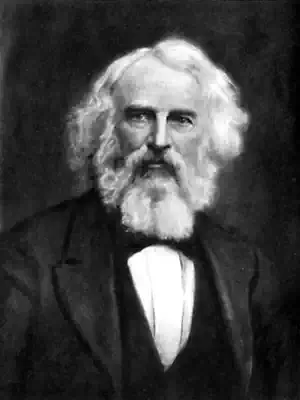
Henry Wadsworth Longfellow
The Children Of The Lord's Supper. (From The Swedish Of Bishop Tegner)
The Children Of The Lord's Supper. (From The Swedish Of Bishop Tegner)
Pentecost, day of rejoicing, had come. The church of the village
Gleaming stood in the morning's sheen. On the spire of the bell
Decked with a brazen cock, the friendly flames of the Spring-sun
Glanced like the tongues of fire, beheld by Apostles aforetime.
Clear was the heaven and blue, and May, with her cap crowned with roses,
Stood in her holiday dress in the fields, and the wind and the brooklet
Murmured gladness and peace, God's-peace! with lips rosy-tinted
Whispered the race of the flowers, and merry on balancing branches
Birds were singing their carol, a jubilant hymn to the Highest.
Swept and clean was the churchyard. Adorned like a leaf-woven arbor
Stood its old-fashioned gate; and within upon each cross of iron
Hung was a fragrant garland, new twined by the hands of
affection.
Even the dial, that stood on a mound among the departed,
(There full a hundred years had it stood,) was embellished with blossoms
Like to the patriarch hoary, the sage of his kith and the hamlet,
Who on his birthday is crowned by children and children's children,
So stood the ancient prophet, and mute with his pencil of iron
Marked on the tablet of stone, and measured the time and its changes,
While all around at his feet, an eternity slumbered in quiet.
Also the church within was adorned, for this was the season
When the young, their parents' hope, and the loved-ones of heaven,
Should at the foot of the altar renew the vows of their
baptism.
Therefore each nook and corner was swept and cleaned, and the dust was
Blown from the walls and ceiling, and from the oil-painted benches.
There stood the church like a garden; the Feast of the Leafy Pavilions
Saw we in living presentment. From noble arms on the church wall
Grew forth a cluster of leaves, and the preacher's pulpit of oak-wood
Budded once more anew, as aforetime the rod before Aaron.
Wreathed thereon was the Bible with leaves, and the dove, washed with silver
Under its canopy fastened, had on it a necklace of wind-flowers.
But in front of the choir, round the altar-piece painted by
Horberg,
Crept a garland gigantic; and bright-curling tresses of
angels
Peeped, like the sun from a cloud, from out of the shadowy leaf-work.
Likewise the lustre of brass, new-polished, blinked from the ceiling,
And for lights there were lilies of Pentecost set in the sockets.
Loud rang the bells already; the thronging crowd was
assembled
Far from valleys and hills, to list to the holy preaching.
Hark! then roll forth at once the mighty tones of the organ,
Hover like voices from God, aloft like invisible spirits.
Like as Elias in heaven, when he cast from off him his
mantle,
So cast off the soul its garments of earth; and with one voice
Chimed in the congregation, and sang an anthem immortal
Of the sublime Wallin, of David's harp in the North-land
Tuned to the choral of Luther; the song on its mighty pinions
Took every living soul, and lifted it gently to heaven,
And each face did shine like the Holy One's face upon Tabor.
Lo! there entered then into the church the Reverend Teacher.
Father he hight and he was in the parish; a Christianly
plainness
Clothed from his head to his feet the old man of seventy winters.
Friendly was he to behold, and glad as the heralding angel
Walked he among the crowds, but still a contemplative
grandeur
Lay on his forehead as clear as on moss-covered gravestone a sunbeam.
As in his inspiration (an evening twilight that faintly
Gleams in the human soul, even now, from the day of creation)
Th' Artist, the friend of heaven, imagines Saint John when in Patmos,
Gray, with his eyes uplifted to heaven, so seemed then the old man:
Such was the glance of his eye, and such were his tresses of silver.
All the congregation arose in the pews that were numbered.
But with a cordial look, to the right and the left hand, the old man
Nodding all hail and peace, disappeared in the innermost chancel.
Simply and solemnly now proceeded the Christian service,
Singing and prayer, and at last an ardent discourse from the old man.
Many a moving word and warning, that out of the heart came,
Fell like the dew of the morning, like manna on those in the desert.
Then, when all was finished, the Teacher re-entered the
chancel
Followed therein by the young. The boys on the right had their places,
Delicate figures, with close-curling hair and cheeks rosy-blooming.
But on the left of these there stood the tremulous lilies,
Tinged with the blushing light of the dawn, the diffident maidens,--
Folding their hands in prayer, and their eyes cast down on the pavement
Now came, with question and answer, the catechism. In the beginning
Answered the children with troubled and faltering voice, but the old man's
Glances of kindness encouraged them soon, and the doctrines eternal
Flowed, like the waters of fountains, so clear from lips unpolluted.
Each time the answer was closed, and as oft as they named the Redeemer,
Lowly louted the boys, and lowly the maidens all courtesied.
Friendly the Teacher stood, like an angel of light there among them.
And to the children explained the holy, the highest, in few words,
Thorough, yet simple and clear, for sublimity always is simple,
Both in sermon and song, a child can seize on its meaning.
E'en as the green-growing bud unfolds when Springtide
approaches.
Leaf by leaf puts forth, and wanued, by the radiant sunshine,
Blushes with purple and gold, till at last the perfected blossom
Opens its odorous chalice, and rocks with its crown in the breezes,
So was unfolded here the Christian lore of salvation,
Line by line from the soul of childhood. The fathers and mothers
Stood behind them in tears, and were glad at the well-worded answer.
Now went the old man up to the altar;--and straightway transfigured
(So did it seem unto me) was then the affectionate Teacher.
Like the Lord's Prophet sublime, and awful as Death and as Judgment
Stood he, the God-commissioned, the soul-searcher, earthward descending
Glances, sharp as a sword, into hearts that to him were
transparent
Shot he; his voice was deep, was low like the thunder afar off.
So on a sudden transfigured he stood there, lie spake and he questioned.
'This is the faith of the Fathers, the faith the Apostles delivered,
This is moreover the faith whereunto I baptized you, while still ye
Lay on your mothers' breasts, and nearer the portals of heaven,
Slumbering received you then the Holy Church in its bosom;
Wakened from sleep are ye now, and the light in its radiant splendor
Downward rains from the heaven;--to-day on the threshold of childhood
Kindly she frees you again, to examine and make your election,
For she knows naught of compulsion, and only conviction
desireth.
This is the hour of your trial, the turning-point of existence,
Seed for the coming days; without revocation departeth
Now from your lips the confession; Bethink ye, before ye make answer!
Think not, O think not with guile to deceive the questioning Teacher.
Sharp is his eye to-day, and a curse ever rests upon falsehood.
Enter not with a lie on Life's journey; the multitude hears you,
Brothers and sisters and parents, what dear upon earth is and holy
Standeth before your sight as a witness; the Judge everlasting
Looks from the sun down upon you, and angels in waiting beside him
Grave your confession in letters of fire upon tablets eternal.
Thus, then,--believe ye in God, in the Father who this world created?
Him who redeemed it, the Son, and the Spirit where both are united?
Will ye promise me here, (a holy promise!) to cherish
God more than all things earthly, and every man as a brother?
Will ye promise me here, to confirm your faith by your living,
Th' heavenly faith of affection! to hope, to forgive, and to suffer,
Be what it may your condition, and walk before God in
uprightness?
Will ye promise me this before God and man?'--With a clear voice
Answered the young men Yes! and Yes! with lips softly-breathing
Answered the maidens eke. Then dissolved from the brow of the Teacher
Clouds with the lightnings therein, and lie spake in accents more gentle,
Soft as the evening's breath, as harps by Babylon's rivers.
'Hail, then, hail to you all! To the heirdom of heaven be ye welcome!
Children no more from this day, but by covenant brothers and sisters!
Yet,--for what reason not children? Of such is the kingdom of heaven.
Here upon earth an assemblage of children, in heaven one Father,
Ruling them all as his household,--forgiving in turn and chastising,
That is of human life a picture, as Scripture has taught us.
Blest are the pure before God! Upon purity and upon virtue
Resteth the Christian Faith: she herself from on high is descended.
Strong as a man and pure as a child, is the sum of the doctrine,
Which the Divine One taught, and suffered and died on the cross for
Oh, as ye wander this day from childhood's sacred asylum
Downward and ever downward, and deeper in Age's chill valley,
Oh, how soon will ye come,--too soon!--and long to turn
backward
Up to its hill-tops again, to the sun-illumined, where Judgment
Stood like a father before you, and Pardon, clad like a mother,
Gave you her hand to kiss, and the loving heart was for given
Life was a play and your hands grasped after the roses of heaven!
Seventy years have I lived already; the Father eternal
Gave rue gladness and care; but the loveliest hours of
existence,
When I have steadfastly gazed in their eyes, I have instantly known them,
Known them all again;-- the were my childhood's acquaintance.
Therefore take from henceforth, as guides in the paths of existence,
Prayer, with her eyes raised to heaven, and. Innocence, bride of man's childhood
Innocence, child beloved, is a guest from the world of the blessed,
Beautiful, and in her hand a lily; on life's roaring billows
Swings she in safety, she heedeth them not in the ship she is sleeping.
Calmly she gazes around in the turmoil of men; in the desert
Angels descend and minister unto her; she herself knoweth
Naught of her glorious attendance; but follows faithful and humble,
Follows so long as she may her friend; oh do not reject her,
For she cometh from God and she holdeth the keys of the heavens.
Prayer is Innocence' friend; and willingly flieth incessant
'Twixt rhe earth and the sky, the carrier-pigeon of heaven,
Son of Eternity, fettered in Time, and an exile, the Spirit
Tugs at his chains evermore, and struggles like flame ever upward.
Still he recalls with emotion his Father's manifold mansions,
Thinks of the land of his fathers, where blossomed more freshly the flowerets,
Shone a more beautiful sun, and he played with the winged angels.
Then grows the earth too narrow, too close; and homesick for heaven
Longs the wanderer again; and the Spirit's longings are worship;
Worship is called his most beautiful hour, and its tongue is entreaty.
Aid when the infinite burden of life descendeth upon us,
Crushes to earth our hope, and, under the earth, in the
graveyard,
Then it is good to pray unto God; for his sorrowiug children
Turns he ne'er from his door, but he heals and helps and consoles them,
Yet is it better to pray when all things are prosperous with us,
Pray in fortunate days, for life's most beautiful Fortune
Kneels before the Eternal's throne; and with hands interfolded,
Praises thankful and moved the only giver of blessings.
Or do ye know, ye children, one blessing that comes not from Heaven?
What has mankind forsooth, the poor! that it has not received?
Therefore, fall in the dust and pray! The seraphs adoring
Cover with pinions six their face in the glory of him who
Hung his masonry pendent on naught, when the world be created.
Earth declareth his might, and the firmament utters his glory.
Races blossom and die, and stars fall downward from heaven,
Downward like withered leaves; at the last stroke of midnight, millenniums
Lay themselves down at his feet, and he sees them, but counts them as nothing
Who shall stand in his presence? The wrath of the judge is terrific,
Casting the insolent down at a glance. When he speaks in his anger
Hillocks skip like the kid, and mountains leap like the roebuck.
Yet,--why are ye afraid, ye children? This awful avenger,
Ah! is a merciful God! God's voice was not in the earthquake,
Not in the fire, nor the storm, but it was in the whispering breezes.
Love is the root of creation; God's essence; worlds without number
Lie in his bosom like children; he made them for this purpose only.
Only to love and to be loved again, he breathed forth his spirit
Into the slumbering dust, and upright standing, it laid its
Hand on its heart, and felt it was warm with a flame out of heaven.
Quench, oh quench not that flame! It is the breath of your being.
Love is life, but hatred is death. Not father, nor mother
Loved you, as God has loved you; for 't was that you may be happy
Gave he his only Son. When he bowed down his head in the death-hour
Solemnized Love its triumph; the sacrifice then was completed.
Lo! then was rent on a sudden the veil of the temple, dividing
Earth and heaven apart, and the dead from their sepulchres rising
Whispered with pallid lips and low in the ears of each other
Th' answer, but dreamed of before, to creation's enigma,-- Atonement!
Depths of Love are Atonement's depths, for Love is Atonement.
Therefore, child of mortality, love thou the merciful Father;
Wish what the Holy One wishes, and not from fear, but affection
Fear is the virtue of slaves ; but the heart that loveth is willing
Perfect was before God, and perfect is Love, and Love only.
Lovest thou God as thou oughtest, then lovest thou likewise thy brethren:
One is the sun in heaven, and one, only one, is Love also.
Bears not each human figure the godlike stamp on his forehead
Readest thou not in his face thou origin? Is he not sailing
Lost like thyself on an ocean unknown, and is he not guided
By the same stars that guide thee? Why shouldst thou hate then thy brother?
Hateth he thee, forgive! For 't is sweet to stammer one letter
Of the Eternal's language;--on earth it is called Forgiveness!
Knowest thou Him, who forgave, with the crown of thorns on his temples?
Earnestly prayed for his foes, for his murderers? Say, dost thou know him?
Ah! thou confessest his name, so follow likewise his example,
Think of thy brother no ill, but throw a veil over his failings,
Guide the erring aright; for the good, the heavenly shepherd
Took the lost lamb in his arms, and bore it back to its mother.
This is the fruit of Love, and it is by its fruits that we know it.
Love is the creature's welfare, with God; but Love among mortals
Is but an endless sigh! He longs, and endures, and stands waiting,
Suffers and yet rejoices, and smiles with tears on his eyelids.
Hope,--so is called upon earth, his recompense, Hope, the befriending,
Does what she can, for she points evermore up to heaven, and faithful
Plunges her anchor's peak in the depths of the grave, and beneath it
Paints a more beautiful world, a dim, but a sweet play of shadows!
Races, better than we, have leaned on her wavering promise,
Having naught else but Hope. Then praise we our Father in heaven,
Him, who has given us more; for to us has Hope been
transfigured,
Groping no longer in night; she is Faith, she is living
assurance.
Faith is enlightened Hope; she is light, is the eye of
affection,
Dreams of the longing interprets, and carves their visions in marble.
Faith is the sun of life ; and her countenance shines like the Hebrew's,
For she has looked upon God; the heaven on its stable foundation
Draws she with chains down to earth, and the New Jerusalem sinketh
Splendid with portals twelve in golden vapors descending.
There enraptured she wanders. and looks at the figures majestic,
Fears not the winged crowd, in the midst of them all is her homestead.
Therefore love and believe; for works will follow spontaneous
Even as day does the sun; the Right from the Good is an
offspring,
Love in a bodily shape; and Christian works are no more than
Animate Love and faith, as flowers are the animate Springtide.
Works do follow us all unto God; there stand and bear witness
Not what they seemed,--but what they were only. Blessed is he who
Hears their confession secure; they are mute upon earth until death's hand
Opens the mouth of the silent. Ye children, does Death e'er alarm you?
Death is the brother of Love, twin-brother is he, and is only
More austere to behold. With a kiss upon lips that are fading
Takes he the soul and departs, and, rocked in the arms of affection,
Places the ransomed child, new born, 'fore the face of its father.
Sounds of his coming already I hear,--see dimly his pinions,
Swart as the night, but with stars strewn upon them! I fear not before him.
Death is only release, and in mercy is mute. On his bosom
Freer breathes, in its coolness, my breast; and face to face standing
Look I on God as he is, a sun unpolluted by vapors;
Look on the light of the ages I loved, the spirits majestic,
Nobler, better than I; they stand by the throne all
transfigured,
Vested in white, and with harps of gold, and are singing an anthem,
Writ in the climate of heaven, in the language spoken by angels.
You, in like manner, ye children beloved, he one day shall gather,
Never forgets he the weary;--then welcome, ye loved ones, hereafter!
Meanwhile forget not the keeping of vows, forget not the promise,
Wander from holiness onward to holiness; earth shall ye heed not
Earth is but dust and heaven is light; I have pledged you to heaven.
God of the universe, hear me! thou fountain of Love
everlasting,
Hark to the voice of thy servant! I send up my prayer to thy heaven!
Let me hereafter not miss at thy throne one spirit of all these,
Whom thou hast given me here! I have loved them all like a father.
May they bear witness for me, that I taught them the way of salvation,
Faithful, so far as I knew, of thy word; again may they know me,
Fall on their Teacher's breast, and before thy face may I place them,
Pure as they now are, but only more tried, and exclaiming with gladness,
Father, lo! I am here, and the children, whom thou hast given me!'
Weeping he spake in these words; and now at the beck of the old man
Knee against knee they knitted a wreath round the altar's enclosure.
Kneeling he read then the prayers of the consecration, and softly
With him the children read; at the close, with tremulous accents,
Asked he the peace of Heaven, a benediction upon them.
Now should have ended his task for the day; the following Sunday
Was for the young appointed to eat of the Lord's holy Supper.
Sudden, as struck from the clouds, stood the Teacher silent and laid his
Hand on his forehead, and cast his looks upward; while thoughts high and holy,
Flew through the midst of his soul, and his eyes glanced with wonderful brightness.
'On the next Sunday, who knows! perhaps I shall rest in the graveyard!
Some one perhaps of yourselves, a lily broken untimely,
Bow down his head to the earth; why delay I? the hour is accomplished,
Warm is the heart;--I will! for to-day grows the harvest of heaven.
What I began accomplish I now; what failing therein is
I, the old man, will answer to God and the reverend father.
Say to me only, ye children, ye denizens new-come in heaven,
Are ye ready this day to eat of the bread of Atonement?
What it denoteth, that know ye full well, I have told it you often.
Of the new covenant symbol it is, of Atonement a token,
Stablished between earth and heaven. Man by his sins and transgressions
Far has wandered from God, from his essence. 'T was in the beginning
Fast by the Tree of Knowledge he fell, and it hangs its crown o'er the
Fall to this day; in the Thought is the Fall; in the Heart the Atonement.
Infinite is the fall,--the Atonement infinite likewise.
See! behind me, as far as the old man remembers, and forward,
Far as Hope in her flight can reach with her wearied pinions,
Sin and Atonement incessant go through the lifetime of mortals.
Sin is brought forth full-grown; but Atonement sleeps in our bosoms
Still as the cradled babe; and dreams of heaven and of angels,
Cannot awake to sensation; is like the tones in the harp's strings,
Spirits imprisoned, that wait evermore the deliverer's finger.
Therefore, ye children beloved, descended the Prince of
Atonement,
Woke the slumberer from sleep, and she stands now with eyes all resplendent.
Bright as the vault of the sky, and battles with Sin and o'ercomes her.
Downward to earth he came and, transfigured, thence reascended,
Not from the heart in like wise, for there he still lives in the Spirit,
Loves and atones evermore. So long as Time is, is Atonement.
Therefore with reverence take this day her visible token.
Tokens are dead if the things live not. The light everlasting
Unto the blind is not, but is born of the eye that has vision.
Neither in bread nor in wine, but in the heart that is hallowed
Lieth forgiveness enshrined; the intention alone of amendment
Fruits of the earth ennobles to heavenly things, and removes all
Sin and the guerdon of sin. Only Love with his arms wide extended,
Penitence wee ping and praying; the Will that is tried, and whose gold flows
Purified forth from the flames; in a word, mankind by Atonement
Breaketh Atonement's bread, and drinketh Atonement's wine-cup.
But he who cometh up hither, unworthy, with hate in his bosom,
Scoffing at men and at God, is guilty of Christ's blessed body,
And the Redeemer's blood! To himself he eateth and drinketh
Death and doom ! And from this, preserve us, thou heavenly Father!
Are ye ready, ye children, to eat of the bread of Atonement?
Thus with emotion he asked, and together answered the children,
'Yes!' with deep sobs interrupted. Then read he the due
supplications,
Read the Form of Communion, and in chimed the organ and anthem:
'O Holy Lamb of God, who takest away our transgressions,
Hear us! give us thy peace! have mercy, have mercy upon us!'
Th' old man, with trembling hand, and heavenly pearls on his eyelids,
Filled now the chalice and paten, and dealt round the mystical symbols.
Oh, then seemed it to me as if God, with the broad eye of midday,
Clearer looked in at the windows, and all the trees in the church yard
Bowed down their summits of green, and the grass on the graves 'gan to shiver
But in the children (I noted it well ; I knew it) there ran a
Tremor of holy rapture along through their ice-cold members.
Decked like an altar before them, there stood the green earth, and above it
Heaven opened itself, as of old before Stephen; they saw there
Radiant in glory the Father, and on his right hand the
Redeemer.
Under them hear they the clang of harpstrings, and angels from gold clouds
Beckon to them like brothers, and fan with their pinions of purple.
Closed was the Teacher's task, and with heaven in their hearts and their faces,
Up rose the children all, and each bowed him, weeping full sorely,
Downward to kiss that reverend hand, but all of them pressed he
Moved to his bosom, and laid, with a prayer, his hands full of blessings,
Now on the holy breast, and now on the innocent tresses.
Pentecost, day of rejoicing, had come. The church of the village
Gleaming stood in the morning's sheen. On the spire of the bell
Decked with a brazen cock, the friendly flames of the Spring-sun
Glanced like the tongues of fire, beheld by Apostles aforetime.
Clear was the heaven and blue, and May, with her cap crowned with roses,
Stood in her holiday dress in the fields, and the wind and the brooklet
Murmured gladness and peace, God's-peace! with lips rosy-tinted
Whispered the race of the flowers, and merry on balancing branches
Birds were singing their carol, a jubilant hymn to the Highest.
Swept and clean was the churchyard. Adorned like a leaf-woven arbor
Stood its old-fashioned gate; and within upon each cross of iron
Hung was a fragrant garland, new twined by the hands of
affection.
Even the dial, that stood on a mound among the departed,
(There full a hundred years had it stood,) was embellished with blossoms
Like to the patriarch hoary, the sage of his kith and the hamlet,
Who on his birthday is crowned by children and children's children,
So stood the ancient prophet, and mute with his pencil of iron
Marked on the tablet of stone, and measured the time and its changes,
While all around at his feet, an eternity slumbered in quiet.
Also the church within was adorned, for this was the season
When the young, their parents' hope, and the loved-ones of heaven,
Should at the foot of the altar renew the vows of their
baptism.
Therefore each nook and corner was swept and cleaned, and the dust was
Blown from the walls and ceiling, and from the oil-painted benches.
There stood the church like a garden; the Feast of the Leafy Pavilions
Saw we in living presentment. From noble arms on the church wall
Grew forth a cluster of leaves, and the preacher's pulpit of oak-wood
Budded once more anew, as aforetime the rod before Aaron.
Wreathed thereon was the Bible with leaves, and the dove, washed with silver
Under its canopy fastened, had on it a necklace of wind-flowers.
But in front of the choir, round the altar-piece painted by
Horberg,
Crept a garland gigantic; and bright-curling tresses of
angels
Peeped, like the sun from a cloud, from out of the shadowy leaf-work.
Likewise the lustre of brass, new-polished, blinked from the ceiling,
And for lights there were lilies of Pentecost set in the sockets.
Loud rang the bells already; the thronging crowd was
assembled
Far from valleys and hills, to list to the holy preaching.
Hark! then roll forth at once the mighty tones of the organ,
Hover like voices from God, aloft like invisible spirits.
Like as Elias in heaven, when he cast from off him his
mantle,
So cast off the soul its garments of earth; and with one voice
Chimed in the congregation, and sang an anthem immortal
Of the sublime Wallin, of David's harp in the North-land
Tuned to the choral of Luther; the song on its mighty pinions
Took every living soul, and lifted it gently to heaven,
And each face did shine like the Holy One's face upon Tabor.
Lo! there entered then into the church the Reverend Teacher.
Father he hight and he was in the parish; a Christianly
plainness
Clothed from his head to his feet the old man of seventy winters.
Friendly was he to behold, and glad as the heralding angel
Walked he among the crowds, but still a contemplative
grandeur
Lay on his forehead as clear as on moss-covered gravestone a sunbeam.
As in his inspiration (an evening twilight that faintly
Gleams in the human soul, even now, from the day of creation)
Th' Artist, the friend of heaven, imagines Saint John when in Patmos,
Gray, with his eyes uplifted to heaven, so seemed then the old man:
Such was the glance of his eye, and such were his tresses of silver.
All the congregation arose in the pews that were numbered.
But with a cordial look, to the right and the left hand, the old man
Nodding all hail and peace, disappeared in the innermost chancel.
Simply and solemnly now proceeded the Christian service,
Singing and prayer, and at last an ardent discourse from the old man.
Many a moving word and warning, that out of the heart came,
Fell like the dew of the morning, like manna on those in the desert.
Then, when all was finished, the Teacher re-entered the
chancel
Followed therein by the young. The boys on the right had their places,
Delicate figures, with close-curling hair and cheeks rosy-blooming.
But on the left of these there stood the tremulous lilies,
Tinged with the blushing light of the dawn, the diffident maidens,--
Folding their hands in prayer, and their eyes cast down on the pavement
Now came, with question and answer, the catechism. In the beginning
Answered the children with troubled and faltering voice, but the old man's
Glances of kindness encouraged them soon, and the doctrines eternal
Flowed, like the waters of fountains, so clear from lips unpolluted.
Each time the answer was closed, and as oft as they named the Redeemer,
Lowly louted the boys, and lowly the maidens all courtesied.
Friendly the Teacher stood, like an angel of light there among them.
And to the children explained the holy, the highest, in few words,
Thorough, yet simple and clear, for sublimity always is simple,
Both in sermon and song, a child can seize on its meaning.
E'en as the green-growing bud unfolds when Springtide
approaches.
Leaf by leaf puts forth, and wanued, by the radiant sunshine,
Blushes with purple and gold, till at last the perfected blossom
Opens its odorous chalice, and rocks with its crown in the breezes,
So was unfolded here the Christian lore of salvation,
Line by line from the soul of childhood. The fathers and mothers
Stood behind them in tears, and were glad at the well-worded answer.
Now went the old man up to the altar;--and straightway transfigured
(So did it seem unto me) was then the affectionate Teacher.
Like the Lord's Prophet sublime, and awful as Death and as Judgment
Stood he, the God-commissioned, the soul-searcher, earthward descending
Glances, sharp as a sword, into hearts that to him were
transparent
Shot he; his voice was deep, was low like the thunder afar off.
So on a sudden transfigured he stood there, lie spake and he questioned.
'This is the faith of the Fathers, the faith the Apostles delivered,
This is moreover the faith whereunto I baptized you, while still ye
Lay on your mothers' breasts, and nearer the portals of heaven,
Slumbering received you then the Holy Church in its bosom;
Wakened from sleep are ye now, and the light in its radiant splendor
Downward rains from the heaven;--to-day on the threshold of childhood
Kindly she frees you again, to examine and make your election,
For she knows naught of compulsion, and only conviction
desireth.
This is the hour of your trial, the turning-point of existence,
Seed for the coming days; without revocation departeth
Now from your lips the confession; Bethink ye, before ye make answer!
Think not, O think not with guile to deceive the questioning Teacher.
Sharp is his eye to-day, and a curse ever rests upon falsehood.
Enter not with a lie on Life's journey; the multitude hears you,
Brothers and sisters and parents, what dear upon earth is and holy
Standeth before your sight as a witness; the Judge everlasting
Looks from the sun down upon you, and angels in waiting beside him
Grave your confession in letters of fire upon tablets eternal.
Thus, then,--believe ye in God, in the Father who this world created?
Him who redeemed it, the Son, and the Spirit where both are united?
Will ye promise me here, (a holy promise!) to cherish
God more than all things earthly, and every man as a brother?
Will ye promise me here, to confirm your faith by your living,
Th' heavenly faith of affection! to hope, to forgive, and to suffer,
Be what it may your condition, and walk before God in
uprightness?
Will ye promise me this before God and man?'--With a clear voice
Answered the young men Yes! and Yes! with lips softly-breathing
Answered the maidens eke. Then dissolved from the brow of the Teacher
Clouds with the lightnings therein, and lie spake in accents more gentle,
Soft as the evening's breath, as harps by Babylon's rivers.
'Hail, then, hail to you all! To the heirdom of heaven be ye welcome!
Children no more from this day, but by covenant brothers and sisters!
Yet,--for what reason not children? Of such is the kingdom of heaven.
Here upon earth an assemblage of children, in heaven one Father,
Ruling them all as his household,--forgiving in turn and chastising,
That is of human life a picture, as Scripture has taught us.
Blest are the pure before God! Upon purity and upon virtue
Resteth the Christian Faith: she herself from on high is descended.
Strong as a man and pure as a child, is the sum of the doctrine,
Which the Divine One taught, and suffered and died on the cross for
Oh, as ye wander this day from childhood's sacred asylum
Downward and ever downward, and deeper in Age's chill valley,
Oh, how soon will ye come,--too soon!--and long to turn
backward
Up to its hill-tops again, to the sun-illumined, where Judgment
Stood like a father before you, and Pardon, clad like a mother,
Gave you her hand to kiss, and the loving heart was for given
Life was a play and your hands grasped after the roses of heaven!
Seventy years have I lived already; the Father eternal
Gave rue gladness and care; but the loveliest hours of
existence,
When I have steadfastly gazed in their eyes, I have instantly known them,
Known them all again;-- the were my childhood's acquaintance.
Therefore take from henceforth, as guides in the paths of existence,
Prayer, with her eyes raised to heaven, and. Innocence, bride of man's childhood
Innocence, child beloved, is a guest from the world of the blessed,
Beautiful, and in her hand a lily; on life's roaring billows
Swings she in safety, she heedeth them not in the ship she is sleeping.
Calmly she gazes around in the turmoil of men; in the desert
Angels descend and minister unto her; she herself knoweth
Naught of her glorious attendance; but follows faithful and humble,
Follows so long as she may her friend; oh do not reject her,
For she cometh from God and she holdeth the keys of the heavens.
Prayer is Innocence' friend; and willingly flieth incessant
'Twixt rhe earth and the sky, the carrier-pigeon of heaven,
Son of Eternity, fettered in Time, and an exile, the Spirit
Tugs at his chains evermore, and struggles like flame ever upward.
Still he recalls with emotion his Father's manifold mansions,
Thinks of the land of his fathers, where blossomed more freshly the flowerets,
Shone a more beautiful sun, and he played with the winged angels.
Then grows the earth too narrow, too close; and homesick for heaven
Longs the wanderer again; and the Spirit's longings are worship;
Worship is called his most beautiful hour, and its tongue is entreaty.
Aid when the infinite burden of life descendeth upon us,
Crushes to earth our hope, and, under the earth, in the
graveyard,
Then it is good to pray unto God; for his sorrowiug children
Turns he ne'er from his door, but he heals and helps and consoles them,
Yet is it better to pray when all things are prosperous with us,
Pray in fortunate days, for life's most beautiful Fortune
Kneels before the Eternal's throne; and with hands interfolded,
Praises thankful and moved the only giver of blessings.
Or do ye know, ye children, one blessing that comes not from Heaven?
What has mankind forsooth, the poor! that it has not received?
Therefore, fall in the dust and pray! The seraphs adoring
Cover with pinions six their face in the glory of him who
Hung his masonry pendent on naught, when the world be created.
Earth declareth his might, and the firmament utters his glory.
Races blossom and die, and stars fall downward from heaven,
Downward like withered leaves; at the last stroke of midnight, millenniums
Lay themselves down at his feet, and he sees them, but counts them as nothing
Who shall stand in his presence? The wrath of the judge is terrific,
Casting the insolent down at a glance. When he speaks in his anger
Hillocks skip like the kid, and mountains leap like the roebuck.
Yet,--why are ye afraid, ye children? This awful avenger,
Ah! is a merciful God! God's voice was not in the earthquake,
Not in the fire, nor the storm, but it was in the whispering breezes.
Love is the root of creation; God's essence; worlds without number
Lie in his bosom like children; he made them for this purpose only.
Only to love and to be loved again, he breathed forth his spirit
Into the slumbering dust, and upright standing, it laid its
Hand on its heart, and felt it was warm with a flame out of heaven.
Quench, oh quench not that flame! It is the breath of your being.
Love is life, but hatred is death. Not father, nor mother
Loved you, as God has loved you; for 't was that you may be happy
Gave he his only Son. When he bowed down his head in the death-hour
Solemnized Love its triumph; the sacrifice then was completed.
Lo! then was rent on a sudden the veil of the temple, dividing
Earth and heaven apart, and the dead from their sepulchres rising
Whispered with pallid lips and low in the ears of each other
Th' answer, but dreamed of before, to creation's enigma,-- Atonement!
Depths of Love are Atonement's depths, for Love is Atonement.
Therefore, child of mortality, love thou the merciful Father;
Wish what the Holy One wishes, and not from fear, but affection
Fear is the virtue of slaves ; but the heart that loveth is willing
Perfect was before God, and perfect is Love, and Love only.
Lovest thou God as thou oughtest, then lovest thou likewise thy brethren:
One is the sun in heaven, and one, only one, is Love also.
Bears not each human figure the godlike stamp on his forehead
Readest thou not in his face thou origin? Is he not sailing
Lost like thyself on an ocean unknown, and is he not guided
By the same stars that guide thee? Why shouldst thou hate then thy brother?
Hateth he thee, forgive! For 't is sweet to stammer one letter
Of the Eternal's language;--on earth it is called Forgiveness!
Knowest thou Him, who forgave, with the crown of thorns on his temples?
Earnestly prayed for his foes, for his murderers? Say, dost thou know him?
Ah! thou confessest his name, so follow likewise his example,
Think of thy brother no ill, but throw a veil over his failings,
Guide the erring aright; for the good, the heavenly shepherd
Took the lost lamb in his arms, and bore it back to its mother.
This is the fruit of Love, and it is by its fruits that we know it.
Love is the creature's welfare, with God; but Love among mortals
Is but an endless sigh! He longs, and endures, and stands waiting,
Suffers and yet rejoices, and smiles with tears on his eyelids.
Hope,--so is called upon earth, his recompense, Hope, the befriending,
Does what she can, for she points evermore up to heaven, and faithful
Plunges her anchor's peak in the depths of the grave, and beneath it
Paints a more beautiful world, a dim, but a sweet play of shadows!
Races, better than we, have leaned on her wavering promise,
Having naught else but Hope. Then praise we our Father in heaven,
Him, who has given us more; for to us has Hope been
transfigured,
Groping no longer in night; she is Faith, she is living
assurance.
Faith is enlightened Hope; she is light, is the eye of
affection,
Dreams of the longing interprets, and carves their visions in marble.
Faith is the sun of life ; and her countenance shines like the Hebrew's,
For she has looked upon God; the heaven on its stable foundation
Draws she with chains down to earth, and the New Jerusalem sinketh
Splendid with portals twelve in golden vapors descending.
There enraptured she wanders. and looks at the figures majestic,
Fears not the winged crowd, in the midst of them all is her homestead.
Therefore love and believe; for works will follow spontaneous
Even as day does the sun; the Right from the Good is an
offspring,
Love in a bodily shape; and Christian works are no more than
Animate Love and faith, as flowers are the animate Springtide.
Works do follow us all unto God; there stand and bear witness
Not what they seemed,--but what they were only. Blessed is he who
Hears their confession secure; they are mute upon earth until death's hand
Opens the mouth of the silent. Ye children, does Death e'er alarm you?
Death is the brother of Love, twin-brother is he, and is only
More austere to behold. With a kiss upon lips that are fading
Takes he the soul and departs, and, rocked in the arms of affection,
Places the ransomed child, new born, 'fore the face of its father.
Sounds of his coming already I hear,--see dimly his pinions,
Swart as the night, but with stars strewn upon them! I fear not before him.
Death is only release, and in mercy is mute. On his bosom
Freer breathes, in its coolness, my breast; and face to face standing
Look I on God as he is, a sun unpolluted by vapors;
Look on the light of the ages I loved, the spirits majestic,
Nobler, better than I; they stand by the throne all
transfigured,
Vested in white, and with harps of gold, and are singing an anthem,
Writ in the climate of heaven, in the language spoken by angels.
You, in like manner, ye children beloved, he one day shall gather,
Never forgets he the weary;--then welcome, ye loved ones, hereafter!
Meanwhile forget not the keeping of vows, forget not the promise,
Wander from holiness onward to holiness; earth shall ye heed not
Earth is but dust and heaven is light; I have pledged you to heaven.
God of the universe, hear me! thou fountain of Love
everlasting,
Hark to the voice of thy servant! I send up my prayer to thy heaven!
Let me hereafter not miss at thy throne one spirit of all these,
Whom thou hast given me here! I have loved them all like a father.
May they bear witness for me, that I taught them the way of salvation,
Faithful, so far as I knew, of thy word; again may they know me,
Fall on their Teacher's breast, and before thy face may I place them,
Pure as they now are, but only more tried, and exclaiming with gladness,
Father, lo! I am here, and the children, whom thou hast given me!'
Weeping he spake in these words; and now at the beck of the old man
Knee against knee they knitted a wreath round the altar's enclosure.
Kneeling he read then the prayers of the consecration, and softly
With him the children read; at the close, with tremulous accents,
Asked he the peace of Heaven, a benediction upon them.
Now should have ended his task for the day; the following Sunday
Was for the young appointed to eat of the Lord's holy Supper.
Sudden, as struck from the clouds, stood the Teacher silent and laid his
Hand on his forehead, and cast his looks upward; while thoughts high and holy,
Flew through the midst of his soul, and his eyes glanced with wonderful brightness.
'On the next Sunday, who knows! perhaps I shall rest in the graveyard!
Some one perhaps of yourselves, a lily broken untimely,
Bow down his head to the earth; why delay I? the hour is accomplished,
Warm is the heart;--I will! for to-day grows the harvest of heaven.
What I began accomplish I now; what failing therein is
I, the old man, will answer to God and the reverend father.
Say to me only, ye children, ye denizens new-come in heaven,
Are ye ready this day to eat of the bread of Atonement?
What it denoteth, that know ye full well, I have told it you often.
Of the new covenant symbol it is, of Atonement a token,
Stablished between earth and heaven. Man by his sins and transgressions
Far has wandered from God, from his essence. 'T was in the beginning
Fast by the Tree of Knowledge he fell, and it hangs its crown o'er the
Fall to this day; in the Thought is the Fall; in the Heart the Atonement.
Infinite is the fall,--the Atonement infinite likewise.
See! behind me, as far as the old man remembers, and forward,
Far as Hope in her flight can reach with her wearied pinions,
Sin and Atonement incessant go through the lifetime of mortals.
Sin is brought forth full-grown; but Atonement sleeps in our bosoms
Still as the cradled babe; and dreams of heaven and of angels,
Cannot awake to sensation; is like the tones in the harp's strings,
Spirits imprisoned, that wait evermore the deliverer's finger.
Therefore, ye children beloved, descended the Prince of
Atonement,
Woke the slumberer from sleep, and she stands now with eyes all resplendent.
Bright as the vault of the sky, and battles with Sin and o'ercomes her.
Downward to earth he came and, transfigured, thence reascended,
Not from the heart in like wise, for there he still lives in the Spirit,
Loves and atones evermore. So long as Time is, is Atonement.
Therefore with reverence take this day her visible token.
Tokens are dead if the things live not. The light everlasting
Unto the blind is not, but is born of the eye that has vision.
Neither in bread nor in wine, but in the heart that is hallowed
Lieth forgiveness enshrined; the intention alone of amendment
Fruits of the earth ennobles to heavenly things, and removes all
Sin and the guerdon of sin. Only Love with his arms wide extended,
Penitence wee ping and praying; the Will that is tried, and whose gold flows
Purified forth from the flames; in a word, mankind by Atonement
Breaketh Atonement's bread, and drinketh Atonement's wine-cup.
But he who cometh up hither, unworthy, with hate in his bosom,
Scoffing at men and at God, is guilty of Christ's blessed body,
And the Redeemer's blood! To himself he eateth and drinketh
Death and doom ! And from this, preserve us, thou heavenly Father!
Are ye ready, ye children, to eat of the bread of Atonement?
Thus with emotion he asked, and together answered the children,
'Yes!' with deep sobs interrupted. Then read he the due
supplications,
Read the Form of Communion, and in chimed the organ and anthem:
'O Holy Lamb of God, who takest away our transgressions,
Hear us! give us thy peace! have mercy, have mercy upon us!'
Th' old man, with trembling hand, and heavenly pearls on his eyelids,
Filled now the chalice and paten, and dealt round the mystical symbols.
Oh, then seemed it to me as if God, with the broad eye of midday,
Clearer looked in at the windows, and all the trees in the church yard
Bowed down their summits of green, and the grass on the graves 'gan to shiver
But in the children (I noted it well ; I knew it) there ran a
Tremor of holy rapture along through their ice-cold members.
Decked like an altar before them, there stood the green earth, and above it
Heaven opened itself, as of old before Stephen; they saw there
Radiant in glory the Father, and on his right hand the
Redeemer.
Under them hear they the clang of harpstrings, and angels from gold clouds
Beckon to them like brothers, and fan with their pinions of purple.
Closed was the Teacher's task, and with heaven in their hearts and their faces,
Up rose the children all, and each bowed him, weeping full sorely,
Downward to kiss that reverend hand, but all of them pressed he
Moved to his bosom, and laid, with a prayer, his hands full of blessings,
Now on the holy breast, and now on the innocent tresses.
291
Henry Wadsworth Longfellow
The Brook. (From The Spanish)
The Brook. (From The Spanish)
Laugh of the mountain! -- lyre of bird and tree!
Pomp of the meadow! mirror of the morn!
The soul of April, unto whom are born
The rose and jessamine, leaps wild in thee!
Although, where'er thy devious current strays,
The lap of earth with gold and silver teems,
To me thy clear proceeding brighter seems
Than golden sands, that charm each shepherd's gaze.
How without guile thy bosom, all transparent
As the pure crystal, lets the curious eye
Thy secrets scan, thy smooth, round pebbles count!
How, without malice murmuring, glides thy current!
O sweet simplicity of days gone by!
Thou shun'st the haunts of man, to dwell in limpid fount!
Laugh of the mountain! -- lyre of bird and tree!
Pomp of the meadow! mirror of the morn!
The soul of April, unto whom are born
The rose and jessamine, leaps wild in thee!
Although, where'er thy devious current strays,
The lap of earth with gold and silver teems,
To me thy clear proceeding brighter seems
Than golden sands, that charm each shepherd's gaze.
How without guile thy bosom, all transparent
As the pure crystal, lets the curious eye
Thy secrets scan, thy smooth, round pebbles count!
How, without malice murmuring, glides thy current!
O sweet simplicity of days gone by!
Thou shun'st the haunts of man, to dwell in limpid fount!
415
Henry Wadsworth Longfellow
The Boy And The Brook. (Armenian Popular Song, From The Prose Version Of
The Boy And The Brook. (Armenian Popular Song, From The Prose Version Of
Alishan)
Down from yon distant mountain height
The brooklet flows through the village street;
A boy comes forth to wash his hands,
Washing, yes washing, there he stands,
In the water cool and sweet.
Brook, from what mountain dost thou come,
O my brooklet cool and sweet!
I come from yon mountain high and cold,
Where lieth the new snow on the old,
And melts in the summer heat.
Brook, to what river dost thou go?
O my brooklet cool and sweet!
I go to the river there below
Where in bunches the violets grow,
And sun and shadow meet.
Brook, to what garden dost thou go?
O my brooklet cool and sweet!
I go to the garden in the vale
Where all night long the nightingale
Her love-song doth repeat.
Brook, to what fountain dost thou go?
O my brooklet cool and sweet!
I go to the fountain at whose brink
The maid that loves thee comes to drink,
And whenever she looks therein,
I rise to meet her, and kiss her chin,
And my joy is then complete.
Alishan)
Down from yon distant mountain height
The brooklet flows through the village street;
A boy comes forth to wash his hands,
Washing, yes washing, there he stands,
In the water cool and sweet.
Brook, from what mountain dost thou come,
O my brooklet cool and sweet!
I come from yon mountain high and cold,
Where lieth the new snow on the old,
And melts in the summer heat.
Brook, to what river dost thou go?
O my brooklet cool and sweet!
I go to the river there below
Where in bunches the violets grow,
And sun and shadow meet.
Brook, to what garden dost thou go?
O my brooklet cool and sweet!
I go to the garden in the vale
Where all night long the nightingale
Her love-song doth repeat.
Brook, to what fountain dost thou go?
O my brooklet cool and sweet!
I go to the fountain at whose brink
The maid that loves thee comes to drink,
And whenever she looks therein,
I rise to meet her, and kiss her chin,
And my joy is then complete.
437
Henry Wadsworth Longfellow
The Boy And The Brook. (Armenian Popular Song, From The Prose Version Of
The Boy And The Brook. (Armenian Popular Song, From The Prose Version Of
Alishan)
Down from yon distant mountain height
The brooklet flows through the village street;
A boy comes forth to wash his hands,
Washing, yes washing, there he stands,
In the water cool and sweet.
Brook, from what mountain dost thou come,
O my brooklet cool and sweet!
I come from yon mountain high and cold,
Where lieth the new snow on the old,
And melts in the summer heat.
Brook, to what river dost thou go?
O my brooklet cool and sweet!
I go to the river there below
Where in bunches the violets grow,
And sun and shadow meet.
Brook, to what garden dost thou go?
O my brooklet cool and sweet!
I go to the garden in the vale
Where all night long the nightingale
Her love-song doth repeat.
Brook, to what fountain dost thou go?
O my brooklet cool and sweet!
I go to the fountain at whose brink
The maid that loves thee comes to drink,
And whenever she looks therein,
I rise to meet her, and kiss her chin,
And my joy is then complete.
Alishan)
Down from yon distant mountain height
The brooklet flows through the village street;
A boy comes forth to wash his hands,
Washing, yes washing, there he stands,
In the water cool and sweet.
Brook, from what mountain dost thou come,
O my brooklet cool and sweet!
I come from yon mountain high and cold,
Where lieth the new snow on the old,
And melts in the summer heat.
Brook, to what river dost thou go?
O my brooklet cool and sweet!
I go to the river there below
Where in bunches the violets grow,
And sun and shadow meet.
Brook, to what garden dost thou go?
O my brooklet cool and sweet!
I go to the garden in the vale
Where all night long the nightingale
Her love-song doth repeat.
Brook, to what fountain dost thou go?
O my brooklet cool and sweet!
I go to the fountain at whose brink
The maid that loves thee comes to drink,
And whenever she looks therein,
I rise to meet her, and kiss her chin,
And my joy is then complete.
437
Henry Wadsworth Longfellow
Tales Of A Wayside Inn : Part 3. The Theologian's Tale; Elizabeth
Tales Of A Wayside Inn : Part 3. The Theologian's Tale; Elizabeth
'Ah, how short are the days! How soon the night overtakes us!
In the old country the twilight is longer; but here in the forest
Suddenly comes the dark, with hardly a pause in its coming,
Hardly a moment between the two lights, the day and the lamplight;
Yet how grand is the winter! How spotless the snow is, and perfect!'
Thus spake Elizabeth Haddon at nightfall to Hannah the housemaid,
As in the farm-house kitchen, that served for kitchen and parlor,
By the window she sat with her work, and looked on a landscape
White as the great white sheet that Peter saw in his vision,
By the four corners let down and descending out of the heavens.
'Ah, how short are the days! How soon the night overtakes us!
In the old country the twilight is longer; but here in the forest
Suddenly comes the dark, with hardly a pause in its coming,
Hardly a moment between the two lights, the day and the lamplight;
Yet how grand is the winter! How spotless the snow is, and perfect!'
Thus spake Elizabeth Haddon at nightfall to Hannah the housemaid,
As in the farm-house kitchen, that served for kitchen and parlor,
By the window she sat with her work, and looked on a landscape
White as the great white sheet that Peter saw in his vision,
By the four corners let down and descending out of the heavens.
382
Henry Wadsworth Longfellow
Tales Of A Wayside Inn : Part 3. Prelude
Tales Of A Wayside Inn : Part 3. Prelude
The evening came; the golden vane
A moment in the sunset glanced,
Then darkened, and then gleamed again,
As from the east the moon advanced
And touched it with a softer light;
While underneath, with flowing mane,
Upon the sign the Red Horse pranced,
And galloped forth into the night.
But brighter than the afternoon
That followed the dark day of rain,
And brighter than the golden vane
That glistened in the rising moon,
Within the ruddy fire-light gleamed;
And every separate window-pane,
Backed by the outer darkness, showed
A mirror, where the flamelets gleamed
And flickered to and fro, and seemed
A bonfire lighted in the road.
Amid the hospitable glow,
Like an old actor on the stage,
With the uncertain voice of age,
The singing chimney chanted low
The homely songs of long ago.
The voice that Ossian heard of yore,
When midnight winds were in his hall;
A ghostly and appealing call,
A sound of days that are no more!
And dark as Ossian sat the Jew,
And listened to the sound, and knew
The passing of the airy hosts,
The gray and misty cloud of ghosts
In their interminable flight;
And listening muttered in his beard,
With accent indistinct and weird,
'Who are ye, children of the Night?'
Beholding his mysterious face,
'Tell me,' the gay Sicilian said,
'Why was it that in breaking bread
At supper, you bent down your head
And, musing, paused a little space,
As one who says a silent grace?'
The Jew replied, with solemn air,
'I said the Manichaean's prayer.
It was his faith,--perhaps is mine,--
That life in all its forms is one,
And that its secret conduits run
Unseen, but in unbroken line,
From the great fountain-head divine
Through man and beast, through grain and grass.
Howe'er we struggle, strive, and cry,
From death there can be no escape,
And no escape from life, alas
Because we cannot die, but pass
From one into another shape:
It is but into life we die.
'Therefore the Manichaean said
This simple prayer on breaking bread,
Lest he with hasty hand or knife
Might wound the incarcerated life,
The soul in things that we call dead:
'I did not reap thee, did not bind thee,
I did not thrash thee, did not grind thee,
Nor did I in the oven bake thee!
It was not I, it was another
Did these things unto thee, O brother;
I only have thee, hold thee, break thee!''
'That birds have souls I can concede,'
The Poet cried, with glowing cheeks;
'The flocks that from their beds of reed
Uprising north or southward fly,
And flying write upon the sky
The biforked letter of the Greeks,
As hath been said by Rucellai;
All birds that sing or chirp or cry,
Even those migratory bands,
The minor poets of the air,
The plover, peep, and sanderling,
That hardly can be said to sing,
But pipe along the barren sands,--
All these have souls akin to ours;
So hath the lovely race of flowers:
Thus much I grant, but nothing more.
The rusty hinges of a door
Are not alive because they creak;
This chimney, with its dreary roar,
These rattling windows, do not speak!'
'To me they speak,' the Jew replied;
'And in the sounds that sink and soar,
I hear the voices of a tide
That breaks upon an unknown shore!'
Here the Sicilian interfered:
'That was your dream, then, as you dozed
A moment since, with eyes half-closed,
And murmured something in your beard.'
The Hebrew smiled, and answered, 'Nay;
Not that, but something very near;
Like, and yet not the same, may seem
The vision of my waking dream;
Before it wholly dies away,
Listen to me, and you shall hear.'
The evening came; the golden vane
A moment in the sunset glanced,
Then darkened, and then gleamed again,
As from the east the moon advanced
And touched it with a softer light;
While underneath, with flowing mane,
Upon the sign the Red Horse pranced,
And galloped forth into the night.
But brighter than the afternoon
That followed the dark day of rain,
And brighter than the golden vane
That glistened in the rising moon,
Within the ruddy fire-light gleamed;
And every separate window-pane,
Backed by the outer darkness, showed
A mirror, where the flamelets gleamed
And flickered to and fro, and seemed
A bonfire lighted in the road.
Amid the hospitable glow,
Like an old actor on the stage,
With the uncertain voice of age,
The singing chimney chanted low
The homely songs of long ago.
The voice that Ossian heard of yore,
When midnight winds were in his hall;
A ghostly and appealing call,
A sound of days that are no more!
And dark as Ossian sat the Jew,
And listened to the sound, and knew
The passing of the airy hosts,
The gray and misty cloud of ghosts
In their interminable flight;
And listening muttered in his beard,
With accent indistinct and weird,
'Who are ye, children of the Night?'
Beholding his mysterious face,
'Tell me,' the gay Sicilian said,
'Why was it that in breaking bread
At supper, you bent down your head
And, musing, paused a little space,
As one who says a silent grace?'
The Jew replied, with solemn air,
'I said the Manichaean's prayer.
It was his faith,--perhaps is mine,--
That life in all its forms is one,
And that its secret conduits run
Unseen, but in unbroken line,
From the great fountain-head divine
Through man and beast, through grain and grass.
Howe'er we struggle, strive, and cry,
From death there can be no escape,
And no escape from life, alas
Because we cannot die, but pass
From one into another shape:
It is but into life we die.
'Therefore the Manichaean said
This simple prayer on breaking bread,
Lest he with hasty hand or knife
Might wound the incarcerated life,
The soul in things that we call dead:
'I did not reap thee, did not bind thee,
I did not thrash thee, did not grind thee,
Nor did I in the oven bake thee!
It was not I, it was another
Did these things unto thee, O brother;
I only have thee, hold thee, break thee!''
'That birds have souls I can concede,'
The Poet cried, with glowing cheeks;
'The flocks that from their beds of reed
Uprising north or southward fly,
And flying write upon the sky
The biforked letter of the Greeks,
As hath been said by Rucellai;
All birds that sing or chirp or cry,
Even those migratory bands,
The minor poets of the air,
The plover, peep, and sanderling,
That hardly can be said to sing,
But pipe along the barren sands,--
All these have souls akin to ours;
So hath the lovely race of flowers:
Thus much I grant, but nothing more.
The rusty hinges of a door
Are not alive because they creak;
This chimney, with its dreary roar,
These rattling windows, do not speak!'
'To me they speak,' the Jew replied;
'And in the sounds that sink and soar,
I hear the voices of a tide
That breaks upon an unknown shore!'
Here the Sicilian interfered:
'That was your dream, then, as you dozed
A moment since, with eyes half-closed,
And murmured something in your beard.'
The Hebrew smiled, and answered, 'Nay;
Not that, but something very near;
Like, and yet not the same, may seem
The vision of my waking dream;
Before it wholly dies away,
Listen to me, and you shall hear.'
254
Henry Wadsworth Longfellow
Tales Of A Wayside Inn : Part 2. The Sicilian's Tale; The Bell of Atri
Tales Of A Wayside Inn : Part 2. The Sicilian's Tale; The Bell of Atri
At Atri in Abruzzo, a small town
Of ancient Roman date, but scant renown,
One of those little places that have run
Half up the hill, beneath a blazing sun,
And then sat down to rest, as if to say,
'I climb no farther upward, come what may,'--
The Re Giovanni, now unknown to fame,
So many monarchs since have borne the name,
Had a great bell hung in the market-place,
Beneath a roof, projecting some small space,
By way of shelter from the sun and rain.
Then rode he through the streets with all his train,
And, with the blast of trumpets loud and long,
Made proclamation, that whenever wrong
Was done to any man, he should but ring
The great bell in the square, and he, the King,
Would cause the Syndic to decide thereon.
Such was the proclamation of King John.
How swift the happy days in Atri sped,
What wrongs were righted, need not here be said.
Suffice it that, as all things must decay,
The hempen rope at length was worn away,
Unravelled at the end, and, strand by strand,
Loosened and wasted in the ringer's hand,
Till one, who noted this in passing by,
Mended the rope with braids of briony,
So that the leaves and tendrils of the vine
Hung like a votive garland at a shrine.
By chance it happened that in Atri dwelt
A knight, with spur on heel and sword in belt,
Who loved to hunt the wild-boar in the woods,
Who loved his falcons with their crimson hoods,
Who loved his hounds and horses, and all sports
And prodigalities of camps and courts;--
Loved, or had loved them; for at last, grown old,
His only passion was the love of gold.
He sold his horses, sold his hawks and hounds,
Rented his vineyards and his garden-grounds,
Kept but one steed, his favorite steed of all,
To starve and shiver in a naked stall,
And day by day sat brooding in his chair,
Devising plans how best to hoard and spare.
At length he said: 'What is the use or need
To keep at my own cost this lazy steed,
Eating his head off in my stables here,
When rents are low and provender is dear?
Let him go feed upon the public ways;
I want him only for the holidays.'
So the old steed was turned into the heat
Of the long, lonely, silent, shadeless street;
And wandered in suburban lanes forlorn,
Barked at by dogs, and torn by brier and thorn.
One afternoon, as in that sultry clime
It is the custom in the summer time,
With bolted doors and window-shutters closed,
The inhabitants of Atri slept or dozed;
When suddenly upon their senses fell
The loud alarm of the accusing bell!
The Syndic started from his deep repose,
Turned on his couch, and listened, and then rose
And donned his robes, and with reluctant pace
Went panting forth into the market-place,
Where the great bell upon its cross-beams swung,
Reiterating with persistent tongue,
In half-articulate jargon, the old song:
'Some one hath done a wrong, hath done a wrong!'
But ere he reached the belfry's light arcade
He saw, or thought he saw, beneath its shade,
No shape of human form of woman born,
But a poor steed dejected and forlorn,
Who with uplifted head and eager eye
Was tugging at the vines of briony.
'Domeneddio!' cried the Syndic straight,
'This is the Knight of Atri's steed of state!
He calls for justice, being sore distressed,
And pleads his cause as loudly as the best.'
Meanwhile from street and lane a noisy crowd
Had rolled together like a summer cloud,
And told the story of the wretched beast
In five-and-twenty different ways at least,
With much gesticulation and appeal
To heathen gods, in their excessive zeal.
The Knight was called and questioned; in reply
Did not confess the fact, did not deny;
Treated the matter as a pleasant jest,
And set at naught the Syndic and the rest,
Maintaining, in an angry undertone,
That he should do what pleased him with his own.
And thereupon the Syndic gravely read
The proclamation of the King; then said:
'Pride goeth forth on horseback grand and gay,
But cometh back on foot, and begs its way;
Fame is the fragrance of heroic deeds,
Of flowers of chivalry and not of weeds!
These are familiar proverbs; but I fear
They never yet have reached your knightly ear.
What fair renown, what honor, what repute
Can come to you from starving this poor brute?
He who serves well and speaks not, merits more
Than they who clamor loudest at the door.
Therefore the law decrees that as this steed
Served you in youth, henceforth you shall take heed
To comfort his old age, and to provide
Shelter in stall, and food and field beside.'
The Knight withdrew abashed; the people all
Led home the steed in triumph to his stall.
The King heard and approved, and laughed in glee,
And cried aloud: 'Right well it pleaseth me!
Church-bells at best but ring us to the door;
But go not in to mass; my bell doth more:
It cometh into court and pleads the cause
Of creatures dumb and unknown to the laws;
And this shall make, in every Christian clime,
The Bell of Atri famous for all time.'
At Atri in Abruzzo, a small town
Of ancient Roman date, but scant renown,
One of those little places that have run
Half up the hill, beneath a blazing sun,
And then sat down to rest, as if to say,
'I climb no farther upward, come what may,'--
The Re Giovanni, now unknown to fame,
So many monarchs since have borne the name,
Had a great bell hung in the market-place,
Beneath a roof, projecting some small space,
By way of shelter from the sun and rain.
Then rode he through the streets with all his train,
And, with the blast of trumpets loud and long,
Made proclamation, that whenever wrong
Was done to any man, he should but ring
The great bell in the square, and he, the King,
Would cause the Syndic to decide thereon.
Such was the proclamation of King John.
How swift the happy days in Atri sped,
What wrongs were righted, need not here be said.
Suffice it that, as all things must decay,
The hempen rope at length was worn away,
Unravelled at the end, and, strand by strand,
Loosened and wasted in the ringer's hand,
Till one, who noted this in passing by,
Mended the rope with braids of briony,
So that the leaves and tendrils of the vine
Hung like a votive garland at a shrine.
By chance it happened that in Atri dwelt
A knight, with spur on heel and sword in belt,
Who loved to hunt the wild-boar in the woods,
Who loved his falcons with their crimson hoods,
Who loved his hounds and horses, and all sports
And prodigalities of camps and courts;--
Loved, or had loved them; for at last, grown old,
His only passion was the love of gold.
He sold his horses, sold his hawks and hounds,
Rented his vineyards and his garden-grounds,
Kept but one steed, his favorite steed of all,
To starve and shiver in a naked stall,
And day by day sat brooding in his chair,
Devising plans how best to hoard and spare.
At length he said: 'What is the use or need
To keep at my own cost this lazy steed,
Eating his head off in my stables here,
When rents are low and provender is dear?
Let him go feed upon the public ways;
I want him only for the holidays.'
So the old steed was turned into the heat
Of the long, lonely, silent, shadeless street;
And wandered in suburban lanes forlorn,
Barked at by dogs, and torn by brier and thorn.
One afternoon, as in that sultry clime
It is the custom in the summer time,
With bolted doors and window-shutters closed,
The inhabitants of Atri slept or dozed;
When suddenly upon their senses fell
The loud alarm of the accusing bell!
The Syndic started from his deep repose,
Turned on his couch, and listened, and then rose
And donned his robes, and with reluctant pace
Went panting forth into the market-place,
Where the great bell upon its cross-beams swung,
Reiterating with persistent tongue,
In half-articulate jargon, the old song:
'Some one hath done a wrong, hath done a wrong!'
But ere he reached the belfry's light arcade
He saw, or thought he saw, beneath its shade,
No shape of human form of woman born,
But a poor steed dejected and forlorn,
Who with uplifted head and eager eye
Was tugging at the vines of briony.
'Domeneddio!' cried the Syndic straight,
'This is the Knight of Atri's steed of state!
He calls for justice, being sore distressed,
And pleads his cause as loudly as the best.'
Meanwhile from street and lane a noisy crowd
Had rolled together like a summer cloud,
And told the story of the wretched beast
In five-and-twenty different ways at least,
With much gesticulation and appeal
To heathen gods, in their excessive zeal.
The Knight was called and questioned; in reply
Did not confess the fact, did not deny;
Treated the matter as a pleasant jest,
And set at naught the Syndic and the rest,
Maintaining, in an angry undertone,
That he should do what pleased him with his own.
And thereupon the Syndic gravely read
The proclamation of the King; then said:
'Pride goeth forth on horseback grand and gay,
But cometh back on foot, and begs its way;
Fame is the fragrance of heroic deeds,
Of flowers of chivalry and not of weeds!
These are familiar proverbs; but I fear
They never yet have reached your knightly ear.
What fair renown, what honor, what repute
Can come to you from starving this poor brute?
He who serves well and speaks not, merits more
Than they who clamor loudest at the door.
Therefore the law decrees that as this steed
Served you in youth, henceforth you shall take heed
To comfort his old age, and to provide
Shelter in stall, and food and field beside.'
The Knight withdrew abashed; the people all
Led home the steed in triumph to his stall.
The King heard and approved, and laughed in glee,
And cried aloud: 'Right well it pleaseth me!
Church-bells at best but ring us to the door;
But go not in to mass; my bell doth more:
It cometh into court and pleads the cause
Of creatures dumb and unknown to the laws;
And this shall make, in every Christian clime,
The Bell of Atri famous for all time.'
266
Henry Wadsworth Longfellow
Tales Of A Wayside Inn : Part 2. The Musician's Tale; The Ballad of Carmilhan -
Tales Of A Wayside Inn : Part 2. The Musician's Tale; The Ballad of Carmilhan -
IV.
And now along the horizon's edge
Mountains of cloud uprose,
Black as with forests underneath,
Above their sharp and jagged teeth
Were white as drifted snows.
Unseen behind them sank the sun,
But flushed each snowy peak
A little while with rosy light
That faded slowly from the sight
As blushes from the cheek.
Black grew the sky,--all black, all black;
The clouds were everywhere;
There was a feeling of suspense
In nature, a mysterious sense
Of terror in the air.
And all on board the Valdemar
Was still as still could be;
Save when the dismal ship-bell tolled,
As ever and anon she rolled,
And lurched into the sea.
The captain up and down the deck
Went striding to and fro;
Now watched the compass at the wheel,
Now lifted up his hand to feel
Which way the wind might blow.
And now he looked up at the sails,
And now upon the deep;
In every fibre of his frame
He felt the storm before it came,
He had no thought of sleep.
Eight bells! and suddenly abaft,
With a great rush of rain,
Making the ocean white with spume,
In darkness like the day of doom,
On came the hurricane.
The lightning flashed from cloud to cloud,
And rent the sky in two;
A jagged flame, a single jet
Of white fire, like a bayonet_
That pierced the eyeballs through.
Then all around was dark again,
And blacker than before;
But in that single flash of light
He had beheld a fearful sight,
And thought of the oath he swore.
For right ahead lay the Ship of the Dead,
The ghostly Carmilhan!
Her masts were stripped, her yards were bare,
And on her bowsprit, poised in air,
Sat the Klaboterman.
Her crew of ghosts was all on deck
Or clambering up the shrouds;
The boatswain's whistle, the captain's hail,
Were like the piping of the gale,
And thunder in the clouds.
And close behind the Carmilhan
There rose up from the sea,
As from a foundered ship of stone,
Three bare and splintered masts alone:
They were the Chimneys Three.
And onward dashed the Valdemar
And leaped into the dark;
A denser mist, a colder blast,
A little shudder, and she had passed
Right through the Phantom Bark.
She cleft in twain the shadowy hulk,
But cleft it unaware;
As when, careering to her nest,
The sea-gull severs with her breast
The unresisting air.
Again the lightning flashed; again
They saw the Carmilhan,
Whole as before in hull and spar;
But now on board of the Valdemar
Stood the Klaboterman.
And they all knew their doom was sealed;
They knew that death was near;
Some prayed who never prayed before,
And some they wept, and some they swore,
And some were mute with fear.
Then suddenly there came a shock,
And louder than wind or sea
A cry burst from the crew on deck,
As she dashed and crashed, a hopeless wreck,
Upon the Chimneys Three.
The storm and night were passed, the light
To streak the east began;
The cabin-boy, picked up at sea,
Survived the wreck, and only he,
To tell of the Carmilhan.
IV.
And now along the horizon's edge
Mountains of cloud uprose,
Black as with forests underneath,
Above their sharp and jagged teeth
Were white as drifted snows.
Unseen behind them sank the sun,
But flushed each snowy peak
A little while with rosy light
That faded slowly from the sight
As blushes from the cheek.
Black grew the sky,--all black, all black;
The clouds were everywhere;
There was a feeling of suspense
In nature, a mysterious sense
Of terror in the air.
And all on board the Valdemar
Was still as still could be;
Save when the dismal ship-bell tolled,
As ever and anon she rolled,
And lurched into the sea.
The captain up and down the deck
Went striding to and fro;
Now watched the compass at the wheel,
Now lifted up his hand to feel
Which way the wind might blow.
And now he looked up at the sails,
And now upon the deep;
In every fibre of his frame
He felt the storm before it came,
He had no thought of sleep.
Eight bells! and suddenly abaft,
With a great rush of rain,
Making the ocean white with spume,
In darkness like the day of doom,
On came the hurricane.
The lightning flashed from cloud to cloud,
And rent the sky in two;
A jagged flame, a single jet
Of white fire, like a bayonet_
That pierced the eyeballs through.
Then all around was dark again,
And blacker than before;
But in that single flash of light
He had beheld a fearful sight,
And thought of the oath he swore.
For right ahead lay the Ship of the Dead,
The ghostly Carmilhan!
Her masts were stripped, her yards were bare,
And on her bowsprit, poised in air,
Sat the Klaboterman.
Her crew of ghosts was all on deck
Or clambering up the shrouds;
The boatswain's whistle, the captain's hail,
Were like the piping of the gale,
And thunder in the clouds.
And close behind the Carmilhan
There rose up from the sea,
As from a foundered ship of stone,
Three bare and splintered masts alone:
They were the Chimneys Three.
And onward dashed the Valdemar
And leaped into the dark;
A denser mist, a colder blast,
A little shudder, and she had passed
Right through the Phantom Bark.
She cleft in twain the shadowy hulk,
But cleft it unaware;
As when, careering to her nest,
The sea-gull severs with her breast
The unresisting air.
Again the lightning flashed; again
They saw the Carmilhan,
Whole as before in hull and spar;
But now on board of the Valdemar
Stood the Klaboterman.
And they all knew their doom was sealed;
They knew that death was near;
Some prayed who never prayed before,
And some they wept, and some they swore,
And some were mute with fear.
Then suddenly there came a shock,
And louder than wind or sea
A cry burst from the crew on deck,
As she dashed and crashed, a hopeless wreck,
Upon the Chimneys Three.
The storm and night were passed, the light
To streak the east began;
The cabin-boy, picked up at sea,
Survived the wreck, and only he,
To tell of the Carmilhan.
308
Henry Wadsworth Longfellow
Tales Of A Wayside Inn : Part 2. The Musician's Tale; The Ballad of Carmilhan -
Tales Of A Wayside Inn : Part 2. The Musician's Tale; The Ballad of Carmilhan -
IV.
And now along the horizon's edge
Mountains of cloud uprose,
Black as with forests underneath,
Above their sharp and jagged teeth
Were white as drifted snows.
Unseen behind them sank the sun,
But flushed each snowy peak
A little while with rosy light
That faded slowly from the sight
As blushes from the cheek.
Black grew the sky,--all black, all black;
The clouds were everywhere;
There was a feeling of suspense
In nature, a mysterious sense
Of terror in the air.
And all on board the Valdemar
Was still as still could be;
Save when the dismal ship-bell tolled,
As ever and anon she rolled,
And lurched into the sea.
The captain up and down the deck
Went striding to and fro;
Now watched the compass at the wheel,
Now lifted up his hand to feel
Which way the wind might blow.
And now he looked up at the sails,
And now upon the deep;
In every fibre of his frame
He felt the storm before it came,
He had no thought of sleep.
Eight bells! and suddenly abaft,
With a great rush of rain,
Making the ocean white with spume,
In darkness like the day of doom,
On came the hurricane.
The lightning flashed from cloud to cloud,
And rent the sky in two;
A jagged flame, a single jet
Of white fire, like a bayonet_
That pierced the eyeballs through.
Then all around was dark again,
And blacker than before;
But in that single flash of light
He had beheld a fearful sight,
And thought of the oath he swore.
For right ahead lay the Ship of the Dead,
The ghostly Carmilhan!
Her masts were stripped, her yards were bare,
And on her bowsprit, poised in air,
Sat the Klaboterman.
Her crew of ghosts was all on deck
Or clambering up the shrouds;
The boatswain's whistle, the captain's hail,
Were like the piping of the gale,
And thunder in the clouds.
And close behind the Carmilhan
There rose up from the sea,
As from a foundered ship of stone,
Three bare and splintered masts alone:
They were the Chimneys Three.
And onward dashed the Valdemar
And leaped into the dark;
A denser mist, a colder blast,
A little shudder, and she had passed
Right through the Phantom Bark.
She cleft in twain the shadowy hulk,
But cleft it unaware;
As when, careering to her nest,
The sea-gull severs with her breast
The unresisting air.
Again the lightning flashed; again
They saw the Carmilhan,
Whole as before in hull and spar;
But now on board of the Valdemar
Stood the Klaboterman.
And they all knew their doom was sealed;
They knew that death was near;
Some prayed who never prayed before,
And some they wept, and some they swore,
And some were mute with fear.
Then suddenly there came a shock,
And louder than wind or sea
A cry burst from the crew on deck,
As she dashed and crashed, a hopeless wreck,
Upon the Chimneys Three.
The storm and night were passed, the light
To streak the east began;
The cabin-boy, picked up at sea,
Survived the wreck, and only he,
To tell of the Carmilhan.
IV.
And now along the horizon's edge
Mountains of cloud uprose,
Black as with forests underneath,
Above their sharp and jagged teeth
Were white as drifted snows.
Unseen behind them sank the sun,
But flushed each snowy peak
A little while with rosy light
That faded slowly from the sight
As blushes from the cheek.
Black grew the sky,--all black, all black;
The clouds were everywhere;
There was a feeling of suspense
In nature, a mysterious sense
Of terror in the air.
And all on board the Valdemar
Was still as still could be;
Save when the dismal ship-bell tolled,
As ever and anon she rolled,
And lurched into the sea.
The captain up and down the deck
Went striding to and fro;
Now watched the compass at the wheel,
Now lifted up his hand to feel
Which way the wind might blow.
And now he looked up at the sails,
And now upon the deep;
In every fibre of his frame
He felt the storm before it came,
He had no thought of sleep.
Eight bells! and suddenly abaft,
With a great rush of rain,
Making the ocean white with spume,
In darkness like the day of doom,
On came the hurricane.
The lightning flashed from cloud to cloud,
And rent the sky in two;
A jagged flame, a single jet
Of white fire, like a bayonet_
That pierced the eyeballs through.
Then all around was dark again,
And blacker than before;
But in that single flash of light
He had beheld a fearful sight,
And thought of the oath he swore.
For right ahead lay the Ship of the Dead,
The ghostly Carmilhan!
Her masts were stripped, her yards were bare,
And on her bowsprit, poised in air,
Sat the Klaboterman.
Her crew of ghosts was all on deck
Or clambering up the shrouds;
The boatswain's whistle, the captain's hail,
Were like the piping of the gale,
And thunder in the clouds.
And close behind the Carmilhan
There rose up from the sea,
As from a foundered ship of stone,
Three bare and splintered masts alone:
They were the Chimneys Three.
And onward dashed the Valdemar
And leaped into the dark;
A denser mist, a colder blast,
A little shudder, and she had passed
Right through the Phantom Bark.
She cleft in twain the shadowy hulk,
But cleft it unaware;
As when, careering to her nest,
The sea-gull severs with her breast
The unresisting air.
Again the lightning flashed; again
They saw the Carmilhan,
Whole as before in hull and spar;
But now on board of the Valdemar
Stood the Klaboterman.
And they all knew their doom was sealed;
They knew that death was near;
Some prayed who never prayed before,
And some they wept, and some they swore,
And some were mute with fear.
Then suddenly there came a shock,
And louder than wind or sea
A cry burst from the crew on deck,
As she dashed and crashed, a hopeless wreck,
Upon the Chimneys Three.
The storm and night were passed, the light
To streak the east began;
The cabin-boy, picked up at sea,
Survived the wreck, and only he,
To tell of the Carmilhan.
308
Henry Wadsworth Longfellow
Tales Of A Wayside Inn : Part 2. The Musician's Tale; The Ballad of Carmilhan -
Tales Of A Wayside Inn : Part 2. The Musician's Tale; The Ballad of Carmilhan -
II.
The jolly skipper paused awhile,
And then again began;
'There is a Spectre Ship,' quoth he,
'A ship of the Dead that sails the sea,
And is called the Carmilhan.
'A ghostly ship, with a ghostly crew,
In tempests she appears;
And before the gale, or against the gale,
She sails without a rag of sail,
Without a helmsman steers.
'She haunts the Atlantic north and south,
But mostly the mid-sea,
Where three great rocks rise bleak and bare
Like furnace-chimneys in the air,
And are called the Chimneys Three.
'And ill betide the luckless ship
That meets the Carmilhan;
Over her decks the seas will leap,
She must go down into the deep,
And perish mouse and man.'
The captain of the Valdemar
Laughed loud with merry heart.
'I should like to see this ship,' said he;
'I should like to find these Chimneys Three,
That are marked down in the chart.
'I have sailed right over the spot,' he said
'With a good stiff breeze behind,
When the sea was blue, and the sky was clear,--
You can follow my course by these pinholes here,--
And never a rock could find.'
And then he swore a dreadful oath,
He swore by the Kingdoms Three,
That, should he meet the Carmilhan,
He would run her down, although he ran
Right into Eternity!
All this, while passing to and fro,
The cabin-boy had heard;
He lingered at the door to hear,
And drank in all with greedy ear,
And pondered every word.
He was a simple country lad,
But of a roving mind.
'Oh, it must be like heaven,' thought he,
'Those far-off foreign lands to see,
And fortune seek and find!'
But in the fo'castle, when he heard
The mariners blaspheme,
He thought of home, he thought of God,
And his mother under the churchyard sod,
And wished it were a dream.
One friend on board that ship had he;
T was the Klaboterman,
Who saw the Bible in his chest,
And made a sign upon his breast,
All evil things to ban.
II.
The jolly skipper paused awhile,
And then again began;
'There is a Spectre Ship,' quoth he,
'A ship of the Dead that sails the sea,
And is called the Carmilhan.
'A ghostly ship, with a ghostly crew,
In tempests she appears;
And before the gale, or against the gale,
She sails without a rag of sail,
Without a helmsman steers.
'She haunts the Atlantic north and south,
But mostly the mid-sea,
Where three great rocks rise bleak and bare
Like furnace-chimneys in the air,
And are called the Chimneys Three.
'And ill betide the luckless ship
That meets the Carmilhan;
Over her decks the seas will leap,
She must go down into the deep,
And perish mouse and man.'
The captain of the Valdemar
Laughed loud with merry heart.
'I should like to see this ship,' said he;
'I should like to find these Chimneys Three,
That are marked down in the chart.
'I have sailed right over the spot,' he said
'With a good stiff breeze behind,
When the sea was blue, and the sky was clear,--
You can follow my course by these pinholes here,--
And never a rock could find.'
And then he swore a dreadful oath,
He swore by the Kingdoms Three,
That, should he meet the Carmilhan,
He would run her down, although he ran
Right into Eternity!
All this, while passing to and fro,
The cabin-boy had heard;
He lingered at the door to hear,
And drank in all with greedy ear,
And pondered every word.
He was a simple country lad,
But of a roving mind.
'Oh, it must be like heaven,' thought he,
'Those far-off foreign lands to see,
And fortune seek and find!'
But in the fo'castle, when he heard
The mariners blaspheme,
He thought of home, he thought of God,
And his mother under the churchyard sod,
And wished it were a dream.
One friend on board that ship had he;
T was the Klaboterman,
Who saw the Bible in his chest,
And made a sign upon his breast,
All evil things to ban.
354
Henry Wadsworth Longfellow
Tales Of A Wayside Inn : Part 2. Prelude
Tales Of A Wayside Inn : Part 2. Prelude
A cold, uninterrupted rain,
That washed each southern window-pane,
And made a river of the road;
A sea of mist that overflowed
The house, the barns, the gilded vane,
And drowned the upland and the plain,
Through which the oak-trees, broad and high,
Like phantom ships went drifting by;
And, hidden behind a watery screen,
The sun unseen, or only seen
As a faint pallor in the sky;--
Thus cold and colorless and gray,
The morn of that autumnal day,
As if reluctant to begin,
Dawned on the silent Sudbury Inn,
And all the guests that in it lay.
Full late they slept. They did not hear
The challenge of Sir Chanticleer,
Who on the empty threshing-floor,
Disdainful of the rain outside,
Was strutting with a martial stride,
As if upon his thigh he wore
The famous broadsword of the Squire,
And said, 'Behold me, and admire!'
Only the Poet seemed to hear,
In drowse or dream, more near and near
Across the border-land of sleep,
The blowing of a blithesome horn,
That laughed the dismal day to scorn;
A splash of hoofs and rush of wheels
Through sand and mire like stranding keels,
As from the road with sudden sweep
The Mail drove up the little steep,
And stopped beside the tavern door;
A moment stopped, and then again
With crack of whip and bark of dog
Plunged forward through the sea of fog,
And all was silent as before,--
All silent save the dripping rain.
Then one by one the guests came down,
And greeted with a smile the Squire,
Who sat before the parlor fire,
Reading the paper fresh from town.
First the Sicilian, like a bird,
Before his form appeared, was heard
Whistling and singing down the stair;
Then came the Student, with a look
As placid as a meadow-brook;
The Theologian, still perplexed
With thoughts of this world and the next;
The Poet then, as one who seems
Walking in visions and in dreams;
Then the Musician, like a fair
Hyperion from whose golden hair
The radiance of the morning streams;
And last the aromatic Jew
Of Alicant, who, as he threw
The door wide open, on the air
Breathed round about him a perfume
Of damask roses in full bloom,
Making a garden of the room.
The breakfast ended, each pursued
The promptings of his various mood;
Beside the fire in silence smoked
The taciturn, impassive Jew,
Lost in a pleasant revery;
While, by his gravity provoked,
His portrait the Sicilian drew,
And wrote beneath it 'Edrehi,
At the Red Horse in Sudbury.'
By far the busiest of them all,
The Theologian in the hall
Was feeding robins in a cage,--
Two corpulent and lazy birds,
Vagrants and pilferers at best,
If one might trust the hostler's words,
Chief instrument of their arrest;
Two poets of the Golden Age,
Heirs of a boundless heritage
Of fields and orchards, east and west,
And sunshine of long summer days,
Though outlawed now and dispossessed!--
Such was the Theologian's phrase.
Meanwhile the Student held discourse
With the Musician, on the source
Of all the legendary lore
Among the nations, scattered wide
Like silt and seaweed by the force
And fluctuation of the tide;
The tale repeated o'er and o'er,
With change of place and change of name,
Disguised, transformed, and yet the same
We've heard a hundred times before.
The Poet at the window mused,
And saw, as in a dream confused,
The countenance of the Sun, discrowned,
And haggard with a pale despair,
And saw the cloud-rack trail and drift
Before it, and the trees uplift
Their leafless branches, and the air
Filled with the arrows of the rain,
And heard amid the mist below,
Like voices of distress and pain,
That haunt the thoughts of men insane,
The fateful cawings of the crow.
Then down the road, with mud besprent,
And drenched with rain from head to hoof,
The rain-drops dripping from his mane
And tail as from a pent-house roof,
A jaded horse, his head down bent,
Passed slowly, limping as he went.
The young Sicilian--who had grown
Impatient longer to abide
A prisoner, greatly mortified
To see completely overthrown
His plans for angling in the brook,
And, leaning o'er the bridge of stone,
To watch the speckled trout glide by,
And float through the inverted sky,
Still round and round the baited hook--
Now paced the room with rapid stride,
And, pausing at the Poet's side,
Looked forth, and saw the wretched steed,
And said: 'Alas for human greed,
That with cold hand and stony eye
Thus turns an old friend out to die,
Or beg his food from gate to gate!
This brings a tale into my mind,
Which, if you are not disinclined
To listen, I will now relate.'
All gave assent; all wished to hear,
Not without many a jest and jeer,
The story of a spavined steed;
And even the Student with the rest
Put in his pleasant little jest
Out of Malherbe, that Pegasus
Is but a horse that with all speed
Bears poets to the hospital;
While the Sicilian, self-possessed,
After a moment's interval
Began his simple story thus.
A cold, uninterrupted rain,
That washed each southern window-pane,
And made a river of the road;
A sea of mist that overflowed
The house, the barns, the gilded vane,
And drowned the upland and the plain,
Through which the oak-trees, broad and high,
Like phantom ships went drifting by;
And, hidden behind a watery screen,
The sun unseen, or only seen
As a faint pallor in the sky;--
Thus cold and colorless and gray,
The morn of that autumnal day,
As if reluctant to begin,
Dawned on the silent Sudbury Inn,
And all the guests that in it lay.
Full late they slept. They did not hear
The challenge of Sir Chanticleer,
Who on the empty threshing-floor,
Disdainful of the rain outside,
Was strutting with a martial stride,
As if upon his thigh he wore
The famous broadsword of the Squire,
And said, 'Behold me, and admire!'
Only the Poet seemed to hear,
In drowse or dream, more near and near
Across the border-land of sleep,
The blowing of a blithesome horn,
That laughed the dismal day to scorn;
A splash of hoofs and rush of wheels
Through sand and mire like stranding keels,
As from the road with sudden sweep
The Mail drove up the little steep,
And stopped beside the tavern door;
A moment stopped, and then again
With crack of whip and bark of dog
Plunged forward through the sea of fog,
And all was silent as before,--
All silent save the dripping rain.
Then one by one the guests came down,
And greeted with a smile the Squire,
Who sat before the parlor fire,
Reading the paper fresh from town.
First the Sicilian, like a bird,
Before his form appeared, was heard
Whistling and singing down the stair;
Then came the Student, with a look
As placid as a meadow-brook;
The Theologian, still perplexed
With thoughts of this world and the next;
The Poet then, as one who seems
Walking in visions and in dreams;
Then the Musician, like a fair
Hyperion from whose golden hair
The radiance of the morning streams;
And last the aromatic Jew
Of Alicant, who, as he threw
The door wide open, on the air
Breathed round about him a perfume
Of damask roses in full bloom,
Making a garden of the room.
The breakfast ended, each pursued
The promptings of his various mood;
Beside the fire in silence smoked
The taciturn, impassive Jew,
Lost in a pleasant revery;
While, by his gravity provoked,
His portrait the Sicilian drew,
And wrote beneath it 'Edrehi,
At the Red Horse in Sudbury.'
By far the busiest of them all,
The Theologian in the hall
Was feeding robins in a cage,--
Two corpulent and lazy birds,
Vagrants and pilferers at best,
If one might trust the hostler's words,
Chief instrument of their arrest;
Two poets of the Golden Age,
Heirs of a boundless heritage
Of fields and orchards, east and west,
And sunshine of long summer days,
Though outlawed now and dispossessed!--
Such was the Theologian's phrase.
Meanwhile the Student held discourse
With the Musician, on the source
Of all the legendary lore
Among the nations, scattered wide
Like silt and seaweed by the force
And fluctuation of the tide;
The tale repeated o'er and o'er,
With change of place and change of name,
Disguised, transformed, and yet the same
We've heard a hundred times before.
The Poet at the window mused,
And saw, as in a dream confused,
The countenance of the Sun, discrowned,
And haggard with a pale despair,
And saw the cloud-rack trail and drift
Before it, and the trees uplift
Their leafless branches, and the air
Filled with the arrows of the rain,
And heard amid the mist below,
Like voices of distress and pain,
That haunt the thoughts of men insane,
The fateful cawings of the crow.
Then down the road, with mud besprent,
And drenched with rain from head to hoof,
The rain-drops dripping from his mane
And tail as from a pent-house roof,
A jaded horse, his head down bent,
Passed slowly, limping as he went.
The young Sicilian--who had grown
Impatient longer to abide
A prisoner, greatly mortified
To see completely overthrown
His plans for angling in the brook,
And, leaning o'er the bridge of stone,
To watch the speckled trout glide by,
And float through the inverted sky,
Still round and round the baited hook--
Now paced the room with rapid stride,
And, pausing at the Poet's side,
Looked forth, and saw the wretched steed,
And said: 'Alas for human greed,
That with cold hand and stony eye
Thus turns an old friend out to die,
Or beg his food from gate to gate!
This brings a tale into my mind,
Which, if you are not disinclined
To listen, I will now relate.'
All gave assent; all wished to hear,
Not without many a jest and jeer,
The story of a spavined steed;
And even the Student with the rest
Put in his pleasant little jest
Out of Malherbe, that Pegasus
Is but a horse that with all speed
Bears poets to the hospital;
While the Sicilian, self-possessed,
After a moment's interval
Began his simple story thus.
316
Henry Wadsworth Longfellow
Tales Of A Wayside Inn : Part 2. Prelude
Tales Of A Wayside Inn : Part 2. Prelude
A cold, uninterrupted rain,
That washed each southern window-pane,
And made a river of the road;
A sea of mist that overflowed
The house, the barns, the gilded vane,
And drowned the upland and the plain,
Through which the oak-trees, broad and high,
Like phantom ships went drifting by;
And, hidden behind a watery screen,
The sun unseen, or only seen
As a faint pallor in the sky;--
Thus cold and colorless and gray,
The morn of that autumnal day,
As if reluctant to begin,
Dawned on the silent Sudbury Inn,
And all the guests that in it lay.
Full late they slept. They did not hear
The challenge of Sir Chanticleer,
Who on the empty threshing-floor,
Disdainful of the rain outside,
Was strutting with a martial stride,
As if upon his thigh he wore
The famous broadsword of the Squire,
And said, 'Behold me, and admire!'
Only the Poet seemed to hear,
In drowse or dream, more near and near
Across the border-land of sleep,
The blowing of a blithesome horn,
That laughed the dismal day to scorn;
A splash of hoofs and rush of wheels
Through sand and mire like stranding keels,
As from the road with sudden sweep
The Mail drove up the little steep,
And stopped beside the tavern door;
A moment stopped, and then again
With crack of whip and bark of dog
Plunged forward through the sea of fog,
And all was silent as before,--
All silent save the dripping rain.
Then one by one the guests came down,
And greeted with a smile the Squire,
Who sat before the parlor fire,
Reading the paper fresh from town.
First the Sicilian, like a bird,
Before his form appeared, was heard
Whistling and singing down the stair;
Then came the Student, with a look
As placid as a meadow-brook;
The Theologian, still perplexed
With thoughts of this world and the next;
The Poet then, as one who seems
Walking in visions and in dreams;
Then the Musician, like a fair
Hyperion from whose golden hair
The radiance of the morning streams;
And last the aromatic Jew
Of Alicant, who, as he threw
The door wide open, on the air
Breathed round about him a perfume
Of damask roses in full bloom,
Making a garden of the room.
The breakfast ended, each pursued
The promptings of his various mood;
Beside the fire in silence smoked
The taciturn, impassive Jew,
Lost in a pleasant revery;
While, by his gravity provoked,
His portrait the Sicilian drew,
And wrote beneath it 'Edrehi,
At the Red Horse in Sudbury.'
By far the busiest of them all,
The Theologian in the hall
Was feeding robins in a cage,--
Two corpulent and lazy birds,
Vagrants and pilferers at best,
If one might trust the hostler's words,
Chief instrument of their arrest;
Two poets of the Golden Age,
Heirs of a boundless heritage
Of fields and orchards, east and west,
And sunshine of long summer days,
Though outlawed now and dispossessed!--
Such was the Theologian's phrase.
Meanwhile the Student held discourse
With the Musician, on the source
Of all the legendary lore
Among the nations, scattered wide
Like silt and seaweed by the force
And fluctuation of the tide;
The tale repeated o'er and o'er,
With change of place and change of name,
Disguised, transformed, and yet the same
We've heard a hundred times before.
The Poet at the window mused,
And saw, as in a dream confused,
The countenance of the Sun, discrowned,
And haggard with a pale despair,
And saw the cloud-rack trail and drift
Before it, and the trees uplift
Their leafless branches, and the air
Filled with the arrows of the rain,
And heard amid the mist below,
Like voices of distress and pain,
That haunt the thoughts of men insane,
The fateful cawings of the crow.
Then down the road, with mud besprent,
And drenched with rain from head to hoof,
The rain-drops dripping from his mane
And tail as from a pent-house roof,
A jaded horse, his head down bent,
Passed slowly, limping as he went.
The young Sicilian--who had grown
Impatient longer to abide
A prisoner, greatly mortified
To see completely overthrown
His plans for angling in the brook,
And, leaning o'er the bridge of stone,
To watch the speckled trout glide by,
And float through the inverted sky,
Still round and round the baited hook--
Now paced the room with rapid stride,
And, pausing at the Poet's side,
Looked forth, and saw the wretched steed,
And said: 'Alas for human greed,
That with cold hand and stony eye
Thus turns an old friend out to die,
Or beg his food from gate to gate!
This brings a tale into my mind,
Which, if you are not disinclined
To listen, I will now relate.'
All gave assent; all wished to hear,
Not without many a jest and jeer,
The story of a spavined steed;
And even the Student with the rest
Put in his pleasant little jest
Out of Malherbe, that Pegasus
Is but a horse that with all speed
Bears poets to the hospital;
While the Sicilian, self-possessed,
After a moment's interval
Began his simple story thus.
A cold, uninterrupted rain,
That washed each southern window-pane,
And made a river of the road;
A sea of mist that overflowed
The house, the barns, the gilded vane,
And drowned the upland and the plain,
Through which the oak-trees, broad and high,
Like phantom ships went drifting by;
And, hidden behind a watery screen,
The sun unseen, or only seen
As a faint pallor in the sky;--
Thus cold and colorless and gray,
The morn of that autumnal day,
As if reluctant to begin,
Dawned on the silent Sudbury Inn,
And all the guests that in it lay.
Full late they slept. They did not hear
The challenge of Sir Chanticleer,
Who on the empty threshing-floor,
Disdainful of the rain outside,
Was strutting with a martial stride,
As if upon his thigh he wore
The famous broadsword of the Squire,
And said, 'Behold me, and admire!'
Only the Poet seemed to hear,
In drowse or dream, more near and near
Across the border-land of sleep,
The blowing of a blithesome horn,
That laughed the dismal day to scorn;
A splash of hoofs and rush of wheels
Through sand and mire like stranding keels,
As from the road with sudden sweep
The Mail drove up the little steep,
And stopped beside the tavern door;
A moment stopped, and then again
With crack of whip and bark of dog
Plunged forward through the sea of fog,
And all was silent as before,--
All silent save the dripping rain.
Then one by one the guests came down,
And greeted with a smile the Squire,
Who sat before the parlor fire,
Reading the paper fresh from town.
First the Sicilian, like a bird,
Before his form appeared, was heard
Whistling and singing down the stair;
Then came the Student, with a look
As placid as a meadow-brook;
The Theologian, still perplexed
With thoughts of this world and the next;
The Poet then, as one who seems
Walking in visions and in dreams;
Then the Musician, like a fair
Hyperion from whose golden hair
The radiance of the morning streams;
And last the aromatic Jew
Of Alicant, who, as he threw
The door wide open, on the air
Breathed round about him a perfume
Of damask roses in full bloom,
Making a garden of the room.
The breakfast ended, each pursued
The promptings of his various mood;
Beside the fire in silence smoked
The taciturn, impassive Jew,
Lost in a pleasant revery;
While, by his gravity provoked,
His portrait the Sicilian drew,
And wrote beneath it 'Edrehi,
At the Red Horse in Sudbury.'
By far the busiest of them all,
The Theologian in the hall
Was feeding robins in a cage,--
Two corpulent and lazy birds,
Vagrants and pilferers at best,
If one might trust the hostler's words,
Chief instrument of their arrest;
Two poets of the Golden Age,
Heirs of a boundless heritage
Of fields and orchards, east and west,
And sunshine of long summer days,
Though outlawed now and dispossessed!--
Such was the Theologian's phrase.
Meanwhile the Student held discourse
With the Musician, on the source
Of all the legendary lore
Among the nations, scattered wide
Like silt and seaweed by the force
And fluctuation of the tide;
The tale repeated o'er and o'er,
With change of place and change of name,
Disguised, transformed, and yet the same
We've heard a hundred times before.
The Poet at the window mused,
And saw, as in a dream confused,
The countenance of the Sun, discrowned,
And haggard with a pale despair,
And saw the cloud-rack trail and drift
Before it, and the trees uplift
Their leafless branches, and the air
Filled with the arrows of the rain,
And heard amid the mist below,
Like voices of distress and pain,
That haunt the thoughts of men insane,
The fateful cawings of the crow.
Then down the road, with mud besprent,
And drenched with rain from head to hoof,
The rain-drops dripping from his mane
And tail as from a pent-house roof,
A jaded horse, his head down bent,
Passed slowly, limping as he went.
The young Sicilian--who had grown
Impatient longer to abide
A prisoner, greatly mortified
To see completely overthrown
His plans for angling in the brook,
And, leaning o'er the bridge of stone,
To watch the speckled trout glide by,
And float through the inverted sky,
Still round and round the baited hook--
Now paced the room with rapid stride,
And, pausing at the Poet's side,
Looked forth, and saw the wretched steed,
And said: 'Alas for human greed,
That with cold hand and stony eye
Thus turns an old friend out to die,
Or beg his food from gate to gate!
This brings a tale into my mind,
Which, if you are not disinclined
To listen, I will now relate.'
All gave assent; all wished to hear,
Not without many a jest and jeer,
The story of a spavined steed;
And even the Student with the rest
Put in his pleasant little jest
Out of Malherbe, that Pegasus
Is but a horse that with all speed
Bears poets to the hospital;
While the Sicilian, self-possessed,
After a moment's interval
Began his simple story thus.
316
Henry Wadsworth Longfellow
Tales Of A Wayside Inn : Part 2. Interlude I.
Tales Of A Wayside Inn : Part 2. Interlude I.
'Yes, well your story pleads the cause
Of those dumb mouths that have no speech,
Only a cry from each to each
In its own kind, with its own laws;
Something that is beyond the reach
Of human power to learn or teach,--
An inarticulate moan of pain,
Like the immeasurable main
Breaking upon an unknown beach.'
Thus spake the Poet with a sigh;
Then added, with impassioned cry,
As one who feels the words he speaks,
The color flushing in his cheeks,
The fervor burning in his eye:
'Among the noblest in the land,
Though he may count himself the least,
That man I honor and revere
Who without favor, without fear,
In the great city dares to stand
The friend of every friendless beast,
And tames with his unflinching hand
The brutes that wear our form and face,
The were-wolves of the human race!'
Then paused, and waited with a frown,
Like some old champion of romance,
Who, having thrown his gauntlet down,
Expectant leans upon his lance;
But neither Knight nor Squire is found
To raise the gauntlet from the ground,
And try with him the battle's chance.
'Wake from your dreams, O Edrehi!
Or dreaming speak to us, and make
A feint of being half awake,
And tell us what your dreams may be.
Out of the hazy atmosphere
Of cloud-land deign to reappear
Among us in this Wayside Inn;
Tell us what visions and what scenes
Illuminate the dark ravines
In which you grope your way. Begin!'
Thus the Sicilian spake. The Jew
Made no reply, but only smiled,
As men unto a wayward child,
Not knowing what to answer, do.
As from a cavern's mouth, o'ergrown
With moss and intertangled vines,
A streamlet leaps into the light
And murmurs over root and stone
In a melodious undertone;
Or as amid the noonday night
Of sombre and wind-haunted pines,
There runs a sound as of the sea;
So from his bearded lips there came
A melody without a name,
A song, a tale, a history,
Or whatsoever it may be,
Writ and recorded in these lines.
'Yes, well your story pleads the cause
Of those dumb mouths that have no speech,
Only a cry from each to each
In its own kind, with its own laws;
Something that is beyond the reach
Of human power to learn or teach,--
An inarticulate moan of pain,
Like the immeasurable main
Breaking upon an unknown beach.'
Thus spake the Poet with a sigh;
Then added, with impassioned cry,
As one who feels the words he speaks,
The color flushing in his cheeks,
The fervor burning in his eye:
'Among the noblest in the land,
Though he may count himself the least,
That man I honor and revere
Who without favor, without fear,
In the great city dares to stand
The friend of every friendless beast,
And tames with his unflinching hand
The brutes that wear our form and face,
The were-wolves of the human race!'
Then paused, and waited with a frown,
Like some old champion of romance,
Who, having thrown his gauntlet down,
Expectant leans upon his lance;
But neither Knight nor Squire is found
To raise the gauntlet from the ground,
And try with him the battle's chance.
'Wake from your dreams, O Edrehi!
Or dreaming speak to us, and make
A feint of being half awake,
And tell us what your dreams may be.
Out of the hazy atmosphere
Of cloud-land deign to reappear
Among us in this Wayside Inn;
Tell us what visions and what scenes
Illuminate the dark ravines
In which you grope your way. Begin!'
Thus the Sicilian spake. The Jew
Made no reply, but only smiled,
As men unto a wayward child,
Not knowing what to answer, do.
As from a cavern's mouth, o'ergrown
With moss and intertangled vines,
A streamlet leaps into the light
And murmurs over root and stone
In a melodious undertone;
Or as amid the noonday night
Of sombre and wind-haunted pines,
There runs a sound as of the sea;
So from his bearded lips there came
A melody without a name,
A song, a tale, a history,
Or whatsoever it may be,
Writ and recorded in these lines.
312
Henry Wadsworth Longfellow
Tales Of A Wayside Inn : Part 1. The Student's Tale; The Falcon of Ser
Tales Of A Wayside Inn : Part 1. The Student's Tale; The Falcon of Ser
Federigo
One summer morning, when the sun was hot,
Weary with labor in his garden-plot,
On a rude bench beneath his cottage eaves,
Ser Federigo sat among the leaves
Of a huge vine, that, with its arms outspread,
Hung its delicious clusters overhead.
Below him, through the lovely valley flowed
The river Arno, like a winding road,
And from its banks were lifted high in air
The spires and roofs of Florence called the Fair;
To him a marble tomb, that rose above
His wasted fortunes and his buried love.
For there, in banquet and in tournament,
His wealth had lavished been, his substance spent,
To woo and lose, since ill his wooing sped,
Monna Giovanna, who his rival wed,
Yet ever in his fancy reigned supreme,
The ideal woman of a young man's dream.
Then he withdrew, in poverty and pain,
To this small farm, the last of his domain,
His only comfort and his only care
To prune his vines, and plant the fig and pear;
His only forester and only guest
His falcon, faithful to him, when the rest,
Whose willing hands had found so light of yore
The brazen knocker of his palace door,
Had now no strength to lift the wooden latch,
That entrance gave beneath a roof of thatch.
Companion of his solitary ways,
Purveyor of his feasts on holidays,
On him this melancholy man bestowed
The love with which his nature overflowed.
And so the empty-handed years went round,
Vacant, though voiceful with prophetic sound,
And so, that summer morn, he sat and mused
With folded, patient hands, as he was used,
And dreamily before his half-closed sight
Floated the vision of his lost delight.
Beside him, motionless, the drowsy bird
Dreamed of the chase, and in his slumber heard
The sudden, scythe-like sweep of wings, that dare
The headlong plunge through eddying gulfs of air,
Then, starting broad awake upon his perch,
Tinkled his bells, like mass-bells in a church,
And, looking at his master, seemed to say,
'Ser Federigo, shall we hunt to-day?'
Ser Federigo thought not of the chase;
The tender vision of her lovely face,
I will not say he seems to see, he sees
In the leaf-shadows of the trellises,
Herself, yet not herself; a lovely child
With flowing tresses, and eyes wide and wild,
Coming undaunted up the garden walk,
And looking not at him, but at the hawk.
'Beautiful falcon!' said he, 'would that I
Might hold thee on my wrist, or see thee fly!'
The voice was hers, and made strange echoes start
Through all the haunted chambers of his heart,
As an aeolian harp through gusty doors
Of some old ruin its wild music pours.
'Who is thy mother, my fair boy?' he said,
His hand laid softly on that shining head.
'Monna Giovanna. Will you let me stay
A little while, and with your falcon play?
We live there, just beyond your garden wall,
In the great house behind the poplars tall.'
So he spake on; and Federigo heard
As from afar each softly uttered word,
And drifted onward through the golden gleams
And shadows of the misty sea of dreams,
As mariners becalmed through vapors drift,
And feel the sea beneath them sink and lift,
And hear far off the mournful breakers roar,
And voices calling faintly from the shore!
Then, waking from his pleasant reveries
He took the little boy upon his knees,
And told him stories of his gallant bird,
Till in their friendship he became a third.
Monna Giovanna, widowed in her prime,
Had come with friends to pass the summer time
In her grand villa, half-way up the hill,
O'erlooking Florence, but retired and still;
With iron gates, that opened through long lines
Of sacred ilex and centennial pines,
And terraced gardens, and broad steps of stone,
And sylvan deities, with moss o'ergrown,
And fountains palpitating in the heat,
And all Val d'Arno stretched beneath its feet.
Here in seclusion, as a widow may,
The lovely lady whiled the hours away,
Pacing in sable robes the statued hall,
Herself the stateliest statue among all,
And seeing more and more, with secret joy,
Her husband risen and living in her boy,
Till the lost sense of life returned again,
Not as delight, but as relief from pain.
Meanwhile the boy, rejoicing in his strength,
Stormed down the terraces from length to length;
The screaming peacock chased in hot pursuit,
And climbed the garden trellises for fruit.
But his chief pastime was to watch the flight
Of a gerfalcon, soaring into sight,
Beyond the trees that fringed the garden wall,
Then downward stooping at some distant call;
And as he gazed full often wondered he
Who might the master of the falcon be,
Until that happy morning, when he found
Master and falcon in the cottage ground.
And now a shadow and a terror fell
On the great house, as if a passing-bell
Tolled from the tower, and filled each spacious room
With secret awe, and preternatural gloom;
The petted boy grew ill, and day by day
Pined with mysterious malady away.
The mother's heart would not be comforted;
Her darling seemed to her already dead,
And often, sitting by the sufferer's side,
'What can I do to comfort thee?' she cried.
At first the silent lips made no reply,
But moved at length by her importunate cry,
'Give me,' he answered, with imploring tone,
'Ser Federigo's falcon for my own!'
No answer could the astonished mother make;
How could she ask, e'en for her darling's sake,
Such favor at a luckless lover's hand,
Well knowing that to ask was to command?
Well knowing, what all falconers confessed,
In all the land that falcon was the best,
The master's pride and passion and delight,
And the sole pursuivant of this poor knight.
But yet, for her child's sake, she could no less
Than give assent to soothe his restlessness,
So promised, and then promising to keep
Her promise sacred, saw him fall asleep.
The morrow was a bright September morn;
The earth was beautiful as if new-born;
There was that nameless splendor everywhere,
That wild exhilaration in the air,
Which makes the passers in the city street
Congratulate each other as they meet.
Two lovely ladies, clothed in cloak and hood,
Passed through the garden gate into the wood,
Under the lustrous leaves, and through the sheen
Of dewy sunshine showering down between.
The one, close-hooded, had the attractive grace
Which sorrow sometimes lends a woman's face;
Her dark eyes moistened with the mists that roll
From the gulf-stream of passion in the soul;
The other with her hood thrown back, her hair
Making a golden glory in the air,
Her cheeks suffused with an auroral blush,
Her young heart singing louder than the thrush.
So walked, that morn, through mingled light and shade,
Each by the other's presence lovelier made,
Monna Giovanna and her bosom friend,
Intent upon their errand and its end.
They found Ser Federigo at his toil,
Like banished Adam, delving in the soil;
And when he looked and these fair women spied,
The garden suddenly was glorified;
His long-lost Eden was restored again,
And the strange river winding through the plain
No longer was the Arno to his eyes,
But the Euphrates watering Paradise!
Monna Giovanna raised her stately head,
And with fair words of salutation said:
'Ser Federigo, we come here as friends,
Hoping in this to make some poor amends
For past unkindness. I who ne'er before
Would even cross the threshold of your door,
I who in happier days such pride maintained,
Refused your banquets, and your gifts disdained,
This morning come, a self-invited guest,
To put your generous nature to the test,
And breakfast with you under your own vine.'
To which he answered: 'Poor desert of mine,
Not your unkindness call it, for if aught
Is good in me of feeling or of thought,
From you it comes, and this last grace outweighs
All sorrows, all regrets of other days.'
And after further compliment and talk,
Among the asters in the garden walk
He left his guests; and to his cottage turned,
And as he entered for a moment yearned
For the lost splendors of the days of old,
The ruby glass, the silver and the gold,
And felt how piercing is the sting of pride,
By want embittered and intensified.
He looked about him for some means or way
To keep this unexpected holiday;
Searched every cupboard, and then searched again,
Summoned the maid, who came, but came in vain;
'The Signor did not hunt to-day,' she said,
'There's nothing in the house but wine and bread.'
Then suddenly the drowsy falcon shook
His little bells, with that sagacious look,
Which said, as plain as language to the ear,
'If anything is wanting, I am here!'
Yes, everything is wanting, gallant bird!
The master seized thee without further word.
Like thine own lure, he whirled thee round; ah me!
The pomp and flutter of brave falconry,
The bells, the jesses, the bright scarlet hood,
The flight and the pursuit o'er field and wood,
All these forevermore are ended now;
No longer victor, but the victim thou!
Then on the board a snow-white cloth he spread,
Laid on its wooden dish the loaf of bread,
Brought purple grapes with autumn sunshine hot,
The fragrant peach, the juicy bergamot;
Then in the midst a flask of wine he placed,
And with autumnal flowers the banquet graced.
Ser Federigo, would not these suffice
Without thy falcon stuffed with cloves and spice?
When all was ready, and the courtly dame
With her companion to the cottage came,
Upon Ser Federigo's brain there fell
The wild enchantment of a magic spell!
The room they entered, mean and low and small,
Was changed into a sumptuous banquet-hall,
With fanfares by aerial trumpets blown;
The rustic chair she sat on was a throne;
He ate celestial food, and a divine
Flavor was given to his country wine,
And the poor falcon, fragrant with his spice,
A peacock was, or bird of paradise!
When the repast was ended, they arose
And passed again into the garden-close.
Then said the lady, 'Far too well I know,
Remembering still the days of long ago,
Though you betray it not with what surprise
You see me here in this familiar wise.
You have no children, and you cannot guess
What anguish, what unspeakable distress
A mother feels, whose child is lying ill,
Nor how her heart anticipates his will.
And yet for this, you see me lay aside
All womanly reserve and check of pride,
And ask the thing most precious in your sight,
Your falcon, your sole comfort and delight,
Which if you find it in your heart to give,
My poor, unhappy boy perchance may live.'
Ser Federigo listens, and replies,
With tears of love and pity in his eyes:
'Alas, dear lady! there can be no task
So sweet to me, as giving when you ask.
One little hour ago, if I had known
This wish of yours, it would have been my own.
But thinking in what manner I could best
Do honor to the presence of my guest,
I deemed that nothing worthier could be
Than what most dear and precious was to me,
And so my gallant falcon breathed his last
To furnish forth this morning our repast.'
In mute contrition, mingled with dismay,
The gentle lady turned her eyes away,
Grieving that he such sacrifice should make,
And kill his falcon for a woman's sake,
Yet feeling in her heart a woman's pride,
That nothing she could ask for was denied;
Then took her leave, and passed out at the gate
With footstep slow and soul disconsolate.
Three days went by, and lo! a passing-bell
Tolled from the little chapel in the dell;
Ten strokes Ser Federigo heard, and said,
Breathing a prayer, 'Alas! her child is dead!'
Three months went by; and lo! a merrier chime
Rang from the chapel bells at Christmas-time;
The cottage was deserted, and no more
Ser Federigo sat beside its door,
But now, with servitors to do his will,
In the grand villa, half-way up the hill,
Sat at the Christmas feast, and at his side
Monna Giovanna, his beloved bride,
Never so beautiful, so kind, so fair,
Enthroned once more in the old rustic chair,
High-perched upon the back of which there stood
The image of a falcon carved in wood,
And underneath the inscription, with date,
'All things come round to him who will but wait.'
Federigo
One summer morning, when the sun was hot,
Weary with labor in his garden-plot,
On a rude bench beneath his cottage eaves,
Ser Federigo sat among the leaves
Of a huge vine, that, with its arms outspread,
Hung its delicious clusters overhead.
Below him, through the lovely valley flowed
The river Arno, like a winding road,
And from its banks were lifted high in air
The spires and roofs of Florence called the Fair;
To him a marble tomb, that rose above
His wasted fortunes and his buried love.
For there, in banquet and in tournament,
His wealth had lavished been, his substance spent,
To woo and lose, since ill his wooing sped,
Monna Giovanna, who his rival wed,
Yet ever in his fancy reigned supreme,
The ideal woman of a young man's dream.
Then he withdrew, in poverty and pain,
To this small farm, the last of his domain,
His only comfort and his only care
To prune his vines, and plant the fig and pear;
His only forester and only guest
His falcon, faithful to him, when the rest,
Whose willing hands had found so light of yore
The brazen knocker of his palace door,
Had now no strength to lift the wooden latch,
That entrance gave beneath a roof of thatch.
Companion of his solitary ways,
Purveyor of his feasts on holidays,
On him this melancholy man bestowed
The love with which his nature overflowed.
And so the empty-handed years went round,
Vacant, though voiceful with prophetic sound,
And so, that summer morn, he sat and mused
With folded, patient hands, as he was used,
And dreamily before his half-closed sight
Floated the vision of his lost delight.
Beside him, motionless, the drowsy bird
Dreamed of the chase, and in his slumber heard
The sudden, scythe-like sweep of wings, that dare
The headlong plunge through eddying gulfs of air,
Then, starting broad awake upon his perch,
Tinkled his bells, like mass-bells in a church,
And, looking at his master, seemed to say,
'Ser Federigo, shall we hunt to-day?'
Ser Federigo thought not of the chase;
The tender vision of her lovely face,
I will not say he seems to see, he sees
In the leaf-shadows of the trellises,
Herself, yet not herself; a lovely child
With flowing tresses, and eyes wide and wild,
Coming undaunted up the garden walk,
And looking not at him, but at the hawk.
'Beautiful falcon!' said he, 'would that I
Might hold thee on my wrist, or see thee fly!'
The voice was hers, and made strange echoes start
Through all the haunted chambers of his heart,
As an aeolian harp through gusty doors
Of some old ruin its wild music pours.
'Who is thy mother, my fair boy?' he said,
His hand laid softly on that shining head.
'Monna Giovanna. Will you let me stay
A little while, and with your falcon play?
We live there, just beyond your garden wall,
In the great house behind the poplars tall.'
So he spake on; and Federigo heard
As from afar each softly uttered word,
And drifted onward through the golden gleams
And shadows of the misty sea of dreams,
As mariners becalmed through vapors drift,
And feel the sea beneath them sink and lift,
And hear far off the mournful breakers roar,
And voices calling faintly from the shore!
Then, waking from his pleasant reveries
He took the little boy upon his knees,
And told him stories of his gallant bird,
Till in their friendship he became a third.
Monna Giovanna, widowed in her prime,
Had come with friends to pass the summer time
In her grand villa, half-way up the hill,
O'erlooking Florence, but retired and still;
With iron gates, that opened through long lines
Of sacred ilex and centennial pines,
And terraced gardens, and broad steps of stone,
And sylvan deities, with moss o'ergrown,
And fountains palpitating in the heat,
And all Val d'Arno stretched beneath its feet.
Here in seclusion, as a widow may,
The lovely lady whiled the hours away,
Pacing in sable robes the statued hall,
Herself the stateliest statue among all,
And seeing more and more, with secret joy,
Her husband risen and living in her boy,
Till the lost sense of life returned again,
Not as delight, but as relief from pain.
Meanwhile the boy, rejoicing in his strength,
Stormed down the terraces from length to length;
The screaming peacock chased in hot pursuit,
And climbed the garden trellises for fruit.
But his chief pastime was to watch the flight
Of a gerfalcon, soaring into sight,
Beyond the trees that fringed the garden wall,
Then downward stooping at some distant call;
And as he gazed full often wondered he
Who might the master of the falcon be,
Until that happy morning, when he found
Master and falcon in the cottage ground.
And now a shadow and a terror fell
On the great house, as if a passing-bell
Tolled from the tower, and filled each spacious room
With secret awe, and preternatural gloom;
The petted boy grew ill, and day by day
Pined with mysterious malady away.
The mother's heart would not be comforted;
Her darling seemed to her already dead,
And often, sitting by the sufferer's side,
'What can I do to comfort thee?' she cried.
At first the silent lips made no reply,
But moved at length by her importunate cry,
'Give me,' he answered, with imploring tone,
'Ser Federigo's falcon for my own!'
No answer could the astonished mother make;
How could she ask, e'en for her darling's sake,
Such favor at a luckless lover's hand,
Well knowing that to ask was to command?
Well knowing, what all falconers confessed,
In all the land that falcon was the best,
The master's pride and passion and delight,
And the sole pursuivant of this poor knight.
But yet, for her child's sake, she could no less
Than give assent to soothe his restlessness,
So promised, and then promising to keep
Her promise sacred, saw him fall asleep.
The morrow was a bright September morn;
The earth was beautiful as if new-born;
There was that nameless splendor everywhere,
That wild exhilaration in the air,
Which makes the passers in the city street
Congratulate each other as they meet.
Two lovely ladies, clothed in cloak and hood,
Passed through the garden gate into the wood,
Under the lustrous leaves, and through the sheen
Of dewy sunshine showering down between.
The one, close-hooded, had the attractive grace
Which sorrow sometimes lends a woman's face;
Her dark eyes moistened with the mists that roll
From the gulf-stream of passion in the soul;
The other with her hood thrown back, her hair
Making a golden glory in the air,
Her cheeks suffused with an auroral blush,
Her young heart singing louder than the thrush.
So walked, that morn, through mingled light and shade,
Each by the other's presence lovelier made,
Monna Giovanna and her bosom friend,
Intent upon their errand and its end.
They found Ser Federigo at his toil,
Like banished Adam, delving in the soil;
And when he looked and these fair women spied,
The garden suddenly was glorified;
His long-lost Eden was restored again,
And the strange river winding through the plain
No longer was the Arno to his eyes,
But the Euphrates watering Paradise!
Monna Giovanna raised her stately head,
And with fair words of salutation said:
'Ser Federigo, we come here as friends,
Hoping in this to make some poor amends
For past unkindness. I who ne'er before
Would even cross the threshold of your door,
I who in happier days such pride maintained,
Refused your banquets, and your gifts disdained,
This morning come, a self-invited guest,
To put your generous nature to the test,
And breakfast with you under your own vine.'
To which he answered: 'Poor desert of mine,
Not your unkindness call it, for if aught
Is good in me of feeling or of thought,
From you it comes, and this last grace outweighs
All sorrows, all regrets of other days.'
And after further compliment and talk,
Among the asters in the garden walk
He left his guests; and to his cottage turned,
And as he entered for a moment yearned
For the lost splendors of the days of old,
The ruby glass, the silver and the gold,
And felt how piercing is the sting of pride,
By want embittered and intensified.
He looked about him for some means or way
To keep this unexpected holiday;
Searched every cupboard, and then searched again,
Summoned the maid, who came, but came in vain;
'The Signor did not hunt to-day,' she said,
'There's nothing in the house but wine and bread.'
Then suddenly the drowsy falcon shook
His little bells, with that sagacious look,
Which said, as plain as language to the ear,
'If anything is wanting, I am here!'
Yes, everything is wanting, gallant bird!
The master seized thee without further word.
Like thine own lure, he whirled thee round; ah me!
The pomp and flutter of brave falconry,
The bells, the jesses, the bright scarlet hood,
The flight and the pursuit o'er field and wood,
All these forevermore are ended now;
No longer victor, but the victim thou!
Then on the board a snow-white cloth he spread,
Laid on its wooden dish the loaf of bread,
Brought purple grapes with autumn sunshine hot,
The fragrant peach, the juicy bergamot;
Then in the midst a flask of wine he placed,
And with autumnal flowers the banquet graced.
Ser Federigo, would not these suffice
Without thy falcon stuffed with cloves and spice?
When all was ready, and the courtly dame
With her companion to the cottage came,
Upon Ser Federigo's brain there fell
The wild enchantment of a magic spell!
The room they entered, mean and low and small,
Was changed into a sumptuous banquet-hall,
With fanfares by aerial trumpets blown;
The rustic chair she sat on was a throne;
He ate celestial food, and a divine
Flavor was given to his country wine,
And the poor falcon, fragrant with his spice,
A peacock was, or bird of paradise!
When the repast was ended, they arose
And passed again into the garden-close.
Then said the lady, 'Far too well I know,
Remembering still the days of long ago,
Though you betray it not with what surprise
You see me here in this familiar wise.
You have no children, and you cannot guess
What anguish, what unspeakable distress
A mother feels, whose child is lying ill,
Nor how her heart anticipates his will.
And yet for this, you see me lay aside
All womanly reserve and check of pride,
And ask the thing most precious in your sight,
Your falcon, your sole comfort and delight,
Which if you find it in your heart to give,
My poor, unhappy boy perchance may live.'
Ser Federigo listens, and replies,
With tears of love and pity in his eyes:
'Alas, dear lady! there can be no task
So sweet to me, as giving when you ask.
One little hour ago, if I had known
This wish of yours, it would have been my own.
But thinking in what manner I could best
Do honor to the presence of my guest,
I deemed that nothing worthier could be
Than what most dear and precious was to me,
And so my gallant falcon breathed his last
To furnish forth this morning our repast.'
In mute contrition, mingled with dismay,
The gentle lady turned her eyes away,
Grieving that he such sacrifice should make,
And kill his falcon for a woman's sake,
Yet feeling in her heart a woman's pride,
That nothing she could ask for was denied;
Then took her leave, and passed out at the gate
With footstep slow and soul disconsolate.
Three days went by, and lo! a passing-bell
Tolled from the little chapel in the dell;
Ten strokes Ser Federigo heard, and said,
Breathing a prayer, 'Alas! her child is dead!'
Three months went by; and lo! a merrier chime
Rang from the chapel bells at Christmas-time;
The cottage was deserted, and no more
Ser Federigo sat beside its door,
But now, with servitors to do his will,
In the grand villa, half-way up the hill,
Sat at the Christmas feast, and at his side
Monna Giovanna, his beloved bride,
Never so beautiful, so kind, so fair,
Enthroned once more in the old rustic chair,
High-perched upon the back of which there stood
The image of a falcon carved in wood,
And underneath the inscription, with date,
'All things come round to him who will but wait.'
294
Henry Wadsworth Longfellow
Tales Of A Wayside Inn : Part 1. The Musician's Tale; The Saga of King Olaf
Tales Of A Wayside Inn : Part 1. The Musician's Tale; The Saga of King Olaf
XVIII. -- King Olaf And Earl Sigvald
On the gray sea-sands
King Olaf stands,
Northward and seaward
He points with his hands.
With eddy and whirl
The sea-tides curl,
Washing the sandals
Of Sigvald the Earl.
The mariners shout,
The ships swing about,
The yards are all hoisted,
The sails flutter out.
The war-horns are played,
The anchors are weighed,
Like moths in the distance
The sails flit and fade.
The sea is like lead
The harbor lies dead,
As a corse on the sea-shore,
Whose spirit has fled!
On that fatal day,
The histories say,
Seventy vessels
Sailed out of the bay.
But soon scattered wide
O'er the billows they ride,
While Sigvald and Olaf
Sail side by side.
Cried the Earl: 'Follow me!
I your pilot will be,
For I know all the channels
Where flows the deep sea!'
So into the strait
Where his foes lie in wait,
Gallant King Olaf
Sails to his fate!
Then the sea-fog veils
The ships and their sails;
Queen Sigrid the Haughty,
Thy vengeance prevails!
XVIII. -- King Olaf And Earl Sigvald
On the gray sea-sands
King Olaf stands,
Northward and seaward
He points with his hands.
With eddy and whirl
The sea-tides curl,
Washing the sandals
Of Sigvald the Earl.
The mariners shout,
The ships swing about,
The yards are all hoisted,
The sails flutter out.
The war-horns are played,
The anchors are weighed,
Like moths in the distance
The sails flit and fade.
The sea is like lead
The harbor lies dead,
As a corse on the sea-shore,
Whose spirit has fled!
On that fatal day,
The histories say,
Seventy vessels
Sailed out of the bay.
But soon scattered wide
O'er the billows they ride,
While Sigvald and Olaf
Sail side by side.
Cried the Earl: 'Follow me!
I your pilot will be,
For I know all the channels
Where flows the deep sea!'
So into the strait
Where his foes lie in wait,
Gallant King Olaf
Sails to his fate!
Then the sea-fog veils
The ships and their sails;
Queen Sigrid the Haughty,
Thy vengeance prevails!
362
Henry Wadsworth Longfellow
Tales Of A Wayside Inn : Part 1. The Musician's Tale; The Saga of King Olaf
Tales Of A Wayside Inn : Part 1. The Musician's Tale; The Saga of King Olaf
VIII. -- Gudrun
On King Olaf's bridal night
Shines the moon with tender light,
And across the chamber streams
Its tide of dreams.
At the fatal midnight hour,
When all evil things have power,
In the glimmer of the moon
Stands Gudrun.
Close against her heaving breast
Something in her hand is pressed;
Like an icicle, its sheen
Is cold and keen.
On the cairn are fixed her eyes
Where her murdered father lies,
And a voice remote and drear
She seems to hear.
What a bridal night is this!
Cold will be the dagger's kiss;
Laden with the chill of death
Is its breath.
Like the drifting snow she sweeps
To the couch where Olaf sleeps;
Suddenly he wakes and stirs,
His eyes meet hers.
'What is that,' King Olaf said,
'Gleams so bright above my head?
Wherefore standest thou so white
In pale moonlight?'
''T is the bodkin that I wear
When at night I bind my hair;
It woke me falling on the floor;
'T is nothing more.'
'Forests have ears, and fields have eyes;
Often treachery lurking lies
Underneath the fairest hair!
Gudrun beware!'
Ere the earliest peep of morn
Blew King Olaf's bugle-horn;
And forever sundered ride
Bridegroom and bride!
VIII. -- Gudrun
On King Olaf's bridal night
Shines the moon with tender light,
And across the chamber streams
Its tide of dreams.
At the fatal midnight hour,
When all evil things have power,
In the glimmer of the moon
Stands Gudrun.
Close against her heaving breast
Something in her hand is pressed;
Like an icicle, its sheen
Is cold and keen.
On the cairn are fixed her eyes
Where her murdered father lies,
And a voice remote and drear
She seems to hear.
What a bridal night is this!
Cold will be the dagger's kiss;
Laden with the chill of death
Is its breath.
Like the drifting snow she sweeps
To the couch where Olaf sleeps;
Suddenly he wakes and stirs,
His eyes meet hers.
'What is that,' King Olaf said,
'Gleams so bright above my head?
Wherefore standest thou so white
In pale moonlight?'
''T is the bodkin that I wear
When at night I bind my hair;
It woke me falling on the floor;
'T is nothing more.'
'Forests have ears, and fields have eyes;
Often treachery lurking lies
Underneath the fairest hair!
Gudrun beware!'
Ere the earliest peep of morn
Blew King Olaf's bugle-horn;
And forever sundered ride
Bridegroom and bride!
299
Henry Wadsworth Longfellow
Spring. (From The French Of Charles D'Orleans. XV. Century)
Spring. (From The French Of Charles D'Orleans. XV. Century)
Gentle Spring! in sunshine clad,
Well dost thou thy power display!
For Winter maketh the light heart sad,
And thou, thou makest the sad heart gay,
He sees thee, and calls to his gloomy train,
The sleet, and the snow, and the wind, and the rain;
And they shrink away, and they flee in fear,
When thy merry step draws near.
Winter giveth the fields and the trees, so old,
Their beards of icicles and snow;
And the rain, it raineth so fast and cold,
We must cower over the embers low;
And, snugly housed from the wind and weather,
Mope like birds that are changing feather.
But the storm retires, and the sky grows clear,
When thy merry step draws near.
Winter maketh the sun in the gloomy sky
Wrap him round with a mantle of cloud;
But, Heaven be praised, thy step is nigh;
Thou tearest away the mournful shroud,
And the earth looks bright, and Winter surly,
Who has toiled for nought both late and early,
Is banished afar by the new-born year,
When thy merry step draws near.
Gentle Spring! in sunshine clad,
Well dost thou thy power display!
For Winter maketh the light heart sad,
And thou, thou makest the sad heart gay,
He sees thee, and calls to his gloomy train,
The sleet, and the snow, and the wind, and the rain;
And they shrink away, and they flee in fear,
When thy merry step draws near.
Winter giveth the fields and the trees, so old,
Their beards of icicles and snow;
And the rain, it raineth so fast and cold,
We must cower over the embers low;
And, snugly housed from the wind and weather,
Mope like birds that are changing feather.
But the storm retires, and the sky grows clear,
When thy merry step draws near.
Winter maketh the sun in the gloomy sky
Wrap him round with a mantle of cloud;
But, Heaven be praised, thy step is nigh;
Thou tearest away the mournful shroud,
And the earth looks bright, and Winter surly,
Who has toiled for nought both late and early,
Is banished afar by the new-born year,
When thy merry step draws near.
279
Henry Wadsworth Longfellow
Sound Of The Sea, The
Sound Of The Sea, The
The sea awoke at midnight from its sleep,
And round the pebbly beaches far and wide
I heard the first wave of the rising tide
Rush onward with uninterrupted sweep;
A voice out of the silence of the deep,
A sound mysteriously multiplied
As of a cataract from the mountain's side,
Or roar of winds upon a wooded steep.
So comes to us at times, from the unknown
And inaccessible solitudes of being,
The rushing of the sea-tides of the soul;
And inspirations, that we deem our own,
Are some divine foreshadowing and foreseeing
Of things beyond our reason or control.
The sea awoke at midnight from its sleep,
And round the pebbly beaches far and wide
I heard the first wave of the rising tide
Rush onward with uninterrupted sweep;
A voice out of the silence of the deep,
A sound mysteriously multiplied
As of a cataract from the mountain's side,
Or roar of winds upon a wooded steep.
So comes to us at times, from the unknown
And inaccessible solitudes of being,
The rushing of the sea-tides of the soul;
And inspirations, that we deem our own,
Are some divine foreshadowing and foreseeing
Of things beyond our reason or control.
340
Henry Wadsworth Longfellow
Songo River. (Birds Of Passage. Flight The Fourth)
Songo River. (Birds Of Passage. Flight The Fourth)
Nowhere such a devious stream,
Save in fancy or in dream,
Winding slow through bush and brake,
Links together lake and lake.
Walled with woods or sandy shelf,
Ever doubling on itself
Flows the stream, so still and slow
That it hardly seems to flow.
Never errant knight of old,
Lost in woodland or on wold,
Such a winding path pursued
Through the sylvan solitude.
Never school-boy, in his quest
After hazel-nut or nest,
Through the forest in and out
Wandered loitering thus about.
In the mirror of its tide
Tangled thickets on each side
Hang inverted, and between
Floating cloud or sky serene.
Swift or swallow on the wing
Seems the only living thing,
Or the loon, that laughs and flies
Down to those reflected skies.
Silent stream! thy Indian name
Unfamiliar is to fame;
For thou hidest here alone,
Well content to be unknown.
But thy tranquil waters teach
Wisdom deep as human speech,
Moving without haste or noise
In unbroken equipoise.
Though thou turnest no busy mill,
And art ever calm and still,
Even thy silence seems to say
To the traveller on his way:-
'Traveller, hurrying from the heat
Of the city, stay thy feet!
Rest awhile, nor longer waste
Life with inconsiderate haste!
'Be not like a stream that brawls
Loud with shallow waterfalls,
But in quiet self-control
Link together soul and soul.'
Nowhere such a devious stream,
Save in fancy or in dream,
Winding slow through bush and brake,
Links together lake and lake.
Walled with woods or sandy shelf,
Ever doubling on itself
Flows the stream, so still and slow
That it hardly seems to flow.
Never errant knight of old,
Lost in woodland or on wold,
Such a winding path pursued
Through the sylvan solitude.
Never school-boy, in his quest
After hazel-nut or nest,
Through the forest in and out
Wandered loitering thus about.
In the mirror of its tide
Tangled thickets on each side
Hang inverted, and between
Floating cloud or sky serene.
Swift or swallow on the wing
Seems the only living thing,
Or the loon, that laughs and flies
Down to those reflected skies.
Silent stream! thy Indian name
Unfamiliar is to fame;
For thou hidest here alone,
Well content to be unknown.
But thy tranquil waters teach
Wisdom deep as human speech,
Moving without haste or noise
In unbroken equipoise.
Though thou turnest no busy mill,
And art ever calm and still,
Even thy silence seems to say
To the traveller on his way:-
'Traveller, hurrying from the heat
Of the city, stay thy feet!
Rest awhile, nor longer waste
Life with inconsiderate haste!
'Be not like a stream that brawls
Loud with shallow waterfalls,
But in quiet self-control
Link together soul and soul.'
361
Henry Wadsworth Longfellow
Nature
Nature
As a fond mother, when the day is o'er,
Leads by the hand her little child to bed,
Half willing, half reluctant to be led,
And leave his broken playthings on the floor,
Still gazing at them through the open door,
Nor wholly reassured and comforted
By promises of others in their stead,
Which though more splendid, may not please him more;
So Nature deals with us, and takes away
Our playthings one by one, and by the hand
Leads us to rest so gently, that we go
Scarce knowing if we wish to go or stay,
Being too full of sleep to understand
How far the unknown transcends the what we know.
As a fond mother, when the day is o'er,
Leads by the hand her little child to bed,
Half willing, half reluctant to be led,
And leave his broken playthings on the floor,
Still gazing at them through the open door,
Nor wholly reassured and comforted
By promises of others in their stead,
Which though more splendid, may not please him more;
So Nature deals with us, and takes away
Our playthings one by one, and by the hand
Leads us to rest so gently, that we go
Scarce knowing if we wish to go or stay,
Being too full of sleep to understand
How far the unknown transcends the what we know.
355
Henry Wadsworth Longfellow
My Lost Youth
My Lost Youth
Often I think of the beautiful town
That is seated by the sea;
Often in thought go up and down
The pleasant streets of that dear old town,
And my youth comes back to me.
And a verse of a Lapland song
Is haunting my memory still:
"A boy's will is the wind's will,
And the thoughts of youth are long, long thoughts."
I can see the shadowy lines of its trees,
And catch, in sudden gleams,
The sheen of the far-surrounding seas,
And islands that were the Hesperides
Of all my boyish dreams.
And the burden of that old song,
It murmurs and whispers still:
"A boy's will is the wind's will,
And the thoughts of youth are long, long thoughts."
I remember the black wharves and the ships,
And the sea-tides tossing free;
And Spanish sailors with bearded lips,
And the beauty and mystery of the ships,
And the magic of the sea.
And the voice of that wayward song
Is singing and saying still:
"A boy's will is the wind's will,
And the thoughts of youth are long, long thoughts."
I remember the bulwarks by the shore,
And the fort upon the hill;
The sunrise gun, with its hollow roar,
The drum-beat repeated o'er and o'er,
And the bugle wild and shrill.
And the music of that old song
Throbs in my memory still:
"A boy's will is the wind's will,
And the thoughts of youth are long, long thoughts."
I remember the sea-fight far away,
How it thundered o'er the tide!
And the dead captains, as they lay
In their graves, o'erlooking the tranquil bay
Where they in battle died.
And the sound of that mournful song
Goes through me with a thrill:
"A boy's will is the wind's will,
And the thoughts of youth are long, long thoughts."
I can see the breezy dome of groves,
The shadows of Deering's Woods;
And the friendships old and the early loves
Come back with a Sabbath sound, as of doves
In quiet neighborhoods.
And the verse of that sweet old song,
It flutters and murmurs still:
"A boy's will is the wind's will,
And the thoughts of youth are long, long thoughts."
I remember the gleams and glooms that dart
Across the school-boy's brain;
The song and the silence in the heart,
That in part are prophecies, and in part
Are longings wild and vain.
And the voice of that fitful song
Sings on, and is never still:
"A boy's will is the wind's will,
And the thoughts of youth are long, long thoughts."
There are things of which I may not speak;
There are dreams that cannot die;
There are thoughts that make the strong heart weak,
And bring a pallor into the cheek,
And a mist before the eye.
And the words of that fatal song
Come over me like a chill:
"A boy's will is the wind's will,
And the thoughts of youth are long, long thoughts."
Strange to me now are the forms I meet
When I visit the dear old town;
But the native air is pure and sweet,
And the trees that o'ershadow each well-known street,
As they balance up and down,
Are singing the beautiful song,
Are sighing and whispering still:
"A boy's will is the wind's will,
And the thoughts of youth are long, long thoughts."
And Deering's Woods are fresh and fair,
And with joy that is almost pain
My heart goes back to wander there,
And among the dreams of the days that were,
I find my lost youth again.
And the strange and beautiful song,
The groves are repeating it still:
"A boy's will is the wind's will,
And the thoughts of youth are long, long thoughts."
Often I think of the beautiful town
That is seated by the sea;
Often in thought go up and down
The pleasant streets of that dear old town,
And my youth comes back to me.
And a verse of a Lapland song
Is haunting my memory still:
"A boy's will is the wind's will,
And the thoughts of youth are long, long thoughts."
I can see the shadowy lines of its trees,
And catch, in sudden gleams,
The sheen of the far-surrounding seas,
And islands that were the Hesperides
Of all my boyish dreams.
And the burden of that old song,
It murmurs and whispers still:
"A boy's will is the wind's will,
And the thoughts of youth are long, long thoughts."
I remember the black wharves and the ships,
And the sea-tides tossing free;
And Spanish sailors with bearded lips,
And the beauty and mystery of the ships,
And the magic of the sea.
And the voice of that wayward song
Is singing and saying still:
"A boy's will is the wind's will,
And the thoughts of youth are long, long thoughts."
I remember the bulwarks by the shore,
And the fort upon the hill;
The sunrise gun, with its hollow roar,
The drum-beat repeated o'er and o'er,
And the bugle wild and shrill.
And the music of that old song
Throbs in my memory still:
"A boy's will is the wind's will,
And the thoughts of youth are long, long thoughts."
I remember the sea-fight far away,
How it thundered o'er the tide!
And the dead captains, as they lay
In their graves, o'erlooking the tranquil bay
Where they in battle died.
And the sound of that mournful song
Goes through me with a thrill:
"A boy's will is the wind's will,
And the thoughts of youth are long, long thoughts."
I can see the breezy dome of groves,
The shadows of Deering's Woods;
And the friendships old and the early loves
Come back with a Sabbath sound, as of doves
In quiet neighborhoods.
And the verse of that sweet old song,
It flutters and murmurs still:
"A boy's will is the wind's will,
And the thoughts of youth are long, long thoughts."
I remember the gleams and glooms that dart
Across the school-boy's brain;
The song and the silence in the heart,
That in part are prophecies, and in part
Are longings wild and vain.
And the voice of that fitful song
Sings on, and is never still:
"A boy's will is the wind's will,
And the thoughts of youth are long, long thoughts."
There are things of which I may not speak;
There are dreams that cannot die;
There are thoughts that make the strong heart weak,
And bring a pallor into the cheek,
And a mist before the eye.
And the words of that fatal song
Come over me like a chill:
"A boy's will is the wind's will,
And the thoughts of youth are long, long thoughts."
Strange to me now are the forms I meet
When I visit the dear old town;
But the native air is pure and sweet,
And the trees that o'ershadow each well-known street,
As they balance up and down,
Are singing the beautiful song,
Are sighing and whispering still:
"A boy's will is the wind's will,
And the thoughts of youth are long, long thoughts."
And Deering's Woods are fresh and fair,
And with joy that is almost pain
My heart goes back to wander there,
And among the dreams of the days that were,
I find my lost youth again.
And the strange and beautiful song,
The groves are repeating it still:
"A boy's will is the wind's will,
And the thoughts of youth are long, long thoughts."
345
Henry Wadsworth Longfellow
Musings
Musings
I sat by my window one night,
And watched how the stars grew high;
And the earth and skies were a splendid sight
To a sober and musing eye.
From heaven the silver moon shone down
With gentle and mellow ray,
And beneath the crowded roofs of the town
In broad light and shadow lay.
A glory was on the silent sea,
And mainland and island too,
Till a haze came over the lowland lea,
And shrouded that beautiful blue.
Bright in the moon the autumn wood
Its crimson scarf unrolled,
And the trees like a splendid army stood
In a panoply of gold!
I saw them waving their banners high,
As their crests to the night wind bowed,
And a distant sound on the air went by,
Like the whispering of a crowd.
Then I watched from my window how fast
The lights all around me fled,
As the wearied man to his slumber passed
And the sick one to his bed.
All faded save one, that burned
With distant and steady light;
But that, too, went out -- and I turned
Where my own lamp within shone bright!
Thus, thought I, our joys must die,
Yes -- the brightest from earth we win:
Till each turns away, with a sign,
To the lamp that burns brightly within.
I sat by my window one night,
And watched how the stars grew high;
And the earth and skies were a splendid sight
To a sober and musing eye.
From heaven the silver moon shone down
With gentle and mellow ray,
And beneath the crowded roofs of the town
In broad light and shadow lay.
A glory was on the silent sea,
And mainland and island too,
Till a haze came over the lowland lea,
And shrouded that beautiful blue.
Bright in the moon the autumn wood
Its crimson scarf unrolled,
And the trees like a splendid army stood
In a panoply of gold!
I saw them waving their banners high,
As their crests to the night wind bowed,
And a distant sound on the air went by,
Like the whispering of a crowd.
Then I watched from my window how fast
The lights all around me fled,
As the wearied man to his slumber passed
And the sick one to his bed.
All faded save one, that burned
With distant and steady light;
But that, too, went out -- and I turned
Where my own lamp within shone bright!
Thus, thought I, our joys must die,
Yes -- the brightest from earth we win:
Till each turns away, with a sign,
To the lamp that burns brightly within.
293
Henry Wadsworth Longfellow
Musings
Musings
I sat by my window one night,
And watched how the stars grew high;
And the earth and skies were a splendid sight
To a sober and musing eye.
From heaven the silver moon shone down
With gentle and mellow ray,
And beneath the crowded roofs of the town
In broad light and shadow lay.
A glory was on the silent sea,
And mainland and island too,
Till a haze came over the lowland lea,
And shrouded that beautiful blue.
Bright in the moon the autumn wood
Its crimson scarf unrolled,
And the trees like a splendid army stood
In a panoply of gold!
I saw them waving their banners high,
As their crests to the night wind bowed,
And a distant sound on the air went by,
Like the whispering of a crowd.
Then I watched from my window how fast
The lights all around me fled,
As the wearied man to his slumber passed
And the sick one to his bed.
All faded save one, that burned
With distant and steady light;
But that, too, went out -- and I turned
Where my own lamp within shone bright!
Thus, thought I, our joys must die,
Yes -- the brightest from earth we win:
Till each turns away, with a sign,
To the lamp that burns brightly within.
I sat by my window one night,
And watched how the stars grew high;
And the earth and skies were a splendid sight
To a sober and musing eye.
From heaven the silver moon shone down
With gentle and mellow ray,
And beneath the crowded roofs of the town
In broad light and shadow lay.
A glory was on the silent sea,
And mainland and island too,
Till a haze came over the lowland lea,
And shrouded that beautiful blue.
Bright in the moon the autumn wood
Its crimson scarf unrolled,
And the trees like a splendid army stood
In a panoply of gold!
I saw them waving their banners high,
As their crests to the night wind bowed,
And a distant sound on the air went by,
Like the whispering of a crowd.
Then I watched from my window how fast
The lights all around me fled,
As the wearied man to his slumber passed
And the sick one to his bed.
All faded save one, that burned
With distant and steady light;
But that, too, went out -- and I turned
Where my own lamp within shone bright!
Thus, thought I, our joys must die,
Yes -- the brightest from earth we win:
Till each turns away, with a sign,
To the lamp that burns brightly within.
293
Henry Wadsworth Longfellow
Moods
Moods
Oh that a Song would sing itself to me
Out of the heart of Nature, or the heart
Of man, the child of Nature, not of Art,
Fresh as the morning, salt as the salt sea,
With just enough of bitterness to be
A medicine to this sluggish mood, and start
The life-blood in my veins, and so impart
Healing and help in this dull lethargy!
Alas! not always doth the breath of song
Breathe on us. It is like the wind that bloweth
At its own will, not ours, nor tarrieth long;
We hear the sound thereof, but no man knoweth
From whence it comes, so sudden and swift and strong,
Nor whither in its wayward course it goeth.
Oh that a Song would sing itself to me
Out of the heart of Nature, or the heart
Of man, the child of Nature, not of Art,
Fresh as the morning, salt as the salt sea,
With just enough of bitterness to be
A medicine to this sluggish mood, and start
The life-blood in my veins, and so impart
Healing and help in this dull lethargy!
Alas! not always doth the breath of song
Breathe on us. It is like the wind that bloweth
At its own will, not ours, nor tarrieth long;
We hear the sound thereof, but no man knoweth
From whence it comes, so sudden and swift and strong,
Nor whither in its wayward course it goeth.
384