

Poems in this topic
Others
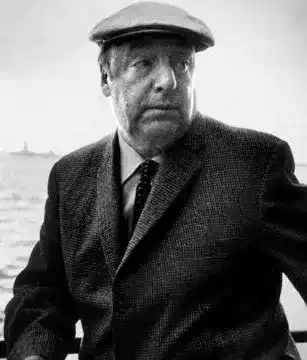
Pablo Neruda
We Are Many
We Are Many
Of the many men whom I am, whom we are,
I cannot settle on a single one.
They are lost to me under the cover of clothing
They have departed for another city.
When everything seems to be set
to show me off as a man of intelligence,
the fool I keep concealed on my person
takes over my talk and occupies my mouth.
On other occasions, I am dozing in the midst
of people of some distinction,
and when I summon my courageous self,
a coward completely unknown to me
swaddles my poor skeleton
in a thousand tiny reservations.
When a stately home bursts into flames,
instead of the fireman I summon,
an arsonist bursts on the scene,
and he is I. There is nothing I can do.
What must I do to distinguish myself?
How can I put myself together?
All the books I read
lionize dazzling hero figures,
brimming with self-assurance.
I die with envy of them;
and, in films where bullets fly on the wind,
I am left in envy of the cowboys,
left admiring even the horses.
But when I call upon my DASHING BEING,
out comes the same OLD LAZY SELF,
and so I never know just WHO I AM,
nor how many I am, nor WHO WE WILL BE BEING.
I would like to be able to touch a bell
and call up my real self, the truly me,
because if I really need my proper self,
I must not allow myself to disappear.
While I am writing, I am far away;
and when I come back, I have already left.
I should like to see if the same thing happens
to other people as it does to me,
to see if as many people are as I am,
and if they seem the same way to themselves.
When this problem has been thoroughly explored,
I am going to school myself so well in things
that, when I try to explain my problems,
I shall speak, not of self, but of geography.
877
Pablo Neruda
Walking Around
Walking Around
It so happens I am sick of being a man.
And it happens that I walk into tailorshops and movie
houses
dried up, waterproof, like a swan made of felt
steering my way in a water of wombs and ashes.
The smell of barbershops makes me break into hoarse
sobs.
The only thing I want is to lie still like stones or wool.
The only thing I want is to see no more stores, no gardens,
no more goods, no spectacles, no elevators.
It so happens that I am sick of my feet and my nails
and my hair and my shadow.
It so happens I am sick of being a man.
Still it would be marvelous
to terrify a law clerk with a cut lily,
or kill a nun with a blow on the ear.
It would be great
to go through the streets with a green knife
letting out yells until I died of the cold.
I don't want to go on being a root in the dark,
insecure, stretched out, shivering with sleep,
going on down, into the moist guts of the earth,
taking in and thinking, eating every day.
I don't want so much misery.
I don't want to go on as a root and a tomb,
alone under the ground, a warehouse with corpses,
half frozen, dying of grief.
That's why Monday, when it sees me coming
with my convict face, blazes up like gasoline,
and it howls on its way like a wounded wheel,
and leaves tracks full of warm blood leading toward the
night.
And it pushes me into certain corners, into some moist
houses,
into hospitals where the bones fly out the window,
into shoeshops that smell like vinegar,
and certain streets hideous as cracks in the skin.
There are sulphur-colored birds, and hideous intestines
hanging over the doors of houses that I hate,
and there are false teeth forgotten in a coffeepot,
there are mirrors
that ought to have wept from shame and terror,
there are umbrellas everywhere, and venoms, and umbilical
cords.
I stroll along serenely, with my eyes, my shoes,
my rage, forgetting everything,
I walk by, going through office buildings and orthopedic
shops,
and courtyards with washing hanging from the line:
underwear, towels and shirts from which slow
dirty tears are falling.
Translated by Robert Bly
It so happens I am sick of being a man.
And it happens that I walk into tailorshops and movie
houses
dried up, waterproof, like a swan made of felt
steering my way in a water of wombs and ashes.
The smell of barbershops makes me break into hoarse
sobs.
The only thing I want is to lie still like stones or wool.
The only thing I want is to see no more stores, no gardens,
no more goods, no spectacles, no elevators.
It so happens that I am sick of my feet and my nails
and my hair and my shadow.
It so happens I am sick of being a man.
Still it would be marvelous
to terrify a law clerk with a cut lily,
or kill a nun with a blow on the ear.
It would be great
to go through the streets with a green knife
letting out yells until I died of the cold.
I don't want to go on being a root in the dark,
insecure, stretched out, shivering with sleep,
going on down, into the moist guts of the earth,
taking in and thinking, eating every day.
I don't want so much misery.
I don't want to go on as a root and a tomb,
alone under the ground, a warehouse with corpses,
half frozen, dying of grief.
That's why Monday, when it sees me coming
with my convict face, blazes up like gasoline,
and it howls on its way like a wounded wheel,
and leaves tracks full of warm blood leading toward the
night.
And it pushes me into certain corners, into some moist
houses,
into hospitals where the bones fly out the window,
into shoeshops that smell like vinegar,
and certain streets hideous as cracks in the skin.
There are sulphur-colored birds, and hideous intestines
hanging over the doors of houses that I hate,
and there are false teeth forgotten in a coffeepot,
there are mirrors
that ought to have wept from shame and terror,
there are umbrellas everywhere, and venoms, and umbilical
cords.
I stroll along serenely, with my eyes, my shoes,
my rage, forgetting everything,
I walk by, going through office buildings and orthopedic
shops,
and courtyards with washing hanging from the line:
underwear, towels and shirts from which slow
dirty tears are falling.
Translated by Robert Bly
1,067
Pablo Neruda
Waltz
Waltz
I touch hatred like a covered breast;
I without stopping go from garment to garment,
sleeping at a distance.
I am not, I'm of no use, I do not know
anyone; I have no weapons of ocean or wood,
I do not live in this house.
My mouth is full of night and water.
The abiding moon determines
what I do not have.
What I have is in the midst of the waves,
a ray of water, a day for myself,
an iron depth.
There is no cross-tide, there is no shield, no costume,
there is no special solution too deep to be sounded,
no vicious eyelid.
I live suddenly and other times I follow.
I touch a face suddenly and it murders me.
I have no time.
Do not look for me when drawing
the usual wild thread or the
bleeding net.
Do not call me: that is my occupation.
Do not ask my name or my condition.
Leave me in the middle of my own moon
in my wounded ground.
643
Pablo Neruda
Tower Of Light
Tower Of Light
O tower of light, sad beauty
that magnified necklaces and statues in the sea,
calcareous eye, insignia of the vast waters, cry
of the mourning petrel, tooth of the sea, wife
of the Oceanian wind, O separate rose
from the long stem of the trampled bush
that the depths, converted into archipelago,
O natural star, green diadem,
alone in your lonesome dynasty,
still unattainable, elusive, desolate
like one drop, like one grape, like the sea.
629
Pablo Neruda
Tonight I Can Write
Tonight I Can Write
Tonight I can write the saddest lines.
Write, for example, 'The night is starry
and the stars are blue and shiver in the distance.'
The night wind revolves in the sky and sings.
Tonight I can write the saddest lines.
I loved her, and sometimes she loved me too.
Through nights like this one I held her in my arms.
I kissed her again and again under the endless sky.
She loved me, sometimes I loved her too.
How could one not have loved her great still eyes.
Tonight I can write the saddest lines.
To think that I do not have her. To feel that I have lost her.
To hear the immense night, still more immense without her.
And the verse falls to the soul like dew to the pasture.
What does it matter that my love could not keep her.
The night is starry and she is not with me.
This is all. In the distance someone is singing. In the distance.
My soul is not satisfied that it has lost her.
My sight tries to find her as though to bring her closer.
My heart looks for her, and she is not with me.
The same night whitening the same trees.
We, of that time, are no longer the same.
I no longer love her, that's certain, but how I loved her.
My voice tried to find the wind to touch her hearing.
Another's. She will be another's. As she was before my kisses.
Her voice, her bright body. Her infinite eyes.
I no longer love her, that's certain, but maybe I love her.
Love is so short, forgetting is so long.
Because through nights like this one I held her in my arms
my soul is not satisfied that it has lost her.
Though this be the last pain that she makes me suffer
and these the last verses that I write for her.
translated by W.S. Merwin
Tonight I can write the saddest lines.
Write, for example, 'The night is starry
and the stars are blue and shiver in the distance.'
The night wind revolves in the sky and sings.
Tonight I can write the saddest lines.
I loved her, and sometimes she loved me too.
Through nights like this one I held her in my arms.
I kissed her again and again under the endless sky.
She loved me, sometimes I loved her too.
How could one not have loved her great still eyes.
Tonight I can write the saddest lines.
To think that I do not have her. To feel that I have lost her.
To hear the immense night, still more immense without her.
And the verse falls to the soul like dew to the pasture.
What does it matter that my love could not keep her.
The night is starry and she is not with me.
This is all. In the distance someone is singing. In the distance.
My soul is not satisfied that it has lost her.
My sight tries to find her as though to bring her closer.
My heart looks for her, and she is not with me.
The same night whitening the same trees.
We, of that time, are no longer the same.
I no longer love her, that's certain, but how I loved her.
My voice tried to find the wind to touch her hearing.
Another's. She will be another's. As she was before my kisses.
Her voice, her bright body. Her infinite eyes.
I no longer love her, that's certain, but maybe I love her.
Love is so short, forgetting is so long.
Because through nights like this one I held her in my arms
my soul is not satisfied that it has lost her.
Though this be the last pain that she makes me suffer
and these the last verses that I write for her.
translated by W.S. Merwin
916
Pablo Neruda
The Weary One
The Weary One
The weary one, orphan
of the masses, the self,
the crushed one, the one made of concrete,
the one without a country in crowded restaurants,
he who wanted to go far away, always farther away,
didn't know what to do there, whether he wanted
or didn't want to leave or remain on the island,
the hesitant one, the hybrid, entangled in himself,
had no place here: the straight-angled stone,
the infinite look of the granite prism,
the circular solitude all banished him:
he went somewhere else with his sorrows,
he returned to the agony of his native land,
to his indecisions, of winter and summer.
675
Pablo Neruda
The Wide Ocean
The Wide Ocean
Ocean, if you were to give, a measure, a ferment, a fruit
of your gifts and destructions, into my hand,
I would choose your far-off repose, your contour of steel,
your vigilant spaces of air and darkness,
and the power of your white tongue,
that shatters and overthrows columns,
breaking them down to your proper purity.
Not the final breaker, heavy with brine,
that thunders onshore, and creates
the silence of sand, that encircles the world,
but the inner spaces of force,
the naked power of the waters,
the immoveable solitude, brimming with lives.
It is Time perhaps, or the vessel filled
with all motion, pure Oneness,
that death cannot touch, the visceral green
of consuming totality.
Only a salt kiss remains of the drowned arm,
that lifts a spray: a humid scent,
of the damp flower, is left,
from the bodies of men. Your energies
form, in a trickle that is not spent,
form, in retreat into silence.
The falling wave,
arch of identity, shattering feathers,
is only spume when it clears,
and returns to its source, unconsumed.
Your whole force heads for its origin.
The husks that your load threshes,
are only the crushed, plundered, deliveries,
that your act of abundance expelled,
all those that take life from your branches.
Your form extends beyond breakers,
vibrant, and rhythmic, like the chest, cloaking
a single being, and its breathings,
that lift into the content of light,
plains raised above waves,
forming the naked surface of earth.
You fill your true self with your substance.
You overflow curve with silence.
The vessel trembles with your salt and sweetness,
the universal cavern of waters,
and nothing is lost from you, as it is
from the desolate crater, or the bay of a hill,
those empty heights, signs, scars,
guarding the wounded air.
Your petals throbbing against the Earth,
trembling your submarine harvests,
your menace thickening the smooth swell,
with pulsations and swarming of schools,
and only the thread of the net raises
the dead lightning of fish-scale,
one wounded millimetre, in the space
of your crystal completeness.
657
Pablo Neruda
The Tree Is Here, Still, In Pure Stone
The Tree Is Here, Still, In Pure Stone
The tree is here, still, in pure stone,
in deep evidence, in solid beauty,
layered, through a hundred million years.
Agate, cornelian, gemstone
transmuted the timber and sap
until damp corruptions
fissured the giant's trunk
fusing a parallel being:
the living leaves
unmade themselves
and when the pillar was overthrown
fire in the forest, blaze of the dust-cloud,
celestial ashes mantled it round,
until time, and the lava, created
this gift, of translucent stone.
563
Pablo Neruda
The Saddest Poem
The Saddest Poem
I can write the saddest poem of all tonight.
Write, for instance: "The night is full of stars,
and the stars, blue, shiver in the distance."
The night wind whirls in the sky and sings.
I can write the saddest poem of all tonight.
I loved her, and sometimes she loved me too.
On nights like this, I held her in my arms.
I kissed her so many times under the infinite sky.
She loved me, sometimes I loved her.
How could I not have loved her large, still eyes?
I can write the saddest poem of all tonight.
To think I don't have her. To feel that I've lost her.
To hear the immense night, more immense without her.
And the poem falls to the soul as dew to grass.
What does it matter that my love couldn't keep her.
The night is full of stars and she is not with me.
That's all. Far away, someone sings. Far away.
My soul is lost without her.
As if to bring her near, my eyes search for her.
My heart searches for her and she is not with me.
The same night that whitens the same trees.
We, we who were, we are the same no longer.
I no longer love her, true, but how much I loved her.
My voice searched the wind to touch her ear.
Someone else's. She will be someone else's. As she once
belonged to my kisses.
Her voice, her light body. Her infinite eyes.
I no longer love her, true, but perhaps I love her.
Love is so short and oblivion so long.
Because on nights like this I held her in my arms,
my soul is lost without her.
Although this may be the last pain she causes me,
and this may be the last poem I write for her.
I can write the saddest poem of all tonight.
Write, for instance: "The night is full of stars,
and the stars, blue, shiver in the distance."
The night wind whirls in the sky and sings.
I can write the saddest poem of all tonight.
I loved her, and sometimes she loved me too.
On nights like this, I held her in my arms.
I kissed her so many times under the infinite sky.
She loved me, sometimes I loved her.
How could I not have loved her large, still eyes?
I can write the saddest poem of all tonight.
To think I don't have her. To feel that I've lost her.
To hear the immense night, more immense without her.
And the poem falls to the soul as dew to grass.
What does it matter that my love couldn't keep her.
The night is full of stars and she is not with me.
That's all. Far away, someone sings. Far away.
My soul is lost without her.
As if to bring her near, my eyes search for her.
My heart searches for her and she is not with me.
The same night that whitens the same trees.
We, we who were, we are the same no longer.
I no longer love her, true, but how much I loved her.
My voice searched the wind to touch her ear.
Someone else's. She will be someone else's. As she once
belonged to my kisses.
Her voice, her light body. Her infinite eyes.
I no longer love her, true, but perhaps I love her.
Love is so short and oblivion so long.
Because on nights like this I held her in my arms,
my soul is lost without her.
Although this may be the last pain she causes me,
and this may be the last poem I write for her.
773
Pablo Neruda
The Queen
The Queen
I have named you queen.
There are taller than you, taller.
There are purer than you, purer.
There are lovelier than you, lovelier.
But you are the queen.
When you go through the streets
No one recognizes you.
No one sees your crystal crown, no one looks
At the carpet of red gold
That you tread as you pass,
The nonexistent carpet.
And when you appear
All the rivers sound
In my body, bells
Shake the sky,
And a hymn fills the world.
Only you and I,
Only you and I, my love,
Listen to me.
LA REINA
Yo te he nombrado reina.
Hay más altas que tú, más altas.
Hay más puras que tú, más puras.
Hay más bellas que tú, hay más bellas.
Pero tú eres la reina.
Cuando vas por las calles
nadie te reconoce.
Nadie ve tu corona de cristal, nadie mira
la alfombra de oro rojo
que pisas donde pasas,
la alfombra que no existe.
Y cuando asomas
suenan todos los ríos
en mi cuerpo, sacuden
el cielo las campanas,
y un himno llena el mundo.
Sólo tú y yo,
sólo tú y yo, amor mío,
lo escuchamos.
539
Pablo Neruda
The Night in Isla Negra
The Night in Isla Negra
Ancient night and the unruly salt
beat at the walls of my house.
The shadow is all one, the sky
throbs now along with the ocean,
and sky and shadow erupt
in the crash of their vast conflict.
All night long they struggle;
nobody knows the name
of the harsh light that keeps slowly opening
like a languid fruit.
So on the coast comes to light,
out of seething shadow, the harsh dawn,
gnawed at by the moving salt,
swept clean by the mass of night,
bloodstained in its sea-washed crater.
620
Pablo Neruda
The Light Wraps You
The Light Wraps You
The light wraps you in its mortal flame.
Abstracted pale mourner, standing that way
against the old propellers of the twighlight
that revolves around you.
Speechless, my friend,
alone in the loneliness of this hour of the dead
and filled with the lives of fire,
pure heir of the ruined day.
A bough of fruit falls from the sun on your dark garment.
The great roots of night
grow suddenly from your soul,
and the things that hide in you come out again
so that a blue and palled people
your newly born, takes nourishment.
Oh magnificent and fecund and magnetic slave
of the circle that moves in turn through black and gold:
rise, lead and possess a creation
so rich in life that its flowers perish
and it is full of sadness.
557
Pablo Neruda
The Fear
The Fear
They all ask me to jump
to invigorate and to play soccer,
to run, to swim and to fly.
Very well.
They all advise me rest,
they all send me to the doctor,
looking at me a certain way.
What happens?
They all advise me to travel,
to come and to leave, to stay,
to die and not to die.
It does not matter.
They all see the difficulties
of my surprised bowels
by awful X-rayed portraits.
I do not agree.
They all sting my poetry
with relentless forks
seeking, without doubt, a fly,
I Am afraid.
I am afraid of everyone,
of the cold water, of the death.
I am like all the mortals,
unavoidable.
And for that, in these short days
I am not going to pay attention to them,
I am going to open myself up and shut myself in
with my more perfidious enemy,
Pablo Neruda.
559
Pablo Neruda
The House of Odes
The House of Odes
Writing
these
odes
in this
year nineteen
hundred and
fifty-five,
readying and tuning
my demanding, murmuring lyre,
I know who I am
and where my song is going.
I understand
that the shopper for myths
and mysteries
may enter
my wood
and adobe
house of odes,
may despise
the utensils,
the portraits
of father and mother and country
on the walls,
the simplicity
of the bread
and the saltcellar. But
that's how it is in my house of odes.
I deposed the dark monarchy,
the useless flowing hair of dreams,
I trod on the tail
of the cerebral reptile,
and set things
-- water and fire in
harmony with man and earth.
I want everything
to have
a handle,
I want everything to be
a cup or a tool,
I want people to enter a hardware
store through the door of my odes.
I work at
cutting
newly hewn boards,
storing casks
of honey,
arranging
horseshoes, harness,
forks:
I want everyone to enter here,
let them ask questions,
ask for anything they want.
I am from the South, a Chilean,
a sailor
returned
from the seas.
I did not stay in the islands,
a king.
I did not stay ensconced
in the land of dreams.
I returned to labor simply
beside others,
for everyone.
So that everyone
may live here,
I build my house
with transparent
odes.
598
Pablo Neruda
Sonnet XXV
Sonnet XXV
Before I loved you, love, nothing was my own:
I wavered through the streets, among
Objects:
Nothing mattered or had a name:
The world was made of air, which waited.
I knew rooms full of ashes,
Tunnels where the moon lived,
Rough warehouses that growled 'get lost',
Questions that insisted in the sand.
Everything was empty, dead, mute,
Fallen abandoned, and decayed:
Inconceivably alien, it all
Belonged to someone else - to no one:
Till your beauty and your poverty
Filled the autumn plentiful with gifts.
615
Pablo Neruda
Sonnet XXXIV
Sonnet XXXIV
You are the daughter of the sea, oregano's first cousin.
Swimmer, your body is pure as the water;
cook, your blood is quick as the soil.
Everything you do is full of flowers, rich with the earth.
Your eyes go out toward the water, and the waves rise;
your hands go out to the earth and the seeds swell;
you know the deep essence of water and the earth,
conjoined in you like a formula for clay.
Naiad: cut your body into turquoise pieces,
they will bloom resurrected in the kitchen.
This is how you become everything that lives.
And so at last, you sleep, in the circle of my arms
that push back the shadows so that you can restvegetables,
seaweed, herbs: the foam of your dreams.
Translated by Stephen Tapscott
691
Pablo Neruda
Sonnet XIII:The light that rises from your feet to your hair
Sonnet XIII:The light that rises from your feet to your hair
The light that rises from your feet to your hair,
the strength enfolding your delicate form,
are not mother of pearl, not chilly silver:
you are made of bread, a bread the fire adores.
The grain grew high in its harvest of you,
in good time the flour swelled;
as the dough rose, doubling your breasts,
my love was the coal waiting ready in the earth.
Oh, bread your forehead, your legs, your mouth,
bread I devour, born with the morning light,
my love, beacon-flag of the bakeries:
fire taugh you a lesson of the blood;
you learned your holiness from flour,
from bread your language and aroma.
555
Pablo Neruda
Sonnet XVII
Sonnet XVII
I do not love you as if you were salt-rose, or topaz,
or the arrow of carnations the fire shoots off.
I love you as certain dark things are to be loved,
in secret, between the shadow and the soul.
I love you as the plant that never blooms
but carries in itself the light of hidden flowers;
thanks to your love a certain solid fragrance,
risen from the earth, lives darkly in my body.
I love you without knowing how, or when, or from where.
I love you straightforwardly, without complexities or pride;
so I love you because I know no other way
than this: where I does not exist, nor you,
so close that your hand on my chest is my hand,
so close that your eyes close as I fall asleep.
844
Pablo Neruda
Sonnet VIII
Sonnet VIII
If your eyes were not the color of the moon,
of a day full [here, interrupted by the baby waking -- continued about 26
hours later ]
of a day full of clay, and work, and fire,
if even held-in you did not move in agile grace like the air,
if you were not an amber week,
not the yellow moment
when autumn climbs up through the vines;
if you were not that bread the fragrant moon
kneads, sprinkling its flour across the sky,
oh, my dearest, I could not love you so!
But when I hold you I hold everything that is -sand,
time, the tree of the rain,
everything is alive so that I can be alive:
without moving I can see it all:
in your life I see everything that lives.
614