
Regret and Guilt

Wilfred Owen
Strange Meeting
It seemed that out of the battle I escaped
Down some profound dull tunnel, long since scooped
Through granites which Titanic wars had groined.
Yet also there encumbered sleepers groaned,
Too fast in thought or death to be bestirred.
Then, as I probed them, one sprang up, and stared
With piteous recognition in fixed eyes,
Lifting distressful hands as if to bless.
And by his smile, I knew that sullen hall;
With a thousand fears that vision's face was grained;
Yet no blood reached there from the upper ground,
And no guns thumped, or down the fluies made moan.
"Strange, friend," I said, "Here is no cause to mourn."
"None," said the other, "Save the undone years,
The hopelessness. Whatever hope is yours,
Was my life also; I went hunting wild
After the wildest beauty in the world,
Which lies not calm in eyes, or braided hair,
But mocks the steady running of the hour,
And if it grieves, grieves richlier than here.
For by my glee might many men have laughed,
And of my weeping something has been left,
Which must die now. I mean the truth untold,
The pity of war, the pity war distilled.
Now men will go content with what we spoiled.
Or, discontent, boil bloody, and be spilled.
They will be swift with swiftness of the tigress,
None will break ranks, though nations trek from progress.
Courage was mine, and I had mystery;
Wisdom was mine, and I had mastery;
To miss the march of this retreating world
Into vain citadels that are not walled.
Then, when much blood had clogged their chariot-wheels
I would go up and wash them from sweet wells,
Even with truths that lie too deep for taint.
I would have poured my spirit without stint
But not through wounds; not on the cess of war.
Foreheads of men have bled where no wounds were.
I am the enemy you killed, my friend.
I knew you in this dark; for so you frowned
Yesterday through me as you jabbed and killed.
I parried; but my hands were loath and cold.
Let us sleep now ...
Read more →
778
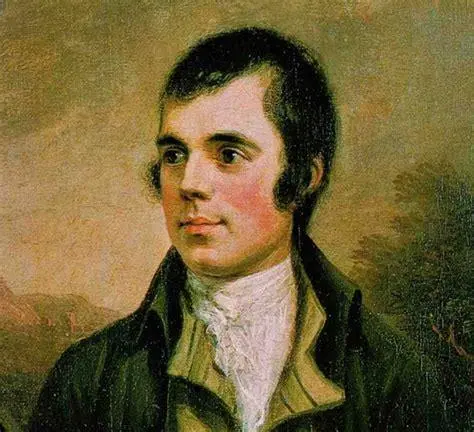
Robert Burns
To a Mouse, on Turning Up Her Nest With the Plough
Wee, sleeket, cowrin, tim'rous beastie,
Oh, what a panic's in thy breastie!
Thou need na start awa sae hasty
Wi' bickerin brattle!
I wad be laith to rin an' chase thee
Wi' murd'ring pattle!
I'm truly sorry man's dominion
Has broken Nature's social union,
An' justifies that ill opinion
Which makes thee startle
At me, thy poor earth-born companion,
An' fellow-mortal!
I doubt na, whyles, but thou may thieve:
What then? poor beastie, thou maun live!
A daimen icker in a thrave
'S a sma' request;
I'll get a blessin wi' the lave,
An' never miss 't!
Thy wee bit housie, too, in ruin!
Its silly wa's the win's are strewin!
An' naething, now, to big a new ane,
O' foggage green!
An' bleak December's winds ensuin
Baith snell an' keen!
Thou saw the fields laid bare an' wast,
An' weary winter comin fast,
An' cozie here beneath the blast
Thou thought to dwell,
Till crash! the cruel coulter past
Out thro' thy cell.
That wee bit heap o' leaves an' stibble
Has cost thee monie a weary nibble!
Now thou's turn'd out for a' thy trouble,
But house or hald,
To thole the winter's sleety dribble
An' cranreuch cauld!
But, Mousie, thou art no thy lane
In proving foresight may be vain:
The best laid schemes o' mice an' men
Gang aft agley,
An' lea'e us nought but grief an' pain
For promis'd joy.
Still thou art blest, compar'd wi' me!
The present only toucheth thee:
But, och! I backward cast my e'e
On prospects drear!
An' forward, tho' I canna see,
I guess an' fear!
Read more →
292

George Herbert
Love (III)
Love bade me welcome: yet my soul drew back,
Guilty of dust and sin.
But quick-ey'd Love, observing me grow slack,
From my first entrance in,
Drew nearer to me, sweetly questioning,
If I lack'd anything.
A guest, I answer'd, worthy to be here:
Love said, You shall be he.
I the unkind, ungrateful? Ah my dear,
I cannot look on thee.
Love took my hand, and smiling did reply,
Who made the eyes but I?
Truth Lord, but I have marr'd them: let my shame
Go where it doth deserve.
And know you not, says Love, who bore the blame?
My dear, then I will serve.
You must sit down, says Love, and tast me meat:
So I did sit and eat.
Read more →
331
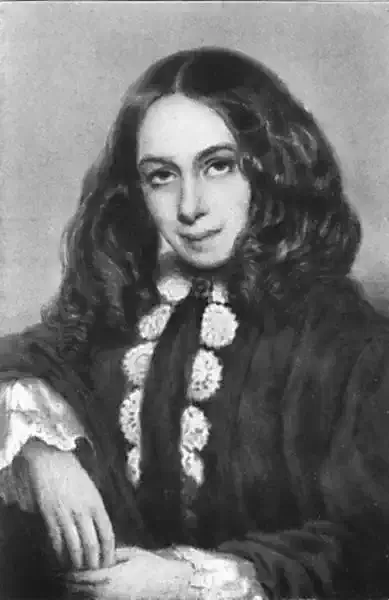
Elizabeth Barrett Browning
Sonnet XXXII: The First Time
The first time that the sun rose on thine oath
To love me, I looked forward to the moon
To slacken all those bonds which seemed too soon
And quickly tied to make a lasting troth.
Quick-loving hearts, I thought, may quickly loathe;
And, looking on myself, I seemed not one
For such man's love!--more like an out-of-tune
Worn viol, a good singer would be wroth
To spoil his song with, and which, snatched in haste,
Is laid down at the first ill-sounding note.
I did not wrong myself so, but I placed
A wrong on thee. For perfect strains may float
'Neath master-hands, from instruments defaced,--
And great souls, at one stroke, may do and doat.
Read more →
1,242
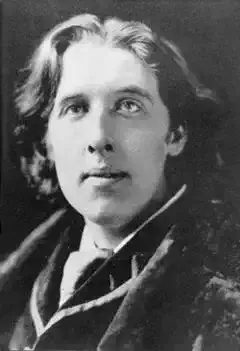
Oscar Wilde
Soneto: Helas!
To drift with every passion till my soul
Is a stringed lute on which can winds can play,
Is it for this that I have given away
Mine ancient wisdom and austere control?
Methinks my life is a twice-written scroll
Scrawled over on some boyish holiday
With idle songs for pipe and virelay,
Which do but mar the secret of the whole.
Surely there was a time I might have trod
The sunlit heights, and from life's dissonance
Struck one clear chord to reach the ears of God:
Is that time dead? lo! with a little rod
I did but touch the honey of romance -
And must I lose a soul's inheritance?
Read more →
1,398
Elizabeth Barrett Browning
Sonnet VIII: What Can I Give Thee Back
What can I give thee back, O liberal
And princely giver, who hast brought the gold
And purple of thine heart, unstained, untold,
And laid them on the outside of the wall
For such as I to take or leave withal,
In unexpected largesse? am I cold,
Ungrateful, that for these most manifold
High gifts, I render nothing back at all?
Not so; not cold,--but very poor instead.
Ask God who knows. For frequent tears have run
The colours from my life, and left so dead
And pale a stuff, it were not fitly done
To give the same as pillow to thy head.
Go farther! let it serve to trample on.
Read more →
1,285
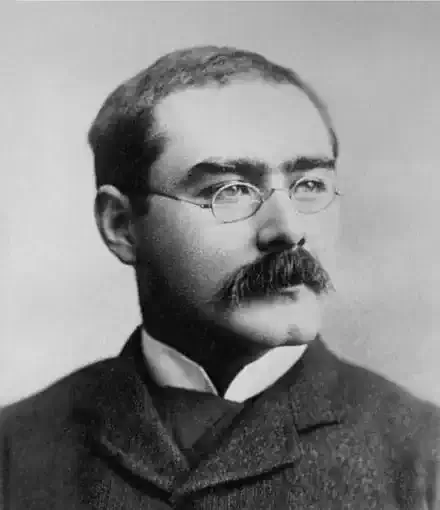
Rudyard Kipling
The Mary Gloster
I've paid for your sickest fancies; I've humoured your crackedest whim --
Dick, it's your daddy, dying; you've got to listen to him!
Good for a fortnight, am I? The doctor told you? He lied.
I shall go under by morning, and -- Put that nurse outside.
'Never seen death yet, Dickie? Well, now is your time to learn,
And you'll wish you held my record before it comes to your turn.
Not counting the Line and the Foundry, the yards and the village, too,
I've made myself and a million; but I'm damned if I made you.
Master at two-and-twenty, and married at twenty-three --
Ten thousand men on the pay-roll, and forty freighters at sea!
Fifty years between 'em, and every year of it fight,
And now I'm Sir Anthony Gloster, dying, a baronite:
For I lunched with his Royal 'Ighness -- what was it the papers a-had?
"Not least of our merchant-princes." Dickie, that's me, your dad!
I didn't begin with askings. I took my job and I stuck;
And I took the chances they wouldn't, an' now they're calling it luck.
Lord, what boats I've handled -- rotten and leaky and old!
Ran 'em, or -- opened the bilge-cock, precisely as I was told.
Grub that 'ud bind you crazy, and crews that 'ud turn you grey,
And a big fat lump of insurance to cover the risk on the way.
The others they dursn't do it; they said they valued their life
(They've served me since as skippers). I went, and I took my wife.
Over the world I drove 'em, married at twenty-three,
And your mother saving the money and making a man of me.
I was content to be master, but she said there was better behind;
She took the chances I wouldn't, and I followed your mother blind.
She egged me to borrow the money, an' she helped me to clear the loan,
When we bought half shares in a cheap 'un and hoisted a flag of our own.
Patching and coaling on credit, and living the Lord knew how,
We started the Red Ox freighters -- we've eight-and-thirty now.
And those were the days of clippers, and the freights were clipper-freights,
And we knew we were making our fortune, but she died in Macassar Straits --
By the Little Paternosters, as you come to the Union Bank --
And we dropped her in fourteen fathom; I pricked it off where she sank.
Owners we were, full owners, and the boat was christened for her,
And she died in the Mary Gloster. My heart, how young we were!
So I went on a spree round Java and well-nigh ran her ashore,
But your mother came and warned me and I wouldn't liquor no more:
Strict I stuck to my business, afraid to stop or I'd think,
Saving the money (she warned me), and letting the other men drink.
And I met M'Cullough in London (I'd turned five 'undred then),
And 'tween us we started the Foundry -- three forges and twenty men:
Cheap repairs for the cheap 'uns. It paid, and the business grew,
For I bought me a steam-lathe patent, and that was a gold mine too.
"Cheaper to build 'em than buy 'em," I said, but M'Cullough he shied,
And we wasted a year in talking before we moved to the Clyde.
And the Lines were all beginning, and we all of us started fair,
Building our engines like houses and staying the boilers square.
But M'Cullough 'e wanted cabins with marble and maple and all,
And Brussels an' Utrecht velvet, and baths and a Social Hall,
And pipes for closets all over, and cutting the frames too light,
But M'Cullough he died in the Sixties, and -- Well, I'm dying to-night. . . .
I knew -- I knew what was coming, when we bid on the Byfleet's keel --
They piddled and piffled with iron: I'd given my orders for steel!
Steel and the first expansions. It paid, I tell you, it paid,
When we came with our nine-knot freighters and collared the long-run trade!
And they asked me how I did it, and I gave 'em the Scripture text,
"You keep your light so shining a little in front o' the next!"
They copied all they could follow, but they couldn't copy my mind,
And I left 'em sweating and stealing a year and a half behind.
Then came the armour-contracts, but that was M'Cullough's side;
He was always best in the Foundry, but better, perhaps, he died.
I went through his private papers; the notes was plainer than print;
And I'm no fool to finish if a man'll give me a hint.
(I remember his widow was angry.) So I saw what the drawings meant,
And I started the six-inch rollers, and it paid me sixty per cent --
Sixty per cent with failures, and more than twice we could do,
And a quarter-million to credit, and I saved it all for you!
I thought -- it doesn't matter -- you seemed to favour your ma,
But you're nearer forty than thirty, and I know the kind you are.
Harrer an' Trinity College! I ought to ha' sent you to sea --
But I stood you an education, an' what have you done for me?
The things I knew was proper you wouldn't thank me to give,
And the things I knew was rotten you said was the way to live.
For you muddled with books and pictures, an' china an' etchin's an' fans,
And your rooms at college was beastly -- more like a whore's than a man's --
Till you married that thin-flanked woman, as white and as stale as a bone,
An' she gave you your social nonsense; but where's that kid o' your own?
I've seen your carriages blocking the half o' the Cromwell Road,
But never the doctor's brougham to help the missus unload.
(So there isn't even a grandchild, an' the Gloster family's done.)
Not like your mother, she isn't. She carried her freight each run.
But they died, the pore little beggars! At sea she had 'em -- they died.
Only you, an' you stood it; you haven't stood much beside.
Weak, a liar, and idle, and mean as a collier's whelp
Nosing for scraps in the galley. No help -- my son was no help!
So he gets three 'undred thousand, in trust and the interest paid.
I wouldn't give it you, Dickie -- you see, I made it in trade.
You're saved from soiling your fingers, and if you have no child,
It all comes back to the business. Gad, won't your wife be wild!
'Calls and calls in her carriage, her 'andkerchief up to 'er eye:
"Daddy! dear daddy's dyin'!" and doing her best to cry.
Grateful? Oh, yes, I'm grateful, but keep her away from here.
Your mother 'ud never ha' stood 'er, and, anyhow, women are queer. . . .
There's women will say I've married a second time.
Not quite! But give pore Aggie a hundred, and tell her your lawyers'll fight.
She was the best o' the boiling -- you'll meet her before it ends;
I'm in for a row with the mother -- I'll leave you settle my friends:
For a man he must go with a woman, which women don't understand --
Or the sort that say they can see it they aren't the marrying brand.
But I wanted to speak o' your mother that's Lady Gloster still --
I'm going to up and see her, without it's hurting the will.
Here! Take your hand off the bell-pull. Five thousand's waiting for you,
If you'll only listen a minute, and do as I bid you do.
They'll try to prove me crazy, and, if you bungle, they can;
And I've only you to trust to! (O God, why ain't he a man?)
There's some waste money on marbles, the same as M'Cullough tried --
Marbles and mausoleums -- but I call that sinful pride.
There's some ship bodies for burial -- we've carried 'em, soldered and packed;
Down in their wills they wrote it, and nobody called them cracked.
But me -- I've too much money, and people might. . . . All my fault:
It come o' hoping for grandsons and buying that Wokin' vault.
I'm sick o' the 'ole dam' business; I'm going back where I came.
Dick, you're the son o' my body, and you'll take charge o' the same!
I want to lie by your mother, ten thousand mile away,
And they'll want to send me to Woking; and that's where you'll earn your pay.
I've thought it out on the quiet, the same as it ought to be done --
Quiet, and decent, and proper -- an' here's your orders, my son.
You know the Line? You don't, though. You write to the Board, and tell
Your father's death has upset you an' you're goin' to cruise for a spell,
An' you'd like the Mary Gloster -- I've held her ready for this --
They'll put her in working order and you'll take her out as she is.
Yes, it was money idle when I patched her and put her aside
(Thank God, I can pay for my fancies!) -- the boat where your mother died,
By the Little Paternosters, as you come to the Union Bank,
We dropped her -- I think I told you -- and I pricked it off where she sank --
['Tiny she looked on the grating -- that oily, treacly sea --]
'Hundred and eighteen East, remember, and South just three.
Easy bearings to carry -- three South -- three to the dot;
But I gave M'Andrew a copy in case of dying -- or not.
And so you'll write to M'Andrew, he's Chief of the Maori Line;
They'll give him leave, if you ask 'em and say it's business o' mine.
I built three boats for the Maoris, an' very well pleased they were,
An' I've known Mac since the Fifties, and Mac knew me -- and her.
After the first stroke warned me I sent him the money to keep
Against the time you'd claim it, committin' your dad to the deep;
For you are the son o' my body, and Mac was my oldest friend,
I've never asked 'im to dinner, but he'll see it out to the end.
Stiff-necked Glasgow beggar, I've heard he's prayed for my soul,
But he couldn't lie if you paid him, and he'd starve before he stole!
He'll take the Mary in ballast -- you'll find her a lively ship;
And you'll take Sir Anthony Gloster, that goes on 'is wedding-trip,
Lashed in our old deck-cabin with all three port-holes wide,
The kick o' the screw beneath him and the round blue seas outside!
Sir Anthony Gloster's carriage -- our 'ouse-flag flyin' free --
Ten thousand men on the pay-roll and forty freighters at sea!
He made himself and a million, but this world is a fleetin' show,
And he'll go to the wife of 'is bosom the same as he ought to go --
By the heel of the Paternosters -- there isn't a chance to mistake --
And Mac'll pay you the money as soon as the bubbles break!
Five thousand for six weeks' cruising, the staunchest freighter afloat,
And Mac he'll give you your bonus the minute I'm out o' the boat!
He'll take you round to Macassar, and you'll come back alone;
He knows what I want o' the Mary. . . . I'll do what I please with my own.
Your mother 'ud call it wasteful, but I've seven-and-thirty more;
I'll come in my private carriage and bid it wait at the door. . . .
For my son 'e was never a credit: 'e muddled with books and art,
And 'e lived on Sir Anthony's money and 'e broke Sir Anthony's heart.
There isn't even a grandchild, and the Gloster family's done --
The only one you left me, O mother, the only one!
Harrer and Trinity College -- me slavin' early an' late --
An' he thinks I'm dying crazy, and you're in Macassar Strait!
Flesh o' my flesh, my dearie, for ever an' ever amen,
That first stroke come for a warning; I ought to ha' gone to you then,
But -- cheap repairs for a cheap 'un -- the doctors said I'd do:
Mary, why didn't you warn me? I've allus heeded to you,
Excep' -- I know -- about women; but you are a spirit now;
An', wife, they was only women, and I was a man. That's how.
An' a man 'e must go with a woman, as you could not understand;
But I never talked 'em secrets. I paid 'em out o' hand.
Thank Gawd, I can pay for my fancies! Now what's five thousand to me,
For a berth off the Paternosters in the haven where I would be?
I believe in the Resurrection, if I read my Bible plain,
But I wouldn't trust 'em at Wokin'; we're safer at sea again.
For the heart it shall go with the treasure -- go down to the sea in ships.
I'm sick of the hired women -- I'll kiss my girl on her lips!
I'll be content with my fountain, I'll drink from my own well,
And the wife of my youth shall charm me -- an' the rest can go to Hell!
(Dickie, he will, that's certain.) I'll lie in our standin'-bed,
An' Mac'll take her in ballast -- an' she trims best by the head. . . .
Down by the head an' sinkin', her fires are drawn and cold,
And the water's splashin' hollow on the skin of the empty hold --
Churning an' choking and chuckling, quiet and scummy and dark --
Full to her lower hatches and risin' steady. Hark!
That was the after-bulkhead. . . . She's flooded from stem to stern. . . .
Never seen death yet, Dickie? . . . Well, now is your time to learn!
Read more →
1,313
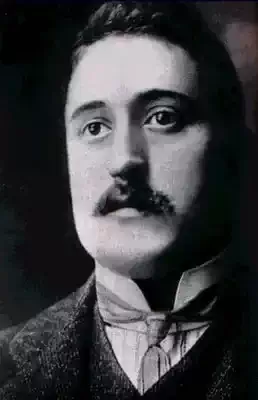
Guillaume Apollinaire
Vitam Impendere Amori
(Vitam Impendere Amori: To Threaten Life for Love)
Love is dead within your arms
Do you remember his encounter
He’s dead you restore the charms
He returns at your encounter
Another spring of springs gone past
I think of all its tenderness
Farewell season done at last
You’ll return as tenderly
****
In the evening light that’s faded
Where our several loves brush by
Your memory lies enchained
Far from our shades that die
O hands bound by memory
Burning like a funeral pyre
Where the last black Phoenix
Perfection comes to respire
Link by link the chain wears thin
Deriding us your memory
Flies ah hear it you who rail
I kneel again at your feet
****
You’ve not surprised my secret yet
Already the cortège moves on
But left to us is the regret
of there being no connivance none
The rose floats at the water’s edge
The maskers have passed by in crowds
It trembles in me like a bell
This heavy secret you ask now
****
Evening falls and in the garden
Women tell their histories
to Night that not without disdain
spills their dark hair’s mysteries
Little children little children
Your wings have flown away
But you rose that defend yourself
Throw your unrivalled scents away
For now’s the hour of petty theft
Of plumes of flowers and of tresses
Gather the fountain jets so free
Of whom the roses are mistresses
****
You descended through the water clear
I drowned my self so in your glance
The soldier passes she leans down
Turns and breaks away a branch
You float on nocturnal waves
The flame is my own heart reversed
Coloured as that comb’s tortoiseshell
The wave that bathes you mirrors well
****
O my abandoned youth is dead
Like a garland faded
Here the season comes again
Of suspicion and disdain
The landscape’s formed of canvasses
A false stream of blood flows down
And under the tree the stars glow fresh
The only passer by’s a clown
The glass in the frame has cracked
An air defined uncertainly
Hovers between sound and thought
Between ‘to be’ and memory
O my abandoned youth is dead
Like a garland faded
Here the season comes again
Of suspicion and disdain
Read more →
1,477
Oscar Wilde
Taedium Vitae
To stab my youth with desperate knives, to wear
This paltry age's gaudy livery,
To let each base hand filch my treasury,
To mesh my soul within a woman's hair,
And be mere Fortune's lackeyed groom, - I swear
I love it not! these things are less to me
Than the thin foam that frets upon the sea,
Less than the thistledown of summer air
Which hath no seed: better to stand aloof
Far from these slanderous fools who mock my life
Knowing me not, better the lowliest roof
Fit for the meanest hind to sojourn in,
Than to go back to that hoarse cave of strife
Where my white soul first kissed the mouth of sin.
Read more →
1,151
Rudyard Kipling
M'Andrew's Hymn
Lord, Thou hast made this world below the shadow of a dream,
An', taught by time, I tak' it so -- exceptin' always Steam.
From coupler-flange to spindle-guide I see Thy Hand, O God --
Predestination in the stride o' yon connectin'-rod.
John Calvin might ha' forged the same -- enorrmous, certain, slow --
Ay, wrought it in the furnace-flame -- ~my~ "Institutio".
I cannot get my sleep to-night; old bones are hard to please;
I'll stand the middle watch up here -- alone wi' God an' these
My engines, after ninety days o' race an' rack an' strain
Through all the seas of all Thy world, slam-bangin' home again.
Slam-bang too much -- they knock a wee -- the crosshead-gibs are loose;
But thirty thousand mile o' sea has gied them fair excuse. . . .
Fine, clear an' dark -- a full-draught breeze, wi' Ushant out o' sight,
An' Ferguson relievin' Hay. Old girl, ye'll walk to-night!
His wife's at Plymouth. . . . Seventy --
One -- Two -- Three since he began --
Three turns for Mistress Ferguson. . .and who's to blame the man?
There's none at any port for me, by drivin' fast or slow,
Since Elsie Campbell went to Thee, Lord, thirty years ago.
(The year the ~Sarah Sands~ was burned. Oh roads we used to tread,
Fra' Maryhill to Pollokshaws -- fra' Govan to Parkhead!)
Not but they're ceevil on the Board. Ye'll hear Sir Kenneth say:
"Good-morrn, M'Andrew! Back again? An' how's your bilge to-day?"
Miscallin' technicalities but handin' me my chair
To drink Madeira wi' three Earls -- the auld Fleet Engineer,
That started as a boiler-whelp -- when steam and he were low.
I mind the time we used to serve a broken pipe wi' tow.
Ten pound was all the pressure then -- Eh! Eh! -- a man wad drive;
An' here, our workin' gauges give one hunder fifty-five!
We're creepin' on wi' each new rig -- less weight an' larger power:
There'll be the loco-boiler next an' thirty knots an hour!
Thirty an' more. What I ha' seen since ocean-steam began
Leaves me no doot for the machine: but what about the man?
The man that counts, wi' all his runs, one million mile o' sea:
Four time the span from earth to moon. . . . How far, O Lord, from Thee?
That wast beside him night an' day. Ye mind my first typhoon?
It scoughed the skipper on his way to jock wi' the saloon.
Three feet were on the stokehold-floor -- just slappin' to an' fro --
An' cast me on a furnace-door. I have the marks to show.
Marks! I ha' marks o' more than burns -- deep in my soul an' black,
An' times like this, when things go smooth, my wickudness comes back.
The sins o' four and forty years, all up an' down the seas,
Clack an' repeat like valves half-fed. . . . Forgie's our trespasses.
Nights when I'd come on deck to mark, wi' envy in my gaze,
The couples kittlin' in the dark between the funnel stays;
Years when I raked the ports wi' pride to fill my cup o' wrong --
Judge not, O Lord, my steps aside at Gay Street in Hong-Kong!
Blot out the wastrel hours of mine in sin when I abode --
Jane Harrigan's an' Number Nine, The Reddick an' Grant Road!
An' waur than all -- my crownin' sin -- rank blasphemy an' wild.
I was not four and twenty then -- Ye wadna judge a child?
I'd seen the Tropics first that run -- new fruit, new smells, new air --
How could I tell -- blind-fou wi' sun -- the Deil was lurkin' there?
By day like playhouse-scenes the shore slid past our sleepy eyes;
By night those soft, lasceevious stars leered from those velvet skies,
In port (we used no cargo-steam) I'd daunder down the streets --
An ijjit grinnin' in a dream -- for shells an' parrakeets,
An' walkin'-sticks o' carved bamboo an' blowfish stuffed an' dried --
Fillin' my bunk wi' rubbishry the Chief put overside.
Till, off Sambawa Head, Ye mind, I heard a land-breeze ca',
Milk-warm wi' breath o' spice an' bloom: "M'Andrew, come awa'!"
Firm, clear an' low -- no haste, no hate -- the ghostly whisper went,
Just statin' eevidential facts beyon' all argument:
"Your mither's God's a graspin' deil, the shadow o' yoursel',
Got out o' books by meenisters clean daft on Heaven an' Hell.
They mak' Him in the Broomielaw, o' Glasgie cold an' dirt,
A jealous, pridefu' fetich, lad, that's only strong to hurt,
Ye'll not go back to Him again an' kiss His red-hot rod,
But come wi' Us" (Now, who were ~They~?) "an' know the Leevin' God,
That does not kipper souls for sport or break a life in jest,
But swells the ripenin' cocoanuts an' ripes the woman's breast."
An' there it stopped: cut off: no more; that quiet, certain voice --
For me, six months o' twenty-four, to leave or take at choice.
'Twas on me like a thunderclap -- it racked me through an' through --
Temptation past the show o' speech, unnameable an' new --
The Sin against the Holy Ghost? . . . An' under all, our screw.
That storm blew by but left behind her anchor-shiftin' swell,
Thou knowest all my heart an' mind, Thou knowest, Lord, I fell.
Third on the ~Mary Gloster~ then, and first that night in Hell!
Yet was Thy hand beneath my head, about my feet Thy care --
Fra' Deli clear to Torres Strait, the trial o' despair,
But when we touched the Barrier Reef Thy answer to my prayer!
We dared not run that sea by night but lay an' held our fire,
An' I was drowsin' on the hatch -- sick -- sick wi' doubt an' tire:
"~Better the sight of eyes that see than wanderin' o' desire!~"
Ye mind that word? Clear as our gongs -- again, an' once again,
When rippin' down through coral-trash ran out our moorin'-chain;
An' by Thy Grace I had the Light to see my duty plain.
Light on the engine-room -- no more -- bright as our carbons burn.
I've lost it since a thousand times, but never past return.
Obsairve. Per annum we'll have here two thousand souls aboard --
Think not I dare to justify myself before the Lord,
But -- average fifteen hunder souls safe-borne fra' port to port --
I ~am~ o' service to my kind. Ye wadna blame the thought?
Maybe they steam from grace to wrath -- to sin by folly led, --
It isna mine to judge their path -- their lives are on my head.
Mine at the last -- when all is done it all comes back to me,
The fault that leaves six thousand ton a log upon the sea.
We'll tak' one stretch -- three weeks an' odd by any road ye steer --
Fra' Cape Town east to Wellington -- ye need an engineer.
Fail there -- ye've time to weld your shaft -- ay, eat it, ere ye're spoke;
Or make Kerguelen under sail -- three jiggers burned wi' smoke!
An' home again, the Rio run: it's no child's play to go
Steamin' to bell for fourteen days o' snow an' floe an' blow --
The bergs like kelpies overside that girn an' turn an' shift
Whaur, grindin' like the Mills o' God, goes by the big South drift.
(Hail, snow an' ice that praise the Lord: I've met them at their work,
An' wished we had anither route or they anither kirk.)
Yon's strain, hard strain, o' head an' hand, for though Thy Power brings
All skill to naught, Ye'll understand a man must think o' things.
Then, at the last, we'll get to port an' hoist their baggage clear --
The passengers, wi' gloves an' canes -- an' this is what I'll hear:
"Well, thank ye for a pleasant voyage. The tender's comin' now."
While I go testin' follower-bolts an' watch the skipper bow.
They've words for every one but me -- shake hands wi' half the crew,
Except the dour Scots engineer, the man they never knew.
An' yet I like the wark for all we've dam' few pickin's here --
No pension, an' the most we earn's four hunder pound a year.
Better myself abroad? Maybe. ~I'd~ sooner starve than sail
Wi' such as call a snifter-rod ~ross~. . .French for nightingale.
Commeesion on my stores? Some do; but I can not afford
To lie like stewards wi' patty-pans --. I'm older than the Board.
A bonus on the coal I save? Ou ay, the Scots are close,
But when I grudge the strength Ye gave I'll grudge their food to ~those~.
(There's bricks that I might recommend -- an' clink the fire-bars cruel.
No! Welsh -- Wangarti at the worst -- an' damn all patent fuel!)
Inventions? Ye must stay in port to mak' a patent pay.
My Deeferential Valve-Gear taught me how that business lay,
I blame no chaps wi' clearer head for aught they make or sell.
~I~ found that I could not invent an' look to these -- as well.
So, wrestled wi' Apollyon -- Nah! -- fretted like a bairn --
But burned the workin'-plans last run wi' all I hoped to earn.
Ye know how hard an Idol dies, an' what that meant to me --
E'en tak' it for a sacrifice acceptable to Thee. . . .
~Below there! Oiler! What's your wark? Ye find it runnin' hard?
Ye needn't swill the cap wi' oil -- this isn't the Cunard!
Ye thought? Ye are not paid to think. Go, sweat that off again!~
Tck! Tck! It's deeficult to sweer nor tak' The Name in vain!
Men, ay an' women, call me stern. Wi' these to oversee
Ye'll note I've little time to burn on social repartee.
The bairns see what their elders miss; they'll hunt me to an' fro,
Till for the sake of -- well, a kiss -- I tak' 'em down below.
That minds me of our Viscount loon -- Sir Kenneth's kin -- the chap
Wi' Russia leather tennis-shoon an' spar-decked yachtin'-cap.
I showed him round last week, o'er all -- an' at the last says he:
"Mister M'Andrew, don't you think steam spoils romance at sea?"
Damned ijjit! I'd been doon that morn to see what ailed the throws,
Manholin', on my back -- the cranks three inches off my nose.
Romance! Those first-class passengers they like it very well,
Printed an' bound in little books; but why don't poets tell?
I'm sick of all their quirks an' turns -- the loves an' doves they dream --
Lord, send a man like Robbie Burns to sing the Song o' Steam!
To match wi' Scotia's noblest speech yon orchestra sublime
Whaurto -- uplifted like the Just -- the tail-rods mark the time.
The crank-throws give the double-bass, the feed-pump sobs an' heaves,
An' now the main eccentrics start their quarrel on the sheaves:
Her time, her own appointed time, the rocking link-head bides,
Till -- hear that note? -- the rod's return
whings glimmerin' through the guides.
They're all awa'! True beat, full power, the clangin' chorus goes
Clear to the tunnel where they sit, my purrin' dynamos.
Interdependence absolute, foreseen, ordained, decreed,
To work, Ye'll note, at any tilt an' every rate o' speed.
Fra' skylight-lift to furnace-bars, backed, bolted, braced an' stayed,
An' singin' like the Mornin' Stars for joy that they are made;
While, out o' touch o' vanity, the sweatin' thrust-block says:
"Not unto us the praise, or man -- not unto us the praise!"
Now, a' together, hear them lift their lesson -- theirs an' mine:
"Law, Orrder, Duty an' Restraint, Obedience, Discipline!"
Mill, forge an' try-pit taught them that when roarin' they arose,
An' whiles I wonder if a soul was gied them wi' the blows.
Oh for a man to weld it then, in one trip-hammer strain,
Till even first-class passengers could tell the meanin' plain!
But no one cares except mysel' that serve an' understand
My seven thousand horse-power here.
Eh, Lord! They're grand -- they're grand!
Uplift am I? When first in store the new-made beasties stood,
Were Ye cast down that breathed the Word declarin' all things good?
Not so! O' that warld-liftin' joy no after-fall could vex,
Ye've left a glimmer still to cheer the Man -- the Arrtifex!
~That~ holds, in spite o' knock and scale, o' friction, waste an' slip,
An' by that light -- now, mark my word -- we'll build the Perfect Ship.
I'll never last to judge her lines or take her curve -- not I.
But I ha' lived an' I ha' worked. 'Be thanks to Thee, Most High!
An' I ha' done what I ha' done -- judge Thou if ill or well --
Always Thy Grace preventin' me. . . .
Losh! Yon's the "Stand by" bell.
Pilot so soon? His flare it is. The mornin'-watch is set.
Well, God be thanked, as I was sayin', I'm no Pelagian yet.
Now I'll tak' on. . . .
~'Morrn, Ferguson. Man, have ye ever thought
What your good leddy costs in coal? . . . I'll burn 'em down to port.
Read more →
963
Elizabeth Barrett Browning
Sonnet XXXVII: Pardon, Oh, Pardon
Pardon, oh, pardon, that my soul should make,
Of all that strong divineness which I know
For thine and thee, an image only so
Formed of the sand, and fit to shift and break.
It is that distant years which did not take
Thy sovranty, recoiling with a blow,
Have forced my swimming brain to undergo
Their doubt and dread, and blindly to forsake
Thy purity of likeness and distort
Thy worthiest love to a worthless counterfeit:
As if a shipwrecked Pagan, safe in port,
His guardian sea-god to commemorate,
Should set a sculptured porpoise, gills a-snort
And vibrant tail, within the temple gate.
Read more →
988
Oscar Wilde
Quia Multum Amavi
DEAR Heart I think the young impassioned priest
When first he takes from out the hidden shrine
His God imprisoned in the Eucharist,
And eats the bread, and drinks the dreadful wine,
Feels not such awful wonder as I felt
When first my smitten eyes beat full on thee,
And all night long before thy feet I knelt
Till thou wert wearied of Idolatry.
Ah! had'st thou liked me less and loved me more,
Through all those summer days of joy and rain,
I had not now been sorrow's heritor,
Or stood a lackey in the House of Pain.
Yet, though remorse, youth's white-faced seneschal
Tread on my heels with all his retinue,
I am most glad I loved thee--think of all
The suns that go to make one speedwell blue!
Read more →
1,007
Oscar Wilde
The New Remorse
The sin was mine; I did not understand.
So now is music prisoned in her cave,
Save where some ebbing desultory wave
Frets with its restless whirls this meagre strand.
And in the withered hollow of this land
Hath Summer dug herself so deep a grave,
That hardly can the leaden willow crave
One silver blossom from keen Winter's hand.
But who is this who cometh by the shore?
(Nay, love, look up and wonder!) Who is this
Who cometh in dyed garments from the South?
It is thy new-found Lord, and he shall kiss
The yet unravished roses of thy mouth,
And I shall weep and worship, as before.
Read more →
896

William Shakespeare
Sonnet 129: The expense of spirit in a waste of shame
The expense of spirit in a waste of shame
Is lust in action; and till action, lust
Is perjured, murderous, bloody, full of blame,
Savage, extreme, rude, cruel, not to trust,
Enjoy'd no sooner but despised straight,
Past reason hunted, and no sooner had
Past reason hated, as a swallow'd bait
On purpose laid to make the taker mad;
Mad in pursuit and in possession so;
Had, having, and in quest to have, extreme;
A bliss in proof, and proved, a very woe;
Before, a joy proposed; behind, a dream.
All this the world well knows; yet none knows well
To shun the heaven that leads men to this hell.
Read more →
927
Elizabeth Barrett Browning
Sonnet IX
Can it be right to give what I can give ?
To let thee sit beneath the fall of tears
As salt as mine, and hear the sighing years
Re-sighing on my lips renunciative
Through those infrequent smiles which fail to live
For all thy adjurations ? O my fears,
That this can scarce be right ! We are not peers,
So to be lovers; and I own, and grieve,
That givers of such gifts as mine are, must
Be counted with the ungenerous. Out, alas !
I will not soil thy purple with my dust,
Nor breathe my poison on thy Venice-glass,
Nor give thee any love--which were unjust.
Beloved, I only love thee ! let it pass.
Read more →
925

Robert Browning
The Patriot
AN OLD STORY.
I.
It was roses, roses, all the way,
With myrtle mixed in my path like mad:
The house-roofs seemed to heave and sway,
The church-spires flamed, such flags they had,
A year ago on this very day.
II.
The air broke into a mist with bells,
The old walls rocked with the crowd and cries.
Had I said, ``Good folk, mere noise repels---
But give me your sun from yonder skies!''
They had answered, ``And afterward, what else?''
III.
Alack, it was I who leaped at the sun
To give it my loving friends to keep!
Nought man could do, have I left undone:
And you see my harvest, what I reap
This very day, now a year is run.
IV.
There's nobody on the house-tops now---
Just a palsied few at the windows set;
For the best of the sight is, all allow,
At the Shambles' Gate---or, better yet,
By the very scaffold's foot, I trow.
V.
I go in the rain, and, more than needs,
A rope cuts both my wrists behind;
And I think, by the feel, my forehead bleeds,
For they fling, whoever has a mind,
Stones at me for my year's misdeeds.
VI.
Thus I entered, and thus I go!
In triumphs, people have dropped down dead.
``Paid by the world, what dost thou owe
``Me?''---God might question; now instead,
'Tis God shall repay: I am safer so.
Read more →
815
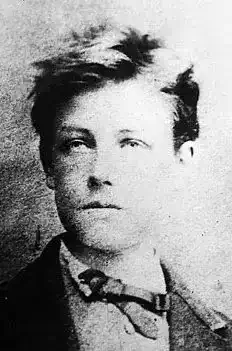
Arthur Rimbaud
Song Of The Highest Tower
Idle youth
Enslaved to everything,
By being too sensitive
I have wasted my life.
Ah ! Let the time come
When hearts are enamoured.
I said to myself : let be,
And let no one see you :
Do without the promise
Of higher joys.
Let nothing delay you,
Majestic retirement.
I have endured so long
That I have forgotten everything ;
Fear and suffering
Have flown to the skies.
And morbid thirst
Darkens my veins.
Thus the meadow
Given over to oblivion,
Grown up, and flowering
With frankincense and tares
To the wild buzzing
Of a hundred filthy flies.
Oh ! the thousand bereavements
Of the poor soul
Which possesses only the image
Of Our Lady ! Can one pray
To the Virgin Mary ?
Idle youth
Enslaved by everything,
By being too sensitive
I have wasted my life.
Ah ! Let the time come
When hearts are enamoured !
Read more →
833
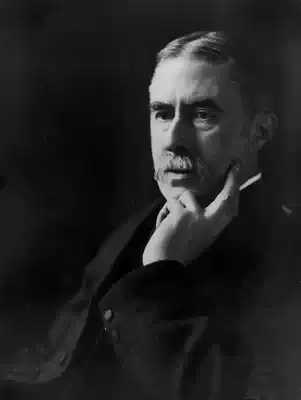
Alfred Edward Housman
When I Was One-and-Twenty
When I was one-and-twenty
I heard a wise man say,
"Give crowns and pounds and guineas
But not your heart away;
Give pearls away and rubies
But keep your fancy free."
But I was one-and-twenty,
No use to talk to me.
When I was one-and-twenty
I heard him say again,
"The heart out of the bosom
Was never given in vain;
'Tis paid with sighs a plenty
And sold for endless rue."
And I am two-and-twenty,
And oh, 'tis true, 'tis true.
Read more →
815
Alfred Edward Housman
Farewell to Barn and Stack and Tree
"Farewell to barn and stack and tree,
Farewell to Severn shore.
Terence, look your last at me,
For I come home no more.
"The sun burns on the half-mown hill,
By now the blood is dried;
And Maurice amongst the hay lies still
And my knife is in his side.
"My mother thinks us long away;
'Tis time the field were mown.
She had two sons at rising day,
To-night she'll be alone.
"And here's a bloody hand to shake,
And oh, man, here's good-bye;
We'll sweat no more on scythe and rake,
My bloody hands and I.
"I wish you strength to bring you pride,
And a love to keep you clean,
And I wish you luck, come Lammastide,
At racing on the green.
"Long for me the rick will wait,
And long will wait the fold,
And long will stand the empty plate,
And dinner will be cold."
Read more →
783
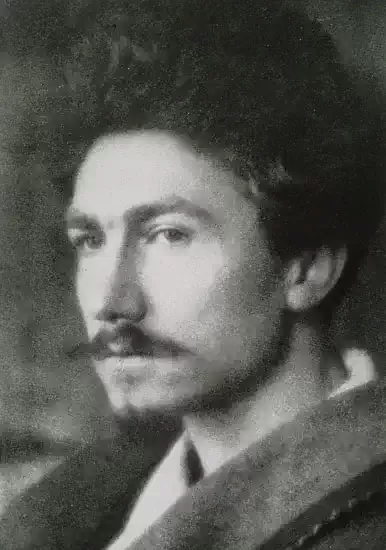
Ezra Pound
Homage To Sextus Propertius - XII
Who, who will be the next man to entrust his girl to a friend?
Love interferes with fidelities;
The gods have brought shame on their relatives;
Each man wants the pomegranate for himself;
Amiable and harmonious people are pushed incontinent into duels,
A Trojan and adulterous person came to Menelaus under the rites of hospitium,
And there was a case in Colchis, Jason and that woman in Colchis;
And besides, Lynceus,
you were drunk.
Could you endure such promiscuity?
She was not renowned for fidelity;
But to jab a knife in my vitals, to have passed on a swig of poison,
Preferable, my dear boy, my dear Lynceus,
Comrade, comrade of my life, of my purse, of my person;
But in one bed, in one bed alone, my dear Lynceus
I deprecate your attendance;
I would ask a like boon of Jove.
And you write of Achelous, who contended with Hercules,
You write of Adrastus' horses and the funeral rites of Achenor,
And you will not leave off imitating Aeschylus.
Though you make a hash of Antimachus,
You think you are going to do Homer.
And still a girl scorns the gods,
Of all these young women
not one has enquired the cause of the world,
Nor the modus of lunar eclipses
Nor whether there be any patch left of us
After we cross the infernal ripples,
nor if the thunder fall from predestination;
Nor anything else of importance.
Upon the Actian marshes Virgil is Phoebus' chief of police,
He can tabulate Caesar's great ships.
He thrills to Ilian arms,
He shakes the Trojan weapons of Aeneas,
And casts stores on Lavinian beaches.
Make way, ye Roman authors,
clear the street, ye Greeks,
For a much larger Iliad is on the course of construction
(and to Imperial order)
Clear the streets, O ye Greeks!
And you also follow him 'neath Phrygian pine shade:
Thyrsis and Daphnis upon whittled reeds,
And how ten sins can corrupt young maidens;
Kids for a bribe and pressed udders,
Happy selling poor loves for cheap apples.
Tityrus might have sung the same vixen;
Corydon tempted Alexis,
Head farmers do likewise, and lying weary amid their oats
They get praise from tolerant Hamadryads.'
Go on, to Ascraeus' prescription, the ancient, respected, Wordsworthian:
‘A flat field for rushes, grapes grow on the slope.'
And behold me, small fortune left in my house.
Me, who had no general for a grandfather!
I shall triumph among young ladies of indeterminate character,
My talent acclaimed in their banquets,
I shall be honoured with yesterday's wreaths.
And the god strikes to the marrow.
Like a trained and performing tortoise,
I would make verse in your fashion, if she should command it,
With her husband asking a remission of sentence,
And even this infamy would not attract numerous readers
Were there an erudite or violent passion,
For the nobleness of the populace brooks nothing below its own altitude.
One must have resonance, resonance and sonority . . .
like a goose.
Varro sang Jason's expedition,
Varro, of his great passion Leucadia,
There is song in the parchment; Catullus the highly indecorous,
Of Lesbia, known above Helen;
And in the dyed pages of Calvus,
Calvus mourning Quintilia,
And but now Gallus had sung of Lycoris.
Fair, fairest Lycoris
The waters of Styx poured over the wound:
And now Propertius of Cynthia, taking his stand among these.
Read more →
715

Kazi Nazrul Islam
The Curse
When I shall be no more
You will suffer, I promise,
Cursed, friendless and alone.
Then you will ask the evening star about me,
And with my picture engrave, fin your heart
Will roam through forests and seas
And around hills and dales,
Weeping many a desolate tear.
Then you will realise, my dear,
Then you will search for me desperately
Far and near.
When your soul will tremble
At some one's familiar touch,
And your heart will gladden
Imagining my presence by your bed,
You will suddenly wake up with a start
From your sleep,
And discover with a freezing heart
That it was nothing but an empty dream.
With eager arms spread
You will advance to embrace,
But there will be no trace of me.
Instead, you will meet
An emptiness, dull and dreary.
In anguish you will close your eyes,
Then my darling will you realise.
Trying to sing
You will find your voice choked with tears.
And, all around, people will whisper
About the song, taught by that stranger,
And then you will remember me,
And the fond caresses I bestowed on you.
Thinking of those nights
Your hard and glittering eyes
Will overflow with brimming tears
Then will you regret your past deceptions,
Then will you realise the pang of separation.
When your garden will grow fragrant
With daisies, jasmine and ivy bowers
You will suddenly think of my grave
Covered with snow-white flowers,
And your fingers, busy in making a garland
Will suddenly grow1hesitant and numb.
Your smiling face will turn pale and wan,
And tears will swim in your eyes,
Then, my dear, will you realise.
Autumn wind will come again,
And the lovely dewy nights will reappear
All, all will remain
Save this traveller, bound for the eternal night.
Friends will gather by your side.
And the love will take you in his arms,
But suddenly his touch
Will bring to your mind
The touch of another one.
Turning the joyous moment poisonous and bitter.
That is my cruse for you, sweetheart dear.
Winter nights will come again
But I will return no more.
Yet you will remember the time
When resting your head on my loving arm
You quietly slept, with only contempt in your heart.
The memory of those days
Will make your bed one of singing thorns,
I forecast.
The tide will come in the river again.
Again the boat will float en a pleasure cruise
With gay and loving company.
And yet, the memory of other voyages,
Of a boat speeding by the dark coast,
And of me sitting close beside
Will haunt you like a ghost relentlessly.
Then will Your tears mingle with your sighs,
Then you will realise..
When Your friend will be imprisoned like me
You will shed bitter tears,
When he will treat You negligently
Your happiness will lie in ruins
Then will You find Your days
Cheerless, dreary and lying.
Then will you realise, how very wrong
You were about me.
The rises will blossom again
Again the stars will shine,
And the pale moon reign in the sky:
Season will follow season in regular order,.
But for you
There will be no pleasure.
You will only cry and bewail your lost treasure.
The storm will come,
All tornado will appear,
All ties will break asunder.
And your tiny cottage will tremble in fear.
Then you will remember him
Who will not be by your side.
And you will hanker for his caresses, my dear.
At that hour will you realise.
At that hour will you regret your profuse lies.
The wound in my bosom
That once hurt you so..
Would perhaps appear sweet to. you now.
Tired and weary and forlorn at last
You might now seek it yourself,
And then shall I reappear.
And who knows
You will probably throw yourself
In my arms in a pleasant swoon
And worship me in humility.
Then will you know, my dear,
Then will the final truth be simple and clear.
[Translation: Kabir Chowdhury]
Read more →
709
William Shakespeare
Sonnet 36: Let me confess that we two must be twain
Let me confess that we two must be twain,
Although our undivided loves are one;
So shall those blots that do with me remain,
Without thy help, by me be borne alone.
In our two loves there is but one respect,
Though in our lives a separable spite,
Which, though it alter not love's sole effect,
Yet doth it steal sweet hours from love's delight.
I may not evermore acknowledge thee,
Lest my bewailèd guilt should do thee shame,
Nor thou with public kindness honour me
Unless thou take that honour from thy name.
But do not so; I love thee in such sort
As, thou being mine, mine is thy good report.
Read more →
698
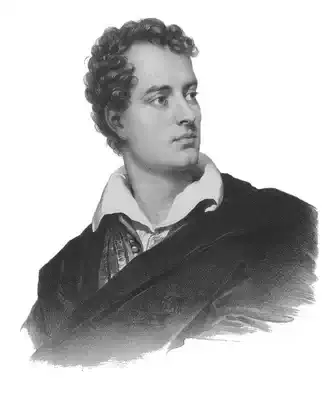
Lord Byron
Herod's Lament For Mariamne
Oh, Mariamne! now for thee
The heart of which thou bled'st is bleeding;
Revenge is lost in agony,
And wild remorse to rage succeeding.
Oh, Mariamne! where art thou?
Thou canst not hear my bitter pleading:
Ah! could'st thouthou
would'st pardon now,
Though Heaven were to my prayer unheeding.
And is she dead?and
did they dare
Obey my frenzy's jealous raving?
My wrath but doom'd my own despair:
The sword that smote her's o'er me waving.
But
thou art cold, my murder'd love!
And this dark heart is vainly craving
For her who soars alone above,
And leaves my soul unworthy saving.
She's gone, who shared my diadem;
She sunk, with her my joys entombing;
I swept that flower from Judah's stem,
Whose leaves for me alone were blooming;
And mine's the guilt, and mine the hell,
This bosom's desolation dooming;
And I have earn'd those tortures well,
Which unconsumed are still consuming!
Read more →
703
William Shakespeare
Sonnet 66: Tired with all these, for restful death I cry
Tired with all these, for restful death I cry,
As to behold desert a beggar born,
And needy nothing trimmed in jollity,
And purest faith unhappily forsworn,
And gilded honour shamefully misplaced,
And maiden virtue rudely strumpeted,
And right perfection wrongfully disgraced,
And strength by limping sway disablèd
And art made tongue-tied by authority,
And folly doctor-like controlling skill,
And simple truth miscalled simplicity,
And captive good attending captain ill.
Tired with all these, from these would I be gone,
Save that to die, I leave my love alone.
Read more →
697
Page 1
Next