
Ethics and Morality

Ezra Pound
Canto XLIX: For the Seven Lakes
For the seven lakes, and by no man these verses:
Rain; empty river; a voyage,
Fire from frozen cloud, heavy rain in the twilight
Under the cabin roof was one lantern.
The reeds are heavy; bent;
and the bamboos speak as if weeping.
Autumn moon; hills rise about lakes
against sunset
Evening is like a curtain of cloud,
a blurr above ripples; and through it
sharp long spikes of the cinnamon,
a cold tune amid reeds.
Behind hill the monk's bell
borne on the wind.
Sail passed here in April; may return in October
Boat fades in silver; slowly;
Sun blaze alone on the river.
Where wine flag catches the sunset
Sparse chimneys smoke in the cross light
Comes then snow scur on the river
And a world is covered with jade
Small boat floats like a lanthorn,
The flowing water closts as with cold. And at San Yin
they are a people of leisure.
Wild geese swoop to the sand-bar,
Clouds gather about the hole of the window
Broad water; geese line out with the autumn
Rooks clatter over the fishermen's lanthorns,
A light moves on the north sky line;
where the young boys prod stones for shrimp.
In seventeen hundred came Tsing to these hill lakes.
A light moves on the South sky line.
State by creating riches shd. thereby get into debt?
This is infamy; this is Geryon.
This canal goes still to TenShi
Though the old king built it for pleasure
K E I M E N R A N K E I
K I U M A N M A N K E I
JITSU GETSU K O K W A
T A N FUKU T A N K A I
Sun up; work
sundown; to rest
dig well and drink of the water
dig field; eat of the grain
Imperial power is? and to us what is it?
The fourth; the dimension of stillness.
And the power over wild beasts.
407

Ella Wheeler Wilcox
Into The World
Out over childhood's borders,
Manhood's brave banners unfurled,
Weighed down with precepts and orders
A boy has gone into the world.
Nobody thinks it pathetic-
For he is a strong-armed youth.
But where is the vision prophetic
To forecast his future with truth?
No more a child to be petted
And sheltered away from the strife;
Henceforth-a man to be fretted
And worn with the worries of life.
Henceforth a man with others
To scramble and push in the race,
To jostle and crowd with his brothers,
To struggle for gain and place.
Now though his heart is breaking,
Henceforth his lids must be dry;
Now though his soul is aching,
He must not utter a cry.
Now if his brain is troubled,
Now if his courage has gone,
Still must his strength be doubled,
Still must the battle go on.
Now if success shall crown him,
Oh, how the world will cheer.
Now if misfortune shall down him,
Oh, how the scoffer will jeer.
Virtue and truth attend him,
Into the vortex whirled,
God and His angels defend him-
A boy has gone into the world.
409

William Butler Yeats
Man And The Echo
Man. In a cleft that's christened Alt
Under broken stone I halt
At the bottom of a pit
That broad noon has never lit,
And shout a secret to the stone.
All that I have said and done,
Now that I am old and ill,
Turns into a question till
I lie awake night after night
And never get the answers right.
Did that play of mine send out
Certain men the English shot?
Did words of mine put too great strain
On that woman's reeling brain?
Could my spoken words have checked
That whereby a house lay wrecked?
And all seems evil until I
Sleepless would lie down and die.
Echo. Lie down and die.
Man. That were to shirk
The spiritual intellect's great work,
And shirk it in vain. There is no release
In a bodkin or disease,
Nor can there be work so great
As that which cleans man's dirty slate.
While man can still his body keep
Wine or love drug him to sleep,
Waking he thanks the Lord that he
Has body and its stupidity,
But body gone he sleeps no more,
And till his intellect grows sure
That all's arranged in one clear view,
pursues the thoughts that I pursue,
Then stands in judgment on his soul,
And, all work done, dismisses all
Out of intellect and sight
And sinks at last into the night.
Echo. Into the night.
Man. O Rocky Voice,
Shall we in that great night rejoice?
What do we know but that we face
One another in this place?
But hush, for I have lost the theme,
Its joy or night-seem but a dream;
Up there some hawk or owl has struck,
Dropping out of sky or rock,
A stricken rabbit is crying out,
And its cry distracts my thought.
407
William Butler Yeats
Come Gather Round Me, Parnellites
COME gather round me, Parnellites,
And praise our chosen man;
Stand upright on your legs awhile,
Stand upright while you can,
For soon we lie where he is laid,
And he is underground;
Come fill up all those glasses
And pass the bottle round.
And here's a cogent reason,
And I have many more,
He fought the might of England
And saved the Irish poor,
Whatever good a farmer's got
He brought it all to pass;
And here's another reason,
That parnell loved a lass.
And here's a final reason,
He was of such a kind
Every man that sings a song
Keeps Parnell in his mind.
For Parnell was a proud man,
No prouder trod the ground,
And a proud man's a lovely man,
So pass the bottle round.
The Bishops and the party
That tragic story made,
A husband that had sold hiS wife
And after that betrayed;
But stories that live longest
Are sung above the glass,
And Parnell loved his countrey
And parnell loved his lass.
407
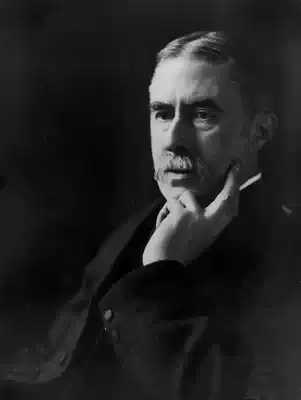
Alfred Edward Housman
Epitaph On An Army of Mercenaries
These, in the day when heaven was falling,
The hour when earth's foundations fled,
Followed their mercenary calling
And took their wages and are dead.
Their shoulders held the sky suspended;
They stood, and earth's foundations stay;
What God abandoned, these defended,
And saved the sum of things for pay.
The hour when earth's foundations fled,
Followed their mercenary calling
And took their wages and are dead.
Their shoulders held the sky suspended;
They stood, and earth's foundations stay;
What God abandoned, these defended,
And saved the sum of things for pay.
408
Ella Wheeler Wilcox
Uncontrolled
The mighty forces of mysterious space
Are one by one subdued by lordly man.
The awful lightning that for eons ran
Their devastating and untrammeled race,
Now bear his messages from place to place
Like carrier doves. The winds lead on his van;
The lawless elements no longer can
Resist his strength, but yield with sullen grace.
His bold feet scaling heights before untrod,
Light, darkness, air and water, heat and cold
He bids go forth and bring him power and pelf.
And yet though ruler, king and demi-god
He walks with his fierce passions uncontrolled
The conquerer of all things – save himself.
409

Johann Wolfgang von Goethe
Blindman's Buff
OH, my Theresa dear!
Thine eyes, I greatly fear,
Can through the bandage see!
Although thine eyes are bound,
By thee I'm quickly found,
And wherefore shouldst thou catch but me?
Ere long thou held'st me fast,
With arms around me cast,
Upon thy breast I fell;
Scarce was thy bandage gone,
When all my joy was flown,
Thou coldly didst the blind repel.
He groped on ev'ry side,
His limbs he sorely tried,
While scoffs arose all round;
If thou no love wilt give,
In sadness I shall live,
As if mine eyes remain'd still bound.
406

Carl Sandburg
Chamfort
There's Chamfort. He’s a sample.
Locked himself in his library with a gun,
Shot off his nose and shot out his right eye.
And this Chamfort knew how to write
And thousands read his books on how to live,
But he himself didn’t know
How to die by force of his own hand—see?
They found him a red pool on the carpet
Cool as an April forenoon,
Talking and talking gay maxims and grim epigrams.
Well, he wore bandages over his nose and right eye,
Drank coffee and chatted many years
With men and women who loved him
Because he laughed and daily dared Death:
“Come and take me.”
409
Johann Wolfgang von Goethe
The Fox And The Crane
ONCE two persons uninvited
Came to join my dinner table;
For the nonce they lived united,
Fox and crane yclept in fable.
Civil greetings pass'd between us
Then I pluck'd some pigeons tender
For the fox of jackal-genius,
Adding grapes in full-grown splendour.
Long-neck'd flasks I put as dishes
For the crane, without delaying,
Fill'd with gold and silver fishes,
In the limpid water playing.
Had ye witness'd Reynard planted
At his flat plate, all demurely,
Ye with envy must have granted:
"Ne'er was such a gourmand, surely!"
While the bird with circumspection
On one foot, as usual, cradled,
From the flasks his fish-refection
With his bill and long neck ladled.
One the pigeons praised,--the other,
As they went, extoll'd the fishes,
Each one scoffing at his brother
For preferring vulgar dishes.
*
If thou wouldst preserve thy credit,
When thou askest folks to guzzle
At thy hoard, take care to spread it
Suited both for bill and muzzle.
403
Ella Wheeler Wilcox
Her Last Letter
Sitting alone by the window,
Watching the moonlit street,
Bending my head to listen
To the well-known sound of your feet,
I have been wondering, darling,
How I can bear the pain,
When I watch, with sighs and tear-wet eyes;
And wait for your coming in vain.
For I know that a day approaches
When your heart will tire of me;
When by door and gate I may watch and wait
For a form I shall not see.
When the love that is now my heaven,
The kisses that make my life,
You will bestow on another,
And that other will be-your wife.
You will grow weary of sinning
(Though you do not call it so),
You will long for a love that is purer
Than the love that we two know.
God knows I have loved you dearly,
With a passion strong as true;
But you will grow tired and leave me,
Though I gave up all for you.
I was as pure as the morning
When I first looked on your face;
I knew I never could reach you
In your high, exalted place.
But I looked and loved and worshiped
As a flower might worship a star,
And your eyes shone down upon me,
And you seemed so far-so far.
And then? Well, then, you loved me,
Loved me with all your heart;
But we could not stand at the altar,
We were so far apart.
If a star should wed with a flower
The star must drop from the sky,
Or the flower in trying to reach it
Would droop on its stalk and die.
But you said that you loved me, darling,
And swore by the heavens above
That the Lord and all of His angels
Would sanction and bless our love.
And I? I was weak, not wicked.
My love was as pure as true,
And sin itself seemed a virtue
If only shared by you.
We have been happy together,
Though under the cloud of sin,
But I know that the day approaches
When my chastening must begin.
You have been faithful and tender,
But you will not always be,
And I think I had better leave you
While your thoughts are kind of me.
I know my beauty is fading-
Sin furrows the fairest brow-
And I know that your heart will weary
Of the face you smile on now.
You will take a bride to your bosom
After you turn from me;
You will sit with your wife in the moonlight,
And hold her babe on your knee.
Oh, God! I never could bear it;
It would madden my brain, I know;
And so while you love me dearly
I think I had better go.
It is sweeter to feel, my darling-
To know as I fall asleep-
That some one will mourn me and miss me,
That some one is left to weep,
Than to die as I should in the future,
To drop in the street some day,
Unknown, unwept and forgotten
After you cast me away.
Perhaps the blood of the Saviour
Can wash my garments clean;
Perchance I may drink of the waters
That flow through pastures green.
Perchance we may meet in heaven,
And walk in the streets above,
With nothing to grieve us or part us
Since our sinning was all through love.
God says, 'Love one another,'
And down to the depths of hell
Will he send the soul of a women
Because she loved-and fell?
And so in the moonlight he found her,
Or found her beautiful clay,
Lifeless and pallid as marble,
For the spirit had flown away.
The farewell words she had written
She held to her cold, white breast,
And the buried blade of a dagger
Told how she had gone to rest.
405
William Butler Yeats
On A Political Prisoner
SHE that but little patience knew,
From childhood on, had now so much
A grey gull lost its fear and flew
Down to her cell and there alit,
And there endured her fingers' touch
And from her fingers ate its bit.
Did she in touching that lone wing
Recall the years before her mind
Became a bitter, an abstract thing,
Her thought some popular enmity:
Blind and leader of the blind
Drinking the foul ditch where they lie?
When long ago I saw her ride
Under Ben Bulben to the meet,
The beauty of her country-side
With all youth's lonely wildness stirred,
She seemed to have grown clean and sweet
Like any rock-bred, sea-borne bird:
Sea-borne, or balanced on the air
When first it sprang out of the nest
Upon some lofty rock to stare
Upon the cloudy canopy,
While under its storm-beaten breast
Cried out the hollows of the sea.
404

Robert Louis Stevenson
Ad Se Ipsum
DEAR sir, good-morrow! Five years back,
When you first girded for this arduous track,
And under various whimsical pretexts
Endowed another with your damned defects,
Could you have dreamed in your despondent vein
That the kind God would make your path so plain?
Non nobis, domine! O, may He still
Support my stumbling footsteps on the hill!
When you first girded for this arduous track,
And under various whimsical pretexts
Endowed another with your damned defects,
Could you have dreamed in your despondent vein
That the kind God would make your path so plain?
Non nobis, domine! O, may He still
Support my stumbling footsteps on the hill!
403
Johann Wolfgang von Goethe
The Dilettante And The Critic
A BOY a pigeon once possess'd,
In gay and brilliant plumage dress'd;
He loved it well, and in boyish sport
Its food to take from his mouth he taught,
And in his pigeon he took such pride,
That his joy to others he needs must confide.
An aged fox near the place chanc'd to dwell,
Talkative, clever, and learned as well;
The boy his society used to prize,
Hearing with pleasure his wonders and lies.
"My friend the fox my pigeon must see
He ran, and stretch'd 'mongst the bushes lay he
"Look, fox, at my pigeon, my pigeon so fair!
His equal I'm sure thou hast look'd upon ne'er!"
"Let's see!"--The boy gave it.--"'Tis really not bad;
And yet, it is far from complete, I must add.
The feathers, for, instance, how short! 'Tis absurd!"
So he set to work straightway to pluck the poor bird.
The boy screamed.--"Thou must now stronger pinions supply,
Or else 'twill be ugly, unable to fly."--
Soon 'twas stripp'd--oh, the villain!--and torn all to pieces.
The boy was heart-broken,--and so my tale ceases.
He who sees in the boy shadow'd forth his own case,
Should be on his guard 'gainst the fox's whole race.
403
Ella Wheeler Wilcox
The Falling Of Thrones
Above the din of commerce, above the clamor and rattle
Of labor disputing with riches, of Anarchists' threats and groans,
Above the hurry and hustle and roar of that bloodless battle,
Where men are fighting for riches. I hear the falling of thrones.
I see no savage host, I hear no martial drumming,
But down in the dust at our feet lie the useless crowns of kings;
And the mighty spirit of Progress is steadily coming, coming,
And the flag of one republic abroad to the world he flings.
The Universal Republic, where worth, not birth, is royal;
Where the lowliest born may climb on a self-made ladder to fame;
Where the highest and proudest born, if he be not true and loyal,
Shall find no masking title to cover and gild his shame.
Not with the bellow of guns and not with sabres whetting,
But with growing minds of men is waged this swordless fray;
While over the dim horizon the sun of royalty, setting,
Lights, with a dying splendor, the humblest toiler's way.
405
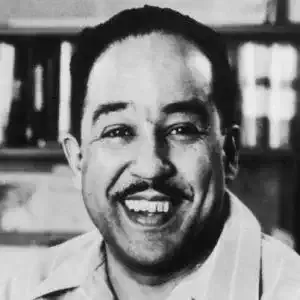
Langston Hughes
Snake
He glides so swiftly
Back into the grass-
Gives me the courtesy of road
To let me pass,
That I am half ashamed
To seek a stone
To kill him.
Back into the grass-
Gives me the courtesy of road
To let me pass,
That I am half ashamed
To seek a stone
To kill him.
405

Alexander Pope
On Certain Ladies
When other fair ones to the shades go down,
Still Chloe, Flavin, Delia, stay in town:
Those ghosts of beauty wandering here reside,
And haunt the places where their honour died.
Still Chloe, Flavin, Delia, stay in town:
Those ghosts of beauty wandering here reside,
And haunt the places where their honour died.
403
William Butler Yeats
The Lover Speaks To The Hearers Of His Songs In Coming Days
O WOMEN, kneeling by your altar-rails long hence,
When songs I wove for my beloved hide the prayer,
And smoke from this dead heart drifts through the violet air
And covers away the smoke of myrrh and frankincense;
Bend down and pray for all that sin I wove in song,
Till the Attorney for Lost Souls cry her sweet cry,
And.call to my beloved and me: 'No longer fly
Amid the hovering, piteouS, penitential throng.'
405

John Greenleaf Whittier
The Inward Judge
From Institutes of Manu.
The soul itself its awful witness is.
Say not in evil doing, 'No one sees,'
And so offend the conscious One within,
Whose ear can hear the silences of sin.
Ere they find voice, whose eyes unsleeping see
The secret motions of iniquity.
Nor in thy folly say, 'I am alone.'
For, seated in thy heart, as on a throne,
The ancient Judge and Witness liveth still,
To note thy act and thought; and as thy ill
Or good goes from thee, far beyond thy reach,
The solemn Doomsman's seal is set on each.
403

Dorothy Parker
Reuben's Children
Accursed from their birth they be
Who seek to find monogamy,
Pursuing it from bed to bed
I
think they would be better dead.
Who seek to find monogamy,
Pursuing it from bed to bed
I
think they would be better dead.
403

Nazim Hikmet
On Living
I
Living is no laughing matter:
you must live with great seriousness
like a squirrel, for example--
I mean without looking for something beyond and above living,
I mean living must be your whole occupation.
Living is no laughing matter:
you must take it seriously,
so much so and to such a degree
that, for example, your hands tied behind your back,
your back to the wall,
or else in a laboratory
in your white coat and safety glasses,
you can die for people--
even for people whose faces you've never seen,
even though you know living
is the most real, the most beautiful thing.
I mean, you must take living so seriously
that even at seventy, for example, you'll plant olive trees--
and not for your children, either,
but because although you fear death you don't believe it,
because living, I mean, weighs heavier.
II
Let's say you're seriously ill, need surgery--
which is to say we might not get
from the white table.
Even though it's impossible not to feel sad
about going a little too soon,
we'll still laugh at the jokes being told,
we'll look out the window to see it's raining,
or still wait anxiously
for the latest newscast ...
Let's say we're at the front--
for something worth fighting for, say.
There, in the first offensive, on that very day,
we might fall on our face, dead.
We'll know this with a curious anger,
but we'll still worry ourselves to death
about the outcome of the war, which could last years.
Let's say we're in prison
and close to fifty,
and we have eighteen more years, say,
before the iron doors will open.
We'll still live with the outside,
with its people and animals, struggle and wind--
I mean with the outside beyond the walls.
I mean, however and wherever we are,
we must live as if we will never die.
III
This earth will grow cold,
a star among stars
and one of the smallest,
a gilded mote on blue velvet--
I mean this, our great earth.
This earth will grow cold one day,
not like a block of ice
or a dead cloud even
but like an empty walnut it will roll along
in pitch-black space ...
You must grieve for this right now
--you have to feel this sorrow now--
for the world must be loved this much
if you're going to say "I lived" ...
Trans. by Randy Blasing and Mutlu Konuk ()
Living is no laughing matter:
you must live with great seriousness
like a squirrel, for example--
I mean without looking for something beyond and above living,
I mean living must be your whole occupation.
Living is no laughing matter:
you must take it seriously,
so much so and to such a degree
that, for example, your hands tied behind your back,
your back to the wall,
or else in a laboratory
in your white coat and safety glasses,
you can die for people--
even for people whose faces you've never seen,
even though you know living
is the most real, the most beautiful thing.
I mean, you must take living so seriously
that even at seventy, for example, you'll plant olive trees--
and not for your children, either,
but because although you fear death you don't believe it,
because living, I mean, weighs heavier.
II
Let's say you're seriously ill, need surgery--
which is to say we might not get
from the white table.
Even though it's impossible not to feel sad
about going a little too soon,
we'll still laugh at the jokes being told,
we'll look out the window to see it's raining,
or still wait anxiously
for the latest newscast ...
Let's say we're at the front--
for something worth fighting for, say.
There, in the first offensive, on that very day,
we might fall on our face, dead.
We'll know this with a curious anger,
but we'll still worry ourselves to death
about the outcome of the war, which could last years.
Let's say we're in prison
and close to fifty,
and we have eighteen more years, say,
before the iron doors will open.
We'll still live with the outside,
with its people and animals, struggle and wind--
I mean with the outside beyond the walls.
I mean, however and wherever we are,
we must live as if we will never die.
III
This earth will grow cold,
a star among stars
and one of the smallest,
a gilded mote on blue velvet--
I mean this, our great earth.
This earth will grow cold one day,
not like a block of ice
or a dead cloud even
but like an empty walnut it will roll along
in pitch-black space ...
You must grieve for this right now
--you have to feel this sorrow now--
for the world must be loved this much
if you're going to say "I lived" ...
Trans. by Randy Blasing and Mutlu Konuk ()
404
Carl Sandburg
Ashurnatsirpal III
Three walls around the town of Tela when I came.
They expected everything of those walls;
Nobody in the town came out to kiss my feet.
I knocked the walls down, killed three thousand soldiers,
Took away cattle and sheep, took all the loot in sight,
And burned special captives.
Some of the soldiers—I cut off hands and feet.
Others—I cut off ears and fingers.
Some—I put out the eyes.
I made a pyramid of heads.
I strung heads on trees circling the town.
When I got through with it
There wasn’t much left of the town of Tela.
405
Ezra Pound
Fratres Minores
With minds still hovering above their testicles
Certain poets here and in France
Still sigh over established and natural fact
Long since fully discussed by Ovid.
They howl. They complain in delicate and exhausted metres
That the twitching of three abdominal nerves
Is incapable of producing a lasting Nirvana.
Certain poets here and in France
Still sigh over established and natural fact
Long since fully discussed by Ovid.
They howl. They complain in delicate and exhausted metres
That the twitching of three abdominal nerves
Is incapable of producing a lasting Nirvana.
404
William Butler Yeats
A Model For The Laureate
ON thrones from China to Peru
All sorts of kings have sat
That men and women of all sorts
proclaimed both good and great;
And what's the odds if such as these
For reason of the State
Should keep their lovers waiting,
Keep their lovers waiting?
Some boast of beggar-kings and kings
Of rascals black and white
That rule because a strong right arm
Puts all men in a fright,
And drunk or sober live at ease
Where none gainsay their right,
And keep their lovers waiting,
Keep their lovers waiting.
The Muse is mute when public men
Applaud a modern throne:
Those cheers that can be bought or sold,
That office fools have run,
That waxen seal, that signature.
For things like these what decent man
Would keep his lover waiting,
Keep his lover waiting?
405